
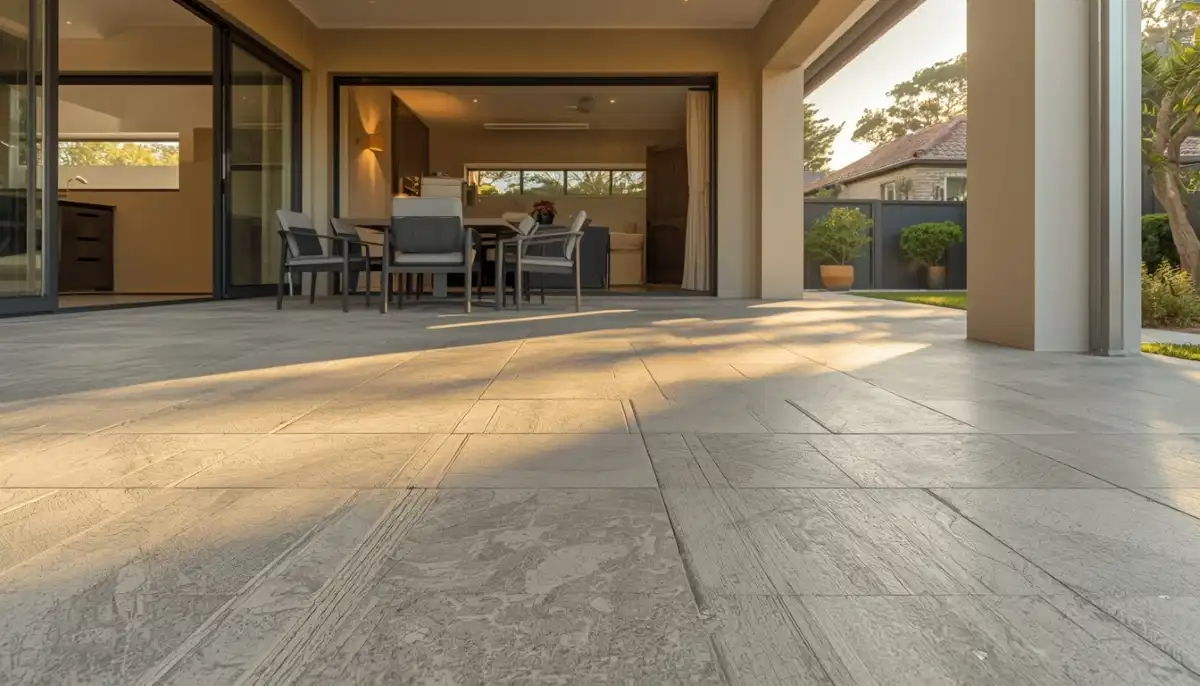
Ready to Transform Your Patio?
Get free quotes from verified tiling specialists who have experience with outdoor patio tiles and understand proper drainage, slip resistance, and weatherproofing.
Servicing Gauteng, Johannesburg, Sandton, and across South Africa
Patio Tiling Installation Guide: Transform Your Outdoor Space SA
🏡 From boring concrete to stunning outdoor living – everything you need to know about patio tiling
You look at your patio and see potential. A place for weekend braais, lazy Sunday afternoons, and evening drinks as the sun sets. But right now, it’s just grey concrete – functional but far from beautiful. You want more. You want a patio that feels like an extension of your home, a space you’re proud to show off.
I’ve transformed hundreds of patios across Gauteng, from Johannesburg to Sandton, and the difference that proper patio tiling installation makes is remarkable. A tiled patio isn’t just prettier – it’s more functional, easier to clean, and adds real value to your home.
But outdoor tiling is different from indoor tiling. You need tiles that can handle sun, rain, temperature changes, and being wet without becoming slippery. You need proper drainage so water doesn’t pool. You need materials that won’t crack in the heat or absorb moisture and grow mould.
In this complete guide to patio floor tiling, I’ll walk you through everything: choosing the right outdoor patio tiles, preparing the substrate, installation techniques for outdoor conditions, drainage requirements, and ongoing maintenance. By the end, you’ll know exactly how to install patio tiles outdoors – whether you’re hiring a professional or considering DIY.
For more outdoor tiling advice, check out our guides on best materials for outdoor tiling, non-slip outdoor tiles guide, driveway tiling guide, balcony waterproof tiling, and garden pathway tiles.
📋 Table of Contents – Patio Tiling Guide
🏠 Why Tile Your Patio? Benefits Overview
Before diving into patio tiling installation, let’s look at why it’s worth the investment:
Benefits of Tiling Your Patio:
- Transforms appearance: From boring concrete to beautiful, inviting outdoor space
- Increases home value: A well-tiled patio adds significant resale value
- Easier to clean: Sweep and hose down – no more stained or cracked concrete
- More durable: Quality outdoor tiles resist cracking, fading, and weather damage
- Stays cooler: Light-coloured tiles reflect heat instead of absorbing it like concrete
- Defines spaces: Use different tiles to separate dining, lounging, and cooking areas
- Complements your home: Coordinate with indoor flooring for seamless indoor-outdoor flow
Is patio tiling DIY or professional? While possible for experienced DIYers, patio floor tiling requires knowledge of outdoor-specific requirements: proper drainage, slip resistance, freeze-thaw resistance, and substrate preparation. Many homeowners hire professionals for peace of mind and warranty protection.
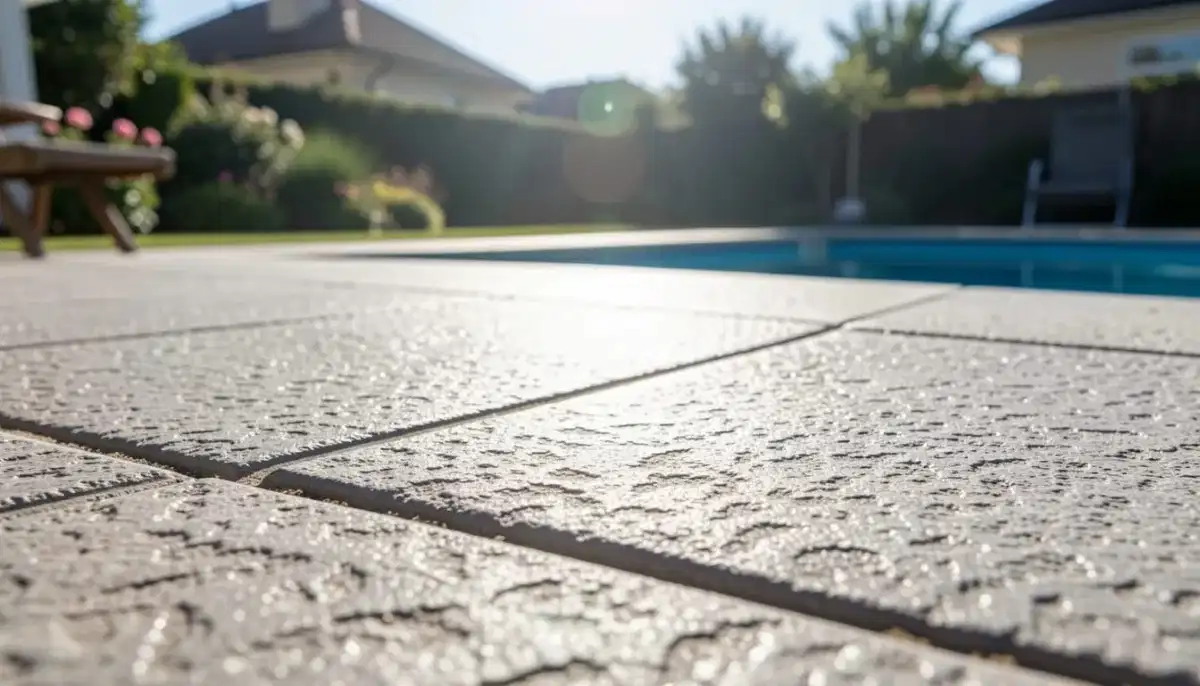
🧱 Best Tiles for Outdoor Patios – Material Guide
Choosing the right outdoor patio tiles is critical for longevity and safety:
| Tile Type | Pros | Cons | Slip Resistance | Price/m² |
|---|---|---|---|---|
| Porcelain (Outdoor-Rated) | Very durable, low absorption, frost-resistant, many styles | Expensive, heavy, requires professional installation | Good (matte/textured finishes) | R300 – R800 |
| Quarry Tile | Very durable, slip-resistant, affordable | Limited colours (reds, browns), can stain | Excellent (textured) | R200 – R400 |
| Natural Stone (Slate, Travertine) | Beautiful, unique, natural slip resistance | Requires sealing, can stain, expensive | Excellent (textured) | R400 – R1,000 |
| Ceramic (Outdoor-Rated) | Affordable, many styles | Less durable than porcelain, can crack in frost | Good (matte finishes) | R150 – R350 |
| Concrete Pavers | Very affordable, easy installation | Can fade, may crack, less premium look | Good | R100 – R250 |
What to Look For in Outdoor Tiles:
- Water absorption: Less than 0.5% for frost resistance (porcelain)
- Slip resistance rating: R11 or higher for wet areas, R10 for covered patios
- Frost resistance: Essential if you live in areas with freezing temperatures
- UV resistance: Colours shouldn’t fade in direct sunlight
For a complete material comparison, read our best materials for outdoor tiling guide.
⚠️ Slip Resistance – Critical for Safety
This is the most important safety consideration for patio tiling installation. Wet patios + smooth tiles = dangerous falls.
Understanding Slip Resistance Ratings (R Ratings):
- R9: Low slip resistance – indoor dry areas only (NOT for patios)
- R10: Moderate slip resistance – covered patios, dry outdoor areas
- R11: Good slip resistance – open patios, pool surrounds, wet areas
- R12: High slip resistance – ramps, commercial wet areas
- R13: Maximum slip resistance – industrial areas, steep ramps
For most patios in South Africa, choose R11 or higher. This ensures safety when tiles are wet from rain, pool splashes, or hosing down.
How to Increase Slip Resistance:
- Choose textured or matte finishes (not glossy)
- Select tiles with built-in slip resistance (many outdoor porcelains have this)
- Use smaller tiles (more grout lines = more grip)
- Avoid polished or high-gloss finishes outdoors
For more details, read our non-slip outdoor tiles guide.
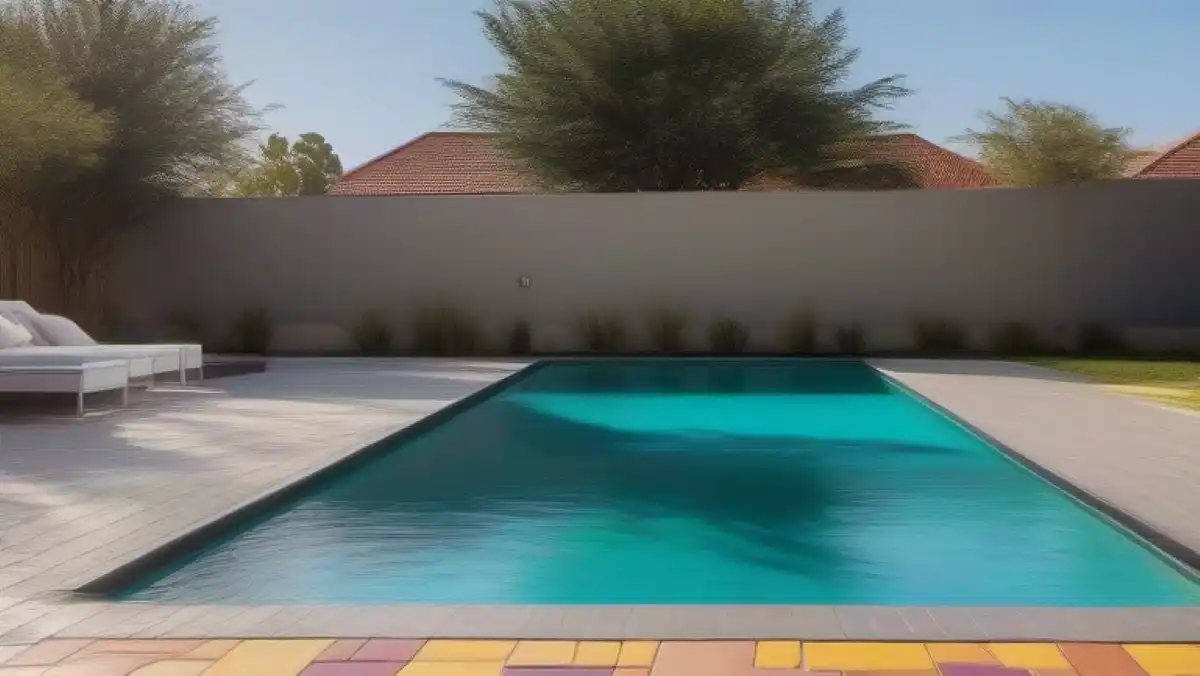
Ready to Transform Your Patio?
Get free quotes from verified tiling specialists who understand outdoor requirements – drainage, slip resistance, and weatherproofing.
Free inspections available. Beat Your Quote guarantee.
🏗️ Substrate Preparation for Outdoor Tiling
Proper preparation is essential for how to install patio tiles outdoors successfully:
Concrete Slab Substrate (Most Common):
- Must be fully cured (minimum 28 days for new concrete)
- Must be clean – no dirt, oil, grease, or existing sealers
- Must have proper slope (2% or 20mm per meter) for drainage
- Repair any cracks – use concrete patching compound
- Apply primer to improve adhesion
- Consider using an uncoupling membrane to prevent cracks from transferring to tiles
Existing Tile Substrate (Tiling Over Old Tiles):
- Old tiles must be firmly bonded (no hollow sounds)
- Must be clean and free of sealers or wax
- Rough up glossy surfaces with sandpaper or grinder
- Use primer designed for tiling over existing tiles
Compacted Sand/Gravel Base (For New Patios):
- Requires reinforced concrete slab – not recommended for direct tiling on sand
- For new patios, pour a concrete slab first, then tile
For more on preparation, read our waterproofing guide and building construction guide.
💧 Drainage Requirements – Water Must Flow
Poor drainage is the #1 cause of failed patio floor tiling. Water that pools on tiles will:
- Create slip hazards
- Promote mould and mildew growth
- Freeze and crack tiles in cold climates
- Damage grout and adhesive over time
Proper Slope Requirements:
- Minimum slope: 2% (20mm drop per 1 meter of length)
- Ideal slope: 2-3% for most patios
- Slope away from the house – never toward foundation
- Water should flow to drains, channels, or garden areas
How to Check Existing Slope:
Place a long spirit level on your concrete slab. Lift the low end until the bubble is centered. Measure the gap under the level. Calculate: if the level is 1 meter long and you lifted it 20mm, you have 2% slope. If less than 20mm, you need to add a levelling compound or re-pour.
Adding Drainage to Flat Slabs:
If your concrete slab is perfectly flat (no slope), you have two options:
- Use a self-levelling compound that can be sloped (more complex)
- Install a drainage channel or French drain at the edge of the patio
- Consult a professional – flat slabs require careful planning
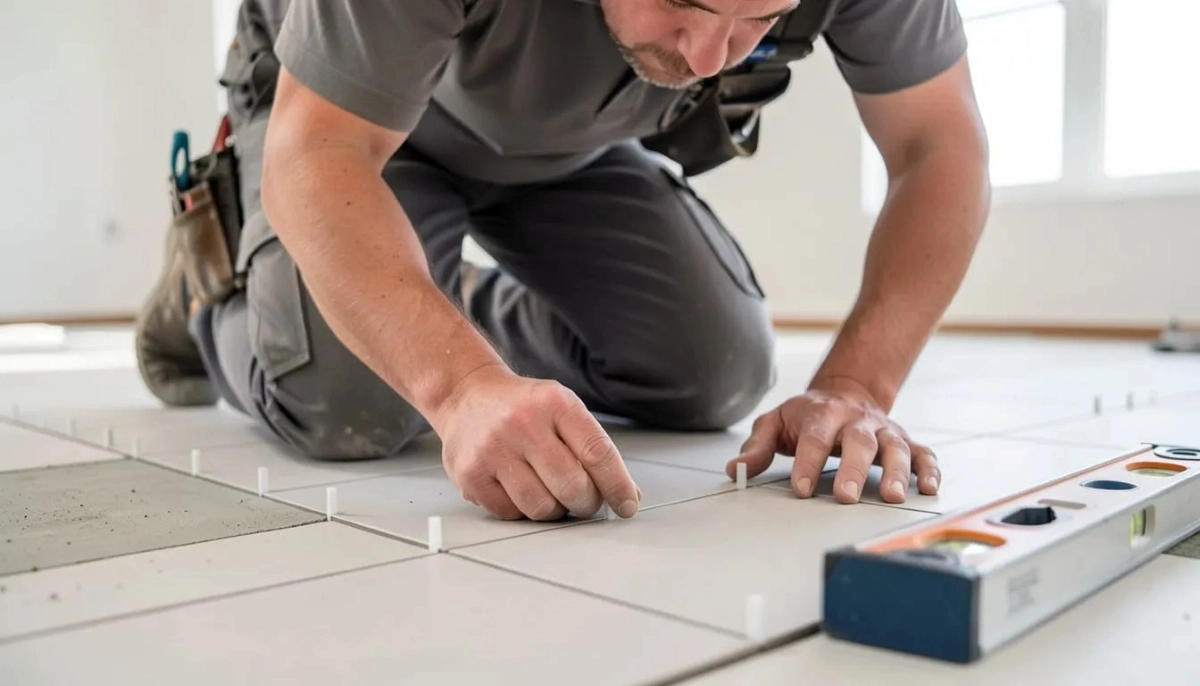
🔧 Step-by-Step Patio Tiling Installation
Here’s the complete process for professional patio tiling installation:
Tools and Materials Needed:
- Outdoor-rated tiles (porcelain, quarry, or natural stone)
- Outdoor-grade polymer-modified thin-set adhesive
- Outdoor-grade grout (sanded for joints over 3mm)
- Tile spacers (3-5mm for outdoor joints)
- Rubber mallet and beating block
- Level and straight edge
- Wet saw with diamond blade
- Grout float and sponge
- Penetrating sealer (for natural stone)
Step 1: Prepare the Substrate
Clean, repair, and prime the concrete slab. Ensure proper slope for drainage. Apply primer and allow to dry.
Step 2: Plan Your Layout
Measure the patio and plan tile placement. Avoid “sliver cuts” at edges. Consider pattern (straight lay, brick bond, diagonal). Dry-lay a row to check cuts.
Step 3: Mix Adhesive
Use outdoor-grade, polymer-modified thin-set. Mix according to instructions. Only mix what you can use in 30 minutes (adhesive sets faster in outdoor heat).
Step 4: Apply Adhesive
Using a notched trowel (8-10mm for outdoor tiles), spread adhesive on a small section. Work in 1-2m² sections. Hold trowel at 45-degree angle.
Step 5: Install Tiles
Press tiles into adhesive with twisting motion. Use spacers (3-5mm – wider than indoor joints to accommodate expansion). Check level frequently.
Step 6: Cut Edge Tiles
Measure and cut tiles to fit edges. Use wet saw with diamond blade. Back-butter cut tiles before placing.
Step 7: Allow Adhesive to Cure
Wait 48 hours minimum before grouting. Protect from rain during curing (cover with plastic sheeting if needed).
Step 8: Grout
Mix outdoor-grade grout. Apply with rubber float, pushing into joints. After 15-30 minutes, wipe with damp sponge. For natural stone, seal before grouting.
Step 9: Seal (If Needed)
Natural stone requires sealing. Porcelain does not (but grout does). Apply penetrating sealer after grout cures (72 hours).
🧹 Grouting and Sealing for Outdoor Conditions
Outdoor grout and sealing requirements differ from indoor:
Outdoor Grout Requirements:
- Use sanded grout for joints 3mm and wider (better durability outdoors)
- Use polymer-modified grout for flexibility and weather resistance
- Consider epoxy grout for maximum water resistance (more expensive)
- Wider joints (3-5mm) are better outdoors – allow for expansion
Sealing Requirements:
- Porcelain tiles: Do not need sealing (tile itself), but grout does
- Natural stone: Must be sealed before AND after grouting
- Quarry tile: Sealing recommended for stain resistance
- Grout sealer: Apply to all outdoor grout – prevents water penetration and mould
Sealing Process:
- Wait 72 hours after grouting for full cure
- Clean tiles thoroughly and allow to dry completely (24 hours)
- Apply penetrating sealer with applicator or brush
- Allow to penetrate for recommended time (5-15 minutes)
- Wipe off excess before it dries
- Apply second coat for high-exposure areas
For more on sealing, read our tile sealing guide.
🚫 Common Mistakes to Avoid in Patio Tiling
⚠️ Warning: These Mistakes Ruin Outdoor Tile Installations
Avoid these errors when planning your patio floor tiling project.
- Using indoor tiles outdoors: Indoor tiles absorb water, crack in frost, and become slippery when wet. Always use outdoor-rated tiles.
- No slope or inadequate drainage: Water pooling on tiles causes slip hazards, mould, and freeze-thaw damage. Ensure 2% minimum slope.
- No expansion joints: Outdoor tiles expand and contract more than indoor. Include expansion joints every 3-5 meters and at walls.
- Using glossy tiles: Polished tiles become dangerously slippery when wet. Choose matte, textured, or rated R11+ for safety.
- Skipping waterproofing: On concrete slabs, waterproofing prevents moisture from rising through the slab and damaging tiles.
- Grouting too soon: Adhesive needs 48 hours to cure outdoors. Grouting too early traps moisture and weakens bond.
- Not sealing natural stone: Unsealed stone absorbs stains, moisture, and can spall (flake) in freezing weather.
- Wrong adhesive: Standard indoor thin-set fails outdoors. Use polymer-modified, outdoor-grade adhesive.
🧽 Maintaining Your Tiled Patio
Proper maintenance keeps your terrace tiling beautiful for decades:
Regular Cleaning:
- Sweep weekly to remove dirt and debris
- Hose down monthly to remove grime
- For deeper cleaning, use a mild detergent and stiff broom
- Avoid pressure washers – they can damage grout and edges
Seasonal Maintenance:
- Check for cracked or missing grout – repair promptly
- Test sealer effectiveness (drop water – if it absorbs, reseal)
- Reseal natural stone every 1-2 years
- Reseal grout every 1-2 years
What to Avoid:
- ❌ Bleach or harsh chemicals – damage grout and sealer
- ❌ Pressure washers – can blow out grout and chip tiles
- ❌ Wire brushes – scratch tile surfaces
- ❌ Vinegar on natural stone – etches the surface
For more cleaning guidance, read our tile cleaning methods guide and tile maintenance tips.
💰 Patio Tiling Cost Guide
Here’s what you can expect to pay for patio tiling installation in South Africa:
| Item | Cost Range | Notes |
|---|---|---|
| Porcelain tiles (material/m²) | R300 – R800 | Outdoor-rated, textured finish |
| Quarry tiles (material/m²) | R200 – R400 | Affordable, durable, limited colours |
| Natural stone (material/m²) | R400 – R1,000 | Slate, travertine – requires sealing |
| Installation (professional)/m² | R200 – R350 | Outdoor specialist required |
| Substrate preparation | R1,000 – R5,000 | Repairs, priming, waterproofing |
| Drainage correction | R2,000 – R10,000 | If slab has no slope |
| Total installed (30m² patio) | R15,000 – R40,000 | Porcelain, standard installation |
For a complete breakdown of outdoor tiling costs, read our tile installation cost per square meter guide.
❓ Frequently Asked Questions About Patio Tiling
Can I tile directly over an existing concrete patio?
Yes – if the concrete is sound, clean, and properly sloped for drainage. Repair any cracks, clean thoroughly, apply primer, and use outdoor-grade adhesive. However, if the concrete is cracking or uneven, you may need to pour a new slab or use a self-levelling compound first.
What is the best tile for an outdoor patio?
The best outdoor patio tiles are porcelain rated for outdoor use (water absorption under 0.5%, slip resistance R11+). Porcelain is durable, frost-resistant, low-maintenance, and available in many styles. For a natural look, slate or travertine are beautiful but require sealing. For budget options, quarry tiles work well.
Do I need to seal outdoor patio tiles?
Porcelain tiles themselves do not need sealing – they’re non-porous. However, grout DOES need sealing to prevent water penetration and mould. Natural stone tiles (slate, travertine) MUST be sealed before and after grouting. Sealer should be reapplied every 1-2 years for natural stone and grout.
How do I ensure my patio tiles are slip-resistant?
Choose tiles with a slip resistance rating of R11 or higher. Look for textured, matte, or flamed finishes – avoid polished or high-gloss tiles outdoors. Smaller tiles with more grout lines also provide better grip. For pool decks, consider specially designed non-slip tiles. Read our non-slip outdoor tiles guide for more.
How much does it cost to tile a patio in South Africa?
Patio tiling installation costs R15,000-40,000 for a 30m² patio using porcelain tiles (R300-800/m² material + R200-350/m² installation). Natural stone costs more (R400-1,000/m² material). Additional costs for substrate preparation, drainage correction, or waterproofing add R1,000-10,000. Get a free quote from verified tilers for accurate pricing.
Can I install patio tiles myself?
If you have tiling experience and understand outdoor requirements (drainage, slip resistance, frost protection), yes. However, how to install patio tiles outdoors requires knowledge of proper slope, expansion joints, and outdoor-grade materials. Mistakes are expensive to fix. Many homeowners hire professionals for peace of mind and warranty protection.
How long does outdoor tile installation take?
A standard 30m² patio typically takes 3-5 days: 1 day for substrate preparation and priming, 1-2 days for tiling, 48 hours for adhesive curing, 1 day for grouting, then sealing after 72 hours. Larger patios or complex patterns take longer. Weather can affect timelines – avoid tiling in rain or extreme heat.
What happens if water gets under patio tiles?
Water under tiles causes several problems: adhesive failure (tiles become loose or hollow), freeze-thaw damage (in cold climates), mould and mildew growth, and eventual cracking. This is why proper drainage (2% slope) and waterproofing membranes are critical for patio floor tiling. If you suspect water under tiles, call a professional for assessment.
✅ Final Thoughts: Transform Your Outdoor Living Space
A beautifully tiled patio transforms your outdoor area from a forgotten space into the heart of your home. Weekend braais, lazy Sunday afternoons, evening entertaining – a tiled patio makes it all better.
The key to successful patio tiling installation is understanding outdoor requirements: proper drainage, slip-resistant tiles, weatherproof materials, and expansion joints. Cut corners on these, and your beautiful patio will fail within years. Do it right, and you’ll enjoy it for decades.
Key takeaways for patio tiling:
- Choose outdoor-rated porcelain or natural stone with R11+ slip resistance
- Ensure 2% minimum slope for drainage – water must not pool
- Use outdoor-grade adhesive, grout, and sealers
- Include expansion joints every 3-5 meters
- Seal natural stone and grout every 1-2 years
- Professional installation is recommended for best results
Your next step: Ready to transform your patio? Get free quotes from verified tiling specialists who understand outdoor requirements – drainage, slip resistance, and weatherproofing.
Ready to Transform Your Patio?
Get free quotes from verified tiling specialists who have experience with outdoor patio tiles and understand proper drainage, slip resistance, and weatherproofing.
📞 Call us: 073 138 4726 to discuss your patio project.
Free inspections •
Beat Your Quote guarantee •
Workmanship guarantees
Are You an Outdoor Tiling Specialist?
Join ServiceLink SA’s network of verified tiling contractors. Get qualified leads for patio, pool, and outdoor tiling projects.
📚 Official resources & standards referenced:
- SANS 10400 – South African National Standard for outdoor tiling standards, drainage requirements, and substrate specifications.
- SABS – South African Bureau of Standards for slip resistance standards (R ratings) and tile durability testing.
Information provided for general guidance. Outdoor tiling requires professional assessment of drainage and substrate conditions.
Written by: Innocent T Hanyani
Construction & Home Services Industry Specialist | 21+ Years Experience
Innocent T Hanyani has over two decades of experience working across South Africa’s construction and home improvement sectors. Throughout his career, he has installed thousands of square meters of outdoor tiling – from intimate patios in Johannesburg to expansive pool decks in Sandton. His practical experience helps homeowners understand the critical differences between indoor and outdoor tiling: drainage, slip resistance, frost protection, and weatherproofing. He has seen beautiful patios ruined by improper slope and tiles that became dangerously slippery when wet – lessons that inform his honest, practical advice.
For more information about outdoor tiling, explore our related resources: best materials for outdoor tiling, non-slip outdoor tiles guide, driveway tiling guide, balcony waterproof tiling, and garden pathway tiles. Learn about our process on what is ServiceLink SA and how our service works. Find tilers in your area: Gauteng, Johannesburg, and Sandton. For related services, see our waterproofing and building construction guides.