

Ready to Create a Beautiful Garden Pathway?
Get free quotes from verified tiling specialists who have experience with garden walkway tiles and landscape tiling projects.
Get Free Pathway Tiling Quotes
Servicing Gauteng, Johannesburg, Pretoria, and across South Africa
Garden Pathway Tiling Ideas: Design & Installation Guide SA
🌿 From winding woodland paths to modern geometric walkways – transform your garden with beautiful tile pathways
There’s something magical about a well-designed garden path. It invites you to explore, connects different areas of your outdoor space, and adds structure to even the wildest garden. A path made of beautiful tiles elevates your landscape from ordinary to extraordinary.
I’ve designed and installed garden pathways across Gauteng, from Johannesburg to Pretoria, for years. And I’ve seen how the right pathway transforms a garden. Suddenly, there’s a journey to take, a destination to reach. The garden becomes an experience, not just a view.
But garden pathway tiles are different from patio tiles or indoor tiles. They need to withstand soil movement, freeze-thaw cycles (in colder parts of SA), rain, and foot traffic while staying beautiful. They need to be slip-resistant, durable, and compatible with the landscape.
In this complete guide to pathway tiling ideas, I’ll cover everything: choosing the right best tiles for garden pathways, design inspiration (from classic to contemporary), substrate preparation (crucial for long life), installation techniques, drainage, and maintenance. Whether you want a formal entrance walkway or a meandering path through your garden, this guide will help you create something beautiful.
For more outdoor tiling advice, check out our guides on best materials for outdoor tiling, non-slip outdoor tiles guide, and patio tiling guide.
📋 Table of Contents – Garden Pathway Tiling Guide
🌿 Why Tile a Garden Pathway? Benefits
Landscape tiling offers several advantages over other pathway materials:
Benefits of Tiled Garden Pathways:
- Beautiful appearance: Tiles offer endless design possibilities – colours, patterns, textures
- Durable and long-lasting: Quality tiles withstand weather, foot traffic, and soil movement (when properly installed)
- Low maintenance: Sweep or hose down – no weeding between pavers
- Stain-resistant: Mud, leaves, and garden debris wipe off easily
- Comfortable underfoot: Smooth but slip-resistant surface – better than gravel or uneven stone
- Defines garden spaces: Pathways create structure and guide visitors through your landscape
- Increases home value: Well-designed landscaping with quality pathways adds significant value
- Allows creativity: Mix patterns, create borders, add decorative inserts
Why Choose Tiles Over Other Materials:
- vs Gravel: No loose stones to scatter, no weeds, comfortable to walk on, no sinking
- vs Concrete: More attractive, more design options, doesn’t crack as easily
- vs Pavers: Fewer joints (less weeding), smoother surface, more design flexibility
- vs Natural stone: More affordable, more colour options, easier to cut
🎨 Garden Pathway Design Ideas & Inspiration
Here are pathway tiling ideas for every garden style:
1. Winding Meandering Path (Cottage/Natural Gardens)
Create gentle curves that follow the natural contours of your garden. Use irregular stepping stones (cut tiles in organic shapes) or small square tiles (150x150mm) in earthy colours. Leave gaps between tiles for creeping plants like thyme or dichondra.
2. Formal Straight Path (Traditional/Formal Gardens)
A straight, wide path leading to an entrance or focal point. Use large format tiles (600x600mm or larger) in a classic pattern (brick bond or stack bond). Consider border tiles in a contrasting colour for definition.
3. Mosaic Accent Path (Artistic/Bohemian Gardens)
Create a stunning mosaic pathway using broken tile pieces (picassiette style) or mosaic sheets. Use colourful glass, ceramic, or porcelain pieces arranged in patterns – flowers, geometric designs, or abstract swirls.
4. Stepping Stone Path (Modern/Minimalist)
Individual tile “stepping stones” set into gravel or grass. Use large square or rectangular tiles (400x400mm or 600x600mm) spaced at comfortable walking distance (450-600mm apart). Choose concrete-look or wood-look porcelain.
5. Patterned Runner Path (Mediterranean/Courtyard)
A narrow path (600-900mm wide) with decorative patterned tiles down the center. Use encaustic-look cement tiles or patterned porcelain. Flanked by solid border tiles on both sides.
6. Colour Gradient Path (Contemporary)
Use tiles that transition from one colour to another along the path length. Start with dark grey at one end, gradually transitioning to light grey or white. Creates dramatic visual interest.
7. Wood-Look Plank Path (Rustic/Modern Farmhouse)
Use wood-look porcelain tiles arranged in a plank pattern (staggered like decking). Perfect for a rustic garden or modern farmhouse style. Warmer appearance than stone-look tiles.
8. Herringbone Brick Path (Classic/Traditional)
Use brick-look tiles arranged in herringbone pattern. Classic and timeless. Works well for formal gardens, courtyards, and period homes. Read our herringbone tile pattern guide for installation tips.
For more design inspiration, read our best materials for outdoor tiling guide.
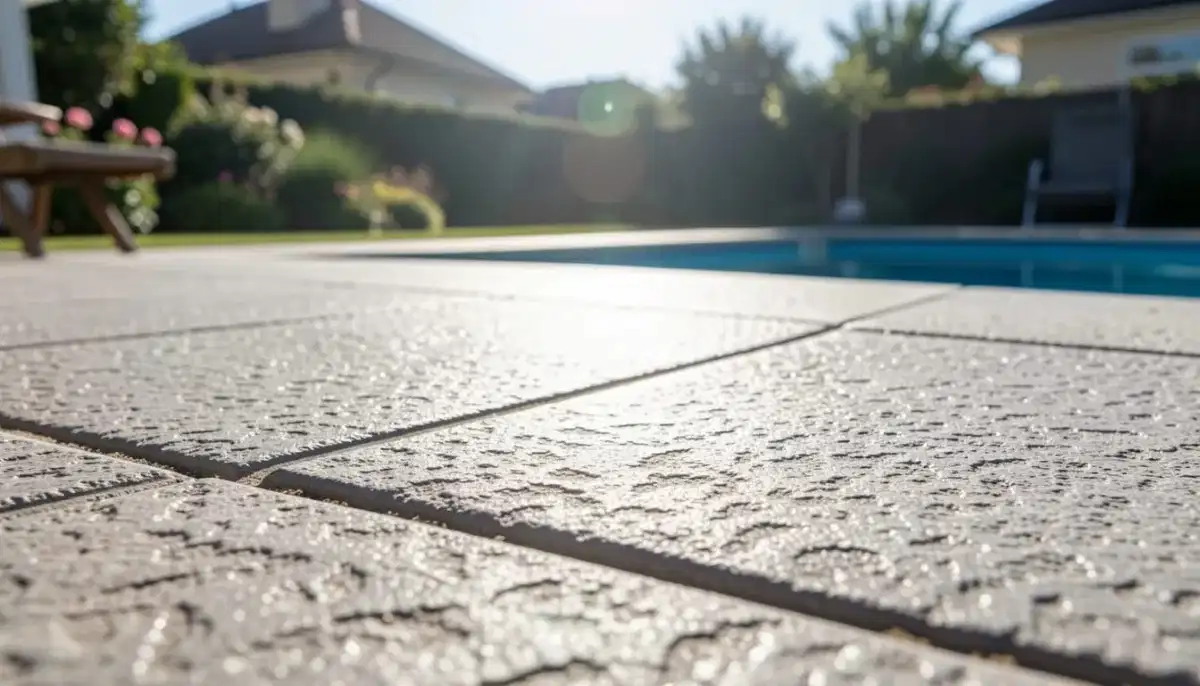
🧱 Best Tiles for Garden Pathways – Material Guide
Choosing the best tiles for garden pathways requires understanding outdoor requirements:
| Tile Type | Slip Resistance | Durability | Water Absorption | Price/m² | Best For |
|---|---|---|---|---|---|
| Textured Porcelain | R11-R12 | Excellent | 0.1%-0.5% | R300 – R800 | Most pathways – best all-around choice |
| Quarry Tiles | R11-R12 | Excellent | 0.5%-2% | R200 – R400 | Budget-friendly, durable, limited colours |
| Natural Stone (Slate) | R11-R12 | Good | 0.5%-1% | R300 – R700 | Natural look, textured finish |
| Natural Stone (Travertine) | R10-R11 | Fair-Good | 1%-5% | R400 – R900 | Warm, earthy appearance – requires sealing |
| Concrete Pavers | R10-R11 | Good | 5%-10% | R150 – R350 | Budget alternative, limited colours |
Critical Requirements for Garden Pathway Tiles:
- Slip resistance: R11 minimum (gardens get wet from rain, sprinklers, morning dew)
- Water absorption: Under 0.5% for porcelain (prevents freeze-thaw damage in colder regions)
- Frost resistance: Essential for areas with freezing temperatures (parts of Gauteng, Free State, Western Cape mountains)
- UV resistance: Colours won’t fade in direct sunlight
- Thickness: Minimum 8mm (10mm recommended for durability)
What to AVOID for Garden Pathways:
- ❌ Polished or glossy tiles – dangerously slippery when wet
- ❌ Indoor ceramic tiles – absorb water, crack in freeze-thaw
- ❌ Marble – etches from rain (acidic), stains easily
- ❌ Glass tiles – slippery when wet, can crack
For natural stone options, read our travertine tiles guide.
Ready to Create Your Dream Garden Pathway?
Get free quotes from verified tiling specialists who have experience with garden walkway tiles and landscape tiling projects.
Get Free Pathway Tiling Quotes
Free inspections available. Beat Your Quote guarantee.
🏗️ Substrate Preparation – The Foundation Matters
Proper preparation is critical for garden pathway tiles to last:
Types of Substrate for Garden Pathways:
Option 1: Concrete Slab (Most Durable – Recommended)
- Pour 75-100mm concrete slab (15-20 MPa strength)
- Install steel reinforcement mesh for larger pathways
- Create proper slope (2% minimum) for drainage
- Allow 28 days cure time before tiling
- Best for: Permanent pathways, high-traffic areas, formal gardens
Option 2: Compacted Base + Mortar Bed (Budget-Friendly)
- Excavate to 150mm depth
- Install 100mm compacted gravel base (G5 or G7 material)
- Add 25-50mm sand bedding layer
- Apply 25-40mm mortar bed (3:1 sand:cement mix)
- Tile directly into wet mortar
- Best for: Informal pathways, stepping stones, moderate traffic
Option 3: Existing Concrete (Retrofit)
- Clean thoroughly – remove dirt, oil, moss
- Repair cracks with concrete patching compound
- Grind down any high spots
- Apply concrete primer
- Best for: Adding tiles to existing concrete paths
Critical Requirements for All Substrates:
- Must have 2% slope for drainage (20mm drop per 1 meter)
- Must be stable – no movement or settlement
- Must be clean – no dirt, oil, or organic matter
- Must be properly cured (concrete) or compacted (gravel)
For more on preparation, read our floor leveling guide.
💧 Drainage for Garden Pathways
Proper drainage prevents water pooling, erosion, and tile damage:
Slope Requirements:
- Minimum slope: 2% (20mm drop per 1 meter of path length)
- Ideal slope: 2-3% for most pathways
- Slope should direct water off the path, not along it
- Crown path (slightly higher in centre) for paths that must be level
Drainage Solutions:
- Slope to garden: Water runs off path into surrounding garden beds – simplest method
- French drain: Gravel-filled trench alongside path collects and redirects water
- Channel drain: Installed at path edges to capture water
- Crowned path: Centre higher, water runs to both edges – for level paths
Warning Signs of Poor Drainage:
- Standing water on tiles after rain – means slope is inadequate
- Water running toward house or structures – redirect immediately
- Erosion at path edges – water is flowing too fast or in wrong direction
For more on drainage, read our patio tiling guide.
🔧 Step-by-Step Garden Pathway Installation
Here’s the complete process for professional landscape tiling:
Tools and Materials Needed:
- Outdoor-rated tiles (porcelain recommended)
- Polymer-modified thin-set adhesive (outdoor-grade)
- Polymer-modified grout (outdoor-grade)
- Tile spacers (3-5mm)
- Rubber mallet and beating block
- Level and straight edge
- Wet saw with diamond blade
- Concrete primer (for concrete substrate)
- Gravel, sand, mortar (for non-concrete substrate)
For Concrete Substrate (Recommended):
Step 1: Clean and prepare concrete – repair cracks, ensure slope, apply primer.
Step 2: Plan layout – measure path width, plan tile placement, avoid sliver cuts.
Step 3: Mix adhesive – use outdoor-grade, polymer-modified thin-set.
Step 4: Apply adhesive – use 8-10mm notched trowel, work in small sections.
Step 5: Back-butter tiles – apply thin adhesive layer to tile back for full coverage.
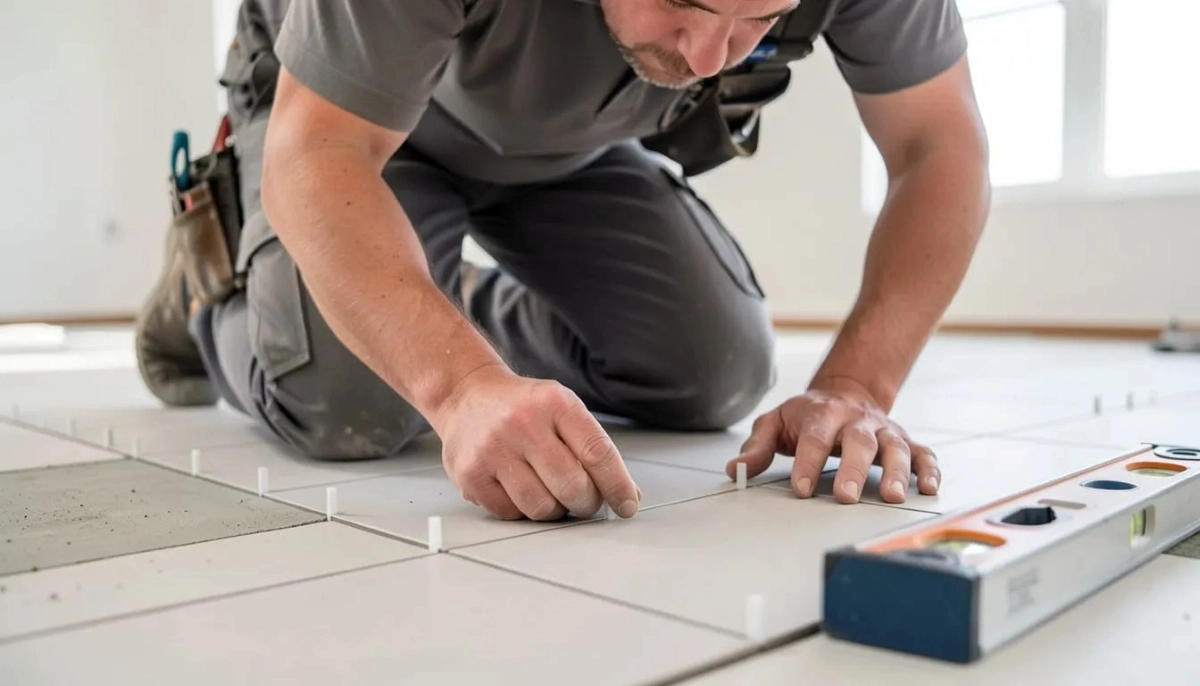
Step 6: Install tiles – press into adhesive, use spacers (3-5mm), check level constantly.
Step 7: Cut edge tiles – measure carefully, cut with wet saw, back-butter before placing.
Step 8: Allow adhesive to cure – 48 hours minimum.
Step 9: Grout – apply polymer-modified outdoor grout, clean after 15-30 minutes.
Step 10: Final cure – wait 7 days before regular use.
For Mortar Bed Substrate (Budget Option):
Step 1: Excavate path area to 150mm depth.
Step 2: Install and compact 100mm gravel base.
Step 3: Add 25-50mm sand bedding layer.
Step 4: Mix and apply 25-40mm mortar bed (3:1 sand:cement).
Step 5: Press tiles into wet mortar before it sets.
Step 6: Check level and adjust immediately.
Step 7: Allow mortar to cure (7 days).
Step 8: Grout joints.

⚖️ Tiles vs Gravel vs Pavers – Comparison
Here’s how garden pathway tiles compare to other materials:
| Factor | Tiles | Gravel | Pavers | Concrete |
|---|---|---|---|---|
| Appearance | Excellent – many styles | Fair – utilitarian | Good | Poor – boring |
| Comfort underfoot | Excellent | Poor – uneven, shifts | Good | Good |
| Weeds | Minimal (tight joints) | Constant problem | Moderate | Minimal |
| Maintenance | Low – sweep, occasional wash | High – rake, top up, weed | Moderate – weed, re-sand | Low – occasional clean |
| Cost (50m²) | R15,000 – R40,000 | R5,000 – R12,000 | R10,000 – R25,000 | R8,000 – R20,000 |
| Lifespan | 20-30+ years | 5-10 years (needs topping) | 15-25 years | 20-30 years |
Verdict: Tiles are the best choice for appearance, comfort, and low maintenance – but cost more upfront. Gravel is cheapest but highest maintenance. Pavers are mid-range. For a beautiful, long-lasting pathway, tiles are worth the investment.
🚫 Common Mistakes to Avoid in Garden Pathway Tiling
⚠️ Warning: These Mistakes Ruin Garden Pathways
Avoid these errors when planning your garden pathway tiles project.
- No proper base (tiling directly on soil): Soil moves, settles, and expands. Tiles will crack and shift within months. Always install proper base (concrete or compacted gravel + mortar).
- Using indoor tiles outdoors: Indoor tiles absorb water, crack in freeze-thaw, and become slippery. Only use outdoor-rated tiles with R11+ slip resistance.
- No slope for drainage: Flat paths collect water. Standing water promotes algae (slippery), damages grout, and erodes edges. Ensure 2% minimum slope.
- Narrow grout joints: Indoor-sized joints (2mm) crack from soil movement and freeze-thaw. Use 3-5mm joints for garden pathways.
- No weed barrier: Without weed barrier under gravel or between tiles, weeds will grow through joints. Install landscape fabric.
- Using glossy or polished tiles: Dangerously slippery when wet – gardens are often wet from rain, sprinklers, or dew. Use textured, R11+ tiles.
- Not back-buttering tiles: Without full adhesive coverage, tiles crack under foot traffic. Always back-butter pathway tiles.
- Walking on tiles too soon: Adhesive needs 48-72 hours cure time. Walking early shifts tiles and damages grout.
🧽 Maintaining Your Tiled Garden Pathway
Proper maintenance keeps your garden walkway tiles beautiful for decades:
Regular Maintenance:
- Weekly: Sweep leaves and debris – organic matter stains if left wet
- Monthly: Hose down to remove dirt and pollen
- Quarterly: Check for cracked or loose tiles – repair immediately
- Annually: Reseal grout lines (if not epoxy grout)
Cleaning:
- Use pH-neutral outdoor tile cleaner or mild detergent
- For algae or moss, use outdoor cleaner with algaecide
- Scrub with stiff brush for textured tiles
- Avoid pressure washers on high setting – can damage grout
- For natural stone, use stone-specific cleaners – never acid
Seasonal Care:
- Autumn: Remove fallen leaves promptly (they stain and become slippery)
- Winter (cold areas): Use sand for traction – never salt (salt damages grout and tiles)
- Spring: Check for winter damage – repair cracks, reseal if needed
- Summer: Hose down to cool tiles before walking barefoot (dark tiles get hot)
Weed Prevention:
- Pull weeds from joints immediately – don’t let them establish
- Apply weed killer to joints annually (careful not to overspray on plants)
- Consider polymeric sand in joints for maximum weed prevention
For more cleaning guidance, read our tile cleaning methods guide.
💰 Garden Pathway Tiling Cost Guide
Here’s what you can expect to pay for garden pathway tiles in South Africa:
| Item | Cost Range | Notes |
|---|---|---|
| Textured porcelain tiles/m² | R300 – R800 | R11 slip rating, under 0.5% absorption |
| Quarry tiles/m² | R200 – R400 | Budget option, limited colours |
| Natural stone (slate)/m² | R300 – R700 | Natural look, requires sealing |
| Concrete slab substrate/m² | R400 – R700 | 75-100mm reinforced concrete |
| Gravel + mortar base/m² | R150 – R300 | Budget option, less durable |
| Installation (professional)/m² | R200 – R350 | Outdoor tiling specialist |
| New pathway (30m²) – concrete base + porcelain | R25,000 – R55,000 | Complete installation |
| New pathway (30m²) – gravel base + quarry | R12,000 – R28,000 | Budget option |
| Retrofit existing concrete (30m²) – porcelain | R15,000 – R35,000 | Assuming concrete is sound |
Example Project Costs:
- 30m concrete base + porcelain pathway: R25,000 – R55,000
- 30m gravel base + quarry tile pathway (budget): R12,000 – R28,000
- Retrofit existing concrete path with porcelain: R15,000 – R35,000
- Stepping stone path (10 tiles, no continuous base): R3,000 – R8,000
For a complete breakdown of outdoor tiling costs, read our tile installation cost per square meter guide.
❓ Frequently Asked Questions About Garden Pathway Tiling
What are the best tiles for garden pathways?
The best tiles for garden pathways are textured porcelain tiles with R11 slip resistance, water absorption under 0.5%, and frost resistance. Porcelain is durable, stain-resistant, low-maintenance, and available in many styles (stone-look, wood-look, concrete-look). For natural look, slate or travertine are good but require sealing. Avoid polished, glossy, or indoor-rated tiles.
Can I lay garden pathway tiles directly on soil?
No. Tiling directly on soil will fail within months – soil moves, settles, and expands. You need a proper base: either a reinforced concrete slab (75-100mm) for permanent pathways, or compacted gravel base (100mm) plus mortar bed (25-40mm) for budget options. Proper base ensures tiles don’t crack or shift.
How do I stop weeds growing between pathway tiles?
To prevent weeds: use tight grout joints (3-5mm) with polymer-modified grout, install landscape fabric under the base, apply weed killer annually to joints, consider polymeric sand between tiles (hardens to prevent weed growth), and pull any weeds immediately before they establish. Proper base preparation prevents most weed problems.
Do garden pathway tiles need to be sealed?
Porcelain tiles do not need sealing (tile itself is non-porous). However, grout lines MUST be sealed to prevent water penetration and weed growth. Natural stone tiles (slate, travertine) require sealing before and after grouting, then annually. Use penetrating sealer – never topical/film-forming sealers on pathways (become slippery).
How much does it cost to tile a garden pathway?
Pathway tiling ideas cost: R25,000-55,000 for 30m concrete base + porcelain pathway; R12,000-28,000 for gravel base + quarry tile (budget); R15,000-35,000 to retrofit existing concrete path. Stepping stone paths (10 tiles) cost R3,000-8,000. Get a free quote from verified specialists for accurate pricing.
Can I use stepping stones instead of a continuous path?
Yes – stepping stones are a popular alternative. Use large individual tiles (400x400mm or 600x600mm) spaced at comfortable walking distance (450-600mm apart). Set them in a mortar bed or on compacted gravel. Stepping stones are cheaper than continuous paths and allow plants to grow between them for a natural look. Ensure tiles are thick enough (10mm+) for durability.
How do I make my garden pathway non-slip?
Choose tiles with R11 or R12 slip resistance rating. Look for textured finishes (slate texture, wood grain, grit coating). Avoid polished or glossy tiles. Ensure proper drainage (2% slope) so water doesn’t pool. For existing slippery paths, apply non-slip coating or add anti-slip strips. Regular cleaning prevents algae buildup (algae is very slippery).
What width should a garden pathway be?
Minimum width for one person: 600mm (comfortable). Ideal width for main garden paths: 900-1200mm (allows two people to walk side by side). Secondary paths (to compost, shed, etc.): 450-600mm. Entrance pathways: 1200-1500mm for grand appearance. Measure your space – narrow paths feel cramped, wide paths feel generous.
✅ Final Thoughts: Create a Pathway That Invites Exploration
A beautiful garden pathway transforms how you experience your outdoor space. It invites you to walk, to explore, to discover. It connects different areas of your garden and creates a journey, not just a destination.
Garden pathway tiles offer the perfect combination of beauty, durability, and low maintenance. Unlike gravel (weeds, scattering), concrete (boring), or pavers (weeds, shifting), tiles provide a stable, comfortable, and stunning surface that lasts for decades.
The key to success is proper preparation. A concrete base or properly compacted gravel with mortar bed, correct slope for drainage, outdoor-rated tiles with R11 slip resistance, and flexible polymer-modified grout. Cut corners on any of these, and your beautiful path will fail.
Key takeaways for garden pathway tiling:
- Choose textured porcelain with R11 slip resistance and under 0.5% absorption
- Never tile directly on soil – need concrete or compacted gravel + mortar base
- Ensure 2% minimum slope for drainage – water must not pool
- Use 3-5mm grout joints with polymer-modified outdoor grout
- Seal grout (and natural stone tiles) annually
- Pull weeds immediately – don’t let them establish in joints
- Professional installation recommended for best results
Your next step: Ready to create a beautiful garden pathway? Get free quotes from verified tiling specialists who have experience with landscape tiling and garden walkway tiles.
Ready to Create Your Dream Garden Pathway?
Get free quotes from verified tiling specialists who have experience with garden pathway tiles and landscape tiling projects.
📞 Call us: 073 138 4726 to discuss your garden pathway project.
Are You a Landscape Tiling Specialist?
Join ServiceLink SA’s network of verified tiling contractors. Get qualified leads for garden pathways, patios, and outdoor tiling projects.
📚 Official resources & standards referenced:
- SANS 10400 – South African National Standard for pathway standards, drainage requirements, and construction specifications.
- SABS – South African Bureau of Standards for material standards, slip resistance, and durability testing.
Information provided for general guidance. Garden pathway tiling requires professional assessment of soil conditions and drainage.
Written by: Innocent T Hanyani
Construction & Home Services Industry Specialist | 21+ Years Experience
Innocent T Hanyani has over two decades of experience working across South Africa’s construction and home improvement sectors. Throughout his career, he has designed and installed hundreds of garden pathways – from formal entrance walks to meandering woodland paths. His practical experience helps homeowners understand the critical importance of proper base preparation, drainage, and tile selection for outdoor conditions. He has seen beautiful pathways fail due to poor soil preparation and others last decades due to proper concrete bases. His advice prioritises longevity, safety, and beauty.
For more information about garden and outdoor tiling, explore our related resources: best materials for outdoor tiling, non-slip outdoor tiles guide, and patio tiling guide. Learn about our process on what is ServiceLink SA and how we verify contractors. Find tilers in your area: Gauteng, Johannesburg, and Pretoria. For related services, see our tree services and waterproofing guides.