

Considering Travertine for Your Home?
Get free quotes from verified natural stone specialists who have experience with travertine flooring and wall installations.
Servicing Western Cape, Cape Town, Constantia, and across South Africa
Travertine Tiles Explained: Benefits, Installation & Maintenance SA
🏛️ The complete guide to one of nature’s most beautiful and character-filled stones – perfect for Mediterranean and coastal homes
There’s something special about travertine. Unlike the cool elegance of marble or the speckled formality of granite, travertine feels warm, earthy, and lived-in. Its natural pits and holes, soft colours, and textured surface evoke the villas of Tuscany and the coastal homes of the Mediterranean.
I’ve installed travertine flooring in homes across the Western Cape, from Cape Town to Constantia, for decades. And there’s a reason it remains so popular in this region – travertine complements our natural landscape beautifully. The warm creams, beiges, and browns echo Table Mountain’s sandstone and our beaches.
In this complete travertine tiles guide, I’ll answer the question what are travertine tiles and are they good with an honest assessment. You’ll learn about travertine’s unique characteristics (including those famous holes), how it compares to marble and granite, installation requirements, maintenance needs, and where it performs best. By the end, you’ll know if this beautiful natural stone tile is right for your home.
For more natural stone comparisons, check out our guides on natural stone vs porcelain, marble tiles guide, and granite tiles guide. For sealing advice, read tile sealing guide.
📋 Table of Contents – Travertine Tiles Guide
🏛️ What Is Travertine? Understanding This Natural Stone
Travertine is a type of limestone tile that forms around natural hot springs and limestone caves. As mineral-rich water evaporates, it leaves behind layers of calcium carbonate – creating this distinctive, porous stone.
Key Properties of Travertine:
- Composition: Calcium carbonate (like marble and limestone)
- Hardness: 3-4 on Mohs scale (softer than granite, similar to marble)
- Porosity: High – naturally has holes and pits from gas bubbles during formation
- Acid sensitivity: Etches from acids (lemon juice, vinegar, wine) – like marble
- Appearance: Warm, earthy colours – cream, beige, walnut, gold, silver
- Unique feature: Natural pits and holes (can be filled or left unfilled)
- Finish options: Honed (matte), tumbled (aged), polished (less common), brushed
Why Travertine Is Special:
Unlike the formal appearance of marble or granite, travertine feels casual and welcoming. Its natural pits and holes give it texture and character. The warm, earthy colours complement a wide range of design styles – from Mediterranean and Tuscan to modern coastal and organic minimalism.
For a complete material comparison, see the tile type comparison chart.
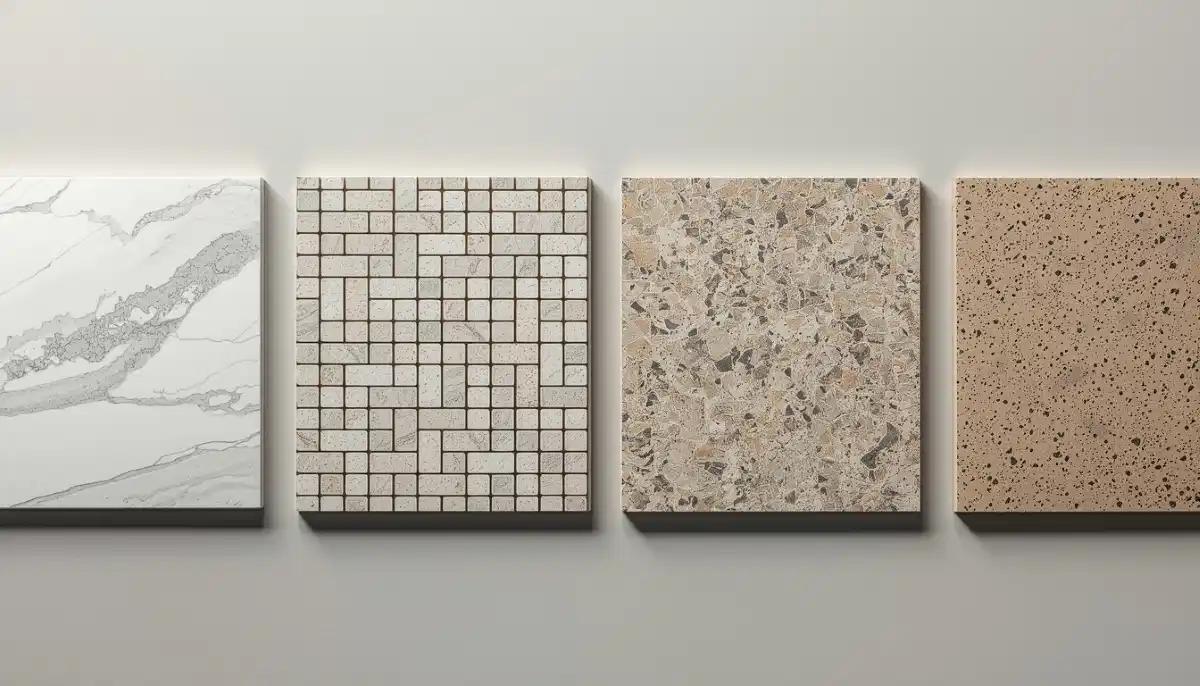
🎨 Types of Travertine – Colours and Finishes
Travertine comes in several colours and finishes. Here’s what’s available in South Africa:
| Travertine Type | Appearance | Best For | Price Range/m² |
|---|---|---|---|
| Noce (Walnut) | Warm medium brown, rich earthy tones | Traditional spaces, outdoor patios, warm interiors | R500 – R900 |
| Classic Cream / Navona | Light beige/cream, very popular, versatile | Most homes – floors, walls, bathrooms, outdoor | R500 – R900 |
| Silver / Grey | Cool grey tones, more modern feel | Contemporary homes, modern coastal design | R600 – R1,000 |
| Gold | Golden beige with warm yellow undertones | Warm, sunny spaces, Mediterranean style | R600 – R1,100 |
Finish Options:
- Honed: Matte, smooth finish. Most common for floors. Non-reflective, hides scratches well.
- Tumbled: Aged, rustic appearance with softened edges. Very popular for traditional and Mediterranean styles. More textured and slip-resistant.
- Brushed: Softly textured, between honed and tumbled. Good for outdoor use.
- Polished: High-gloss, reflective. Less common for travertine – shows scratches easily.
Filled vs Unfilled: (See Section 5 for detailed explanation)
- Filled travertine: Natural pits and holes filled with cement or resin – smooth surface.
- Unfilled travertine: Natural holes left open – textured, rustic appearance.
⚖️ Travertine vs Marble vs Granite vs Limestone
Understanding how travertine compares to other natural stone tiles helps you make the right choice:
| Property | Travertine | Marble | Granite | Limestone |
|---|---|---|---|---|
| Hardness (Mohs) | 3-4 | 3-5 | 6-7 | 2-4 |
| Porosity | High (holes) | Moderate | Low | High |
| Acid resistance | Poor – etches | Poor – etches | Excellent | Poor – etches |
| Appearance | Warm, earthy, holes | Elegant, veining | Speckled, uniform | Uniform, matte |
| Sealing required | Every 1-2 years | Every 6-12 months | Every 1-2 years | Every 6-12 months |
| Price range/m² | R500 – R1,100 | R600 – R2,000+ | R500 – R1,500 | R400 – R900 |
Verdict: Travertine offers warm, earthy beauty at a mid-range price point. It’s softer and more porous than granite but more characterful. For Mediterranean, Tuscan, or coastal homes, travertine is often the perfect choice.
✅❌ Pros and Cons of Travertine Flooring
Pros – Why Choose Travertine:
- ✓ Warm, earthy appearance – unique character not found in other stones
- ✓ Natural pits and holes add texture and visual interest
- ✓ Softer and warmer underfoot than granite (less cold)
- ✓ Available in beautiful warm colours – cream, walnut, gold, silver
- ✓ Tumbled finish is naturally slip-resistant – great for wet areas
- ✓ Excellent for outdoor use (patios, pool decks, garden paths)
- ✓ Ages beautifully – develops patina over time
- ✓ More affordable than marble
Cons – Considerations Before Buying:
- ✗ Porous – requires regular sealing (every 1-2 years)
- ✗ Soft – scratches more easily than granite
- ✗ Etches from acids – lemon juice, vinegar, wine will leave dull spots
- ✗ Unfilled travertine holes can trap dirt and require special cleaning
- ✗ Not recommended for kitchen countertops (acid risk, porous)
- ✗ Requires professional installation – not a DIY stone
- ✗ Can be cold in winter (like all stone floors)
🔘 Filled vs Unfilled Travertine – The Hole Question
One of the most distinctive features of travertine is its natural holes and pits. You have a choice:
Filled Travertine:
The natural holes are filled with cement or resin during manufacturing, creating a smooth, flat surface. Filled travertine is easier to clean, less likely to trap dirt, and more practical for floors. The filling is colour-matched to the stone, so holes are less visible. Most travertine sold in South Africa is filled.
Unfilled Travertine:
The natural holes and pits are left open, creating a textured, rustic appearance. Unfilled travertine has more character and is very authentic to the stone’s natural state. However, holes trap dirt and require more maintenance (vacuuming with brush attachment, careful mopping). Unfilled is more common on walls than floors.
Which Should You Choose?
- For floors: Choose filled travertine – easier to clean, more practical.
- For walls: Unfilled travertine works beautifully – less dirt exposure.
- For outdoor use: Filled is more practical (holes trap outdoor dirt and moisture).
- For rustic/Tuscan style: Unfilled adds authenticity.
Ready to Install Travertine in Your Home?
Get free quotes from verified natural stone specialists who understand the unique requirements of travertine flooring and wall installation.
Find Travertine Specialists Near You
Free inspections available. Benefits of choosing us.
🔧 Travertine Installation – Special Requirements
Travertine installation requires attention to these details:
Subfloor Requirements:
- Must be flat (within 3mm over 2 meters) – travertine is softer and more likely to crack over uneven surfaces
- Must be structurally sound – no movement or deflection
- Concrete subfloor: fully cured (minimum 28 days), clean, primed
- For outdoor installation, ensure proper slope for drainage
Adhesive and Grout:
- Use white, polymer-modified thin-set (grey can show through lighter travertine)
- Back-butter each tile for full coverage – essential for natural stone
- Use unsanded grout for joints under 3mm (sanded can scratch)
- For tumbled travertine, use grout that matches the stone colour
Cutting Travertine:
- Can be cut with wet saw with diamond blade (preferred)
- Softer than granite – manual cutter may work for small tiles
- Tumbled edges may need additional work to match after cutting
Pre-Sealing:
Some installers pre-seal travertine before installation to prevent grout from staining the stone. This is recommended for lighter-coloured travertine.
For complete preparation guidance, read our floor leveling guide.

🛡️ Sealing and Maintenance – Critical for Travertine
Travertine requires consistent care. Here’s your complete maintenance guide:
Sealing Schedule:
- Initial sealing: Seal immediately after installation (once grout cures – 72 hours)
- Regular sealing: Every 1-2 years, depending on traffic and exposure
- Test for sealing need: Drop water on surface – if it beads up, sealer is working. If it darkens or absorbs, reseal immediately.
- Outdoor travertine: May need sealing every 6-12 months due to weather exposure
Daily and Weekly Cleaning:
- Sweep or vacuum daily – dirt and grit can scratch the softer surface
- Use soft-bristle broom or vacuum with hard floor attachment (no beater bar)
- Damp mop with pH-neutral stone cleaner – never vinegar or acidic cleaners
- For unfilled travertine, use a vacuum with brush attachment to clean holes
- Wipe spills immediately – especially wine, juice, coffee, and oil
What NOT to Use on Travertine:
- ❌ Vinegar, lemon juice, or any acidic cleaner – etches the surface
- ❌ Bleach or ammonia – harsh chemicals damage sealer
- ❌ Abrasive scrubbers (steel wool, scouring pads) – scratch the stone
- ❌ Steam cleaners – heat and moisture can damage sealer and stone
Stain Removal:
For oil-based stains, use baking soda poultice (mix baking soda with water to paste). Apply, cover with plastic wrap, leave 24-48 hours. Remove, rinse, dry. For organic stains (wine, coffee), use hydrogen peroxide poultice. Test on inconspicuous area first.
For more cleaning guidance, read our tile sealing guide.

🏠 Best Uses for Travertine in Your Home
Here’s where travertine excels – and where to avoid it:
Excellent Uses:
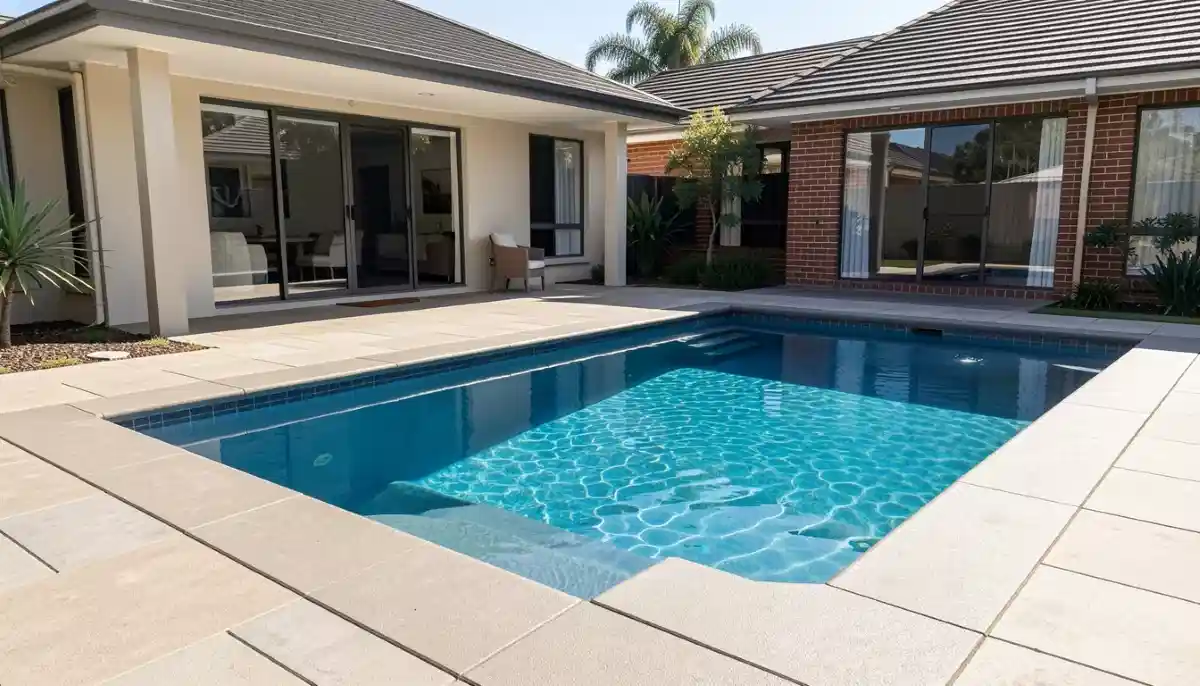
- Outdoor patios and pool decks: Travertine stays cool underfoot, has natural slip resistance (tumbled finish), and handles sun exposure beautifully. It’s a top choice for Cape Town’s coastal homes.
- Bathroom floors and walls: Warm, earthy appearance creates spa-like retreat. Choose honed or tumbled for slip resistance.
- Living rooms and dining rooms: Adds warmth and character. Use filled travertine for easier cleaning.
- Entryways and foyers: Makes a beautiful first impression. Durable enough for moderate traffic.
- Fireplace surrounds: Heat-resistant and beautiful. The natural texture adds visual interest.
- Garden pathways: Unfilled, tumbled travertine creates rustic garden paths.
Where to Avoid Travertine:
- Kitchen countertops: Too porous and acid-sensitive. Lemon juice, vinegar, and wine will etch and stain.
- Kitchen floors (high-traffic): Possible but requires meticulous sealing and immediate spill cleanup. Porcelain is more practical.
- High-traffic commercial spaces: Too soft – will scratch and wear quickly.
- Areas requiring frequent harsh chemical cleaning: The stone is sensitive to many cleaners.
💰 Travertine Tile Cost Guide
Here’s what you can expect to pay for travertine flooring in South Africa:
| Item | Cost Range | Notes |
|---|---|---|
| Travertine tiles (material/m²) | R500 – R1,100 | Cream R500-900, Silver R600-1,000, Gold R600-1,100 |
| Installation (floors)/m² | R200 – R400 | Specialist natural stone installer required |
| Installation (walls)/m² | R180 – R350 | Lighter weight, easier handling |
| Sealing (professional)/m² | R50 – R100 | DIY sealer: R200-R500 per bottle (covers 20-40m²) |
| Outdoor installation premium | +20-30% | Requires proper slope and drainage |
| Total installed floor (50m²) | R35,000 – R75,000+ | Material + installation + sealing |
For a complete breakdown of tile costs, read our tile installation cost per square meter guide.
🏺 Travertine vs Porcelain Stone-Look Tiles
Many homeowners choose porcelain tiles that mimic travertine. Here’s how they compare:
| Factor | Real Travertine | Porcelain Travertine-Look |
|---|---|---|
| Authenticity | 100% real natural stone | Printed design – looks similar from distance |
| Durability | Softer – scratches and etches | Harder – very durable, scratch-resistant |
| Maintenance | High – sealing required | Low – no sealing (grout only) |
| Cost (50m² installed) | R35,000 – R75,000 | R20,000 – R40,000 |
| Acid resistance | Poor – etches | Excellent |
| Slip resistance | Good (tumbled finish) | Varies – choose matte/textured |
Which should you choose? For authenticity and character, real travertine is irreplaceable. For busy families, rental properties, or anyone who wants the look without maintenance, porcelain is the practical choice.
❓ Frequently Asked Questions About Travertine Tiles
What are travertine tiles and are they good for flooring?
What are travertine tiles and are they good – Travertine is a natural stone formed around hot springs, characterised by warm earthy colours and natural holes/pits. It is excellent for flooring in homes with moderate traffic, especially in Mediterranean, Tuscan, or coastal styles. However, it requires regular sealing and is softer than granite – not ideal for high-traffic commercial spaces or busy families with young children.
Does travertine need to be sealed?
Absolutely. Travertine is highly porous – unsealed, it will absorb spills and stain permanently. Seal immediately after installation and reseal every 1-2 years. Outdoor travertine may need sealing every 6-12 months. Test by dropping water on the surface – if it beads up, sealer is working. If it darkens or absorbs, reseal immediately.
Is travertine good for outdoor patios and pool decks?
Yes – travertine is excellent for outdoor use. It stays cool underfoot (unlike dark stone or concrete), has natural slip resistance (especially tumbled finish), and handles sun exposure beautifully. Choose filled travertine for easier cleaning. In Cape Town’s coastal climate, travertine is a popular choice for patios and pool surrounds. Ensure proper sealing and slope for drainage.
What’s the difference between filled and unfilled travertine?
Filled travertine has the natural holes filled with cement or resin – smooth surface, easier to clean, more practical for floors. Unfilled travertine leaves holes open – textured, rustic appearance, more authentic but traps dirt. For floors, choose filled. For walls, unfilled works beautifully. For outdoor use, filled is more practical.
Can travertine be used in a shower?
Yes – travertine is beautiful in showers. However, it requires meticulous sealing (every 6-12 months) and you must use pH-neutral stone cleaners. Soap scum can be harder to remove from natural stone than from porcelain. Consider honed or tumbled finish for slip resistance. Many luxury bathrooms feature stunning travertine showers successfully with proper maintenance.
Does travertine crack easily?
Travertine is softer than granite but not brittle when properly installed. Cracking occurs from subfloor movement (inadequate preparation), impact (dropping heavy objects), or point loads (heavy furniture with small legs). Proper subfloor preparation and an uncoupling membrane prevent most cracking. Avoid walking on travertine with stiletto heels – they can dent or crack the stone.
How do you clean travertine floors?
Sweep or vacuum daily with soft-bristle broom. Damp mop weekly with pH-neutral stone cleaner – never vinegar or acidic cleaners. For unfilled travertine, use vacuum with brush attachment to clean holes. Wipe spills immediately. Avoid steam cleaners, abrasive scrubbers, and harsh chemicals. Reseal every 1-2 years. Read our tile cleaning methods guide for more details.
Is travertine more expensive than porcelain?
Yes. Travertine tiles cost R500-R1,100/m² plus R200-400/m² installation – total R35,000-75,000 for 50m². Porcelain travertine-look tiles cost R250-600/m² plus R150-250/m² installation – total R20,000-40,000 for 50m². Real travertine costs 50-100% more than porcelain alternatives. However, many homeowners feel the authenticity and character are worth the premium.
✅ Final Thoughts: Travertine – Warmth, Character, and Authenticity
Travertine isn’t for everyone. It requires more care than porcelain, more sealing than granite, and more acceptance of natural imperfections than manufactured stone. But for homeowners who appreciate warmth, character, and authentic natural beauty, there’s nothing quite like it.
The warm creams and beiges complement the Western Cape’s natural landscape beautifully. The textured, tumbled finish is naturally slip-resistant – perfect for pool decks and patios. And the way travertine ages – developing a rich patina over years of use – gives it a soul that manufactured materials can’t replicate.
Key takeaways for travertine tiles:
- Warm, earthy natural stone with unique holes and pits
- Softer than granite – can scratch and etch
- Requires regular sealing (every 1-2 years)
- Excellent for outdoor patios, bathrooms, and living areas
- NOT recommended for kitchen countertops (acid-sensitive, porous)
- Choose filled for floors, unfilled for walls
- For busy families, consider porcelain travertine-look tiles instead
Your next step: Ready to install travertine in your home? Get free quotes from verified natural stone specialists who understand this unique material.
Ready to Install Beautiful Travertine Tiles?
Get free quotes from verified natural stone specialists who understand the unique requirements of travertine flooring and wall installation.
📞 Call us: 073 138 4726 to discuss your travertine project.
Are You a Natural Stone Installation Specialist?
Join ServiceLink SA’s network of verified tiling contractors. Get qualified leads, showcase your natural stone expertise, and grow your business.
📚 Official resources & standards referenced:
- SABS – South African Bureau of Standards for travertine standards, including hardness, porosity, and quality specifications.
- SANS 10400 – South African National Standard for installation standards and substrate requirements for natural stone.
Information provided for general guidance. Travertine installation requires specialist knowledge – always consult qualified professionals.
Written by: Innocent T Hanyani
Construction & Home Services Industry Specialist | 21+ Years Experience
Innocent T Hanyani has over two decades of experience working across South Africa’s construction and home improvement sectors. Throughout his career, he has installed thousands of square meters of travertine flooring – from coastal patios in the Western Cape to luxury bathrooms in Constantia. His practical experience helps homeowners understand the unique beauty and maintenance requirements of this special stone. He has seen travertine patios last decades with proper care and travertine floors ruined by improper sealing. His honest advice helps homeowners decide if travertine is right for their lifestyle.
For more information about travertine and natural stone, explore our related resources: natural stone vs porcelain, marble tiles guide, granite tiles guide, and tile sealing guide. Learn about our process on what is ServiceLink SA and how our service works. Find tilers in your area: Western Cape, Cape Town, and Constantia. For related services, see our flooring services and waterproofing guides.