
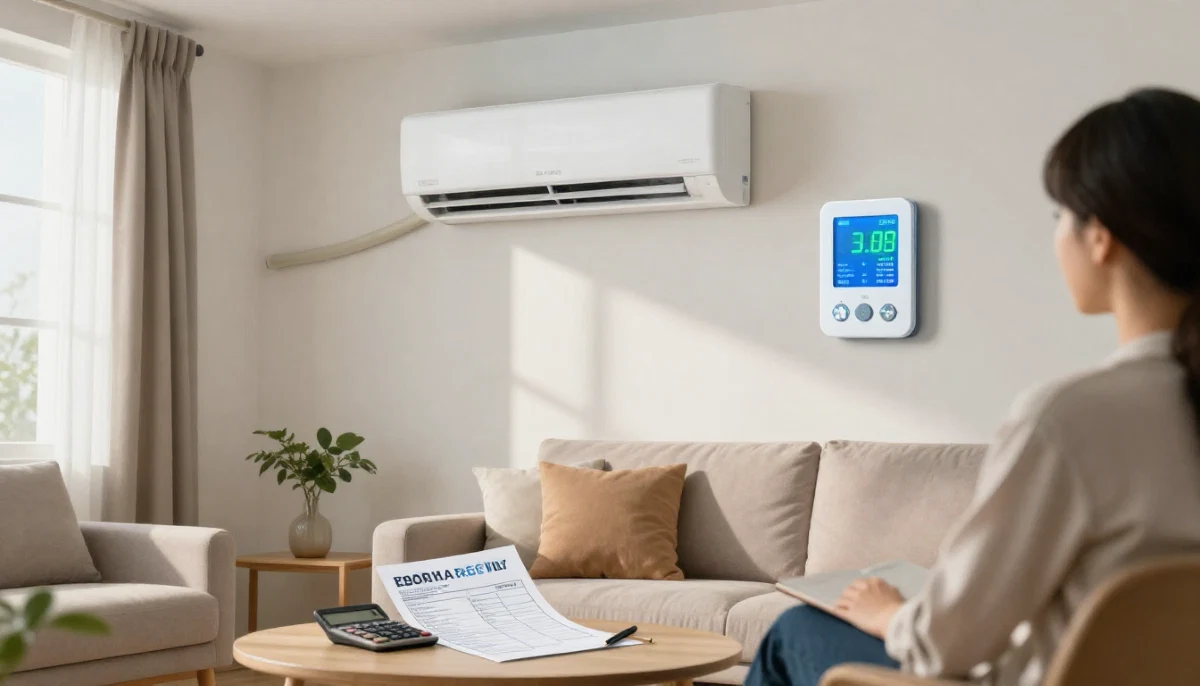
Considering Solar Power for Your Aircon?
Get free quotes from verified local solar and aircon specialists. Compare system prices and potential savings.
Find Solar Aircon Specialists Near Me
Servicing Johannesburg, Pretoria, Cape Town, Durban, and across South Africa
Solar Power for Aircon in South Africa: Is It Worth the Investment?
☀️❄️ From system sizing to payback periods—everything you need to know about running your air conditioner on solar power
You’ve seen the electricity bills. You’ve felt the pain of load-shedding. And you’ve watched your neighbours install solar panels on their roofs.
You start wondering: “Could solar power run my aircon? How much would it cost? How long until I break even? Is this actually worth it?”
These are excellent questions. And the answers aren’t simple—because every home is different. Your aircon size, usage patterns, roof space, and electricity tariff all affect whether solar powered aircon makes financial sense.
I’ve helped hundreds of South African homeowners answer these exact questions. Some have saved thousands. Others found that solar wasn’t right for them yet. The key is understanding the numbers.
In this guide, I’ll give you a complete breakdown of using solar air conditioning system technology in South Africa. You’ll learn how many panels you need, what it costs, how much you’ll save, and most importantly—whether it’s worth it for YOUR home.
For more background, check aircon load-shedding guide and running costs explained. Ready to see if solar is right for you? Let’s go.
📋 Table of Contents – Solar Power for Aircon Guide
⚡ Quick Answer: Is Solar Worth It for Your Aircon?
The short answer: YES if you use your aircon heavily during daylight hours (home office, retired at home, or work from home). MAYBE if you use it mostly at night. PROBABLY NOT if you use it lightly (less than 4 hours/day).
✅ Best Case for Solar
Daily daytime use (home office, retired)
12,000 BTU+ inverter aircon
High electricity tariff (R3.50+/kWh)
Payback: 3-5 years
⚠️ Borderline Case
Evening-only use
Small aircon (under 9,000 BTU)
Low electricity tariff (under R3.00/kWh)
Payback: 6-10 years
❌ Worst Case for Solar
Very light use (under 4 hours/day)
Non-inverter aircon
Limited roof space
Payback: 10-15+ years
Key takeaway: The more you use your aircon during daylight hours, the faster solar pays for itself. For heavy daytime users, payback is 3-5 years. For occasional evening users, payback may be too long to justify.
Read our detailed solar backup guide.
🔆 How Solar-Powered Aircon Works
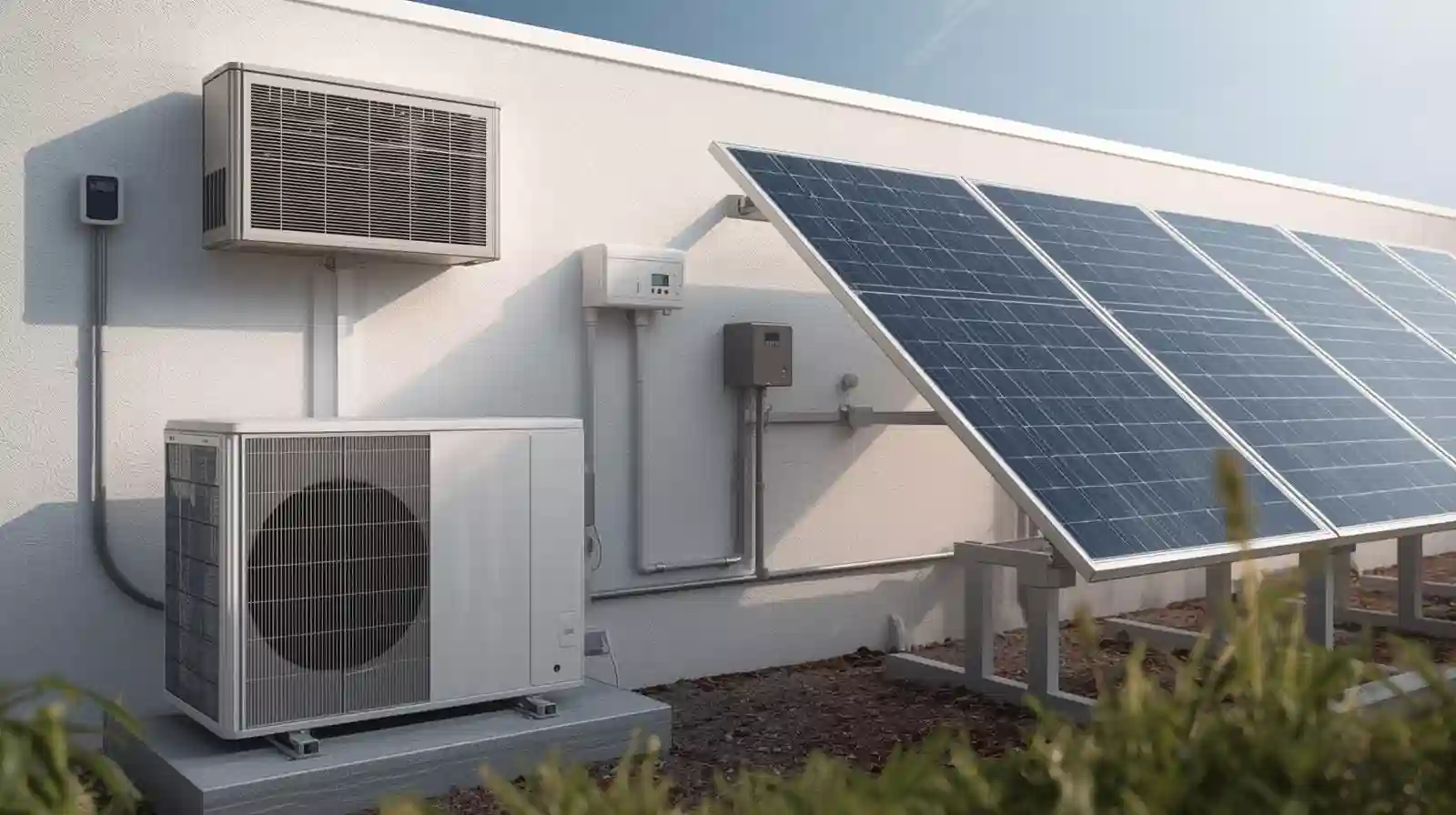
Solar powered aircon doesn’t mean a special air conditioner. It means using solar panels to generate electricity that powers your existing air conditioner.
The basic components:
- Solar panels: Installed on your roof. Convert sunlight into DC electricity.
- Solar inverter: Converts DC electricity from panels to AC electricity your aircon can use.
- Batteries (optional): Store excess solar energy for use at night or during load-shedding.
- Your existing aircon: Works exactly the same—just powered by solar instead of Eskom.
How it works during the day: Solar panels generate electricity → inverter converts it → your aircon runs on solar power. Any excess power goes to other appliances or back to the grid (if grid-tied).
How it works at night (with batteries): Solar panels charged batteries during the day → batteries power your aircon at night.
How it works during load-shedding (with batteries): Same as night operation—batteries power your aircon when the grid is down.
Read our solar panel installation guide and battery backup guide.
📏 System Sizing: How Many Solar Panels Do You Need?
The number of panels depends on your aircon’s power consumption and how many hours you run it.
| Aircon Size | Power Consumption | Panels Needed (400W each) | Estimated System Cost (panels + inverter) |
|---|---|---|---|
| 9,000 BTU inverter | 700-900 W | 2-3 panels | R15,000 – R25,000 |
| 12,000 BTU inverter | 1,000-1,300 W | 3-4 panels | R20,000 – R35,000 |
| 18,000 BTU inverter | 1,600-2,000 W | 4-5 panels | R25,000 – R45,000 |
| 24,000 BTU inverter | 2,200-2,800 W | 6-7 panels | R35,000 – R55,000 |
| Add battery storage | 5-10 kWh battery | N/A | +R30,000 – R60,000 |
Formula for panels needed: (Aircon watts ÷ 400W panel) × 1.2 (safety factor) = number of panels
Example for 12,000 BTU (1,200W): 1,200 ÷ 400 = 3 panels × 1.2 = 4 panels
Read our solar panel guide.
Want a Custom Solar Quote for Your Aircon?
Get free quotes from verified local solar and aircon specialists. Compare system sizes and prices.
Get Free Quotes From Local Specialists
Free site inspections available.
💰 Cost Breakdown: What You’ll Pay
Here’s the complete solar system required for aircon cost breakdown for a typical South African home:
| Component | Description | Typical Cost |
|---|---|---|
| Solar panels (400W each) | 3-6 panels depending on aircon size | R8,000 – R20,000 |
| Hybrid solar inverter | 3-5 kW inverter (supports batteries) | R12,000 – R25,000 |
| Mounting and installation | Labour, rails, cables, permits | R5,000 – R10,000 |
| Battery storage (optional) | 5-10 kWh lithium battery | R30,000 – R60,000 |
| Total (panels + inverter + install) | Solar-only system (no battery) | R25,000 – R55,000 |
| Total (with battery) | Solar + battery system | R55,000 – R115,000 |
Read our battery backup guide and generator alternative.
🧮 Savings Calculator: How Much You’ll Save
Here’s what you’ll save annually by running your solar powered aircon on solar power:
| Aircon Size | Daily Use (daytime) | Annual Eskom Cost (without solar) | Annual Solar Saving |
|---|---|---|---|
| 9,000 BTU | 4 hours/day | R1,000 – R1,500 | R1,000 – R1,500 |
| 9,000 BTU | 8 hours/day | R2,000 – R3,000 | R2,000 – R3,000 |
| 12,000 BTU | 4 hours/day | R1,500 – R2,200 | R1,500 – R2,200 |
| 12,000 BTU | 8 hours/day | R3,000 – R4,400 | R3,000 – R4,400 |
| 18,000 BTU | 4 hours/day | R2,500 – R3,500 | R2,500 – R3,500 |
| 18,000 BTU | 8 hours/day | R5,000 – R7,000 | R5,000 – R7,000 |
Assumes Eskom tariff R3.00/kWh. Actual savings vary by tariff, aircon efficiency, and sunlight hours.
Read our running costs guide and energy-saving tips.
⏱️ Payback Period by Usage Pattern
Here’s how long it takes for can solar panels run an air conditioner investment to pay for itself:
| Usage Pattern | Aircon Size | System Cost (no battery) | Annual Saving | Payback Period |
|---|---|---|---|---|
| Light (4 hours/day) | 9,000 BTU | R20,000 | R1,200 | 16-17 years |
| Moderate (6 hours/day) | 12,000 BTU | R30,000 | R2,500 | 12 years |
| Heavy (8 hours/day) | 12,000 BTU | R30,000 | R3,500 | 8-9 years |
| Very Heavy (10 hours/day) | 12,000 BTU | R30,000 | R4,500 | 6-7 years |
| Plus battery for night use | 12,000 BTU | R70,000 | R5,500 | 12-13 years |
💡 The Solar Reality Check:
If you’re a heavy daytime aircon user (home office, work from home, retired), solar pays back in 6-9 years. If you’re a light evening user, solar may not be financially worth it yet. However, solar also protects against future electricity price increases (which average 10-15% per year).
⚙️ Why Inverter Aircons Are Critical for Solar
If you’re considering solar, an inverter aircon is almost mandatory. Here’s why:
| Feature | Non-Inverter Aircon | Inverter Aircon | Why It Matters for Solar |
|---|---|---|---|
| Startup power surge | 3-5x running power (3,000-6,000W for 12,000 BTU) | No surge (soft start) | Non-inverter needs much larger (more expensive) solar system |
| Running power | Constant 1,400-1,800W | Variable 600-1,300W | Inverter uses less power, smaller solar system |
| Compatibility with solar | Poor (high surges cause inverter overload) | Excellent (smooth power draw) | Inverter works seamlessly with solar systems |
⚠️ Critical Warning:
Non-inverter aircons can cause solar inverters to trip due to their high startup power surge (3-5x running power). If you have a non-inverter aircon, your solar system needs to be sized 3-5x larger—dramatically increasing costs. Read our inverter guide before proceeding.
🔋 Battery Backup: Run Your Aircon at Night?
Adding batteries lets you run your aircon at night and during load-shedding. But it significantly increases cost.
Without battery (solar-only):
- Cost: R25,000 – R55,000
- Runs aircon only during daylight hours
- No load-shedding protection
- Payback: 6-9 years (heavy daytime users)
With battery (solar + storage):
- Cost: R55,000 – R115,000
- Runs aircon during day (solar) and night (battery)
- Full load-shedding protection
- Payback: 10-15 years (may not be worth it for aircon alone)
The battery math: A 5kWh battery stores enough power to run a 12,000 BTU inverter aircon for 4-5 hours. A 10kWh battery gives 8-10 hours. Battery costs add R30,000-R60,000 to your system.
Recommendation: If you want load-shedding protection for your whole home (lights, TV, fridge, aircon), batteries make sense. If you only want to run your aircon during the day, skip the battery.
Read our battery backup guide and load-shedding guide.

🔌 Grid-Tied vs Hybrid vs Off-Grid Systems
There are three types of solar systems. Each works differently for solar powered aircon:
| System Type | How It Works | Runs Aircon During Day? | Runs Aircon at Night? | Load-Shedding Protection? | Cost |
|---|---|---|---|---|---|
| Grid-tied | Panels only, no battery, shuts off during grid outage | ✅ Yes | ❌ No | ❌ No | Lowest (R25k-R55k) |
| Hybrid | Panels + battery, can run off-grid | ✅ Yes | ✅ Yes (battery) | ✅ Yes | Medium (R55k-R115k) |
| Off-grid | Panels + large battery, no grid connection | ✅ Yes | ✅ Yes (large battery) | ✅ Yes (always) | Highest (R100k+) |
Read NERSA grid-tied regulations and SAREC solar PV standards.
⚡ Solar and Load-Shedding: What You Need to Know
Load-shedding affects solar systems differently depending on your setup:
Grid-tied systems (no battery): Shut off during load-shedding for safety. Your aircon won’t run. No load-shedding protection.
Hybrid systems (with battery): Disconnect from the grid during load-shedding and run your home (including aircon) from battery power. Full load-shedding protection.
How long can you run your aircon during load-shedding?
- 5kWh battery: 4-5 hours for 12,000 BTU inverter aircon
- 10kWh battery: 8-10 hours for 12,000 BTU inverter aircon
- Larger battery: proportionally longer
Pro tip: During load-shedding, set your aircon to 24°C instead of 22°C to extend battery life by 20-30%.
Read our complete load-shedding guide and generator alternative.
👍👎 Pros and Cons of Solar-Powered Aircon
✅ Advantages
- Free electricity during daylight hours
- Protection against rising Eskom tariffs (10-15%/year)
- Load-shedding protection (with battery)
- Reduces carbon footprint
- Increases property value
- Government tax incentives (Section 12B)
- Quiet operation (no generator noise)
❌ Disadvantages
- High upfront cost (R25,000 – R115,000+)
- Long payback period (6-15 years for aircon only)
- Requires roof space (3-7 panels)
- Less effective on cloudy/rainy days
- Batteries add significant cost
- Non-inverter aircons are problematic
- Installation complexity and permits required
🏠 Real-World Examples: South African Homes
Here’s how different South African homes fare with solar air conditioning system investments:
| Home Type | Aircon Setup | Daily Use | System (no battery) | Cost | Payback |
|---|---|---|---|---|---|
| Home office (Johannesburg) | 9,000 BTU inverter | 8 hours/day (work hours) | 3 panels + 3kW inverter | R25,000 | 6-7 years |
| Retired couple (Cape Town) | 12,000 BTU inverter | 10 hours/day (all day) | 4 panels + 5kW inverter | R35,000 | 5-6 years |
| Working family (Pretoria) | 12,000 BTU inverter | 4 hours/day (evenings only) | Solar not recommended | N/A | Payback too long |
| Large home (Durban) | 12,000 BTU + 9,000 BTU inverters | 8 hours/day (both units) | 7 panels + 8kW inverter | R55,000 | 5-7 years |
❓ Frequently Asked Questions About Solar Power for Aircons
Can solar panels run an air conditioner?
Yes, can solar panels run an air conditioner is absolutely possible. A 12,000 BTU inverter aircon needs 3-4 solar panels (400W each) and a compatible inverter. During daylight hours, solar can power your aircon completely. With batteries, you can also run at night. Read our system sizing guide above for details.
How many solar panels do I need to run an air conditioner?
For a 9,000 BTU inverter aircon: 2-3 panels (R15k-R25k system). For a 12,000 BTU inverter: 3-4 panels (R20k-R35k system). For an 18,000 BTU inverter: 4-5 panels (R25k-R45k system). For non-inverter aircons, multiply by 3-5x due to startup surges. Use the formula: (aircon watts ÷ 400W panel) × 1.2 = number of panels.
Is solar power for aircon worth it in South Africa?
It depends on your usage. If you use your aircon heavily during daylight hours (home office, retired, work from home), YES—payback is 5-8 years. If you use it mostly at night or lightly (under 4 hours/day), probably NOT—payback exceeds 10-12 years. Read our payback tables above for detailed analysis.
What size solar system do I need for my aircon?
The solar system required for aircon depends on your aircon size and usage. For a 12,000 BTU inverter used 8 hours/day: 3-4 panels (1.2-1.6kW solar array) and a 3-5kW hybrid inverter. Add battery if you want night operation or load-shedding protection. Get a professional site assessment for accurate sizing.
Can I run my aircon on solar without batteries?
Yes. A grid-tied or hybrid system without batteries will run your aircon during daylight hours when the sun is shining. When the sun goes down or on cloudy days, your aircon automatically switches back to Eskom power. No battery needed—but you won’t have night operation or load-shedding protection.
How long will a battery run my aircon during load-shedding?
A 5kWh battery runs a 12,000 BTU inverter aircon for 4-5 hours. A 10kWh battery runs it for 8-10 hours. Set the temperature to 24°C instead of 22°C to extend battery life by 20-30%. For whole-home backup (lights, TV, fridge, aircon), a 10-15kWh battery is recommended.
Do I need a special air conditioner for solar power?
No special air conditioner is required, but an INVERTER aircon is highly recommended. Non-inverter aircons have high startup power surges (3-5x running power) that can trip solar inverters. If you have a non-inverter, your solar system needs to be 3-5x larger—dramatically increasing cost. Read our inverter guide.
What happens to my solar aircon on cloudy days?
On cloudy days, your solar panels produce less power (typically 10-30% of rated output). Your aircon will automatically draw power from Eskom (grid) to supplement. You don’t need to do anything—the system switches seamlessly. On very dark days, your aircon runs entirely on Eskom.
Can I add solar to my existing aircon?
Yes. You don’t need to replace your aircon. Any existing aircon can be powered by solar. However, if you have a non-inverter aircon, you may need a larger solar inverter to handle startup surges. A solar inverter rated for 3-5x your aircon’s running watts is recommended for non-inverter units.
Are there government incentives for solar in South Africa?
Yes. SARS Section 12B tax incentive allows businesses to deduct 100% of solar panel costs in the first year. For homeowners, there’s currently no direct rebate, but some municipalities offer feed-in tariffs for excess power sent to the grid. Read NERSA regulations and Eskom solar rebate programs.
✅ Final Thoughts: Solar for Aircon—Right for You?
Solar powered aircon can save you thousands in electricity costs—but only if you’re a heavy daytime user. For light or evening-only users, the payback period may be too long.
Key takeaways for solar-powered aircon:
- Heavy daytime users (home office, retired): Solar pays back in 5-8 years. Worth it.
- Light or evening users (under 4 hours/day): Solar payback 10-15+ years. Probably not worth it yet.
- Inverter aircons are essential: Non-inverter units need 3-5x larger (more expensive) solar systems.
- Batteries add significant cost: Skip batteries if you only want daytime savings. Add batteries for load-shedding protection and night operation.
- System cost: R25,000 – R55,000 (no battery) for a 12,000 BTU aircon. R55,000 – R115,000 with battery.
- Annual savings: R1,500 – R7,000 depending on usage and aircon size.
- Solar also protects against rising Eskom tariffs (10-15% annual increases).
Your action plan: First, calculate your daily aircon usage (hours during daylight). Second, check if you have an inverter aircon. Third, use the sizing table above to estimate system cost. Fourth, calculate your potential payback period. Fifth, request quotes from local solar and aircon specialists for accurate pricing and site assessment.
Ready to Explore Solar Power for Your Aircon?
Get free quotes from verified local solar and aircon specialists. Compare system sizes, prices, and potential savings.
📞 Call us: 073 138 4726 for immediate help finding solar aircon specialists near you.
Free site inspections •
Pay Later option •
Solar backup guide
📚 Official resources & standards referenced:
- SAREC – Solar PV installation standards and quality assurance
- NERSA – Grid-tied solar regulations and feed-in tariffs
- Eskom – Solar rebate programs and load-shedding information
Information provided for general guidance based on South African market conditions. Actual costs vary by installer, equipment quality, roof configuration, and local regulations. Always obtain multiple quotes and verify installer credentials.
Written by: Innocent T Hanyani
Construction & Home Services Industry Specialist | 21+ Years Experience
Innocent T Hanyani has over two decades of experience working across South Africa’s construction, maintenance, and home services sectors. Throughout his career, he has worked closely with contractors, service providers, and property owners, gaining practical insight into how projects are quoted, managed, and completed. His work focuses on helping homeowners understand how to find reliable contractors, compare quotes, and avoid common industry pitfalls when hiring service professionals. His insights are based on practical industry experience as well as ongoing research into contractor platforms, service marketplaces, and hiring trends across South Africa.