Want to Claim Your Diesel Rebate?
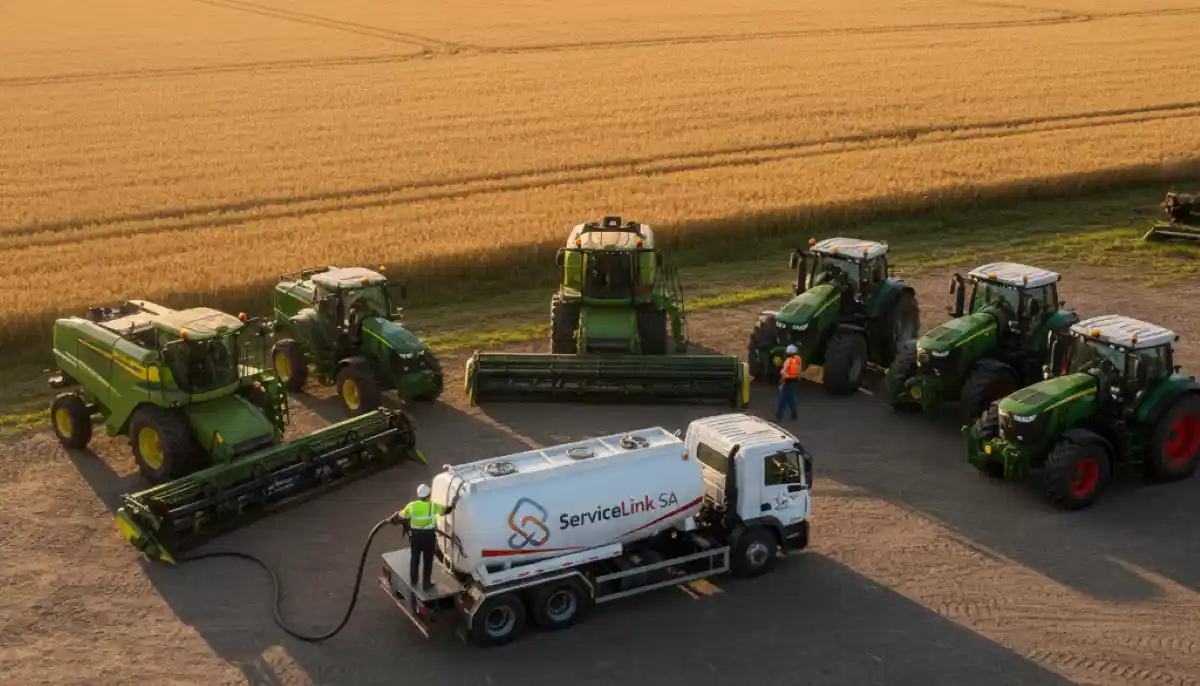
ServiceLink SA connects you with verified suppliers who provide proper rebate documentation. Get free quotes today. If we can’t assist directly, we’ll connect you with our trusted partner companies to carry out your fuel supply projects professionally and timeously.
Servicing Gauteng, Mpumalanga, Free State, North West, and across South Africa’s farming and mining regions
Diesel Rebate System South Africa: How Farmers and Mines Get Refunds
💰 From road levy refunds to compliance documentation—your complete guide to claiming diesel rebates
I once met a farmer in the Free State who was paying over R1.2 million annually for diesel. He had no idea that the diesel rebate system South Africa could refund him nearly R400,000 of that—money that was rightfully his. When I showed him the numbers, he was stunned. “You mean I’ve been overpaying by R400,000 every year?” he asked. For seven years. Nearly R3 million left on the table.
That’s the reality for many farmers, miners, and other qualifying businesses. The fuel rebate for agriculture and mining is a legitimate, legal refund of road levies for fuel used off-road. But complex rules and documentation requirements mean many eligible businesses never claim what they’re owed.
This comprehensive compliance guide explains the diesel refund scheme, including how to claim diesel rebate for farming, eligibility requirements for mining and other industries, the difference between road user levy and rebated fuel, and step-by-step claim procedures. For more on agricultural fuel supply, read bulk fuel for farms and agriculture.
Ready to claim what’s rightfully yours? Let’s dive into the rebate system.
📋 Table of Contents – Diesel Rebate Guide
📋 What Is the Diesel Rebate System?
The diesel rebate system South Africa is a government program that refunds road-related levies on diesel used for qualifying off-road activities. When you use diesel for farming, mining, forestry, fishing, or railways—not on public roads—you shouldn’t pay road levies. The rebate gives you that money back.
⚠️ The Key Principle of Diesel Rebate
You only pay road levies if you use fuel on public roads. If your diesel powers a tractor in a field, a generator at a mine, or a fishing boat at sea, you shouldn’t pay road taxes. The diesel refund scheme gives you back those levies.
What levies can be rebated?
- General Fuel Levy: The largest component (typically R3.70-R4.00/L)
- RAF Levy: Road Accident Fund levy (typically R2.00-R2.20/L)
- Carbon Tax: May also be rebated for qualifying activities (subject to rules)
What CANNOT be rebated?
- Slate Levy: Cost-recovery mechanism, not a tax—cannot be rebated
- Basic Fuel Price (BFP): International product cost—not a tax
- Supplier margin: Supplier profit—not a government levy
- Transport differential: Delivery cost—not a government levy
How much can you save with the diesel rebate?
For a farmer using 50,000L monthly, rebated levies total approximately R5.80-R6.20/L. Monthly rebate = R290,000-R310,000. Annual rebate = R3.5-R3.7 million. That’s real money.
Who administers the diesel rebate?
SARS (South African Revenue Service) administers the rebate system. See SARS – Diesel rebate claims for official information. Eligibility rules are set by DALRRD for agriculture and DMRE for mining.
For more on the levies themselves, read fuel tax and levies in South Africa.
✅ Who Qualifies for the Diesel Rebate?
Understanding eligibility is critical for the diesel rebate system South Africa:
Agriculture (farming):
- Commercial farmers (registered for VAT)
- Subsistence farmers (with proof of farming activity)
- Diesel used for: tractors, harvesters, irrigation pumps, grain dryers, generators for farming operations
- See DALRRD – Agricultural rebate eligibility for detailed criteria
Mining and quarrying:
- Registered mining operations
- Diesel used for: extraction equipment, haul trucks on mine property, processing plants, generators for mining operations
- See DMRE – Mining rebate regulations for detailed criteria
Forestry:
- Commercial forestry operations
- Diesel used for: timber harvesting equipment, forestry vehicles off public roads, processing equipment
Fishing:
- Commercial fishing vessels
- Diesel used for: propulsion, onboard processing, refrigeration
Railways:
- Qualifying rail transport operations
- Diesel used for: locomotives, rail maintenance vehicles
What does NOT qualify:
- Diesel used in vehicles that travel on public roads (even occasionally)
- Diesel used for personal/domestic purposes
- Diesel used by businesses not in qualifying sectors
- Diesel where proper records aren’t kept
Important note on mixed-use operations:
If your business uses diesel both for qualifying activities (off-road) and non-qualifying activities (on-road), you can only claim rebate on the qualifying portion. You must keep separate records for each.
For more on agricultural eligibility, read bulk fuel for farms and agriculture.
🎨 Rebated Fuel Explained: Dyed Diesel
Rebated fuel is diesel sold at a lower price because road levies have been removed upfront. Here’s what you need to know:
What is rebated fuel?
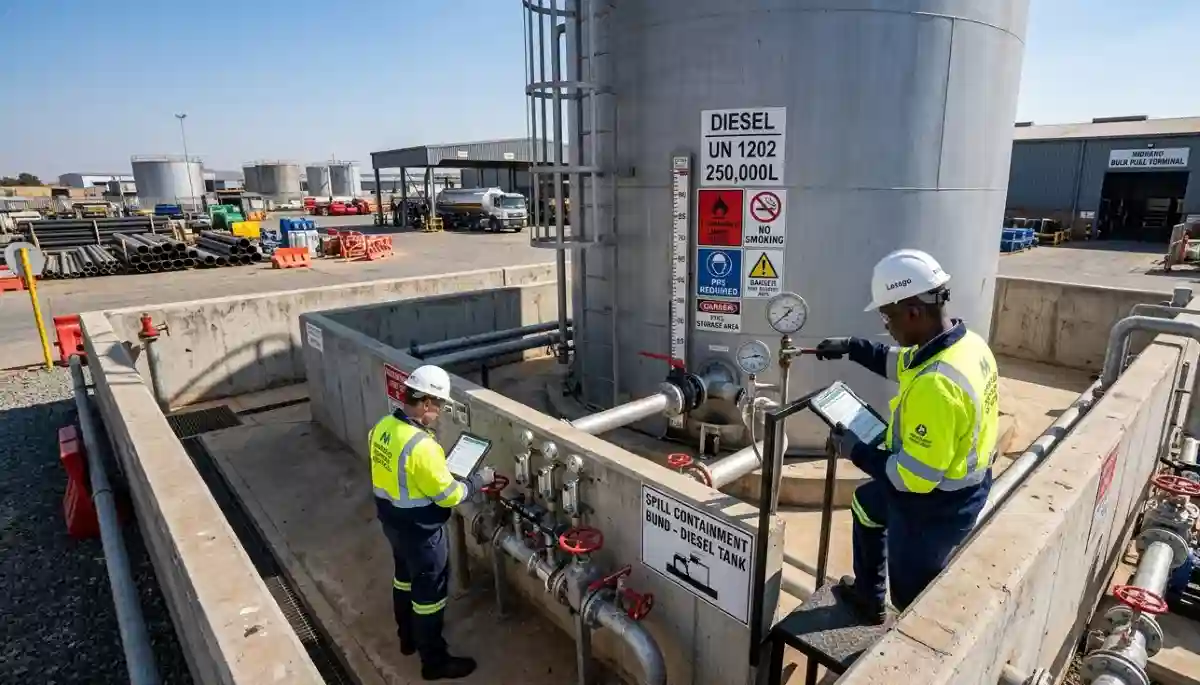
Rebated fuel (commonly called dyed diesel) has had the General Fuel Levy and RAF Levy removed at the point of sale. It’s marked with a red dye to indicate it’s for off-road use only and cannot be used in vehicles that travel on public roads.
How rebated fuel differs from standard diesel:
| Characteristic | Rebated Fuel (Dyed) | Standard Diesel (Clear) |
|---|---|---|
| Appearance | Red dye added | Clear/amber |
| Price | Lower (levies removed) | Higher (includes all levies) |
| On-road use allowed? | ❌ No (illegal) | ✅ Yes |
| Off-road use allowed? | ✅ Yes | ✅ Yes (but paying unnecessary tax) |
| Claim process | No claim needed (savings upfront) | Claim rebate after purchase |
| Record keeping | Required (to prove off-road use) | Required (to support claim) |
Two paths to the same savings:
There are two ways to benefit from the diesel rebate:
- Buy rebated fuel (dyed diesel): Pay lower price upfront, no claim needed. Requires supplier to sell dyed diesel.
- Claim rebate on clear diesel: Pay full price, then claim refund from SARS. Requires detailed record-keeping.
Which path is better?
For most farmers and miners, buying rebated fuel directly is simpler and improves cash flow (no waiting for refunds). However, not all suppliers offer dyed diesel. If your supplier doesn’t, you can still claim the rebate on clear diesel.
Legal warning about rebated fuel:
Using rebated fuel (dyed diesel) in any vehicle that travels on public roads is illegal and carries severe penalties—including fines, imprisonment, and confiscation of vehicles. The red dye is detectable even in small amounts.
For more on fuel grades, read 50ppm vs 500ppm diesel explained.
🛣️ Road User Levy: What You Can Claim Back
The road user levy is the combination of road-related taxes included in fuel prices. Here’s the breakdown:
Components of the road user levy:
| Levy Component | Typical Rate (c/L) | Purpose | Rebatable? |
|---|---|---|---|
| General Fuel Levy | 370-400c (R3.70-R4.00) | General government revenue | ✅ Yes (for qualifying use) |
| RAF Levy | 200-220c (R2.00-R2.20) | Road Accident Fund | ✅ Yes (for qualifying use) |
| Carbon Tax | 10-15c (R0.10-R0.15) | Environmental | ⚠️ Subject to rules |
| Slate Levy | 0-50c (R0.00-R0.50) | Price stabilisation | ❌ Not rebatable |
Total potential rebate amount:
For qualifying off-road use, you can typically claim approximately R5.80-R6.20 per litre (General Fuel Levy + RAF Levy + sometimes Carbon Tax).
Example rebate calculation:
- Annual diesel consumption: 500,000 litres
- Rebatable levies: R6.00/L
- Annual rebate: 500,000 × R6.00 = R3,000,000
What about the slate levy?
The slate levy is not a tax—it’s a cost-recovery mechanism. It cannot be rebated regardless of use. This is a common point of confusion in the diesel rebate system South Africa.
For more on levy components, read fuel price breakdown South Africa.
Ready to Claim Your Diesel Rebate?
ServiceLink SA connects you with verified suppliers who provide proper rebate documentation. Get free quotes today. If we can’t assist directly, we’ll connect you with our trusted partner companies.
How to claim diesel rebate for farming—get suppliers who support proper documentation.
📝 How to Claim Diesel Rebate for Farming and Mining
Here’s your step-by-step guide for how to claim diesel rebate for farming, mining, and other qualifying industries:
Step 1: Register with SARS
- Ensure your business is registered for VAT (required for commercial operations)
- Register for the diesel rebate program specifically
- Obtain a tax reference number if you don’t already have one
Step 2: Purchase diesel from registered suppliers
- Only buy from registered fuel suppliers who provide proper tax invoices
- Ensure invoices include: supplier details, your details, date, quantity, price, levy breakdown
- ServiceLink SA connects you with verified suppliers who provide proper documentation
Step 3: Keep detailed usage records
- Record diesel usage by vehicle/equipment
- Track hours of operation for each piece of qualifying equipment
- Maintain logs showing fuel was used for qualifying off-road activities
- Keep odometer/hours meter readings before and after each use
Step 4: Separate qualifying from non-qualifying usage
- If you use diesel both for qualifying and non-qualifying activities, track separately
- Example: A farm with tractors (qualifying) and delivery bakkies (non-qualifying)
- Only claim rebate on the qualifying portion
Step 5: Complete the rebate claim form
- Download form from SARS eFiling or request from SARS office
- Complete all sections accurately
- Calculate total qualifying litres and rebate amount
- Attach supporting documentation
Step 6: Submit your claim
- Submit via SARS eFiling (preferred) or at a SARS branch
- Claims can be submitted monthly, quarterly, or annually
- Most businesses claim quarterly or annually to reduce administrative burden
Step 7: Retain records for audit
- SARS can audit rebate claims up to 5 years after submission
- Keep all purchase invoices, usage logs, and calculations
- Store records securely (digital or physical)
Step 8: Receive your refund
- SARS will process valid claims and refund the rebate amount
- Refunds are typically paid within 30-60 days
- Refunds are paid into your registered bank account
Claim frequency considerations:
- Monthly claims: Best cash flow but higher administrative burden
- Quarterly claims: Good balance of cash flow and admin
- Annual claims: Lowest administrative burden but delayed refunds
For more on working with suppliers, read how to choose a bulk fuel supplier.
📋 Documentation Requirements for Rebate Claims
Proper documentation is essential for the diesel refund scheme. Here’s what you must keep:
Purchase documentation (from supplier):
- Valid tax invoice with supplier’s VAT number
- Your business name and VAT number
- Date of delivery/purchase
- Quantity of diesel in litres
- Price per litre and total amount
- Breakdown of levies (General Fuel Levy, RAF Levy, etc.)
- Delivery address (for delivered fuel)
- Vehicle registration (for fuel station purchases)
Usage documentation (your records):
- Daily or per-use log of qualifying activities
- Equipment identification (tractor ID, generator number, etc.)
- Hours of operation or kilometres (for off-road vehicles)
- Purpose of use (ploughing, irrigation, mining extraction, etc.)
- Calculation of litres used based on equipment consumption rates
- Reconciliation with purchase invoices
Example usage log format:
| Date | Equipment | Hours Used | Activity | Est. Litres | Invoice Ref |
|---|---|---|---|---|---|
| 15/01/2024 | Tractor A | 8 | Ploughing | 240 | INV-001 |
| 16/01/2024 | Irrigation Pump B | 10 | Irrigation | 150 | INV-001 |
| 17/01/2024 | Tractor A | 6 | Harrowing | 180 | INV-002 |
How long to keep records:
SARS requires you to keep all rebate documentation for 5 years from the date of claim. Failure to produce records during an audit can result in denied claims and penalties.
Digital vs physical records:
Both are acceptable, but digital records are easier to store, search, and protect. Scan physical documents if you keep paper originals. Back up digital records securely.
For more on fuel management, read fuel management systems in South Africa.
❌ Common Mistakes When Claiming Diesel Rebate
Avoid these errors in the diesel refund scheme process:
⚠️ Common Rebate Claim Mistakes
- Mistake #1: Claiming for diesel used in on-road vehicles (even occasionally). This is fraud.
- Mistake #2: Poor record-keeping—no usage logs or incomplete purchase invoices.
- Mistake #3: Claiming for diesel purchased from unregistered suppliers (no valid tax invoice).
- Mistake #4: Claiming the slate levy (not rebatable) or incorrect levy amounts.
- Mistake #5: Not separating qualifying from non-qualifying usage in mixed operations.
- Mistake #6: Using estimated consumption without supporting calculations.
- Mistake #7: Missing claim deadlines or submitting incomplete forms.
- Mistake #8: Not keeping records for the full 5-year retention period.
How to avoid these mistakes:
- Implement a formal fuel tracking system (digital is best)
- Train staff on proper record-keeping procedures
- Only buy from registered suppliers who provide proper invoices
- Separate storage tanks for qualifying vs non-qualifying fuel if possible
- Conduct internal audits of your rebate claims before submission
- Consult with a tax professional familiar with diesel rebate rules
What if you discover a mistake on a previous claim?
Contact SARS immediately to correct the record. Voluntary disclosure of errors is treated more leniently than discovery during an audit. Ignoring mistakes only makes them worse.
For more on compliance, read bulk diesel storage regulations.
⚖️ Penalties for Rebate Fraud
The diesel rebate system South Africa has serious consequences for abuse:
What constitutes rebate fraud?
- Claiming rebate for diesel used in on-road vehicles
- Claiming rebate for non-qualifying activities
- Inflating usage quantities
- Falsifying records or invoices
- Using rebated fuel (dyed diesel) in on-road vehicles
- Selling rebated fuel to parties who will use it on-road
Penalties for individuals:
- Fines up to R1 million or more depending on the value of fraud
- Imprisonment (up to 5 years for serious cases)
- Confiscation of vehicles found with rebated fuel
- Blacklisting from future rebate claims
- Repayment of fraudulently claimed amounts plus interest
- Additional administrative penalties (up to 200% of the claimed amount)
Penalties for businesses:
- Fines up to R10 million or more
- Director liability (personal fines and imprisonment)
- Loss of VAT registration or rebate eligibility
- Reputation damage and potential loss of licenses
- Full audit of all tax affairs (not just diesel rebate)
Real-world enforcement:
SARS conducts regular audits of diesel rebate claims. Roadblocks also test for red dye in vehicle fuel tanks. Detection technology is sophisticated—the dye is detectable even in very small amounts.
The bottom line:
The rebate is a legitimate benefit for qualifying off-road use. Claim what you’re entitled to—but don’t push the boundaries. The penalties for fraud far outweigh any potential benefit.
For more on legal compliance, read how to avoid contractor scams.
🔄 Rebate vs Dyed Diesel: Two Paths to Savings
Understanding the two methods for benefiting from the fuel rebate for agriculture helps you choose the right approach:
| Factor | Claim Rebate on Clear Diesel | Buy Rebated (Dyed) Diesel |
|---|---|---|
| Upfront price per litre | Higher (includes all levies) | Lower (levies removed) |
| Cash flow impact | Negative (pay full price, wait for refund) | Positive (pay less upfront) |
| Administrative burden | Higher (submit claims to SARS) | Lower (no claims to submit) |
| Supplier availability | Widely available (all suppliers) | Limited (not all suppliers offer dyed diesel) |
| Risk of non-compliance | Lower (clear diesel can be used anywhere) | Higher (cannot be used on-road) |
| Best for | Operations with mixed use, no dyed supplier | Pure off-road operations with dyed supplier |
Which should you choose?
- Choose dyed diesel if: Your operations are 100% off-road, a local supplier offers dyed diesel at competitive prices, and you want simpler administration.
- Choose rebate claims on clear diesel if: You have mixed on-road/off-road use, no dyed diesel supplier available, or you prefer the flexibility of clear diesel.
Can you use both methods?
Yes. You could buy dyed diesel for your qualifying equipment and clear diesel for your on-road vehicles. Just keep separate storage and records for each.
For more on agricultural fuel supply, read bulk fuel for farms and agriculture.
❓ Frequently Asked Questions About Diesel Rebate
What is the diesel rebate system in South Africa?
The diesel rebate system South Africa refunds road-related levies (General Fuel Levy and RAF Levy) on diesel used for qualifying off-road activities including farming, mining, forestry, fishing, and railways. Qualifying users can save approximately R5.80-R6.20 per litre.
How to claim diesel rebate for farming?
How to claim diesel rebate for farming involves: registering with SARS, purchasing from registered suppliers, keeping detailed usage records, completing claim forms, and submitting via SARS eFiling. Claims can be monthly, quarterly, or annually. Proper documentation is essential.
What is rebated fuel and how is it different?
Rebated fuel (dyed diesel) has had road levies removed upfront. It’s marked with red dye to indicate off-road use only. Rebated fuel costs less than clear diesel but cannot be used in on-road vehicles. Using rebated fuel on public roads is illegal with severe penalties.
What is the road user levy I can claim back?
The road user levy comprises the General Fuel Levy (R3.70-R4.00/L) and RAF Levy (R2.00-R2.20/L). These are the main rebatable components. Carbon Tax may also be rebated subject to rules. The slate levy is NOT rebatable.
Who qualifies for the fuel rebate for agriculture?
The fuel rebate for agriculture applies to commercial and subsistence farmers using diesel for qualifying off-road activities: tractors, harvesters, irrigation pumps, grain dryers, and generators for farming operations. See DALRRD – Agricultural rebate eligibility for detailed criteria.
What documentation do I need for diesel rebate claims?
You need: valid tax invoices from registered suppliers (with levy breakdown) and usage records (equipment logs showing hours operated, activity type, and estimated litres). Keep all documentation for 5 years as SARS may audit claims within this period.
What are the penalties for diesel rebate fraud?
Penalties include: fines up to R1 million+ (individuals) or R10 million+ (businesses), imprisonment up to 5 years, confiscation of vehicles, blacklisting from rebate claims, repayment of fraudulently claimed amounts plus interest, and administrative penalties up to 200% of claimed amount.
Can I claim diesel rebate for mining operations?
Yes, registered mining operations qualify for the diesel rebate system South Africa on diesel used for extraction equipment, haul trucks on mine property, processing plants, and generators. See DMRE – Mining rebate regulations for detailed eligibility criteria.
✅ Final Thoughts: Claim What’s Rightfully Yours
The diesel rebate system South Africa offers substantial savings for qualifying businesses. Whether you’re a farmer, miner, forester, fisher, or railway operator, you could be saving R5.80-R6.20 per litre on eligible diesel use. For many businesses, that’s hundreds of thousands—even millions—annually.
Key takeaways from this guide:
- The diesel rebate system South Africa refunds road levies for qualifying off-road use
- Fuel rebate for agriculture and mining can save R5.80-R6.20 per litre
- The diesel refund scheme has two paths: claim rebate on clear diesel or buy rebated (dyed) diesel
- How to claim diesel rebate for farming requires registration, proper documentation, and submission via SARS eFiling
- Road user levy components (General Fuel Levy + RAF Levy) are the main rebatable items
- Rebated fuel (dyed diesel) cannot be used on public roads—penalties are severe
- Proper documentation is essential: purchase invoices and usage logs must be kept for 5 years
- Common mistakes include poor record-keeping and claiming for on-road use
- Rebate fraud carries serious penalties including fines and imprisonment
- ServiceLink SA connects you with suppliers who provide proper rebate documentation
Your action plan: Determine if your business qualifies for the diesel rebate. Register with SARS if not already registered. Implement proper record-keeping systems for fuel purchases and usage. Work with suppliers who provide proper tax invoices. Submit your first rebate claim—and start saving thousands annually.
Ready to Claim Your Diesel Rebate?
ServiceLink SA connects you with verified suppliers who provide proper rebate documentation. Get free quotes today. If we can’t assist directly, we’ll connect you with our trusted partner companies to carry out your fuel supply projects professionally and timeously.
📞 Call us: 073 138 4726 for immediate help finding suppliers who support diesel rebate documentation.
Diesel Delivery •
Generator Fuel Services •
Fuel Tank Installation •
Emergency Fuel Delivery •
Fleet Fueling Solutions
📚 Official resources & standards referenced:
- SARS – South African Revenue Service – Diesel rebate claims, forms, and procedures.
- DALRRD – Department of Agriculture, Land Reform and Rural Development – Agricultural rebate eligibility criteria.
- DMRE – Department of Mineral Resources and Energy – Mining rebate regulations and fuel licensing.
- SABS – South African Bureau of Standards – Fuel quality standards for rebated fuel.
Information provided for general guidance based on independent research and official sources. Rebate rates, eligibility criteria, and claim procedures change periodically. Always verify current requirements directly with SARS, DALRRD, and DMRE.
Written by: ServiceLink SA Research Team
Fuel Tax & Rebate Compliance Specialists
The ServiceLink SA Research Team combines expertise from fuel tax compliance, agricultural and mining sector regulations, and documentation management. Our analysts track SARS diesel rebate claim procedures, monitor DALRRD agricultural eligibility criteria, analyse DMRE mining rebate regulations, and maintain relationships with accredited suppliers who provide proper rebate documentation. This guide draws on primary research, official SARS, DALRRD, and DMRE documentation, and direct experience assisting farmers and miners with successful rebate claims. Our mission is to help South African businesses understand the diesel rebate system South Africa, including how to claim diesel rebate for farming and mining, and benefit from the fuel rebate for agriculture and other qualifying sectors. If we can’t assist directly, we’ll connect you with our trusted partner companies who specialize in compliant fuel supply and rebate documentation.
For more information about diesel rebates and fuel supply, explore our related resources: how to choose a bulk fuel supplier, bulk fuel supply costs, diesel delivery services, bulk fuel for farms and agriculture, bulk diesel storage regulations, fuel tax and levies, and 50ppm vs 500ppm diesel explained. See our location-specific guides for Bethal, Standerton, Kroonstad, and Welkom.