
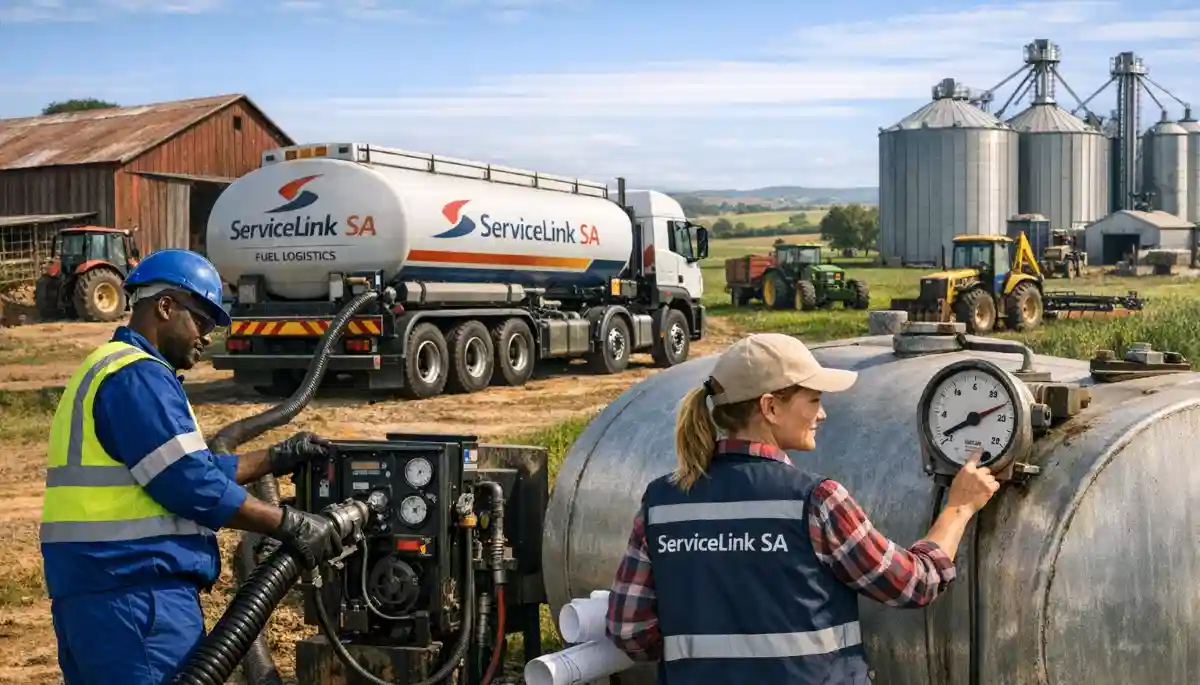
Power Your Farm Operations
ServiceLink SA connects you with verified bulk fuel suppliers specializing in agricultural diesel delivery. Get free quotes today.
Servicing Mpumalanga, Free State, North West, Western Cape, Gauteng, and across South Africa’s farming regions
Bulk Fuel for Farms and Agriculture: Agricultural Diesel Supply SA
🚜 From planting to harvest—your complete guide to farm diesel delivery, rebated fuel, and agricultural fuel management
I remember talking to a maize farmer in the Free State during harvest season. His combine harvesters were running 18 hours a day, pushing to beat incoming rains. Then his phone rang. His fuel supplier had just gone out of business. No warning. No delivery that day. No delivery tomorrow. He had 200 hectares of maize still standing in the fields and less than a day’s fuel left in his tanks.
That farmer lost nearly R2 million in spoiled crops because he couldn’t keep his harvesters running. All because of a fuel supplier he thought he could trust.
For South African farmers, bulk fuel for farms and agriculture isn’t just an operating expense—it’s the difference between harvesting your crop and watching it rot in the field. Between irrigating through a dry spell and watching your plants wither. Between a profitable season and financial disaster.
This comprehensive guide covers everything you need to know about farm diesel delivery, agricultural fuel supply, dyed diesel for agricultural use South Africa, rebated fuel benefits, off-road diesel regulations, and on-farm storage best practices. For more on supplier selection, read how to choose a bulk fuel supplier.
Ready to secure your farm’s fuel future? Let’s dive in.
📋 Table of Contents – Agricultural Fuel Supply Guide
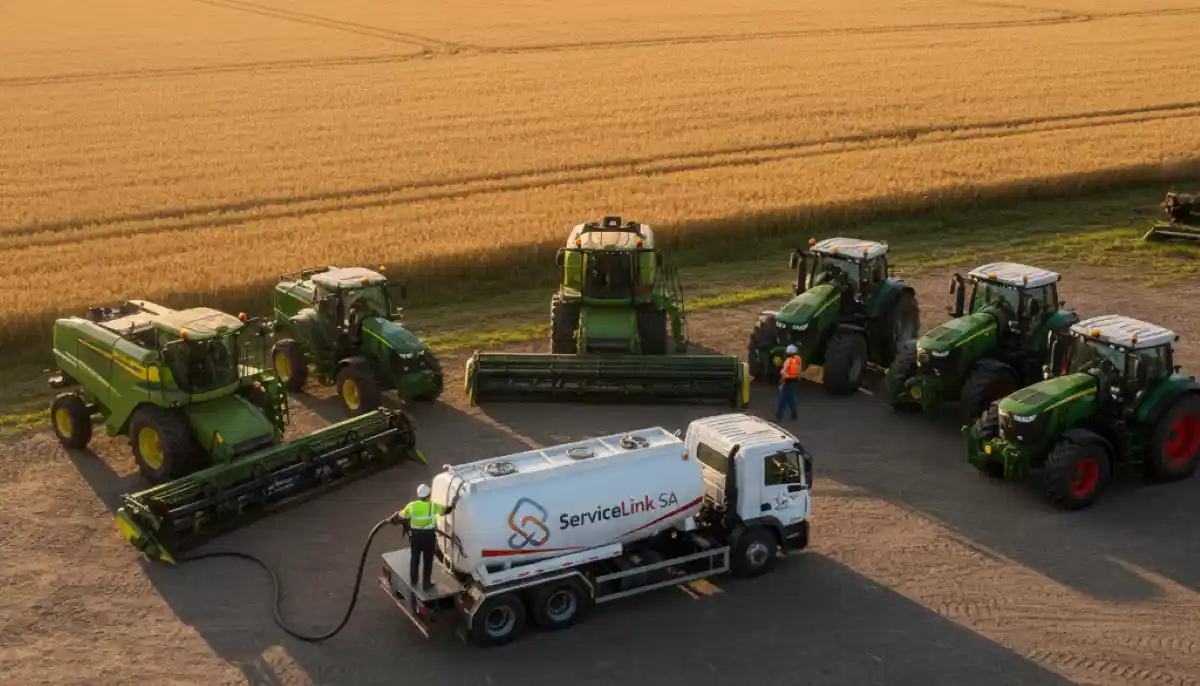
⚠️ Why Bulk Fuel Matters for South African Farms
Diesel powers South African agriculture. From tractors and combines to irrigation pumps and grain dryers—farming runs on fuel. When fuel runs out, crops spoil, livestock suffers, and profits disappear.
⚠️ Warning: The High Cost of Farm Fuel Disruption
A single day without diesel during harvest can cost a medium-sized grain farm R50,000-R200,000+ in spoiled crops and idle equipment. During irrigation season, a day without fuel for pumps can kill tens of thousands of rands worth of crops. Reliable agricultural fuel supply isn’t optional—it’s survival.
Why bulk fuel for farms and agriculture demands special attention:
- Seasonal intensity: Planting, spraying, and harvest seasons require intense, uninterrupted fuel supply.
- Remote locations: Many farms are far from fuel depots, requiring dedicated delivery logistics.
- Weather dependency: Rain can make farm roads impassable. Fuel must be delivered before weather windows close.
- Equipment variety: Tractors, combines, sprayers, loaders, generators—each with different refuelling needs.
- Storage considerations: On-farm storage must meet SABS standards while being practical for farm conditions.
- Rebate eligibility: Farmers can claim significant diesel rebates—but only with proper documentation.
- Contamination risks: Farm storage tanks are vulnerable to water, microbial growth, and debris.
Typical diesel consumption by farm equipment:
| Equipment Type | Typical Fuel Consumption | Seasonal Usage |
|---|---|---|
| Large tractor (200hp+) | 25-40 L/hour | Tillage, planting, spraying |
| Combine harvester | 30-50 L/hour | Harvest season (intense) |
| Irrigation pump (large) | 15-30 L/hour | Dry season (continuous) |
| Medium tractor (100hp) | 15-25 L/hour | Year-round general use |
| Grain dryer | 10-20 L/hour | Post-harvest (continuous) |
| Diesel generator (backup) | 5-15 L/hour | Load shedding, emergencies |
For more on cost management, read bulk fuel supply costs in South Africa.
🚜 Diesel-Powered Farm Equipment Guide
Understanding your farm’s fuel consumption patterns helps you plan agricultural fuel supply effectively:
Tillage and planting equipment (highest consumption):
- Large tractors (200hp+) pulling ploughs, cultivators, planters
- 25-40 L/hour during intensive field work
- Peak usage during planting season (2-6 weeks)
Harvesting equipment:
- Combine harvesters, forage harvesters, cotton pickers
- 30-50 L/hour during harvest
- Extremely intense usage—often 16-20 hours daily during harvest window
Irrigation systems:
- Diesel pumps for centre pivots, drip systems, flood irrigation
- 15-30 L/hour depending on pump size and lift
- Continuous operation during dry spells—weeks or months without stopping
Post-harvest equipment:
- Grain dryers, cleaners, conveyors
- 10-20 L/hour
- Continuous operation until grain is dried and stored
General farm vehicles:
- Loaders, telehandlers, small tractors, bakkies
- 5-15 L/hour
- Year-round daily usage
Fuel planning tip for farmers: Calculate your peak season daily consumption (e.g., harvest: combines + tractors + grain dryers). Multiply by expected harvest days (often 14-21 days). Add 20% buffer for weather delays. This tells you required storage capacity and delivery timing before harvest starts.
For more on generator fuel for farm backup, read generator fuel services.
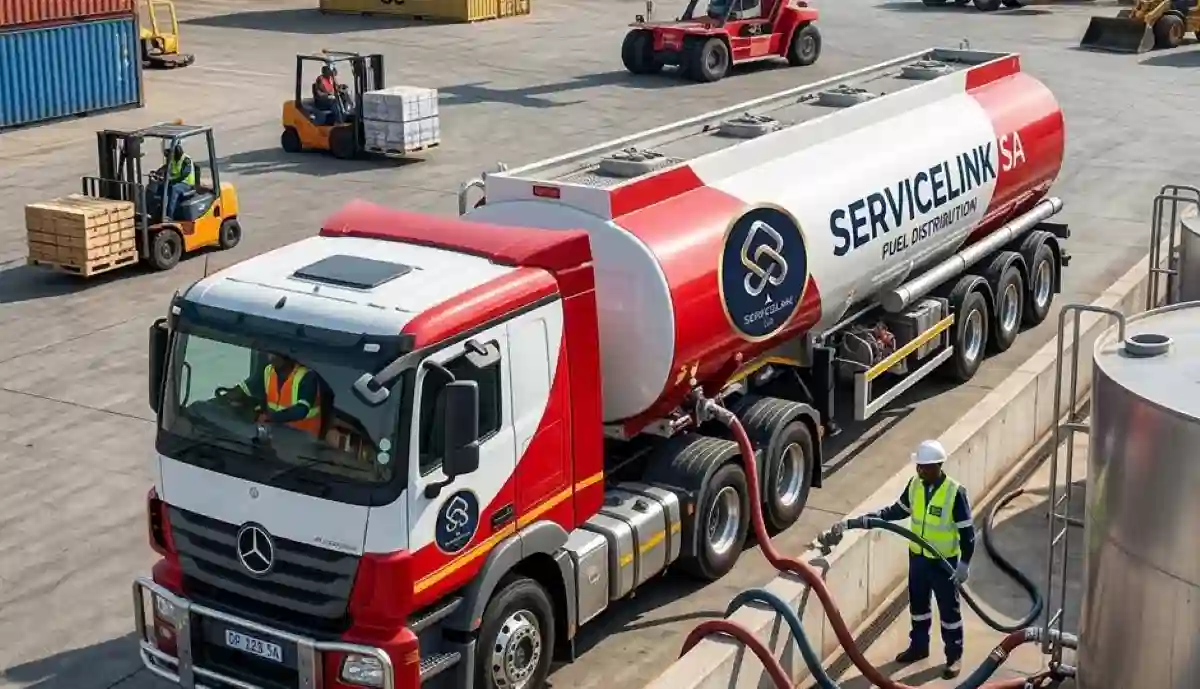
💰 Rebated Fuel: The Diesel Rebate for Agriculture Explained
Rebated fuel is one of the most important financial benefits for South African farmers. Here’s what you need to know:
What is rebated fuel?
Rebated fuel refers to diesel where a portion of the General Fuel Levy and RAF Levy has been refunded (rebated) for qualifying agricultural use. Farmers pay less per litre because they’re not using the fuel on public roads.
Who qualifies for the diesel rebate?
Registered farmers using diesel for qualifying agricultural activities including:
- Tractors and farm vehicles used exclusively on farm land
- Irrigation pumps
- Grain dryers and post-harvest equipment
- Generators used for farming operations
- Other farm equipment not used on public roads
How the diesel rebate works:
- You pay the full pump price including all levies
- You claim a rebate from SARS for the road-related levies
- Rebate rate changes annually with the national budget
- Claims require detailed record-keeping (fuel purchases, usage logs)
How to claim the diesel rebate:
- Register as a qualifying farmer with SARS
- Keep detailed fuel purchase records (invoices, delivery notes)
- Maintain usage logs showing fuel used for qualifying activities
- Submit claims via SARS eFiling (typically bi-annually or annually)
- Keep records for 5 years in case of audit
⚠️ Important Warning
Rebated fuel fraud is prosecuted severely. Using rebated fuel in vehicles that travel on public roads (even occasionally) is illegal and can result in massive penalties, criminal charges, and loss of rebate privileges. Never use farm-rebated diesel in delivery vehicles or personal cars.
For complete rebate information, read diesel rebate system South Africa and fuel tax and levies. See SARS – Diesel rebate for agriculture for official requirements.
🎨 Dyed Diesel vs Clear Diesel: What Farmers Need to Know
Dyed diesel (also called off-road diesel) is rebated diesel marked with a red dye to indicate it’s not for on-road use. Here’s the comparison:
| Feature | Dyed Diesel (Rebated) | Clear Diesel (Full-tax) |
|---|---|---|
| Fuel quality | Same SANS 342 standard | Same SANS 342 standard |
| Cost per litre | Lower (levies rebated) | Higher (includes all levies) |
| Visual appearance | Red dye added | Clear/amber |
| On-road use allowed? | ❌ No (illegal) | ✅ Yes |
| Off-road farm use | ✅ Yes (primary use) | ✅ Yes (but paying unnecessary tax) |
| Record keeping required | Extensive (for rebate claims) | Standard business records |
Why dyed diesel matters for farmers:
Using dyed diesel for agricultural use South Africa allows you to benefit from the diesel rebate without paying the rebate portion upfront. Your fuel supplier provides dyed diesel specifically for off-road farm use. The red dye allows SARS inspectors to easily identify illegal on-road use.
Can you use clear diesel on farm equipment?
Yes, but you’re paying higher taxes for no benefit. You can still claim the rebate on clear diesel if you keep proper records—but it’s easier to use dyed diesel directly from your supplier.
What about on-road farm vehicles?
Farm vehicles that travel on public roads (e.g., delivery bakkies, livestock trucks) must use clear diesel with full taxes. Never put dyed diesel in vehicles that go on public roads.
For more on diesel grades, read 50ppm vs 500ppm diesel explained.
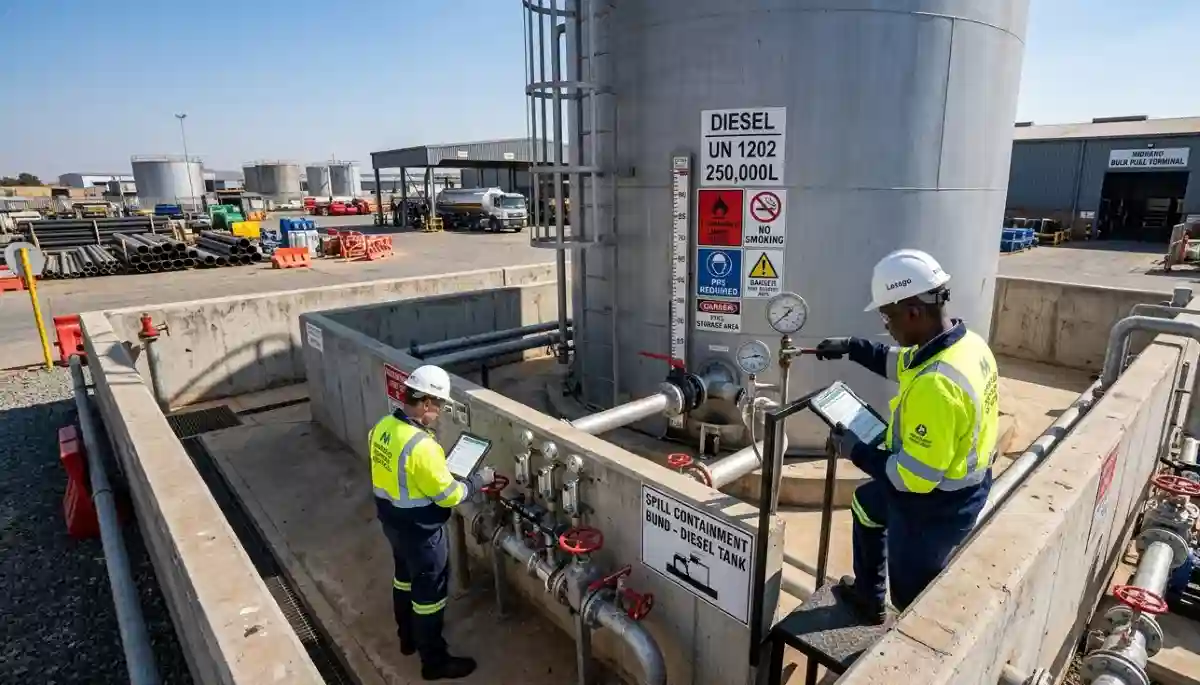
Need Reliable Farm Fuel Delivery?
ServiceLink SA connects you with verified suppliers specializing in agricultural diesel delivery and rebated fuel.
Dyed diesel for agricultural use South Africa—find local specialists serving your farming region.
✅ What Makes a Great Agricultural Fuel Supplier?
Not all fuel suppliers understand farming’s unique needs. Here’s what separates agricultural specialists from general suppliers:
Essential characteristics for farm fuel suppliers:
- SARS rebate documentation: Provide proper invoices and delivery notes for rebate claims. See SARS – Diesel rebate for agriculture.
- DALRRD compliance: Understanding of DALRRD – Agricultural fuel regulations.
- SABS farm storage knowledge: Experience with SABS – Farm storage standards.
- Dyed diesel availability: Can supply rebated (dyed) diesel for off-road farm use.
- Seasonal delivery planning: Understands planting and harvest schedules and plans deliveries accordingly.
- Farm access experience: Comfortable with gravel roads, farm tracks, and seasonal weather challenges.
- Emergency response: 24/7 emergency delivery for irrigation or harvest emergencies.
- Storage solutions: Can advise on and supply SABS-compliant farm storage tanks.
- Quality assurance: Regular testing for water and microbial contamination—critical for farm storage.
Why agricultural specialization matters: A fuel supplier who only serves urban depots may not understand harvest season urgency, farm road conditions, or rebated fuel documentation requirements. Agricultural-experienced suppliers understand farming’s seasonal intensity.
ServiceLink SA verifies farm fuel supplier credentials during our screening process. Learn how we verify agricultural fuel suppliers.
🚩 7 Red Flags of Farm Fuel Suppliers (Avoid at All Costs!)
When sourcing bulk fuel for farms and agriculture, watch out for these warning signs:
- No rebate documentation capability: Can’t provide SARS-compliant invoices for rebate claims. This costs you real money.
- No dyed diesel available: Only supplies clear diesel means you’re paying unnecessary taxes.
- No farm access experience: Uncomfortable with gravel roads or farm tracks—will refuse delivery when roads are muddy.
- No understanding of seasonal urgency: “We’ll get there when we can” isn’t acceptable during harvest.
- Poor storage advice: Recommends non-compliant or unsafe storage solutions.
- No emergency delivery commitment: Can’t guarantee rapid response for irrigation or harvest emergencies.
- No DALRRD or SABS knowledge: Unaware of agricultural fuel regulations or farm storage standards.
For more scam prevention, read how to avoid contractor scams—many principles apply to farm fuel suppliers too.
🔍 Where to Find Farm Fuel Suppliers Near You
Finding reliable farm diesel delivery partners requires agriculture-specific sources:
Best methods (recommended):
- ServiceLink SA: Our platform connects you with verified suppliers specializing in agricultural fuel delivery. Free quotes, verified credentials, and farming experience. Get quotes from farm fuel suppliers near you.
- DALRRD registered suppliers: Check agricultural fuel supplier registers. DALRRD – Agricultural fuel regulations.
- Agricultural co-operatives: Many co-ops have fuel supply programs for members.
- Farmer referrals: Ask neighbouring farmers for supplier recommendations.
- Grain SA or other commodity groups: Member supplier directories.
Methods to avoid or use with caution:
- General fuel suppliers without agricultural experience: They likely don’t understand rebated fuel or seasonal needs.
- Social media or classifieds: Never source farm fuel from unverified online listings—rebate documentation is critical.
For a complete list of service categories, see our bulk fuel supply services page.
📋 How to Verify a Farm Fuel Supplier (6 Critical Checks)
Before contracting any agricultural fuel supply partner, run through this verification checklist:
- Verify SARS rebate documentation capability: Ask for sample invoices. Ensure they include required fields for rebate claims. SARS – Diesel rebate for agriculture.
- Confirm dyed diesel availability: Ensure they supply rebated (dyed) diesel for off-road farm use.
- Check DALRRD compliance knowledge: Ask about their understanding of agricultural fuel regulations. DALRRD – Agricultural fuel regulations.
- Verify SABS farm storage knowledge: Ask about their experience with farm storage standards. SABS – Farm storage standards.
- Request farm client references: At least 3 references from similar farms. Call them. Ask about seasonal reliability, rebate documentation, and farm access.
- Verify emergency response: Ask for documented emergency delivery commitment (response time, after-hours availability).
For more detailed verification guidance, read how to verify a contractor.
🏭 On-Farm Fuel Storage Solutions
Proper storage is critical for bulk fuel for farms and agriculture. Here are SABS-compliant options:
Above-ground farm tanks (most common):
- Typical capacity: 5,000L – 50,000L
- Must have secondary containment (bund or double-skinned)
- Must meet SABS – Farm storage standards
- Lockable dispensing system to prevent theft
- Positioned away from buildings, water sources, and livestock areas
Mobile farm bowsers:
- Typical capacity: 500L – 3,000L
- Towed behind tractor or truck
- Used for refuelling equipment in distant fields
- Must be secured when not in use
Storage compliance requirements for farms:
- SABS-compliant tanks (SANS 10089-3)
- Spill containment (bunding at 110% of tank capacity)
- Fire extinguishers within easy access
- Hazchem signage clearly displayed
- Regular inspections (monthly visual, annual professional)
- Water drain systems to remove condensation
- Filtration on dispensing systems
Best practices for on-farm fuel storage:
- Install tanks on level, stable, well-drained ground
- Keep tanks locked and secure—fuel theft is common on farms
- Conduct regular water checks (water in diesel damages injectors)
- Test for microbial growth (diesel bug) especially during long storage
- Keep detailed inventory records to reconcile deliveries
- Consider tank monitoring systems for remote visibility
For more on storage, read fuel tank installation, diesel storage tanks for farms, and bulk diesel storage regulations.
❓ Frequently Asked Questions About Farm Fuel Supply
What is dyed diesel for agricultural use in South Africa?
Dyed diesel for agricultural use South Africa is rebated diesel marked with red dye to indicate it’s for off-road farm use only. It costs less than clear diesel because road levies are rebated. Using dyed diesel in on-road vehicles is illegal and carries severe penalties.
How do I claim the diesel rebate for my farm?
To claim rebated fuel benefits, register as a qualifying farmer with SARS, keep detailed fuel purchase records, maintain usage logs showing fuel used for qualifying agricultural activities, and submit claims via SARS eFiling. Your fuel supplier must provide SARS-compliant invoices. Read diesel rebate system guide for details.
What’s the difference between off-road diesel and regular diesel?
Off-road diesel (dyed diesel) is chemically identical to regular diesel—both meet SANS 342 standards. The only difference is the red dye and the tax status. Off-road diesel has road levies rebated, making it cheaper for farm use. Never use off-road diesel in vehicles that travel on public roads.
How much diesel does a typical South African farm use monthly?
Agricultural fuel supply volumes vary dramatically by farm type and size. Small mixed farms: 2,000-10,000L monthly. Medium grain farms: 10,000-30,000L monthly (much higher during planting/harvest). Large irrigation farms: 30,000-100,000L+ monthly during irrigation season.
What are the SABS requirements for farm fuel storage?
SABS farm storage standards (SANS 10089-3) require secondary containment (bunding at 110% capacity), proper tank materials, fire safety equipment, hazchem signage, and regular inspections. See SABS – Farm storage standards for complete requirements.
How do I prevent diesel contamination on my farm?
Prevent diesel contamination through: regular water checks (drain water from tank bottoms weekly), fuel filtration during dispensing, microbial treatment programs (diesel bug), regular fuel testing (quarterly), and proper tank maintenance. Contaminated fuel damages injectors and pumps—repairs often cost R20,000-R100,000+.
What DALRRD regulations apply to agricultural fuel?
DALRRD agricultural fuel regulations cover farm storage permits, environmental compliance, rebated fuel documentation, and inspection requirements. See DALRRD – Agricultural fuel regulations for complete requirements for your farming operation.
Can I get emergency farm diesel delivery during harvest?
Yes, professional agricultural fuel suppliers offer 24/7 emergency delivery, especially during harvest season. Establish relationships with emergency providers before harvest starts. Keep their contact details posted in your fuel shed. Emergency delivery costs more but prevents crop losses—typically wholesale price + R2.00-R4.00/L + call-out fee.
✅ Final Thoughts: Secure Your Farm’s Fuel Future
Your choice of bulk fuel for farms and agriculture directly impacts your crop success, equipment reliability, and farm profitability. The wrong supplier risks harvest disruptions, rebate documentation failures, and contaminated fuel. The right supplier becomes a partner in your farming success.
Key takeaways from this guide:
- Farm fuel disruption during harvest costs R50,000-R200,000+ daily in spoiled crops
- Rebated fuel (dyed diesel) saves farmers significant money through the diesel rebate
- Dyed diesel for agricultural use South Africa is chemically identical to clear diesel—only the tax status differs
- Never use rebated fuel in on-road vehicles—penalties are severe
- Always verify SARS rebate documentation, DALRRD compliance, and SABS farm storage standards
- Proper on-farm storage with bunding protects your fuel and the environment
- Test stored fuel regularly for water and microbial contamination
- Establish emergency delivery relationships before harvest or irrigation season
- Use ServiceLink SA to connect with verified agricultural fuel specialists
Your action plan: Use ServiceLink SA to request quotes from verified farm fuel suppliers in your area. Compare their rebated fuel availability, rebate documentation quality, seasonal delivery planning, and emergency response capabilities. Choose a partner who understands farming’s unique challenges. Then implement proper storage and testing to protect your fuel investment.
Ready to Secure Reliable Farm Fuel Supply?
ServiceLink SA connects you with verified suppliers offering agricultural diesel delivery, rebated fuel, and farm storage solutions.
📞 Call us: 073 138 4726 for immediate help finding farm fuel suppliers near you.
Diesel Delivery •
Emergency Fuel Delivery •
Fuel Tank Installation •
Generator Fuel Services •
Fuel Management Systems
📚 Official resources & standards referenced:
- SARS – South African Revenue Service – Diesel rebate for agriculture, rebated fuel regulations, and claim procedures.
- DALRRD – Department of Agriculture, Land Reform and Rural Development – Agricultural fuel regulations and compliance requirements.
- SABS – South African Bureau of Standards – Farm storage standards (SANS 10089-3) and fuel quality specifications.
- DMRE – Department of Mineral Resources and Energy – Fuel licensing and pricing information.
Information provided for general guidance based on independent research and official sources. Agricultural regulations, rebate rates, and compliance requirements change periodically. Always verify current requirements directly with SARS, DALRRD, and SABS.
Written by: ServiceLink SA Research Team
Agricultural Fuel Supply & Farm Logistics Specialists
The ServiceLink SA Research Team combines expertise from agricultural economics, farm fuel logistics, and regulatory compliance. Our analysts track SARS diesel rebate regulations, DALRRD agricultural fuel requirements, SABS farm storage standards, and maintain relationships with accredited suppliers serving South Africa’s major farming regions including Mpumalanga, Free State, North West, Western Cape, and KwaZulu-Natal. This guide draws on primary research, official SARS and DALRRD requirements, and direct interviews with commercial farmers, agricultural co-operatives, and farm equipment specialists. Our mission is to help South African farmers secure reliable, cost-effective agricultural fuel supply while maximizing rebate benefits and maintaining regulatory compliance.
For more information about bulk fuel for farms and agriculture, explore our related resources: how to choose a bulk fuel supplier, diesel delivery services, bulk fuel supply costs, bulk diesel storage regulations, diesel storage tanks for farms, and diesel rebate system. See our location-specific guides for Bethal, Standerton, Kroonstad, Welkom, and George.