
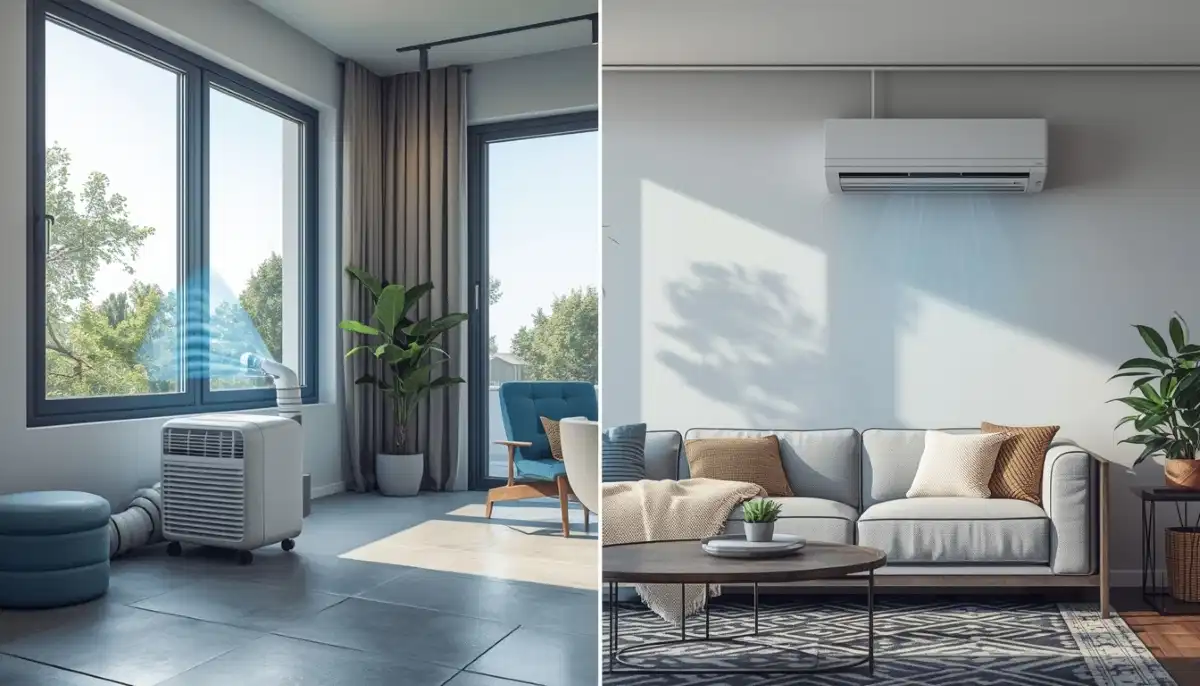
Still Deciding Between Portable and Split Aircon?
Get free quotes from local aircon specialists. Compare installation prices for split systems or buy advice for portable units.
Servicing Johannesburg, Pretoria, Cape Town, Durban, and across South Africa
Portable vs Split Aircon in South Africa: The Shocking Truth About Running Costs
❄️ Everything you need to know before buying a mobile air conditioner or split system for your home
Let me tell you about my friend Thabo. He lives in a small flat in Johannesburg. Summer arrived with a vengeance—40°C days, no breeze, and his north-facing bedroom felt like an oven. He needed cooling fast. So he rushed to the nearest store and bought a portable air conditioner for R4,500. “Plug and play,” the salesperson said. “Perfect for flats.”
Six months later? Thabo’s electricity bill had doubled. The portable unit was so loud he couldn’t sleep. And it barely cooled his room beyond a few feet from the vent. He regrets that purchase every single summer.
Now meet Lisa. She lives in a three-bedroom house in Cape Town. Before buying, she researched the portable vs split aircon debate thoroughly. She invested in a split system installation costing R12,000. Today? Her home stays perfectly cool, her electricity bill increased only slightly, and the unit is so quiet she forgets it’s running.
This guide will help you avoid Thabo’s mistake and make Lisa’s smart choice—or choose a portable unit if it genuinely fits your situation. I’ll cover portable air conditioner vs split running costs, installation requirements, cooling performance, and the hidden factors most people don’t consider.
For more buying guidance, check best aircon brands in South Africa and aircon installation cost breakdown. Ready to make an informed decision? Let’s go.
📋 Table of Contents – Portable vs Split Aircon Guide
⚡ Portable vs Split Aircon: At a Glance
Before diving deep, here’s your 30-second summary of the portable vs split aircon decision:
💷 Upfront Cost
Portable: R3,000 – R8,000
Split: R8,000 – R25,000+
⚡ Running Cost (monthly)
Portable: R400 – R800+
Split: R200 – R500
🔧 Installation
Portable: DIY (5 minutes)
Split: Professional (3-5 hours)
⚠️ Key Takeaway:
Portable units cost less upfront but cost significantly more to run. Over 3-5 years, a split system is almost always cheaper—even with higher installation costs. The is portable aircon worth it question depends entirely on your specific situation (renting, no installation options, tiny space).
🔧 How Each System Actually Works (Simplified)
Understanding the basic mechanics helps explain why split systems outperform portable units so dramatically.
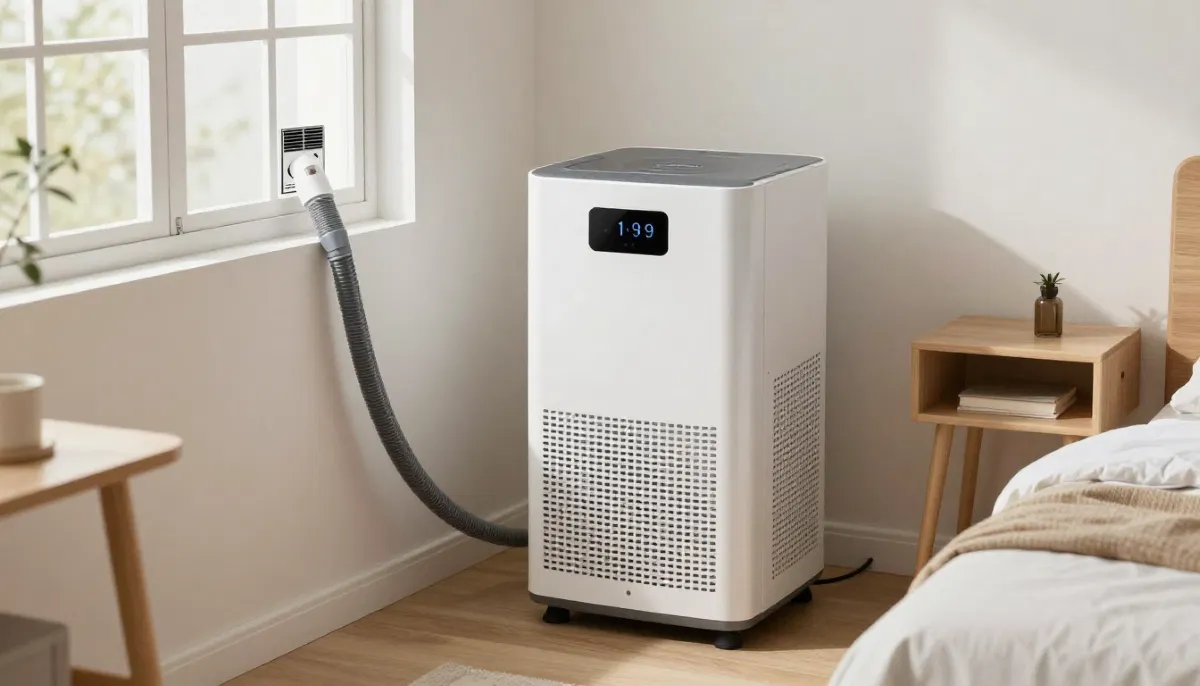
📦 Portable Air Conditioner (Mobile AC)
A mobile air conditioner is a self-contained unit on wheels. It pulls warm air from the room, cools it using refrigerant, and blows cold air back out. But here’s the catch: it also needs to exhaust hot air from the cooling process. That hot air must go somewhere—usually through a hose that vents out a window. This creates negative pressure, pulling warm air from other rooms or outside back into your space. It’s fighting itself constantly.
Pro tip: Dual-hose portable units are more efficient because they draw intake air from outside, not from the room you’re cooling. But they’re rarer and more expensive in South Africa.
🏠 Split System Air Conditioner
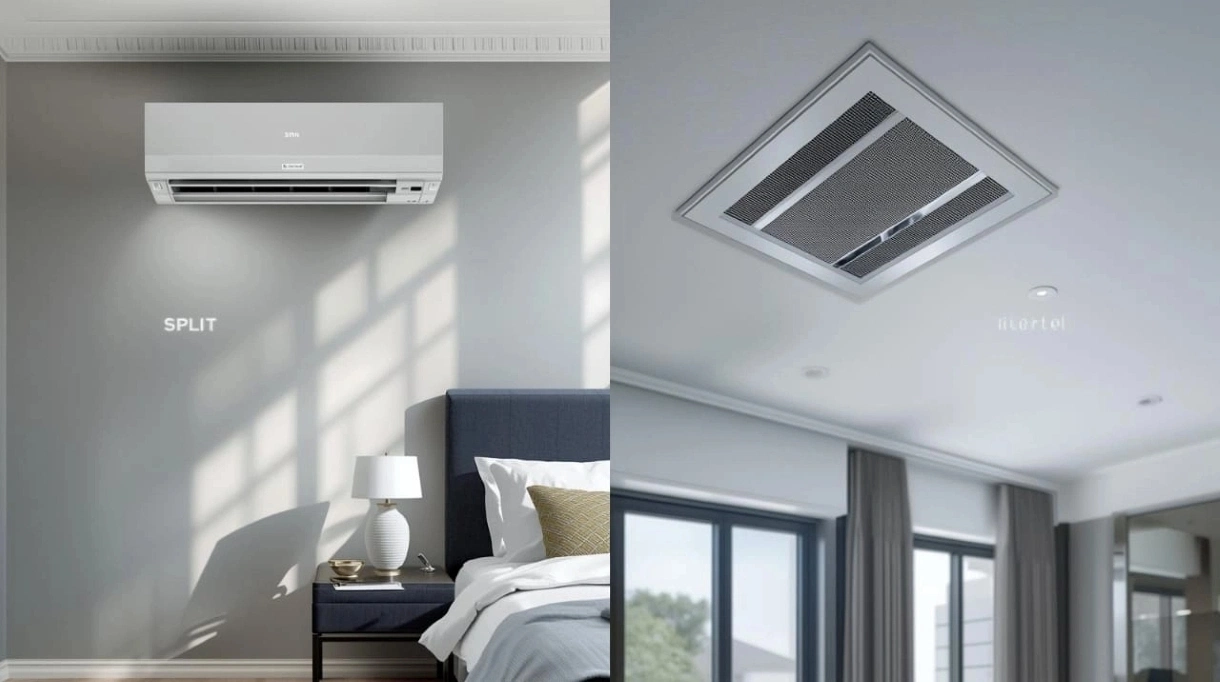
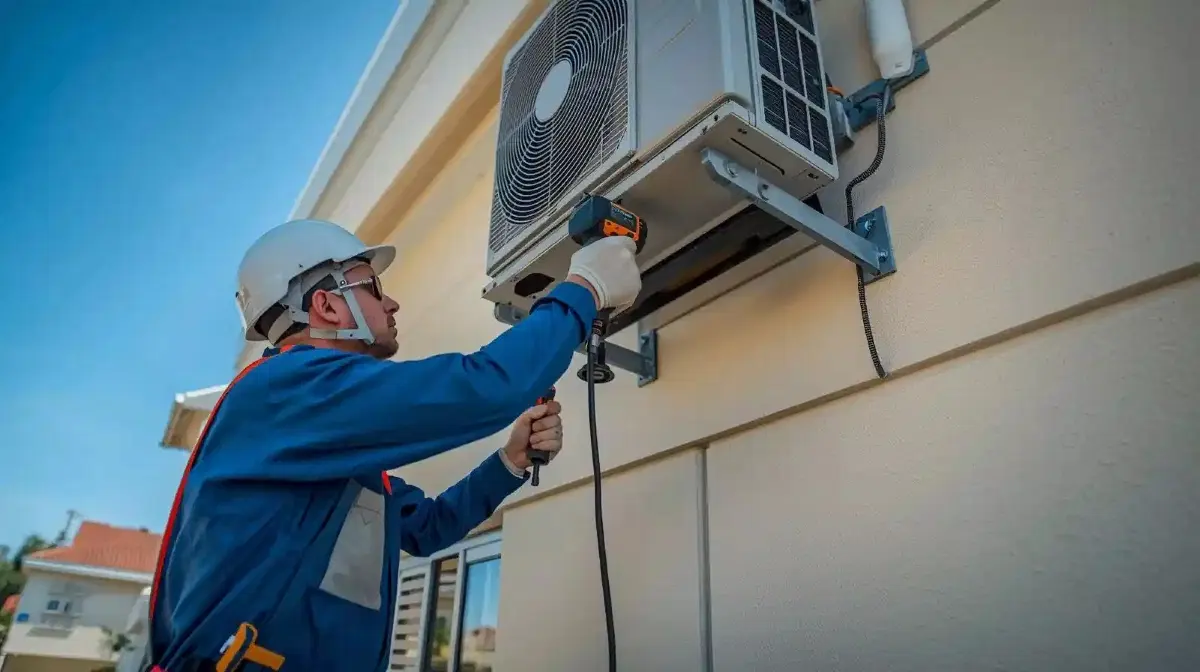
A split system has two parts: an indoor unit (mounted on your wall) and an outdoor compressor unit (mounted on an exterior wall, roof, or ground). Refrigerant pipes and electrical cables connect them through a small hole in your wall. The indoor unit pulls warm room air, cools it, and returns it—all without creating negative pressure. The outdoor unit dumps the heat outside, far away from your living space. This separation is why split systems are dramatically more efficient.
For installation guidance, read split system installation and how to choose an aircon installer.
💰 Cost Comparison: The Shocking Truth About Running Costs
This is where the portable aircon vs split system cost debate gets interesting. Let me show you real numbers.
| Cost Factor | Portable Aircon (12,000 BTU) | Split System (12,000 BTU) | Winner |
|---|---|---|---|
| Purchase Price | R3,500 – R7,000 | R7,000 – R15,000 | Portable |
| Installation Cost | R0 (DIY) | R1,500 – R3,500 | Portable |
| Monthly Electricity (8 hrs/day) | R450 – R800 | R200 – R400 | Split |
| Annual Electricity (summer only) | R2,700 – R4,800 | R1,200 – R2,400 | Split |
| 3-Year Total Cost | R11,600 – R21,400 | R11,600 – R24,900 | Similar (depends on usage) |
| 5-Year Total Cost | R18,500 – R32,000 | R15,000 – R29,500 | Split |
| Expected Lifespan | 3 – 5 years | 10 – 15 years | Split |
💡 Insight:
A split system costs more upfront but becomes cheaper than a portable unit after approximately 3-4 years of regular use. If you plan to stay in your home long-term, a split system is the financially smarter choice. If you’re renting or moving soon, portable may make sense.
For a detailed breakdown of professional installation costs in your area, check our complete aircon installation cost guide. You can also compare installation prices from local specialists near you.
Ready to Get Accurate Quotes for Your Home?
Tell us about your room size and cooling needs. We’ll connect you with up to 3 verified local aircon specialists for free, no-obligation quotes.
Get Free Quotes From Local Specialists
Compare prices, read reviews, and hire with confidence.
🌡️ Cooling Performance: BTU, Room Size & Real-World Efficiency
Not all 12,000 BTU air conditioners cool the same. Here’s why split systems outperform portable units despite similar BTU ratings.
📊 BTU Explained
BTU (British Thermal Unit) measures cooling power. Higher BTU = more cooling capacity. But here’s the catch: portable units lose efficiency because of how they exhaust hot air.
| Room Size | Split System BTU Needed | Portable BTU Needed (Due to inefficiency) |
|---|---|---|
| Small bedroom (10-15m²) | 9,000 – 12,000 BTU | 12,000 – 14,000 BTU |
| Medium bedroom (15-25m²) | 12,000 – 18,000 BTU | 14,000 – 20,000 BTU |
| Living room (25-40m²) | 18,000 – 24,000 BTU | 22,000 – 30,000 BTU |
| Open plan (40-60m²) | 24,000 – 36,000 BTU | Not recommended |
Why the difference? Portable units create negative pressure, pulling warm air from adjacent rooms or outside. They also generate heat themselves (from the motor and compressor). A split system’s outdoor unit dumps all heat outside, so the indoor unit only produces cold air.
For accurate sizing, use our aircon BTU size calculator before buying any unit.
📦 Portable AC Pros and Cons (Detailed)
Let me be honest about portable ac pros and cons based on real user experiences across South Africa.
✅ Advantages of Portable Air Conditioners
- No permanent installation: Perfect for renters, students, or anyone who can’t modify their property. Landlords can’t object.
- Move room to room: Wheels let you cool your bedroom at night and your home office during the day. One unit serves multiple spaces.
- Low upfront cost: Entry-level units start around R3,000. You don’t need to save for months.
- Take it when you move: Your aircon moves with you to your next home. No loss on installation investment.
- Immediate cooling: Buy it today, plug it in today. No waiting for installers.
- Some models include heater: Useful for Johannesburg and Cape Town winters.
❌ Disadvantages of Portable Air Conditioners
- High running costs: The biggest downside. Expect to pay 2-3x more for electricity compared to a split system of similar BTU.
- Noisy operation: All components (compressor, fan, motor) are inside the room. Noise levels typically 50-60 dB—like a loud conversation or vacuum cleaner in the distance.
- Limited cooling range: Most portable units struggle to cool beyond 3-4 meters from the unit. The far corner of a large bedroom stays warm.
- Window vent required: You need a window or sliding door for the exhaust hose. Not all windows work well.
- Water drainage: Portable units collect condensation. Most have manual drainage (you empty a bucket). Some auto-evaporate but work less efficiently in humid climates like Durban.
- Takes floor space: These units are bulky. They occupy valuable floor area in small rooms.
- Shorter lifespan: Most portable units last 3-5 years with regular use. Split systems last 10-15 years.
⚠️ Warning – Portable Aircon Pitfalls:
Many homeowners buy a portable unit thinking it will cool their entire open-plan living area. It won’t. These are designed for single small-to-medium rooms only. Using a portable unit in a large space will run up your electricity bill while barely cooling the area near the unit. Read best aircon for small rooms for better alternatives.
🏠 Split System Pros and Cons (Detailed)
✅ Advantages of Split System Air Conditioners
- Energy efficient: Inverter split systems are dramatically more efficient than portable units. No negative pressure, no self-generated heat inside the room.
- Quiet operation: Indoor units produce only 20-35 dB—quieter than a whisper. The noisy compressor lives outside.
- Even cooling: Properly sized split systems cool entire rooms uniformly, not just a small radius.
- Long lifespan: Quality split systems last 10-15 years with proper maintenance. Read our maintenance checklist to extend lifespan.
- Heating option: Most split systems include heat pumps for winter warmth. Very efficient heating compared to space heaters.
- Aesthetic: Wall-mounted indoor units look sleek. No bulky machine on your floor.
- Higher property value: Installed air conditioning is a selling point when you list your home.
- Inverter technology: Modern inverter units adjust compressor speed based on cooling demand, saving significant electricity. Read inverter vs non-inverter guide.
❌ Disadvantages of Split System Air Conditioners
- Higher upfront cost: Purchase plus installation typically costs R8,000 – R25,000+. This is a significant investment.
- Professional installation required: You cannot DIY a split system. Installation requires qualified technicians, refrigerant handling, and electrical work. Learn how to choose the right installer.
- Permanent installation: If you move, the split system usually stays with the property (unless you pay for removal and reinstallation).
- Landlord permission needed: Renters need written permission to drill holes and mount outdoor units.
- Outdoor unit placement: You need suitable exterior space for the compressor unit. Not all properties have this.
- Regular maintenance required: Split systems need filter cleaning (monthly) and professional servicing (annually). Learn how often to service your aircon.
🎯 When to Choose a Portable Air Conditioner
The is portable aircon worth it answer is YES in these specific situations:
- You’re renting: Landlords rarely approve split system installations. Portable units need no permanent modifications.
- You move frequently: Students, young professionals in short-term leases, or frequent relocators benefit from portable units they can take anywhere.
- Budget is extremely tight: If you cannot afford R8,000+ upfront, a R3,500 portable unit provides some cooling relief during heatwaves.
- You need occasional cooling only: If you only need aircon 10-15 days per year (e.g., in coastal areas with mild summers), portable makes sense.
- Supplemental cooling: Use a portable unit to boost cooling in a room where your main system struggles (e.g., a home office in a hot corner).
- No outdoor space for compressor: Some flats, apartments, or heritage buildings have no exterior wall suitable for a split system outdoor unit.
Realistic example: A student renting a 12m² room in Johannesburg who only needs cooling during December-February heatwaves. Portable unit cost: R4,000. Running cost for 3 months: R600 extra electricity total. Total first year: R4,600. Split system (if even permitted): R12,000+. Portable wins here.
🎯 When to Choose a Split System Air Conditioner
Choose a split system if:
- You own your home: The investment adds value to your property. You’ll enjoy it for years.
- You need reliable daily cooling: For bedrooms, living areas, or home offices used regularly throughout summer.
- You care about electricity bills: Split systems pay for themselves in energy savings over 3-4 years.
- You need heating too: Heat pump technology in split systems efficiently warms rooms in winter (unlike portable units which struggle).
- Noise sensitivity: Light sleepers, babies’ rooms, home offices, or anyone who can’t tolerate portable unit noise.
- Larger spaces: Living rooms, open-plan areas, or any room over 25m² needs split system cooling.
- Long-term cost savings: Over 5+ years, split systems are significantly cheaper than replacing portable units every 3-4 years while paying higher electricity monthly.
Realistic example: A family in Pretoria with a 35m² living room. Split system installation: R15,000. Annual running cost: R1,800. Over 5 years: R24,000 total. Portable unit capable of cooling 35m² would cost R8,000 (needs large 20,000+ BTU unit), annual running cost R4,500, lifespan 3 years (needs two units over 5 years). 5-year portable total: R8,000 + (R4,500 x 5) + R8,000 = R38,500. Split system saves R14,500 over 5 years.
❌ 5 Common Mistakes When Buying Air Conditioners
🚫 Avoid These Costly Errors:
Mistake #1: Undersizing your aircon. Buying a portable unit that’s too small for your room is the most common error. The unit runs constantly, never reaches desired temperature, and wastes electricity. Always size up 10-20% for portable units due to inefficiency. Use our BTU calculator first.
Mistake #2: Ignoring running costs. Many buyers focus only on the purchase price. “This portable unit is only R4,000!” But over 3 years, you’ll spend R10,000+ on electricity. The R12,000 split system with R200/month electricity costs R19,200 over 3 years. The portable costs R14,000+ over the same period. The gap narrows quickly.
Mistake #3: DIY split system installation. This is illegal in South Africa. Split systems contain refrigerants (R32 or R410A) that require certified handling. Improper installation can cause refrigerant leaks, poor performance, electrical fires, or voided warranties. Always hire SABS-compliant, registered installers. Read our installer selection guide.
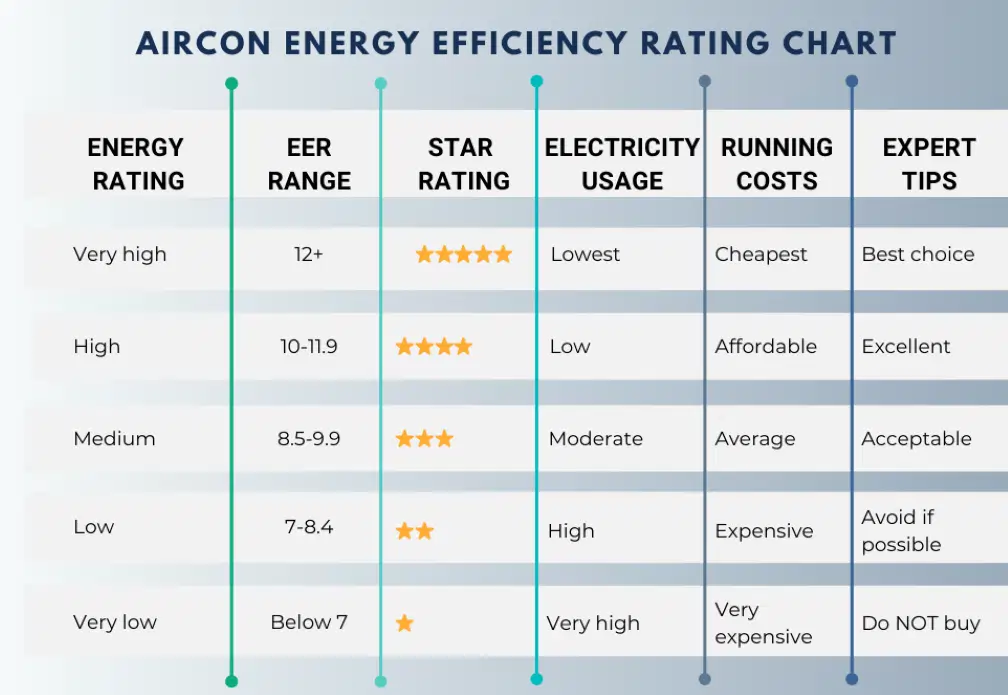
Mistake #4: Not checking energy efficiency ratings. Look for the energy efficiency rating label. Higher stars = lower running costs. Inverter technology also significantly reduces consumption. Read our inverter guide before buying.
Mistake #5: Buying portable for open-plan spaces. Portable units cannot effectively cool large, open areas. The negative pressure problem worsens in open spaces. You’ll waste money and stay hot. Invest in a split system or multi-split for open-plan homes.
🏙️ Realistic Pricing Examples by South African City
Here’s what you’ll actually pay for portable vs split aircon in different South African cities:
| City & Scenario | Portable Solution | Split Solution | Best Choice |
|---|---|---|---|
| Sandton: 1-bedroom flat (renter) | 12,000 BTU portable: R4,500 | Not permitted (landlord refusal) | Portable |
| Cape Town: 3-bed house (owner) | 3 x portable units: R15,000 + high running costs | 3 x split systems installed: R28,000 | Split (long-term) |
| Durban: Small home office (occasional use) | 9,000 BTU portable: R3,800 | 9,000 BTU split installed: R8,500 | Portable (light use) |
| Pretoria: Large living room (daily use) | Not recommended (ineffective) | 18,000 BTU inverter split: R14,500 installed | Split |
| Johannesburg: Student room (6-month lease) | Portable rental or purchase: R3,000 | Not practical | Portable |
| Midrand: 3-bedroom house, whole home cooling | 4 portable units: R20,000 + R1,500/month electricity | Multi-split system: R32,000 installed + R400/month electricity | Split (saves R1,100/month) |
For accurate quotes specific to your home, request free quotes from local installers serving your area. Free site inspections are available for major installations.
❓ Frequently Asked Questions About Portable vs Split Aircon
Which is cheaper to run: portable or split aircon?
Split systems are significantly cheaper to run—typically 40-60% less electricity for the same cooling output. A split system running 8 hours daily costs roughly R200-400 monthly, while a portable unit of similar BTU costs R450-800 monthly. The efficiency difference comes from split systems dumping heat outside while portable units fight negative pressure and self-generated heat.
Is a portable aircon worth it for a bedroom?
For small bedrooms (under 15m²) and light use (not every night), yes. For larger bedrooms or nightly use during hot summers, a split system is worth the investment. The noise from portable units (50-60 dB) disturbs light sleepers, while split systems (20-35 dB) are nearly silent. Read best aircon for small rooms for more guidance.
Can I install a split air conditioner myself?
No. Split system installation requires certified refrigerant handling (illegal without license), electrical work, vacuum pumping, and pressure testing. Improper installation damages the unit, voids warranties, and risks refrigerant leaks (harmful to environment and health). Always hire registered, SABS-compliant installers. Use our installer selection guide to find qualified professionals.
How long do portable air conditioners last?
Most portable units last 3-5 years with regular summer use. Their components (compressor, fan motor) run inside the room, exposed to dust, humidity, and heat. Split systems last 10-15 years because their compressor lives outdoors in a protected environment. Regular maintenance extends lifespan for both types. Read our maintenance guide.
Do portable air conditioners need to be vented outside?
Yes, absolutely. Portable units must vent hot exhaust air outside through a window or sliding door kit. Without proper venting, the unit will recirculate hot air and actually increase room temperature. Never use a portable unit without the exhaust hose correctly installed. Some models offer “self-evaporating” features but still require exhaust venting.
What size portable aircon do I need for a 20m² room?
For a 20m² room, you need approximately 12,000-14,000 BTU in a portable unit (compared to 9,000-12,000 BTU in a split system). The higher BTU requirement compensates for portable unit inefficiency. Undersizing leads to constant running, poor cooling, and higher electricity bills. Use our BTU calculator for accurate sizing.
Do split systems work during load-shedding?
Standard split systems stop working during load-shedding because they need electricity. However, you can integrate them with backup power systems. Inverter split systems pair well with solar and battery backups. For load-shedding protection, read our guide to aircon and load-shedding and generator backup options.
Which aircon type is best for a flat or apartment?
If you own the flat and have exterior wall access, a split system is best. If you rent, a portable unit is usually your only option. Some flats permit window units (read window vs split comparison). Check body corporate rules before any installation—many restrict outdoor compressor placement on balconies or common walls.
What’s the difference between single-hose and dual-hose portable aircons?
Single-hose portable units pull room air to cool the compressor, then exhaust it outside—creating negative pressure that pulls warm air back in. Dual-hose units have separate intake and exhaust hoses, pulling outdoor air for compressor cooling. Dual-hose units are 20-30% more efficient but cost more (R6,000+ vs R3,500+) and are less common in South Africa. If buying portable, dual-hose is worth the premium.
How do I maintain my aircon regardless of type?
All aircons need: monthly filter cleaning (critical for efficiency and air quality), annual professional servicing, coil cleaning every 6-12 months, and drain line checks. Portable units need manual condensation drainage. Split systems need outdoor unit cleaning. Read our complete aircon maintenance checklist and service frequency guide for detailed schedules.
✅ Final Thoughts: Make the Right Choice for Your Home
The portable vs split aircon decision isn’t about which is “better” in absolute terms. It’s about which fits YOUR specific situation.
Choose a portable air conditioner if: You rent, move frequently, have a tiny budget, need occasional cooling only, or have no exterior wall access. Accept the higher running costs and noise as trade-offs for flexibility and low upfront cost.
Choose a split system if: You own your home, need reliable daily cooling, care about electricity bills, value quiet operation, or have larger spaces to cool. The higher upfront investment pays back through energy savings, longevity, and comfort.
Key takeaways for portable vs split aircon buyers:
- Split systems cost less to run (40-60% savings on electricity)
- Split systems last longer (10-15 years vs 3-5 years for portable)
- Portable units cost less upfront (R3,500-R7,000 vs R8,000-R25,000+)
- Portable units work for renters and frequent movers
- Split systems require professional installation (use our installer guide)
- Neither type works during load-shedding without backup power
- Always size correctly using our BTU calculator
Your action plan: First, measure your room and use our BTU calculator. Second, decide if you can install a split system (homeowner? landlord permission?). Third, get quotes. For split systems, request quotes from local installers to compare prices. For portable units, read reviews and buy from reputable brands. For both, read our brand guide.
Ready to Cool Your Home the Smart Way?
Whether you choose portable or split, ServiceLink SA connects you with the right professionals and advice. Get free quotes from verified local aircon specialists today.
📞 Call us: 073 138 4726 for immediate help finding aircon installers near you.
Free site inspections •
Beat Your Quote guarantee •
Pay Later option •
Our guarantees
📚 Official resources & standards referenced:
- Department of Energy – Portable AC efficiency guidelines
- SABS – Safety standards for mobile air conditioning units
- Eskom – Energy efficiency and demand management guidelines
Information provided for general guidance based on South African market conditions, typical electricity tariffs (R2.50-R3.50/kWh), and industry standards. Always verify current pricing and regulations directly with relevant authorities.
Written by: ServiceLink SA Research Team
Air Conditioning & Home Cooling Specialists
The ServiceLink SA Research Team comprises industry professionals with decades of combined experience in HVAC (heating, ventilation, and air conditioning) across South Africa. Our team has worked with leading aircon brands including Daikin, Samsung, LG, and Carrier. We’ve personally tested portable units, split systems, and ducted solutions in real South African homes—from small Johannesburg flats to large Cape Town houses. Our recommendations are based on actual performance data, energy consumption tests, and thousands of customer feedback reports. We’re committed to helping South Africans make informed cooling decisions that balance comfort, cost, and energy efficiency.
For more information about air conditioning in South Africa, explore our related resources: air conditioning services, aircon installation, split system installation, window unit installation, aircon maintenance, and aircon repair. For location-specific information, check our Gauteng, Western Cape, KwaZulu-Natal, Johannesburg, Pretoria, Cape Town, and Durban hubs. Our contractor selection guide helps you hire the right professional for your installation.