

Struggling with Stubborn Tile Stains?
Get free quotes from verified cleaning specialists who can remove even the toughest grout stain removal challenges.
Servicing Gauteng, Johannesburg, Pretoria, and across South Africa
Removing Stains from Tile and Grout: Complete Guide SA
🧼 From red wine to rust – the ultimate guide to eliminating every type of tile and grout stain
You look down at your kitchen floor. That red wine stain from last week’s dinner party is still there. The grout around the toilet has turned an ugly brown. And no matter what you try, the coffee ring on the bathroom floor won’t budge. You’re frustrated, and you’re not alone.
I’ve seen it all across Gauteng, from Johannesburg to Pretoria. Homeowners scrubbing with bleach, vinegar, and everything in between – often making the stain worse or damaging their tiles permanently. The truth is, different stains need different treatments. What works for red wine can ruin your grout. What cleans coffee can damage natural stone.
In this complete guide to removing stains from tile and grout, I’ll show you how to identify your stain type, choose the right tile stain remover, and apply proper stain treatment techniques. You’ll learn how to remove tough stains from tile and grout using common household products and commercial cleaners. By the end, you’ll know exactly how to get your tiles looking like new again.
For more cleaning advice, check out our guides on best tile cleaning methods, tile maintenance tips, tile sealing guide, and restoring old tile floors. For grout-specific issues, read grout cracking repair guide.
📋 Table of Contents – Stain Removal Guide
🔍 Identify Your Stain Type – First Step in Stain Treatment
Before applying any tile stain remover, you need to know what you’re dealing with:
Stain Categories:
- Organic stains: Wine, coffee, tea, juice, food colouring, blood – usually dark, penetrating
- Oil/grease stains: Cooking oil, butter, lotions, makeup – darkens tile/grout, feels greasy
- Hard water/rust: White, chalky deposits (calcium) or orange/brown (iron) – common in bathrooms
- Mould/mildew: Black, green, or dark spots – thrives in damp areas (showers, bathrooms)
- Ink/dye: Pen, marker, hair dye – often very stubborn
- Paint: Latex, oil-based, acrylic – requires specific removers
Quick Test: If the stain feels greasy, it’s oil-based. If it’s dark and absorbed, it’s likely organic. If it’s white or orange and crusty, it’s hard water/rust. Identifying correctly saves time and prevents damage.
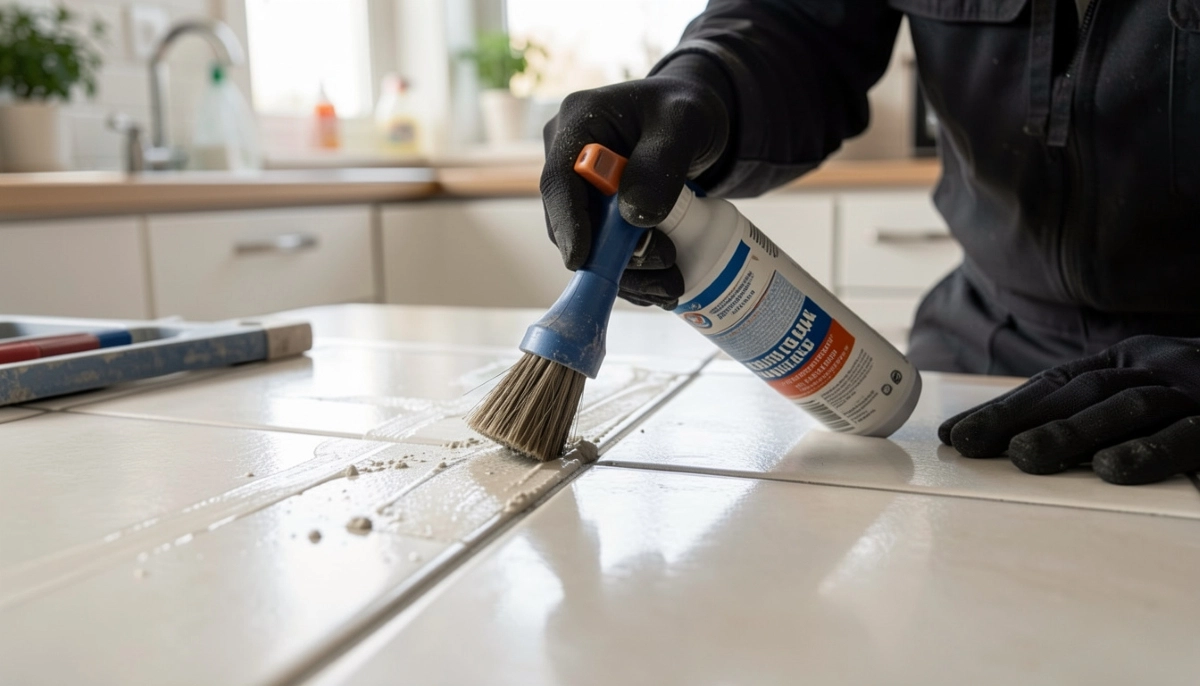
🍷 Organic Stains – Food, Wine, Coffee, Tea
These are the most common household stains. Here’s how to remove them:
For Fresh Stains (Immediate Action):
- Blot immediately with paper towels or clean cloth – never wipe (spreads stain)
- For wine: pour salt over the stain to absorb remaining liquid
- Rinse with cold water
- Mix baking soda with water to form a paste, apply to stain, let sit 10-15 minutes
- Scrub gently with soft brush, rinse, dry
For Set-In Organic Stains (Dried):
- Apply hydrogen peroxide (3%) – test on inconspicuous area first
- Let sit 10-15 minutes (longer for stubborn stains)
- Scrub with soft brush, rinse thoroughly
- For white grout: oxygen bleach paste (mix with water) works very well
For Coffee/Tea Stains:
- Baking soda paste – apply, let dry, scrub, rinse
- For stubborn coffee stains: hydrogen peroxide
- For natural stone: use stone-specific poultice
For Fruit Juice/Coloured Drink Stains:
- Treat like wine – blot, rinse, hydrogen peroxide (test first)
- Lemon juice on ceramic/porcelain (not natural stone) can help – rinse thoroughly
🫒 Oil and Grease Stains – Kitchen Nightmares
Oil stains are common in kitchens and around cooking areas:
For Fresh Oil Spills:
- Absorb with baking soda or cornstarch – sprinkle generously, let sit 15-30 minutes
- Sweep up the powder
- Apply dish soap (degreasing type) mixed with warm water
- Scrub with soft brush, rinse, dry
For Set-In Oil/Grease Stains:
- Apply baking soda paste (baking soda + water) to the stain
- Let sit for several hours or overnight – baking soda draws out oil
- Scrub, rinse, repeat if needed
- For stubborn oil on grout: use a poultice (see grout section)
For Makeup/Lotion Stains:
- Similar to oil treatment – baking soda or dish soap
- For foundation/concealer: rubbing alcohol on a cotton ball (test first on tile type)
Pro Tip: For kitchen floors, seal grout every 6-12 months – oil stains are much harder to remove from unsealed grout. Read our tile sealing guide for instructions.

Still Can’t Remove That Stain?
Get free quotes from verified cleaning specialists who have commercial-grade tile stain remover products and professional techniques.
Get Professional Stain Removal
Free inspections available. Workmanship guarantees.
💧 Hard Water and Rust Stains
White calcium deposits and orange rust stains are common in bathrooms:
Hard Water Stains (White, Chalky):
- For ceramic/porcelain: Vinegar-water solution (1:4) – let sit 5-10 minutes, scrub, rinse. Safe and effective.
- For natural stone: Use stone-specific hard water remover – NEVER vinegar (acid etches stone).
- Prevention: Wipe shower walls after each use, install water softener if hard water is severe.
Rust Stains (Orange/Brown):
- For ceramic/porcelain: Use commercial rust remover specifically for tile (follow instructions).
- For natural stone: Professional help recommended – rust is very difficult to remove from stone.
- Alternative DIY: Lemon juice and salt paste (ceramic/porcelain only, not natural stone) – let sit, scrub, rinse.
- Address the source: Rust stains often indicate iron in water supply – consider water filtration.
For Grout with Hard Water Stains:
- Oxygen bleach paste – apply, let sit 15-20 minutes, scrub with grout brush, rinse
- For severe buildup, professional cleaning may be needed
🦠 Mould and Mildew – Bathroom Grout
Black or dark spots on grout are usually mould or mildew. Here’s how to remove them:
DIY Mould Removal:
- Mix 1 part bleach with 3 parts water (for ceramic/porcelain only – NOT natural stone)
- Apply to mouldy grout, let sit 10-15 minutes
- Scrub with grout brush
- Rinse thoroughly – bleach residue can damage grout over time
- Safer alternative: Use oxygen bleach (hydrogen peroxide-based) – less harsh
For Natural Stone Grout:
- NEVER use bleach on natural stone – it can discolour and damage
- Use oxygen bleach paste or commercial stone-safe mould remover
Preventing Mould Return:
- Improve ventilation – use bathroom exhaust fan during and after showers
- Wipe shower walls and floor after use
- Seal grout every 1-2 years – sealed grout resists moisture
- Consider epoxy grout for showers (completely waterproof, mould-resistant)
✅ Pro Tip:
For persistent mould in shower grout, hydrogen peroxide (3%) is often more effective than bleach and less damaging to grout. Apply, let bubble for 10-15 minutes, scrub, rinse. Repeat if needed.
🪥 Grout-Specific Stain Removal
Grout is porous and absorbs stains easily. Here’s how to tackle grout stain removal:
General Grout Cleaning (Maintenance):
- Mix baking soda with water to form a paste
- Apply to grout lines using a grout brush (stiff bristles)
- Scrub gently – baking soda is mildly abrasive but safe for grout
- Rinse with damp cloth, dry
Deep Grout Stain Removal:
- Use oxygen bleach powder – mix with water to form a paste
- Apply paste to grout lines, let sit 15-30 minutes
- Scrub vigorously with grout brush
- Rinse thoroughly – repeat if needed
- For white grout, hydrogen peroxide works very well
Poultice Method for Deep Grout Stains (Oil, Set-In Stains):
- Mix baking soda (or diatomaceous earth) with water to form a thick paste
- Apply paste to stain, cover with plastic wrap
- Tape edges to seal
- Leave for 24-48 hours – poultice draws stain out
- Remove, rinse, repeat if needed
After Cleaning – Seal Grout:
Once grout is clean and completely dry (48 hours), apply grout sealer. Sealed grout resists future stains dramatically. Read our tile sealing guide for instructions.
🪨 Special Care for Natural Stone (Marble, Travertine, Slate, Limestone)
Natural stone requires gentler stain treatment – harsh chemicals cause permanent damage:
What NEVER to Use on Natural Stone:
- ❌ Vinegar, lemon juice, or any acid – etches and dulls the surface
- ❌ Bleach, ammonia – can discolour and damage
- ❌ Abrasive scrubbers – scratch the surface
- ❌ Generic tile cleaners – many contain acids or harsh chemicals
Safe Stain Removal for Natural Stone:
- Organic stains (wine, coffee): Hydrogen peroxide poultice (mix with diatomaceous earth or baking soda to paste). Apply, cover with plastic wrap, leave 24-48 hours.
- Oil/grease stains: Baking soda poultice – same application method.
- Hard water: Stone-specific hard water remover – follow instructions carefully.
- General cleaning: Stone-specific pH-neutral cleaner only.
Important: Test any cleaner on an inconspicuous area first (inside a closet, under an appliance). For valuable stone or stubborn stains, hire a professional stone restorer.
For more on natural stone care, read our tile maintenance tips guide.
🛒 Commercial Stain Removers – What Works
When DIY methods fail, commercial tile stain remover products can help:
| Product Type | Best For | Price Range | Notes |
|---|---|---|---|
| Oxygen bleach powder | Organic stains, grout, general cleaning | R50 – R120 | Safe for most tiles, effective, affordable |
| Grout cleaner (spray) | Grout stains, mildew | R80 – R200 | Convenient, good for spot cleaning |
| Stone-specific cleaner | Natural stone daily cleaning | R100 – R250 | pH-neutral, safe for marble/travertine |
| Rust remover (tile-safe) | Rust stains | R80 – R200 | Test on inconspicuous area first |
| Stone poultice kit | Deep stains in natural stone | R150 – R400 | Professional-grade, follows instructions carefully |
| Mould remover (bleach-free) | Mould/mildew on grout | R60 – R150 | Safer than bleach, effective |
Product Recommendations: Look for pH-neutral, bleach-free, acid-free products for regular use. For grout, oxygen bleach is hard to beat for value and effectiveness.

🚫 What NOT to Use – Common Mistakes in Removing Stains from Tile and Grout
⚠️ Critical Warning: These Products Make Stains Worse
Avoid these when attempting how to remove tough stains from tile and grout.
- Bleach on coloured grout: Bleach discolours or lightens coloured grout permanently. Use oxygen bleach instead.
- Vinegar on natural stone: Vinegar etches marble, travertine, and limestone permanently. The damage is not reversible without professional re-polishing.
- Abrasive scrubbers (steel wool, scouring pads): Scratch glossy and polished tiles permanently.
- Acid-based cleaners on grout: Weakens grout structure, causing crumbling over time.
- Wax or acrylic finishes: Trap dirt, yellow over time, and become slippery.
- Pressure washers on indoor tiles: Can force water under tiles and damage grout.
- Muriatic acid: Destroys grout and damages tile surfaces – never use.
- Mixing different cleaners: Can create toxic fumes (bleach + ammonia = chloramine gas).
According to SANS 10400 stain removal guidelines and SABS chemical safety standards, always follow product instructions and test on inconspicuous areas first.
📞 When to Call a Professional
Some stains require professional grout stain removal expertise:
- Stubborn stains after multiple DIY attempts: If baking soda, oxygen bleach, and hydrogen peroxide didn’t work, professionals have stronger products.
- Large stained areas: Professional cleaning of 50m²+ is more efficient and often cheaper than DIY products.
- Natural stone etching or deep stains: Stone restoration specialists can re-polish etched areas.
- Mould behind tiles or in walls: May indicate water damage – professional remediation needed.
- Stains from unknown sources: Professionals can identify stain type and use appropriate treatment.
- Before re-sealing large areas: Professional cleaning ensures perfect surface for sealer adhesion.
ServiceLink SA connects you with verified cleaning and tiling specialists. Learn more about what is ServiceLink SA and how we verify contractors. For related issues, read our grout cracking repair guide.
❓ Frequently Asked Questions About Removing Stains from Tile and Grout
How do I remove red wine stains from tile and grout?
Blot immediately with paper towels (don’t wipe). Pour salt over the stain to absorb remaining wine. Rinse. Apply hydrogen peroxide (3%) – test on inconspicuous area first. Let sit 10-15 minutes, scrub, rinse. For grout, use oxygen bleach paste. For natural stone, use stone-specific poultice. Act quickly – dried wine stains are much harder to remove.
What’s the best grout stain remover for white grout?
For white grout, oxygen bleach (hydrogen peroxide-based) is very effective. Mix with water to form a paste, apply to grout lines, let sit 15-30 minutes, scrub with grout brush, rinse. For stubborn stains, hydrogen peroxide (3%) alone works well. Avoid chlorine bleach – it weakens grout over time. For maintenance, baking soda paste works well.
Can I use vinegar to clean tile and grout stains?
Yes for ceramic and porcelain tiles – vinegar-water solution (1:4) is effective for general cleaning and hard water stains. However, NEVER use vinegar on natural stone (marble, travertine, limestone, slate) – it etches permanently. Also avoid vinegar on unsealed grout – it can weaken it. For removing stains from tile and grout, always check your tile type first.
How do I get my grout white again?
Use oxygen bleach paste – mix powder with water to a paste consistency. Apply to grout lines, let sit 15-30 minutes, scrub with grout brush, rinse. For severe staining, repeat or let sit longer. For white grout, hydrogen peroxide (3%) works very well. After cleaning and fully drying (48 hours), apply grout sealer to prevent future staining. Read our tile sealing guide for instructions.
Does bleach damage grout?
Yes – regular use of chlorine bleach weakens grout, causing it to become porous and crumble over time. Bleach also discolours coloured grout. For occasional mould removal, diluted bleach (1:3 with water) can be used, but rinse thoroughly. For regular grout stain removal, use oxygen bleach instead – it’s effective and gentler on grout.
How do I remove oil stains from unsealed grout?
Oil stains in grout are challenging. Use the poultice method: mix baking soda (or diatomaceous earth) with water to form a thick paste. Apply to stain, cover with plastic wrap, tape edges. Leave 24-48 hours – the poultice draws oil out. Remove, rinse, repeat if needed. After stain is gone and grout is completely dry (48 hours), seal the grout to prevent future oil absorption.
Can I use a steam cleaner to remove grout stains?
Yes – steam cleaners can be effective for deep grout cleaning on sealed ceramic and porcelain tiles. The heat and pressure loosen embedded dirt. However, avoid steam on natural stone (heat can damage) and unsealed grout (moisture can penetrate). Always test in an inconspicuous area first. For tile stain remover, steam is a chemical-free option for general grout cleaning.
How can I prevent grout from staining in the first place?
The best prevention is sealing grout every 1-2 years. Sealed grout resists moisture, oil, and stains. Also: wipe spills immediately, use mats in high-spill areas (kitchen), improve bathroom ventilation to prevent mould, clean grout regularly with pH-neutral cleaner, and consider epoxy grout for new installations (completely stain-proof). Read our tile sealing guide for detailed instructions.
✅ Final Thoughts: Stains Don’t Have to Be Permanent
Removing stains from tile and grout is often easier than you think – if you use the right technique. The key is identifying the stain type and using the appropriate treatment. Baking soda and oxygen bleach tackle most organic stains. Poultices work for deep-set oil stains. And regular sealing prevents future problems.
Remember: never use vinegar on natural stone, avoid bleach on coloured grout, and always test cleaners on inconspicuous areas first. When DIY fails, professional cleaners have commercial-grade products and equipment that can restore even severely stained tiles.
Key takeaways for stain removal:
- Identify stain type before choosing a treatment
- Act quickly – fresh stains are much easier to remove
- Baking soda paste works for many organic and oil stains
- Oxygen bleach is the best grout stain remover – safe and effective
- NEVER use vinegar on natural stone – it etches permanently
- Seal grout after cleaning to prevent future stains
- For stubborn stains or large areas, call a professional
Your next step: Ready to tackle those stubborn stains? Get free quotes from verified cleaning specialists who can remove even the toughest grout stain removal challenges.
Need Professional Stain Removal?
Get free quotes from verified cleaning specialists who have commercial-grade tile stain remover products and professional techniques.
📞 Call us: 073 138 4726 to discuss your stain removal needs.
Are You a Cleaning or Tiling Professional?
Join ServiceLink SA’s network of verified contractors. Get qualified leads for stain removal and tile restoration projects.
📚 Official resources & standards referenced:
- SANS 10400 – South African National Standard for stain removal guidelines and cleaning standards.
- SABS – South African Bureau of Standards for chemical safety and product quality standards.
Information provided for general guidance. Always test stain removers on inconspicuous areas first.
Written by: Innocent T Hanyani
Construction & Home Services Industry Specialist | 21+ Years Experience
Innocent T Hanyani has over two decades of experience working across South Africa’s construction and home improvement sectors. Throughout his career, he has advised hundreds of homeowners on effective stain removal techniques. His practical experience helps homeowners distinguish between stain types and choose the right treatment – avoiding costly mistakes like using vinegar on marble. He has seen DIY attempts make stains worse and professional restoration bring tiles back to life. His advice emphasises identifying the stain first, then treating appropriately.
For more information about tile cleaning and maintenance, explore our related resources: best tile cleaning methods, tile maintenance tips, tile sealing guide, restoring old tile floors, and grout cracking repair guide. Learn about our process on what is ServiceLink SA and how we verify contractors. Find tilers in your area: Gauteng, Johannesburg, and Pretoria. For related services, see our cleaning services and waterproofing guides.