

Want to Lock in Better Diesel Prices?
ServiceLink SA connects you with verified suppliers who offer transparent pricing. Get free quotes and compare rates today. If we can’t assist directly, we’ll connect you with our trusted partner companies to carry out your fuel supply projects professionally and timeously.
Servicing Johannesburg, Pretoria, Durban, Cape Town, Port Elizabeth, and across South Africa
When Will Diesel Prices Drop in South Africa? Expert Outlook for Bulk Buyers
📈 From global oil markets to local adjustments—your complete guide to understanding and anticipating diesel price movements
I remember sitting with a logistics company owner in Durban who was convinced diesel prices would drop “any day now.” He had been delaying signing a supply contract for three months, buying spot fuel at premium prices while waiting for the market to turn. When I asked him what data he was using for his diesel price forecast South Africa, he shrugged. “Just a feeling,” he said. That feeling cost him over R1.2 million in unnecessary fuel expenses.
Forecasting diesel prices isn’t about crystal balls or gut feelings. It’s about understanding the complex interplay of global oil markets, exchange rates, local regulatory adjustments, and supply-demand dynamics. While no forecast is perfect, understanding the drivers helps bulk buyers make smarter purchasing decisions.
This comprehensive guide provides a diesel price outlook for South African bulk buyers, explains how fuel price prediction works, and answers the critical question: when will diesel prices drop in South Africa? We’ll cover the mechanics of over-recovery and under-recovery, key indicators to watch, seasonal patterns, and strategies for protecting your business from price volatility. For more on cost management, read bulk fuel supply costs in South Africa.
Ready to become a smarter diesel buyer? Let’s dive into the numbers.
📋 Table of Contents – Diesel Price Forecast Guide

⚠️ Why Diesel Price Forecasting Matters for Bulk Buyers
For businesses consuming thousands or millions of litres monthly, even small price movements have massive financial impacts. Understanding the diesel price forecast South Africa helps you make better purchasing decisions.
⚠️ The Financial Impact of Diesel Price Movements
A 10c/L change in diesel price affects a 100,000L/month buyer by R10,000 monthly—R120,000 annually. A R1/L change affects the same buyer by R100,000 monthly—R1.2M annually. Accurate fuel price prediction isn’t academic—it’s directly tied to your bottom line.
Why diesel price forecasting matters for your business:
- Budgeting accuracy: Better forecasts mean fewer budget surprises.
- Contract timing: Knowing market direction helps time contract negotiations.
- Inventory decisions: Forecasts inform how much fuel to store.
- Hedging strategies: Large buyers can use derivatives to lock in prices.
- Pricing to customers: Transport and logistics companies need to adjust customer pricing.
- Competitive advantage: Better fuel cost management improves margins.
Who needs diesel price forecasts?
- Logistics companies: Fuel is 25-40% of operating costs
- Mining operations: Massive volumes, thin margins
- Agricultural businesses: Seasonal consumption patterns
- Manufacturing plants: Generator fuel for load shedding
- Any business with significant diesel consumption
For more on cost management, read bulk fuel supply costs in South Africa and how to choose a bulk fuel supplier.
📊 How Diesel Prices Are Set in South Africa
Understanding the pricing mechanism is essential for any diesel price outlook. South Africa uses a regulated pricing formula:
The diesel price formula components:
| Component | Description | Who Controls |
|---|---|---|
| Basic Fuel Price (BFP) | International product price + freight + insurance + handling | Global markets (DMRE calculates) |
| General Fuel Levy | Government tax on fuel | National Treasury |
| RAF Levy | Road Accident Fund contribution | National Treasury |
| Carbon Tax | Environmental tax on fuel | National Treasury |
| Wholesale/Retail margin | Distributor and retailer profit | Supplier/Market |
| Transport differential | Cost to move fuel from depot to point of sale | Distance-based |
Key points about the pricing formula:
- The DMRE announces price adjustments monthly, typically effective the first Wednesday of each month. See DMRE – Monthly price adjustments.
- The Basic Fuel Price (BFP) is calculated using international Platts assessments, shipping costs, insurance, and handling.
- Government levies change annually during the national budget (usually February).
- The wholesale/retail margin is the most negotiable component for bulk buyers.
- The Central Energy Fund (CEF) publishes detailed fuel price data. See CEF – Fuel price data.
Why this matters for forecasting:
Since government levies are predictable (annual changes only) and margins are negotiable, the primary drivers of price volatility are the BFP (global oil prices, shipping, exchange rates) and the slate levy mechanism.
For more on pricing, read how fuel prices are calculated in South Africa and fuel price breakdown.
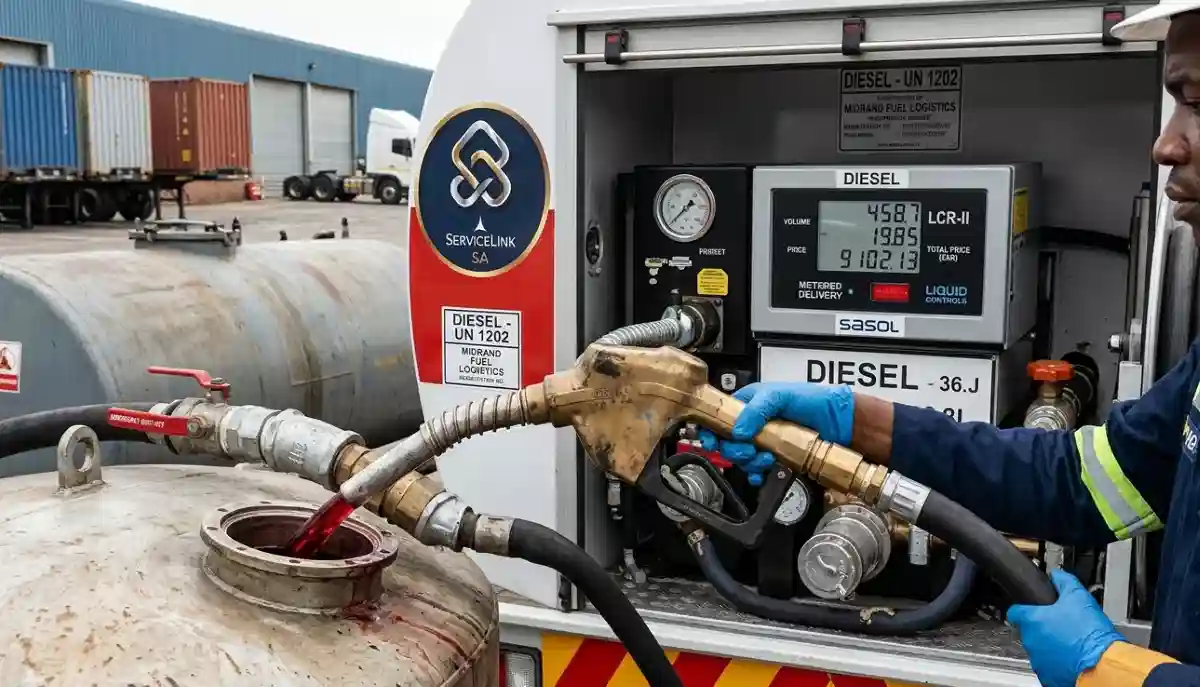
🌍 Key Drivers of Diesel Price Movements
Accurate diesel price forecast South Africa requires monitoring these key drivers:
1. Global crude oil prices (most significant driver):
- Diesel is refined from crude oil—crude price = diesel price direction
- Key benchmarks: Brent crude (European/global) and WTI (US)
- Drivers: OPEC+ production decisions, geopolitical events, global demand
- Monitoring: Daily Brent crude prices, weekly inventory reports
2. Exchange rate (USD/ZAR):
- Oil is priced in US dollars. Weak rand = higher diesel prices
- Every R0.10 change in USD/ZAR affects diesel price by approximately 2-3c/L
- Monitoring: Daily USD/ZAR exchange rate, Reserve Bank announcements
3. Global refinery margins (crack spreads):
- Diesel crack spread = difference between crude oil price and diesel price
- Widens when refinery capacity is constrained (maintenance, closures)
- Monitoring: Platts diesel crack spread indicators
4. Shipping and freight costs:
- Cost to ship diesel from international refineries to South Africa
- Affected by fuel prices (bunker fuel), vessel availability, route disruptions
- Monitoring: Baltic Dry Index, freight rate reports
5. South African economic indicators:
- Domestic diesel demand (mining, agriculture, logistics performance)
- StatsSA economic indicators affect demand expectations. See StatsSA – Economic indicators.
- Load shedding intensity affects generator diesel demand
6. Government policy and levies:
- Annual budget adjustments to General Fuel Levy, RAF Levy, Carbon Tax
- Slate levy adjustments to recover under-recoveries
- These changes are predictable (annual) but significant
7. Seasonal factors:
- Northern hemisphere winter = higher heating oil demand = diesel price pressure
- South African planting/harvest seasons affect agricultural diesel demand
- Refinery maintenance schedules (typically spring and autumn)
For more on market data, read wholesale diesel prices.
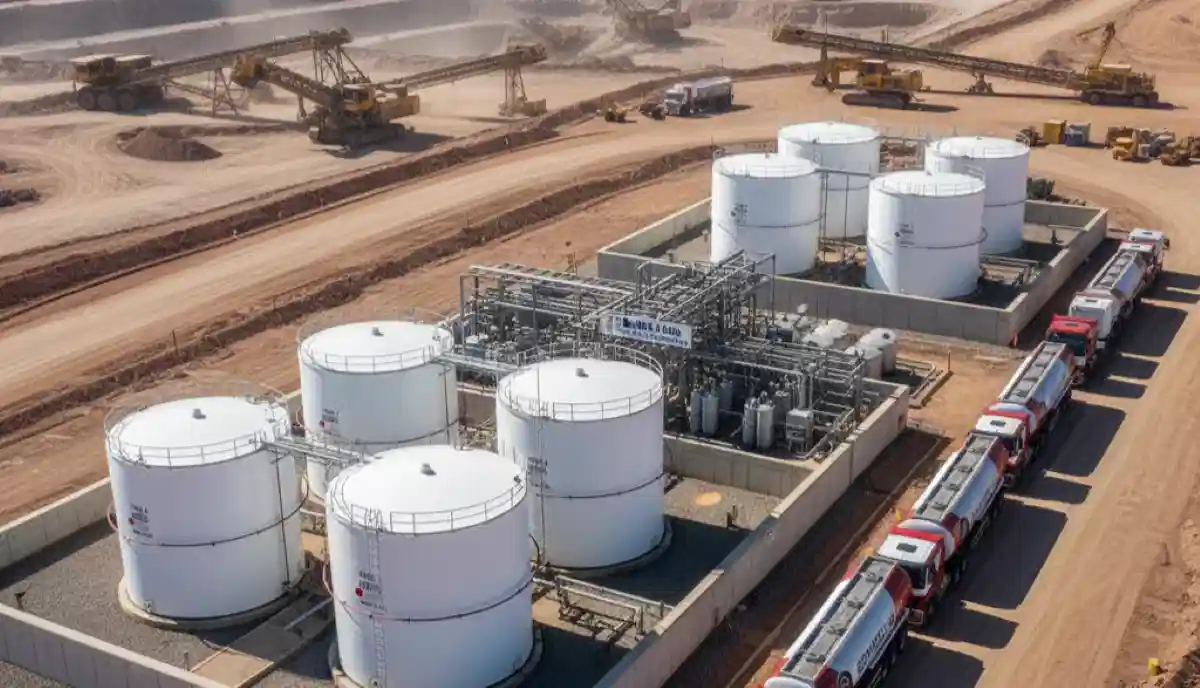
📉 Over-Recovery and Under-Recovery Explained
Understanding over-recovery and under-recovery is essential for short-term fuel price prediction:
What are over-recovery and under-recovery?
South Africa’s fuel price formula calculates prices based on a 30-day average of international prices. When international prices move significantly during the month, the actual landed cost differs from the formula calculation:
- Over-recovery: International prices drop during the month, meaning the formula price is HIGHER than actual landed cost. Consumers pay more than the fuel cost. The over-recovery is tracked in the Slate Account.
- Under-recovery: International prices rise during the month, meaning the formula price is LOWER than actual landed cost. Consumers pay less than the fuel cost. The under-recovery is also tracked in the Slate Account.
How this affects diesel prices:
- Large under-recoveries lead to price increases (slate levy) in following months
- Large over-recoveries can lead to price decreases or slate levy reductions
- The Slate Levy mechanism spreads recovery (or refund) over subsequent months
Practical example:
If international diesel prices spike suddenly (e.g., Middle East conflict), the current month’s formula price (based on previous 30-day average) will be too low. This creates an under-recovery. The DMRE may implement a slate levy in following months to recover the difference, causing prices to rise even after international prices stabilize.
💡 Key Insight for Bulk Buyers
During periods of rapid price movement, the monthly DMRE adjustment may lag behind actual market conditions. This creates short-term opportunities (if prices are dropping) or risks (if prices are rising) for buyers who understand the mechanism. Monitoring daily international prices helps you anticipate DMRE adjustments.
For more on the slate levy, read fuel slate levy explained.
Want to Lock in Better Diesel Prices?
ServiceLink SA connects you with verified suppliers who offer transparent, index-based pricing. Get free quotes and compare rates today. If we can’t assist directly, we’ll connect you with our trusted partner companies.
Compare wholesale diesel prices from accredited suppliers in your area.
📅 Seasonal Patterns in Diesel Pricing
Historical data reveals seasonal patterns that inform diesel price forecast South Africa:
Typical seasonal patterns:
| Season | Typical Price Pressure | Key Drivers |
|---|---|---|
| Q1 (Jan-Mar) | Moderate to High | Northern hemisphere winter heating demand, post-harvest demand in SA |
| Q2 (Apr-Jun) | Moderate | Refinery maintenance season, transition to summer blends |
| Q3 (Jul-Sep) | Low to Moderate | Northern hemisphere summer (lower heating demand), SA winter (higher diesel demand) |
| Q4 (Oct-Dec) | Moderate to High | Pre-winter inventory building in northern hemisphere, SA planting season |
South Africa-specific seasonal factors:
- Planting season (October-November): Increased agricultural diesel demand
- Harvest season (April-June): Peak agricultural diesel consumption
- Winter (June-August): Higher generator diesel demand due to increased load shedding? (correlation varies)
- December-January: Logistics slowdown, potentially lower demand
Refinery maintenance calendar:
Major refineries schedule maintenance during spring (September-November) and autumn (March-May) in the northern hemisphere. South Africa’s refineries have their own schedules. Maintenance reduces supply, potentially increasing prices.
Important caveat:
Seasonal patterns are general tendencies—not guarantees. Global events (wars, pandemics, OPEC decisions) can completely override seasonal patterns. Use seasonal patterns as one input among many, not as standalone forecasts.
📈 Recent Diesel Price Trends and Analysis
Understanding recent trends helps contextualize your diesel price outlook:
Key trend indicators to monitor:
- Year-on-year price changes: Is diesel more or less expensive than same period last year?
- Month-on-month momentum: Are prices rising, falling, or stable?
- Volatility levels: Are prices swinging dramatically or moving gradually?
- Brent crude correlation: How closely are local prices tracking global crude?
- USD/ZAR impact: How much of price movement is exchange rate vs oil price?
Where to find historical price data:
- DMRE publishes monthly price adjustments with historical data. See DMRE – Monthly price adjustments.
- CEF maintains comprehensive fuel price databases. See CEF – Fuel price data.
- StatsSA publishes fuel price indices. See StatsSA – Economic indicators.
What to look for in trend analysis:
- Supply trends: OPEC+ production decisions, US shale output, Russian export restrictions
- Demand trends: Global economic growth, Chinese manufacturing activity, European industrial demand
- Inventory trends: US diesel inventory reports (weekly), OECD commercial stock levels
- Geopolitical risks: Middle East tensions, Russia-Ukraine war, Venezuela sanctions
💡 Key Takeaway: The best fuel price prediction comes from monitoring multiple indicators—not just the headline diesel price. Follow Brent crude daily, watch the USD/ZAR exchange rate, and track DMRE announcements monthly.
For more on pricing, read wholesale diesel prices and bulk diesel vs retail diesel price.

🔧 How to Develop Your Own Diesel Price Outlook
While professional forecasts are valuable, developing your own diesel price outlook helps you make better business decisions:
Step 1: Monitor leading indicators daily:
- Brent crude oil price (US$/barrel)
- USD/ZAR exchange rate
- Platts diesel crack spread (refinery margin)
Step 2: Track DMRE announcements monthly:
- DMRE typically announces price adjustments around the 25th-28th of each month
- Adjustments take effect first Wednesday of the following month
- The announcement includes the slate levy adjustment
Step 3: Follow key reports weekly/monthly:
- US Energy Information Administration (EIA) weekly inventory reports
- International Energy Agency (IEA) monthly oil market reports
- OPEC+ monthly production reports
Step 4: Monitor geopolitical and economic news:
- Middle East tensions (affects supply)
- US Federal Reserve interest rate decisions (affects USD)
- Chinese economic data (affects global demand)
- South African economic indicators (affects local demand)
Step 5: Build a simple forecast model:
For short-term forecasts (1-2 months):
- Current Brent crude price + 2-4 week forward curve
- Current USD/ZAR + 2-4 week forward expectations
- Add current government levies (fixed until budget)
- Add negotiated supplier margin
- Add current slate levy (known from DMRE)
Step 6: Compare with professional forecasts:
Major investment banks and energy consultancies publish diesel price forecasts. Use these to validate your own analysis. Be aware that no forecast is perfect—focus on direction (up/down) rather than exact numbers.
Important limitations:
- Short-term forecasts (1-3 months) are more reliable than long-term
- Unexpected geopolitical events can invalidate any forecast
- Don’t base major business decisions (e.g., large storage investments) solely on forecasts
⏰ When Will Diesel Prices Drop in South Africa?
The question every bulk buyer asks: when will diesel prices drop in South Africa? Here’s what to watch for:
Conditions that typically lead to price drops:
- Falling crude oil prices: If Brent crude drops significantly (e.g., from $90 to $75/barrel), diesel prices typically follow with 1-2 month lag
- Strengthening rand: If USD/ZAR improves from R19 to R17, diesel prices typically decrease
- Reduced global demand: Economic slowdowns (especially in China, Europe, US) reduce demand pressure
- Increased supply: OPEC+ increasing production, US shale output rising, Iranian/Venezuelan oil returning to market
- Slate account over-recovery: If DMRE has accumulated over-recoveries, slate levy may decrease or be refunded
Signs that price drops are coming (leading indicators):
- Brent crude dropping for 2-4 consecutive weeks
- USD/ZAR strengthening for 2-4 consecutive weeks
- US diesel inventory reports showing building stocks
- OPEC+ announcing production increases
- Global economic indicators showing slowing demand
Realistic expectations:
- Diesel prices rarely drop dramatically overnight (except after major events)
- Typical monthly DMRE adjustments range from -R1.00/L to +R1.00/L
- Large drops (>R1.50/L) require significant crude price decreases AND rand strengthening
- Price drops often happen more slowly than price increases (asymmetric response)
⚠️ Warning: Don’t Try to “Time the Market”
Many businesses have lost significant money waiting for price drops that didn’t materialize. Unless you have professional market intelligence and risk management capabilities, focus on securing competitive margins and transparent pricing rather than timing the market. The diesel price outlook should inform strategy—not drive speculative decisions.
For more on market timing, read diesel wholesale discount structures.
🛡️ Strategies to Protect Your Business from Price Volatility
Rather than trying to predict exact prices, focus on strategies that protect your business regardless of market direction:
1. Negotiate transparent, index-based contracts:
Use BFP + fixed margin pricing. This ensures you always pay fair market price plus an agreed markup—no hidden fees, no price manipulation.
2. Secure competitive margins:
The supplier margin is the most negotiable component. For large volumes (50,000L+ monthly), target margins of 5-10%. For very large volumes (200,000L+), target 3-7%.
3. Consider fixed-price contracts for short terms:
For 3-6 month periods when you need budget certainty, fixed-price contracts work. Just understand you’re paying a premium for that certainty.
4. Implement fuel management systems:
Track consumption, identify inefficiencies, and reduce usage. Saving 5-10% on consumption is often easier than negotiating better prices.
5. Optimize storage capacity:
If you expect prices to rise, having extra storage allows you to buy more before the increase. If you expect prices to fall, keep storage minimal and buy just-in-time.
6. Use multiple suppliers:
Don’t depend on a single supplier. Having alternatives improves negotiating leverage and ensures supply continuity.
7. For very large buyers (1M+ litres monthly):
Consider professional fuel hedging through JSE derivatives or supplier hedging programs. See fuel hedging in South Africa for more.
8. Build price contingencies into customer contracts:
For logistics and transport businesses, include fuel escalation clauses in customer contracts. Pass through price risk rather than absorbing it.
9. Monitor and adjust regularly:
Review your fuel strategy quarterly. What worked last year may not work this year. Stay flexible.
For more on contract strategies, read fuel supply contracts in South Africa.
❓ Frequently Asked Questions About Diesel Price Forecasts
When will diesel prices drop in South Africa?
When will diesel prices drop in South Africa depends on global crude oil prices, the USD/ZAR exchange rate, and supply-demand dynamics. Watch for falling Brent crude, strengthening rand, and OPEC+ production increases as leading indicators. No one can predict exact timing—focus on securing competitive margins instead.
What is the diesel price forecast for bulk buyers?
The diesel price forecast South Africa for bulk buyers depends on volume and contract terms. Index-based pricing (BFP + fixed margin) provides transparency and fair market pricing. For specific forecasts, monitor Brent crude trends, USD/ZAR movements, and DMRE monthly announcements.
What is over-recovery and under-recovery in fuel pricing?
Over-recovery occurs when international prices drop during the month, making the formula price higher than actual cost. Under-recovery occurs when international prices rise, making the formula price lower than actual cost. These are tracked in the Slate Account and adjusted via the slate levy in following months.
How accurate are diesel price forecasts?
Fuel price prediction accuracy varies significantly. Short-term forecasts (1-3 months) are moderately reliable (60-80% directional accuracy). Long-term forecasts (6-12+ months) are unreliable due to unpredictable geopolitical events, OPEC decisions, and economic changes. Use forecasts as directional guidance, not guarantees.
What affects diesel prices most in South Africa?
The biggest drivers of the diesel price outlook are: global crude oil prices (Brent crude), USD/ZAR exchange rate, and government levies. Crude oil and exchange rate together account for 60-70% of price movements. Refinery margins, shipping costs, and local demand account for the remainder.
How often do diesel prices change in South Africa?
Diesel prices are adjusted monthly by the DMRE, typically effective the first Wednesday of each month. However, wholesale contract prices may change more or less frequently depending on contract terms. Index-based contracts adjust monthly with DMRE changes. Fixed-price contracts don’t adjust during the term.
Where can I find historical diesel price data?
Historical diesel price data is available from: DMRE monthly price announcements (DMRE – Monthly price adjustments), CEF fuel price databases (CEF – Fuel price data), and StatsSA fuel indices (StatsSA – Economic indicators).
Should I lock in fixed diesel prices or use index-based pricing?
Choose index-based pricing (BFP + fixed margin) for long-term contracts (12+ months) as it’s transparent and fair. Choose fixed pricing only for short terms (3-6 months) when you need absolute budget certainty and accept paying a premium. Never accept fixed pricing without understanding the premium you’re paying.
✅ Final Thoughts: Smarter Diesel Buying Through Better Forecasting
Understanding the diesel price forecast South Africa helps you make better purchasing decisions—but forecasting is just one tool. The most successful bulk buyers combine market intelligence with disciplined procurement strategies: transparent contracts, competitive margins, fuel efficiency, and flexible storage.
Key takeaways from this guide:
- Diesel prices are driven by global crude oil, exchange rates, and government levies
- Over-recovery and under-recovery affect short-term price movements via the slate levy
- Monitor Brent crude daily, USD/ZAR daily, and DMRE announcements monthly
- Seasonal patterns provide general guidance—not guarantees
- Short-term forecasts (1-3 months) are more reliable than long-term
- Don’t try to “time the market”—focus on securing competitive margins instead
- Index-based pricing (BFP + fixed margin) offers transparency and fairness
- Fuel management systems reduce consumption—saving 5-10% often easier than negotiating better prices
- ServiceLink SA connects you with suppliers offering transparent, index-based pricing
Your action plan: Start monitoring the key indicators: Brent crude, USD/ZAR, and DMRE announcements. Use this intelligence to inform your purchasing decisions—but don’t let it paralyze you. Secure competitive, transparent contracts with verified suppliers. Implement fuel management systems to reduce consumption. Then monitor, adjust, and optimize continuously.
Ready to Secure Better Diesel Prices?
ServiceLink SA connects you with verified suppliers offering transparent, index-based pricing. Get free quotes and compare rates today. If we can’t assist directly, we’ll connect you with our trusted partner companies to carry out your fuel supply projects professionally and timeously.
📞 Call us: 073 138 4726 for immediate help finding suppliers with competitive diesel prices near you.
Diesel Delivery •
Fleet Fueling Solutions •
Generator Fuel Services •
Emergency Fuel Delivery •
Fuel Management Systems
📚 Official resources & data sources referenced:
- DMRE – Department of Mineral Resources and Energy – Monthly price adjustments, Basic Fuel Price (BFP), and slate levy announcements.
- StatsSA – Statistics South Africa – Economic indicators, PPI, and fuel price indices.
- CEF – Central Energy Fund – Fuel price data, historical prices, and industry analysis.
- US EIA – Energy Information Administration – Global oil market data, inventory reports, and forecasts.
Information provided for general guidance based on independent research and official sources. Diesel prices, forecasts, and market conditions change rapidly. Always verify current prices directly with DMRE and your suppliers. Past performance does not guarantee future results.
Written by: ServiceLink SA Research Team
Fuel Market Intelligence & Procurement Specialists
The ServiceLink SA Research Team combines expertise from energy economics, fuel market analysis, and procurement strategy. Our analysts track DMRE monthly price adjustments, monitor global oil markets (Brent crude, Platts assessments), analyze USD/ZAR exchange rate trends, and maintain relationships with accredited suppliers across South Africa. This guide draws on primary research, official DMRE and CEF data, and analysis of global energy market reports from IEA, EIA, and OPEC. Our mission is to help South African bulk buyers understand diesel price forecast South Africa dynamics and make smarter purchasing decisions. If we can’t assist directly, we’ll connect you with our trusted partner companies who specialize in fuel supply and market intelligence.
For more information about diesel pricing and forecasting, explore our related resources: bulk fuel supply costs, how to choose a bulk fuel supplier, diesel delivery services, fleet fueling solutions, fuel management systems, wholesale diesel prices, and fuel supply contracts. See our location-specific guides for Johannesburg, Pretoria, Durban, Cape Town, and Port Elizabeth.