🔧 Need Professional Plumbing Maintenance?
Schedule a professional inspection or get quotes for maintenance contracts. Free inspections available for qualifying homeowners.
Get Maintenance Quotes Near You
Servicing Gauteng, Western Cape, KwaZulu-Natal, and across South Africa
Home Plumbing Maintenance Checklist: Prevent Costly Repairs with This Seasonal Guide
🔧 Monthly, quarterly, and annual tasks every South African homeowner should know—plus a free downloadable checklist
Let me tell you about two homeowners. The first, Thabo in Johannesburg, spends about 30 minutes each month checking his plumbing. He cleans aerators, checks under sinks, tests his geyser pressure valve, and monitors his water meter. In five years, he’s had one minor leak—caught early—costing R850 to repair.
The second, Sarah in Pretoria, never thinks about her plumbing until something goes wrong. In the same five years, she’s had a burst geyser (R18,000 replacement plus R25,000 water damage), two blocked drains (R2,500), and a leaking tap that wasted water for months before she noticed (R1,200 repair plus higher water bills). Total cost: over R46,000.
The difference? Consistent home plumbing maintenance. Most plumbing emergencies don’t happen without warning—they’re the result of months or years of neglect. A dripping tap wastes water and money. A slowly corroding pipe eventually bursts. A failing geyser pressure valve gives warning signs before catastrophic failure.
This guide is your complete plumbing checklist—everything you need to know to prevent plumbing problems before they become expensive emergencies. Whether you’re a new homeowner or have lived in your house for decades, this preventive maintenance schedule will save you thousands and give you peace of mind.
For related information, read our plumbing service contracts guide, water saving plumbing tips, pipe insulation guide, and how to fix a leaking pipe guide. Let’s protect your home.
📋 Table of Contents – Home Plumbing Maintenance Checklist
💰 Why Preventive Maintenance Matters: The Cost Comparison
Here’s what consistent home plumbing maintenance saves you compared to emergency repairs:
| Maintenance Task | Time/Cost | Emergency It Prevents | Emergency Cost | Savings |
|---|---|---|---|---|
| Test geyser pressure valve (annual)同 | 5 minutes, free同 | Burst geyser, ceiling collapse同 | R15,000-R35,000+同 | R15,000+ |
| Check under sinks for leaks (monthly)同 | 5 minutes, free同 | Water damage, mould, rot同 | R5,000-R30,000+同 | R5,000+ |
| Clean drain strainers (weekly)同 | 2 minutes, free同 | Blocked drains, sewage backup同 | R1,500-R8,000+同 | R1,500+ |
| Monitor water meter (monthly)同 | 5 minutes, free同 | Hidden leak, slab leak同 | R5,000-R50,000+同 | R5,000+ |
| Annual professional inspection | R800-R1,500 | Multiple potential failures | R10,000-R50,000+ | R8,500+ |
💡 The 1% Rule:
Spending 1% of your home’s value on annual preventive maintenance (including plumbing) prevents 10-20% of its value in emergency repairs over time. For a R2 million home, R20,000/year in maintenance prevents R200,000-R400,000 in disasters. Your plumbing portion is R800-R1,500 annually.
📅 Monthly Maintenance Checklist (30 Minutes)
These quick monthly tasks form the foundation of home plumbing maintenance:
✅ Check Under All Sinks
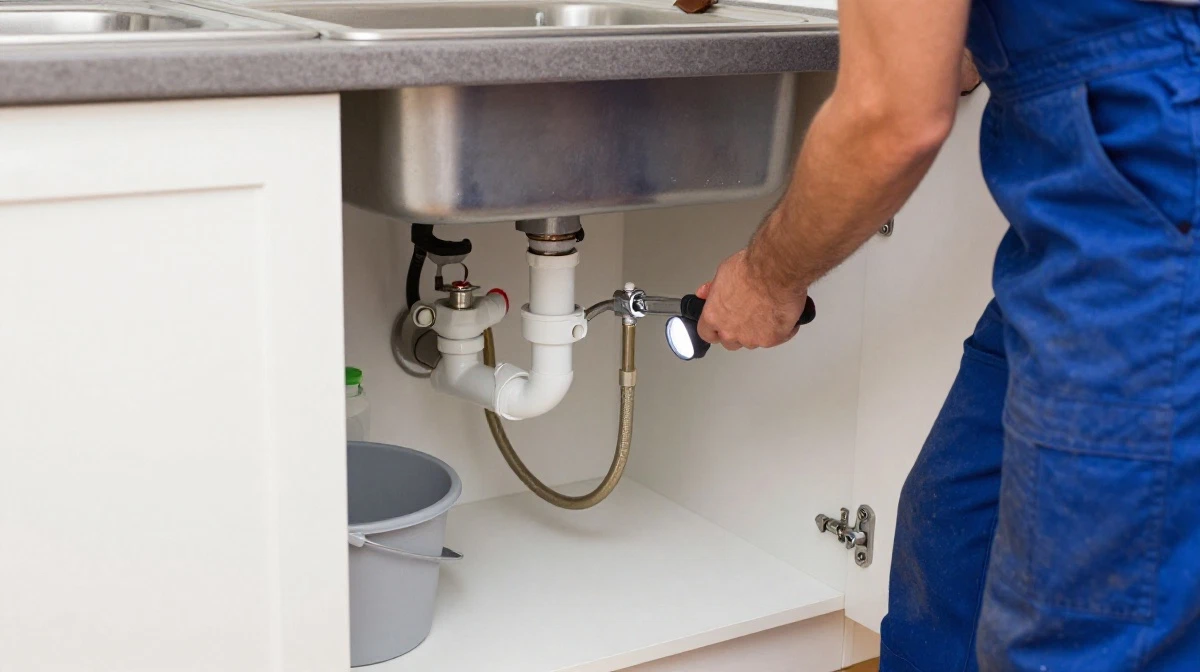
Look for moisture, water stains, or drips. Run your hand along pipes (careful—hot water pipes may be warm). Check cabinet floors for dampness. A small drip today becomes a major leak tomorrow.
✅ Test Toilet Flush & Fill
Flush each toilet. Does it flush completely? Does the tank refill within 30-60 seconds? Listen for hissing (indicates leak). Add food colouring to tank—if colour appears in bowl without flushing, you have a silent leak.
✅ Check Visible Pipes
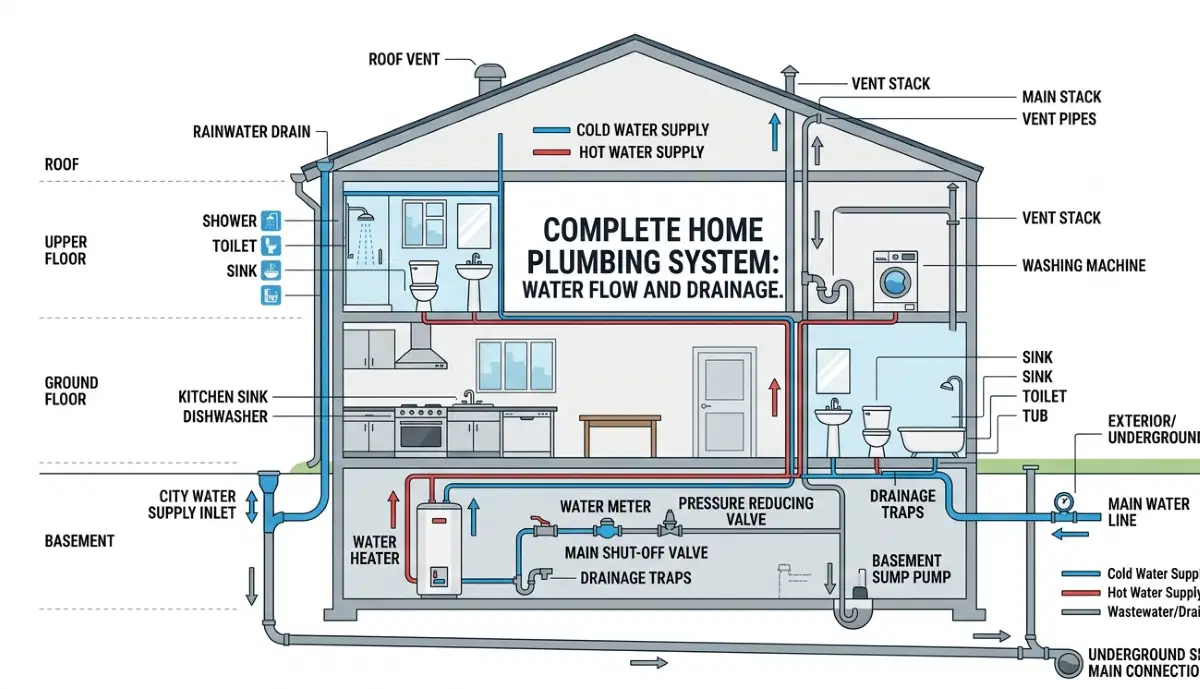
Inspect exposed pipes in ceilings, basements, and crawl spaces. Look for corrosion, rust, moisture, or mineral deposits (white crusty buildup). These indicate slow leaks.
✅ Monitor Water Meter
Turn off all water. Check meter reading. Wait 30 minutes without using water. Check again. If meter moved, you have a hidden leak. Call a plumber.
✅ Listen for Running Water
At night when your home is quiet, walk through listening for running water sounds when all taps are off. Hissing or rushing sounds indicate leaks behind walls or underground.
✅ Check Tap Function
Turn each tap on and off. Check for drips, sputtering (air in lines), or unusual noises. Tighten loose handles. Note any taps that are difficult to operate.
📆 Quarterly Maintenance Checklist (Every 3 Months)
These tasks require a bit more time but are essential for prevent plumbing problems:
✅ Clean Tap Aerators & Showerheads
Unscrew aerators from taps. Rinse away sediment and debris. Soak in vinegar for 30 minutes if mineral buildup is present. For showerheads, fill a plastic bag with vinegar, tie over showerhead, leave overnight. This restores water flow and pressure.
✅ Check Washing Machine Hoses
Inspect washing machine supply hoses for bulging, cracking, or leaks. Standard rubber hoses should be replaced every 3-5 years. Consider upgrading to steel-braided hoses (R200-R400)—they last longer and are burst-resistant.
✅ Clean Drain Strainers & Traps
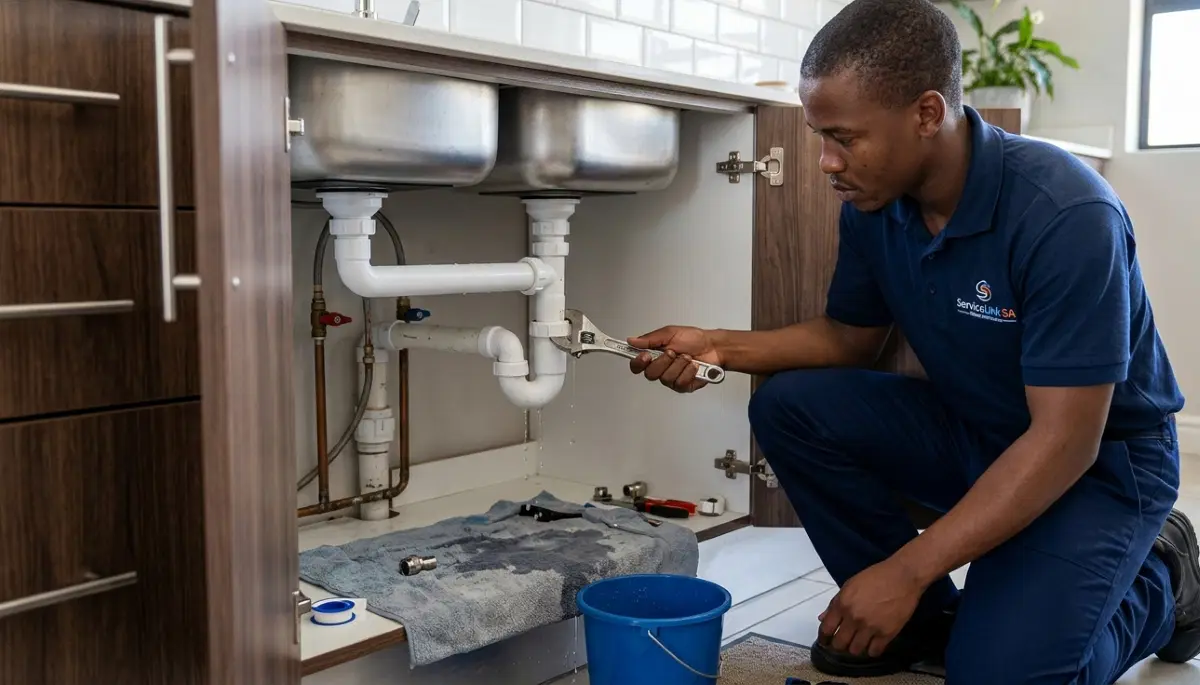
Remove and clean drain strainers in sinks, showers, and baths. For sinks, remove the P-trap (place bucket underneath first) and clear any debris. This prevents slow drains and blockages.
✅ Test Water Pressure
Attach pressure gauge to outside tap or washing machine connection. Normal pressure: 400-600 kPa. Below 300 kPa = low pressure issue. Above 700 kPa = needs pressure reducing valve. Read our low water pressure guide.
✅ Inspect Exterior Taps & Pipes
Check outside taps for leaks when turned on. Look for frost damage after winter. Ensure taps are properly sealed where they enter the house. Disconnect garden hoses before freezing weather.
🔧 Need Professional Help with Maintenance?
Schedule a professional inspection or get quotes for maintenance contracts. Free inspections available for qualifying homeowners.
Free quotes • Verified plumbers • Maintenance contracts available
🔧 Annual Professional Maintenance Checklist (Hire a Plumber)
Some home plumbing maintenance tasks require a professional. Schedule these annually:
| Task | Why It’s Important | Typical Cost |
|---|---|---|
| Geyser Inspection & Service | Check pressure valve, anode rod, element, thermostat. Extends geyser life by 5+ years. Read our geyser guide. | R500-R1,000 |
| Professional Drain Cleaning | Hydro-jetting removes buildup from pipe walls, preventing blockages. Especially important for older homes. | R800-R1,500 |
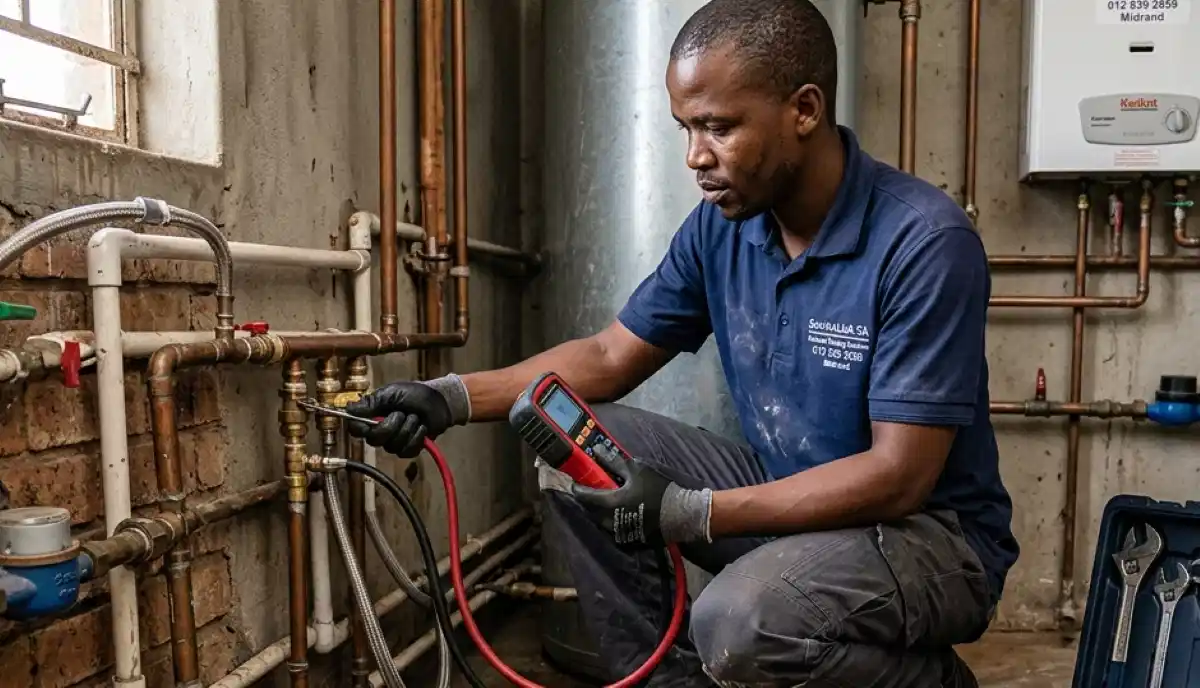
| Comprehensive Leak Detection | Professional inspection using acoustic and thermal tools finds hidden leaks you can’t see or hear. | R850-R2,000 |
| Pressure Regulation Check | Test whole-house pressure. Adjust or replace PRV if needed. Prevents burst pipes from high pressure. | R450-R800 |
| Toilet Seal Inspection | Check wax seals on toilets for deterioration. Replace before leaks damage floors below. | R500-R1,000 per toilet |
| Pipe Insulation Check | Inspect insulation on exposed pipes. Replace damaged sections. Prevents freezing and heat loss. | R300-R800 |
Total annual professional maintenance: R2,500-R5,000. This investment typically prevents R10,000-R50,000 in emergency repairs. Read our plumbing service contracts guide for ongoing professional maintenance options.
🌦️ Seasonal Checklist: South African Climate Guide
South Africa’s varied climate means different seasonal priorities for home plumbing maintenance:
❄️ WINTER (May-August) – Gauteng, Free State, Northern Cape
- Insulate exposed pipes in attics, garages, and exterior walls
- Disconnect garden hoses from outside taps
- Let taps drip during freezing nights (below 0°C)
- Open cabinet doors under sinks to allow warm air circulation
- Know where your main water shut-off valve is (for frozen pipe bursts)
☀️ SUMMER (November-February) – All regions
- Check irrigation systems for leaks before peak usage
- Inspect pool plumbing for cracks or leaks
- Monitor water bills for increased usage (hidden leaks)
- Check outdoor taps and hoses for leaks
- Consider water-efficient fixtures during high usage season
🍂 AUTUMN (March-May) – Prepare for winter
- Schedule annual professional inspection before winter
- Check geyser function before cold weather increases demand
- Inspect roof for leaks that could affect pipes in ceilings
- Clear gutters and downspouts to prevent water backup
🌸 SPRING (September-November) – Post-winter check
- Check for frost damage to exposed pipes
- Test outside taps after winter
- Inspect geyser for any issues after heavy winter use
- Check for leaks in irrigation systems before summer
Read our pipe insulation guide for winter preparation and frozen pipes prevention guide for cold areas.
🔥 Geyser Maintenance: Extend Lifespan by 5+ Years
Your geyser is the most expensive plumbing component in your home. Proper preventive maintenance dramatically extends its life:
📋 Monthly Geyser Check (2 minutes)
Look at the drip tray under your geyser. Any moisture? Listen for hissing or popping sounds. Check the pressure relief valve drip pipe—is water dripping constantly (indicates valve failure)?
🔧 Quarterly Pressure Valve Test (5 minutes)
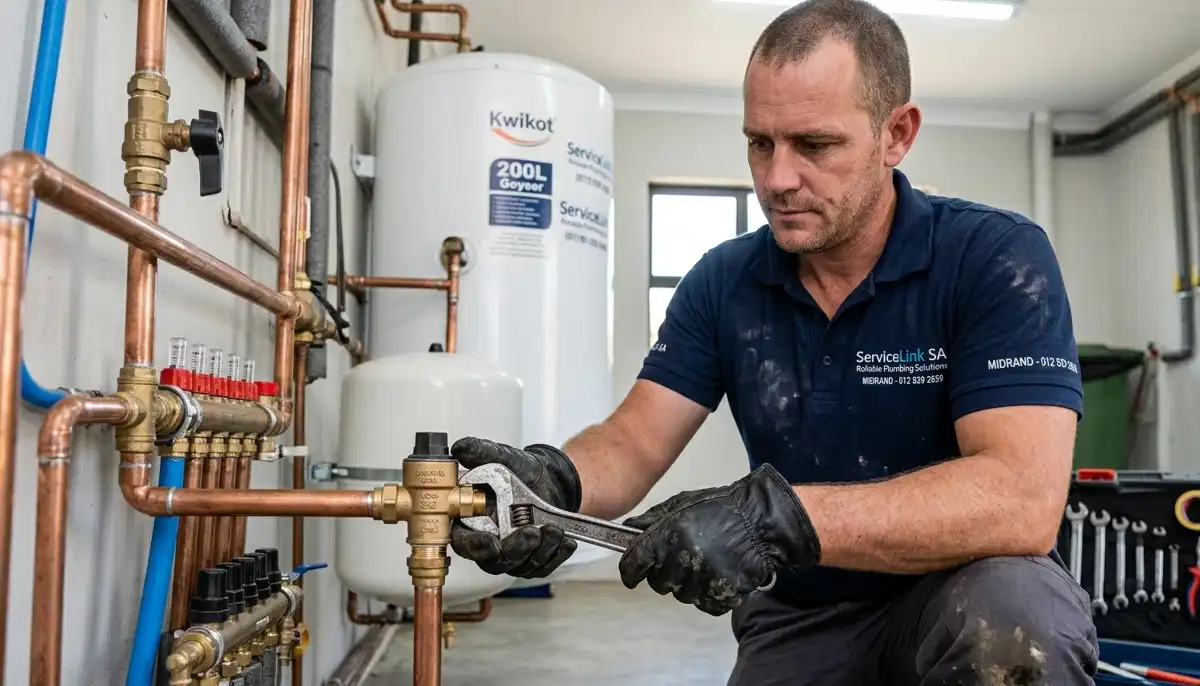
Locate the pressure relief valve (brass valve on geyser side). Lift the lever gently for 2-3 seconds. You should hear water flow into the drip pipe. Release. If valve doesn’t open or doesn’t close fully (continues dripping), call a plumber. Read our geyser pressure valve guide.
💧 Annually: Check Sacrificial Anode Rod
The anode rod attracts corrosion, protecting your geyser tank. Have a plumber inspect annually. Replace every 3-5 years (R1,000-R2,000). This single maintenance task can extend geyser life from 8 years to 15+ years.
🧼 Every 2-3 Years: Flush the Geyser
Sediment buildup reduces efficiency and causes popping noises. Professional flushing (R500-R800) removes sediment, restores efficiency, and extends element life.
For complete geyser guidance, read our geyser installation and repair guide.
💧 Leak Detection: The 30-Minute Monthly Test
This simple test is the most valuable plumbing checklist item for catching hidden leaks:
- Turn off all water-using fixtures – Taps, toilets, washing machine, dishwasher, irrigation. Ensure no one uses water during the test.
- Locate your water meter – Usually outside near the street or at the property boundary.
- Record the meter reading – Write down all numbers. The small triangle or star-shaped dial indicates even tiny flows.
- Wait 30 minutes – Do not use any water during this time. No flushing, no washing, no drinking water.
- Check the meter again – If any numbers have changed or the small dial has moved, you have a hidden leak.
- If leak detected – Call professional leak detection services to locate and repair.
💡 Pro Tip:
Perform this test at the same time each month (e.g., first Sunday morning). Record results in a log. A gradual increase in baseline consumption indicates a developing leak before it becomes catastrophic.
🚰 Drain Maintenance: Prevent Blockages
Most drain blockages are preventable with simple habits:
✅ DO:
- Use drain strainers in sinks and showers (catch hair, food debris)
- Run hot water for 30 seconds after each use (flushes debris)
- Pour boiling water down drains monthly (melts grease buildup)
- Use baking soda + vinegar monthly (natural cleaner)
- Have drains professionally cleaned every 2-3 years
❌ DON’T:
- Pour cooking grease or oil down drains (solidifies, causes fatbergs)
- Use chemical drain cleaners (damage pipes, harm plumbers)
- Flush “flushable” wipes (they aren’t—they clog sewer lines)
- Put coffee grounds, eggshells, or fibrous foods down disposal
- Ignore slow drains (they only get worse)
For existing drain issues, read our drain cleaning and unblocking guide.
🚨 Emergency Preparedness: Know These 3 Things
Part of home plumbing maintenance is being prepared for when things go wrong:
🔴
1. Main Water Shut-Off Valve
Locate it today. Label it. Ensure everyone in your home knows where it is and how to turn it off (clockwise to close). In an emergency, this single action prevents catastrophic flooding.
⚡
2. Geyser Electrical Isolation
Know which circuit breaker controls your geyser. If your geyser is leaking, turn off the electricity to it before calling a plumber to prevent electrocution risk.
📞
3. Emergency Plumber Contact
Save ServiceLink SA’s emergency number 073 138 4726 in your phone now. Don’t search during a crisis. We connect you with 24/7 emergency plumbers near you.
Read our emergency plumbing services guide for more.
📋 Professional Maintenance Contracts: Are They Worth It?
Many plumbing companies offer annual maintenance contracts. Here’s what to consider:
| Contract Type | Typical Cost/Year | What’s Included | Best For |
|---|---|---|---|
| Basic Inspection Contract | R800-R1,500 | Annual inspection, pressure test, geyser check, basic report | Most homeowners, DIY maintenance |
| Comprehensive Contract | R2,500-R5,000 | Annual inspection + 1-2 included call-outs + discounted repairs | Older homes, busy professionals |
| Full Service Contract | R5,000-R12,000 | Quarterly inspections, priority response, all repairs included | Large homes, landlords, commercial |
Verdict: For most homeowners, a basic annual inspection contract (R800-R1,500) is excellent value. It ensures professional eyes on your system annually and often includes priority service. Read our plumbing service contracts guide for more.
💰 Cost Savings: What Maintenance Prevents
Here’s the real-world financial impact of consistent home plumbing maintenance:
| Maintenance Neglected | Potential Emergency | Emergency Cost | Maintenance Cost | Savings |
|---|---|---|---|---|
| Geyser pressure valve not tested for 5 years同 | Burst geyser, ceiling collapse, water damage同 | R25,000-R50,000+同 | Free (DIY test)同 | R25,000+ |
| Small drip under sink ignored for 6 months | Cabinet rot, mould, floor damage | R5,000-R15,000 | R500-R1,500 (repair drip) | R4,000+ |
| Anode rod never replaced (geyser age 12 years) | Geyser tank rust-through, burst | R15,000-R25,000 | R1,500 every 3-5 years | R12,000+ |
| Slow drain ignored for months | Complete blockage, sewage backup | R2,000-R8,000 | R150-R300 (DIY cleaning) | R1,700+ |
| No annual inspection for 5 years | Multiple undetected issues compound | R15,000-R40,000 | R4,000-R7,500 (5 years) | R10,000+ |
💡 The Bottom Line:
Investing R500-R1,500 annually in preventive maintenance saves R5,000-R50,000+ in emergency repairs over time. That’s a 500-5,000% return on investment. There’s no better financial decision for your home.
❌ 5 Maintenance Mistakes to Avoid
Mistake #1: Only Fixing Things When They Break
Reactive maintenance is the most expensive approach. By the time something breaks, significant damage has often already occurred. Proactive home plumbing maintenance costs 10-20% of emergency repairs.
Mistake #2: Ignoring Small Leaks
“It’s just a drip” is the most expensive phrase in plumbing. A drip per second wastes 11,000 litres/year (R500-R1,500) and the leak always worsens. Fix drips immediately.
Mistake #3: Never Testing the Geyser Pressure Valve
A stuck pressure valve can cause geyser explosion. A leaking pressure valve wastes water and indicates failure. Test quarterly. Replace every 2-3 years if needed.
Mistake #4: Not Knowing Where Your Main Shut-Off Is
Every minute spent searching for the valve during a burst pipe adds hundreds of litres of water damage. Find it today. Label it. Show everyone in your home.
Mistake #5: Using Chemical Drain Cleaners
These damage pipes, are hazardous to handle, and make professional drain cleaning dangerous for plumbers. Use mechanical methods (plunger, snake) or call a professional.
📋 Printable Quick-Reference Checklist
Copy this checklist and keep it on your fridge or in your maintenance binder:
🏠 HOME PLUMBING MAINTENANCE CHECKLIST SOUTH AFRICA
✅ MONTHLY (30 min)
- ☐ Check under all sinks for leaks
- ☐ Test toilet flush & fill (food colouring test)
- ☐ Inspect visible pipes for corrosion
- ☐ Monitor water meter (30-min test)
- ☐ Listen for running water when off
- ☐ Check tap function
✅ QUARTERLY (1 hour)
- ☐ Clean tap aerators & showerheads
- ☐ Check washing machine hoses
- ☐ Clean drain strainers & traps
- ☐ Test water pressure (gauge)
- ☐ Inspect exterior taps
- ☐ Test geyser pressure valve
✅ ANNUALLY (Professional)
- ☐ Geyser inspection (anode rod, element)
- ☐ Professional drain cleaning
- ☐ Comprehensive leak detection
- ☐ Pressure regulation check
- ☐ Toilet seal inspection
- ☐ Pipe insulation check
✅ EMERGENCY PREPAREDNESS
- ☐ Locate main water shut-off valve
- ☐ Label main water valve clearly
- ☐ Identify geyser circuit breaker
- ☐ Save emergency plumber number: 073 138 4726
- ☐ Share locations with all household members
❓ Frequently Asked Questions About Home Plumbing Maintenance
How often should I do home plumbing maintenance?
Home plumbing maintenance should be done monthly (30-minute checks), quarterly (1-hour deeper checks), and annually (professional inspection). Monthly tasks include checking under sinks, testing toilets, and monitoring your water meter. Quarterly includes cleaning aerators and testing pressure. Annual professional inspection is essential for geyser and hidden systems.
What is the most important plumbing maintenance task?
The single most important plumbing checklist item is the monthly water meter test. Turn off all water, check the meter, wait 30 minutes, check again. If the meter moved, you have a hidden leak. This simple test catches slab leaks, underground pipe leaks, and hidden wall leaks before they cause catastrophic damage.
How can I prevent plumbing problems in winter?
To prevent plumbing problems in winter: Insulate exposed pipes in attics, garages, and exterior walls. Disconnect garden hoses from outside taps. During freezing nights (below 0°C), let taps drip slightly and open cabinet doors under sinks to allow warm air circulation. Know your main water shut-off valve location in case of frozen pipe bursts.
Should I get a professional plumbing maintenance contract?
For most homeowners, a basic annual inspection contract (R800-R1,500) is excellent value. It ensures professional eyes on your system annually and often includes priority service. For older homes, busy professionals, or landlords, a comprehensive contract (R2,500-R5,000) that includes 1-2 call-outs may be worthwhile. Read our plumbing service contracts guide for more.
How do I test my geyser pressure valve?
To test your geyser pressure valve: Locate the brass valve on the side or top of your geyser. Place a bucket under the drip pipe. Lift the lever gently for 2-3 seconds—you should hear water flow into the drip pipe. Release the lever. If no water flows (valve stuck closed) or water continues dripping after release (valve stuck open), call a plumber. Test quarterly.
How do I know if I have a hidden leak?
Signs of hidden leaks include: water meter moving when no water is being used (30-minute test), unexplained high water bills, soggy patches in garden, musty odours indoors, new foundation cracks, or sounds of running water when everything is off. Professional leak detection services can locate hidden leaks without damaging your property.
How long do plumbing systems last without maintenance?
Without preventive maintenance, galvanised steel pipes (common pre-1990) may fail at 30-40 years instead of 50+. Geysers last 8-10 years instead of 12-15. Copper pipes can corrode faster in acidic water. Pressure valves fail earlier. Regular maintenance extends component life by 20-50% and prevents catastrophic failures.
What should I include in a home plumbing maintenance binder?
Your home plumbing maintenance binder should include: A copy of this checklist with completion dates, water meter readings log, pressure test results, geyser service records, warranty documents for fixtures and appliances, COC certificates for any plumbing work, and contact information for your preferred plumber and emergency services.
✅ Final Thoughts: An Hour a Month Saves Thousands
Your home’s plumbing system works silently every day, delivering clean water and removing waste. But like any system, it needs regular attention. The 30 minutes you spend each month on home plumbing maintenance is the best investment you can make in your property.
Key takeaways for South African homeowners:
- Monthly checks take 30 minutes and catch problems early
- The water meter test is your most powerful leak detection tool
- Quarterly geyser pressure valve testing prevents catastrophic bursts
- Annual professional inspection costs R800-R1,500 and saves thousands
- Preventive maintenance delivers 500-5,000% ROI
- Know your main water shut-off valve location today
- Create a maintenance binder to track everything
Your action plan: Print the checklist above. Schedule 30 minutes this weekend for your first monthly inspection. Locate and label your main water shut-off valve. Save 073 138 4726 in your phone. Then book your annual professional inspection through ServiceLink SA. Your home—and your wallet—will thank you.
🔧 Need Professional Plumbing Maintenance?
Schedule a professional inspection or get quotes for maintenance contracts. Free inspections available for qualifying homeowners.
📞 Call us: 073 138 4726 for immediate help finding a maintenance plumber near you.
Maintenance contracts •
Water saving tips •
Pipe insulation •
Fix leaking pipes •
Why choose us
📚 Official resources & standards referenced:
- Plumbing Industry Registration Board (PIRB) – Maintenance standards and professional plumber verification.
- Department of Water and Sanitation – Water conservation tips and leak detection guidelines.
- SANS 10400 – South African National Standard for plumbing maintenance and compliance.
Information provided for general guidance based on industry research and PIRB/DWS standards. For specific home plumbing maintenance advice, consult a qualified plumber familiar with your property.
Written by: Innocent T Hanyani
Construction & Home Services Industry Specialist | 21+ Years Experience
Innocent T Hanyani has over two decades of experience working across South Africa’s plumbing,
construction, and property maintenance sectors. Throughout his career, he has worked closely
with plumbers, contractors, and homeowners, gaining practical insight into how plumbing
systems are installed, repaired, and maintained. His expertise helps homeowners understand
common plumbing problems, choose the right repair solutions, and find reliable service
professionals for everything from leak detection to full plumbing installations.
For more information about home plumbing maintenance, explore our related resources:
plumbing service contracts guide,
home plumbing maintenance checklist,
water saving plumbing tips,
pipe insulation guide,
and how to fix a leaking pipe guide.
Our how ServiceLink SA works and
contractor verification process pages explain how we connect you with trusted professionals.
See our service areas page for maintenance coverage in your region.