
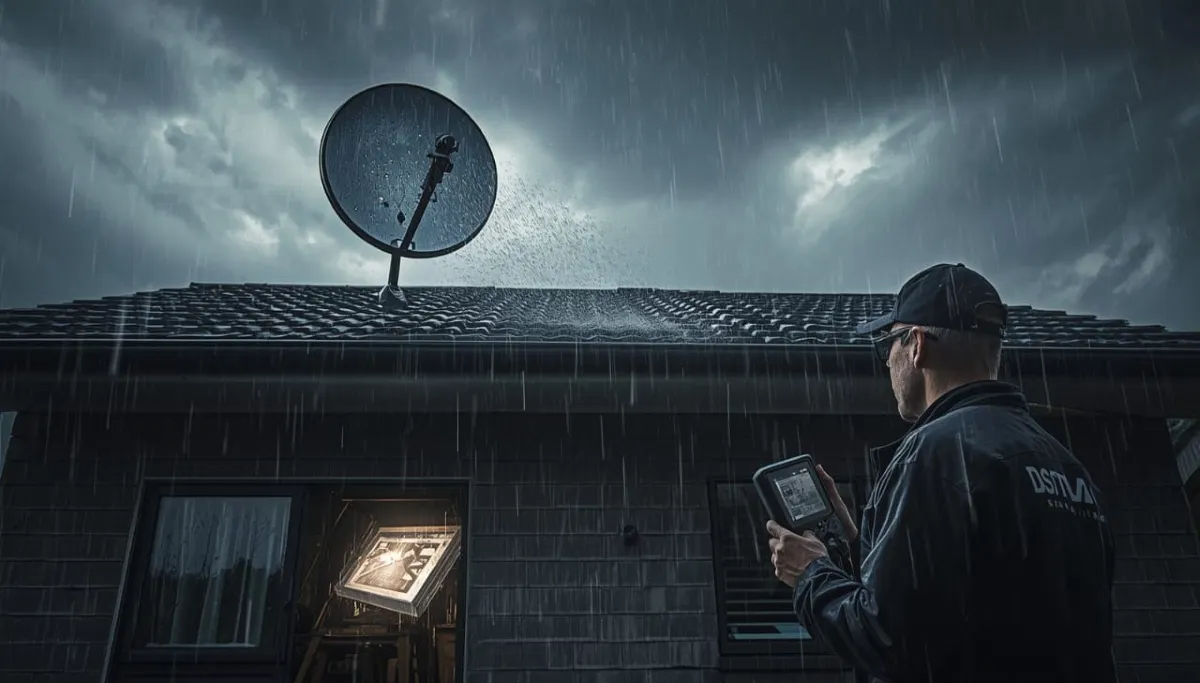
Losing Signal Every Time It Rains?
Get a permanent fix from a verified, accredited DSTV installer near you.
Same-day service available across South Africa.
Servicing KwaZulu-Natal, Durban, Umhlanga, Ballito, Richards Bay, Ladysmith, and across South Africa
Rain Fade DSTV Signal: Why It Happens and 7 Permanent Solutions
🌧️ Dark clouds roll in, and your TV goes out. Here’s why – and how to fix it permanently.
You’re watching the rugby. The Springboks are about to score. Suddenly, dark clouds gather.
Thunder rumbles. The rain starts pouring. And then… your TV picture freezes, pixelates,
or disappears completely with that dreaded “No Signal” message.
The storm passes. The sun comes out. Your signal returns. Until the next storm.
This is called rain fade dstv signal loss – and it’s one of the most frustrating problems
for DSTV users, especially in high-rainfall areas like Durban, Cape Town, and Port Elizabeth.
In this guide, I’ll explain why weather affecting satellite signal happens,
how to tell if your problem is normal or serious, and most importantly – 7 permanent solutions
to how to stop dstv signal loss during heavy rain so you can watch TV through any storm.
For a broader guide on rain-related signal loss, read our
signal loss during rain guide.
For improving signal strength, see signal strength guide.
And for no signal issues, read no signal guide.
📋 Table of Contents – Rain Fade Solutions Guide
🌧️ What Is Rain Fade? Understanding Satellite Signal Loss
Rain fade dstv signal – known technically as rain fade – occurs when heavy rain
absorbs or scatters the satellite signal as it travels through the atmosphere.
How satellite signals work:
- The satellite is 36,000km above Earth
- Its signal travels through the entire atmosphere to reach your dish
- Raindrops absorb and scatter microwave signals (the same way fog scatters light)
- Heavier rain = more signal loss
- This is called weather interference – a 2-10dB signal loss during heavy rain
💡 Key Insight:
Think of signal strength like a water tank. Rain fade drains water from the tank.
If your tank is full (strong signal), a little rain doesn’t empty it.
If your tank is only half full (marginal signal), even light rain can drain it completely.
The solution is to fill your tank – improve your baseline signal.
⚠️ Normal Rain Fade vs Problem: When to Worry
Not all dstv signal loss rain is a problem. Here’s how to tell the difference.
Normal rain fade (nothing to fix):
- Signal loss only during very heavy rain or thunderstorms
- Signal returns within 5-15 minutes after rain lightens
- This happens 2-5 times per year
- Your signal is normally 85%+ in clear weather
- This is unavoidable – all satellite TV experiences this
Problem rain fade (needs fixing):
- Signal loss during light or moderate rain
- Signal takes 30+ minutes to return after rain stops
- This happens every time it rains (multiple times per month)
- Your signal is normally below 75% in clear weather
- You have pixelation even in clear weather
- This can be fixed permanently
⚠️ If you lose signal every time it rains – even light rain – you have a problem that needs fixing.
Don’t just live with it. The 7 solutions in this guide will give you reliable viewing through most storms.
Request a professional assessment.
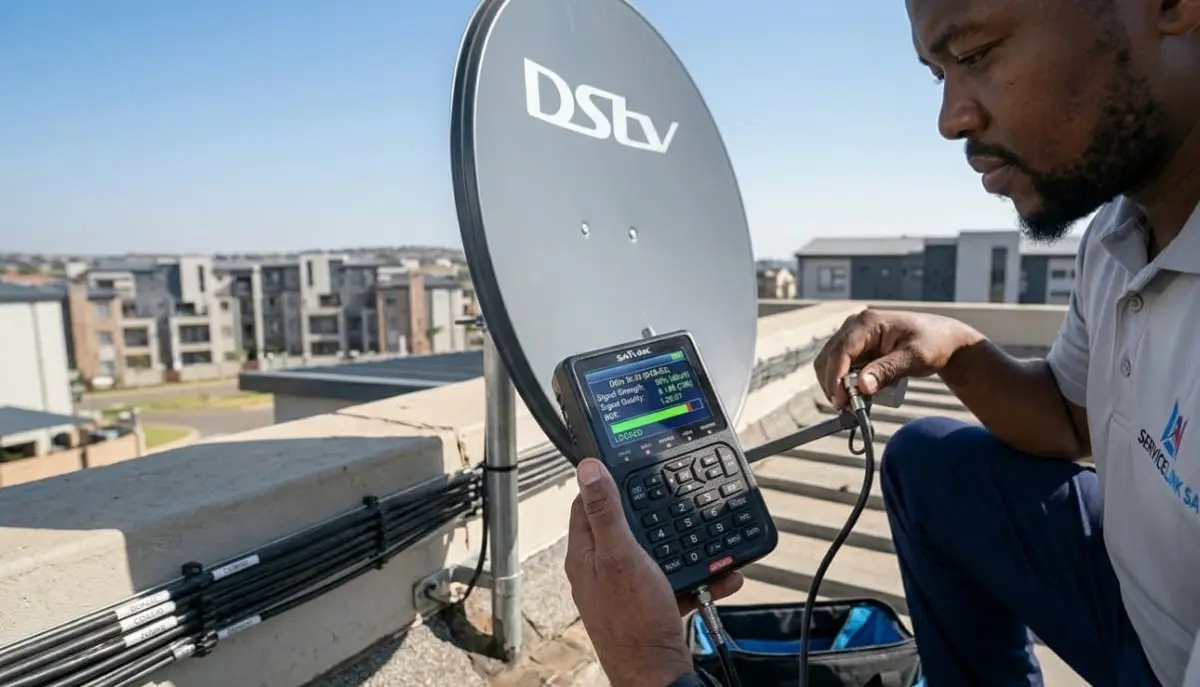
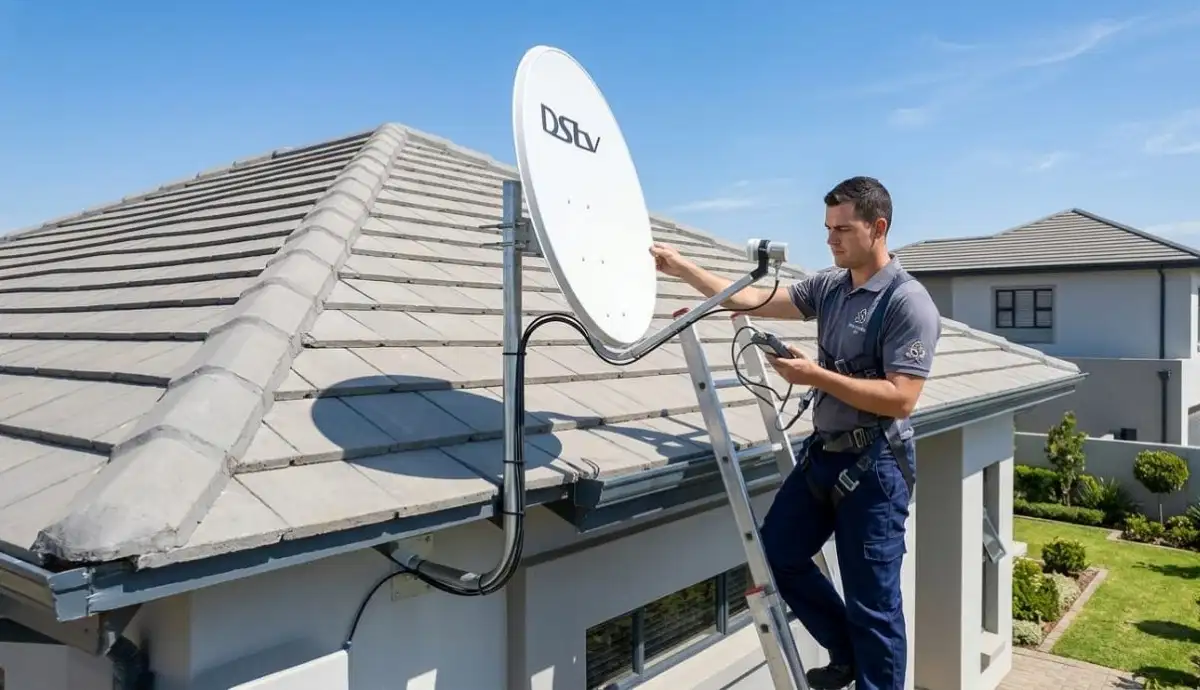
🎯 Solution #1: Professional Dish Realignment
The most common cause of weather affecting satellite signal is poor dish alignment.
Even a 2mm misalignment can reduce your signal by 50-80%.
What professional realignment includes:
- Technician uses a professional signal meter (not just decoder readings)
- Makes tiny adjustments to azimuth, elevation, and LNB skew
- Targets 85%+ signal strength and quality
- Weatherproofs all connections after alignment
- Includes warranty on the work
Cost: R450-R900
Effectiveness: ⭐⭐⭐⭐⭐ (can improve signal by 10-20%)
For DIY alignment instructions (ground-level only), read our
dish alignment guide.
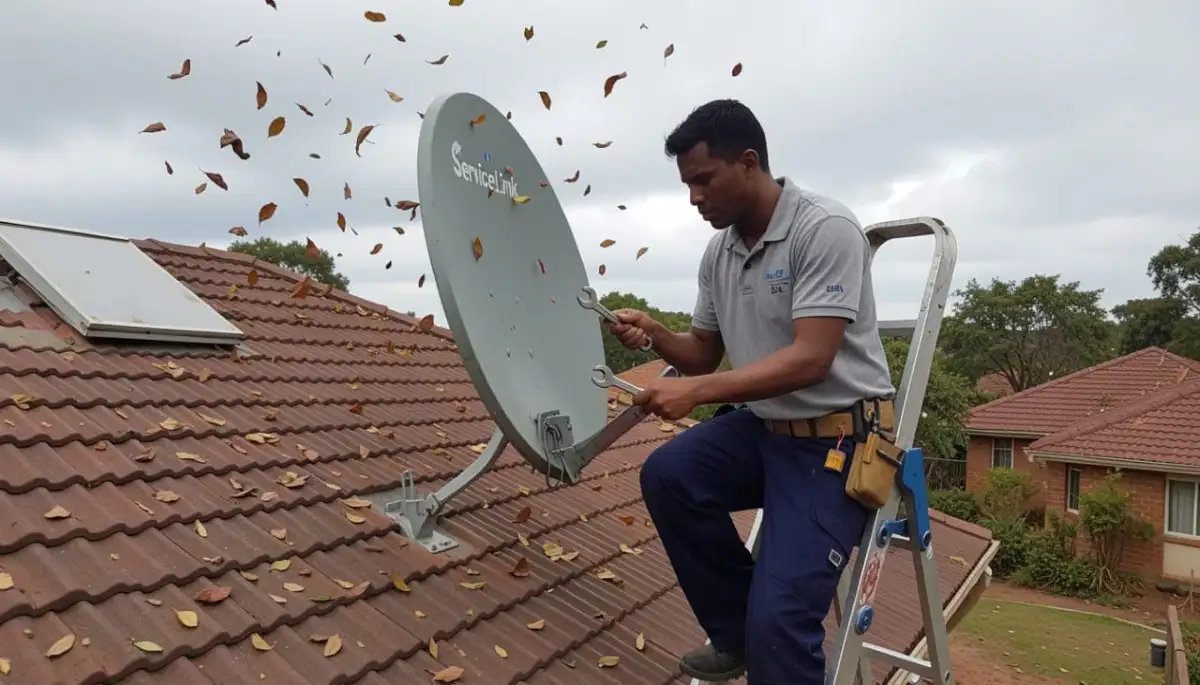
📡 Solution #2: Upgrade to a Larger Dish
A 60cm dish is standard for most of South Africa, but in coastal areas or fringe signal areas,
you need a larger dish to overcome rain fade dstv signal.
Recommended dish sizes by region:
- Inland (Gauteng, Free State, North West): 60cm is usually sufficient
- Coastal (Durban, Cape Town, Port Elizabeth): 80cm recommended
- High rainfall areas (KZN, Eastern Cape): 80cm recommended
- Fringe areas (deep valleys, far north): 80cm-1.2m may be needed
How a larger dish helps:
A larger dish collects more signal. An 80cm dish collects about 30% more signal than a 60cm dish.
This extra signal provides “rain margin” – the buffer that keeps your TV working during storms.
Cost: R550-R750 for 80cm dish + R500-R900 installation = R1,050-R1,650
Effectiveness: ⭐⭐⭐⭐⭐ (best long-term solution for coastal areas)
Read our complete dish size guide.
Tired of Losing Signal Every Time It Rains?
Get a permanent fix from a verified, accredited DSTV installer near you.
We’ll diagnose your rain fade and implement the right solution.
Free quotes. Verified installers. No obligation.
🔧 Solution #3: Replace Old LNB
LNBs have a lifespan of 3-5 years. As they age, their performance degrades,
making weather interference worse.
Signs your LNB needs replacement:
- Good signal strength but poor quality
- Signal works in the morning but fails in the afternoon (heat-related)
- LNB is more than 4 years old
- Visible damage (cracks, rust, water inside)
Cost: R350-R700 (including installation)
Effectiveness: ⭐⭐⭐⭐ (restores original signal performance)
Read our LNB replacement guide.
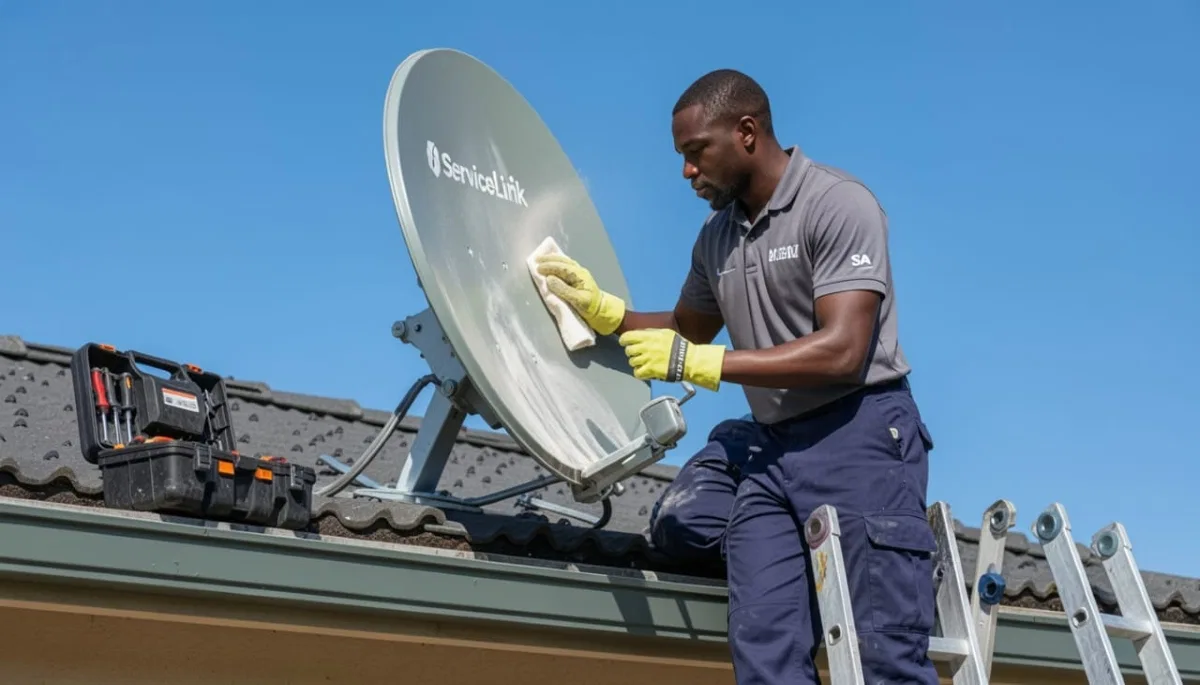
💧 Solution #4: Weatherproof All Connections
Water ingress is a common cause of dstv signal loss rain.
Ironically, rain can get into your system and cause signal loss even after the rain stops.
What to check:
- All outdoor F-connectors should be wrapped with self-amalgamating tape (not electrical tape)
- Drip loops at all entry points into your home
- Silicone sealant around wall penetrations – inside AND outside
- LNB cap must be intact (the plastic cover over the ports)
Cost: R100-R300 (DIY) or included in professional service
Effectiveness: ⭐⭐⭐⭐ (prevents water-related signal loss)
🌳 Solution #5: Trim Vegetation (Trees, Branches)
Trees absorb moisture. When it rains, wet leaves absorb even more satellite signal.
A branch that doesn’t block signal in dry weather can kill your signal when wet.
Signs of vegetation obstruction:
- Signal loss is worse in summer (leaves) than winter (bare branches)
- Signal loss happens during rain AND for a while after (leaves staying wet)
- You can see branches in your dish’s line of sight
Cost: R0-R1,000 (DIY or professional tree trimming)
Effectiveness: ⭐⭐⭐⭐ (eliminates obstruction-related loss)
🔌 Solution #6: Upgrade Cables to RG6 Quad-Shield
Old or low-quality cables cause signal loss, making weather interference worse.
RG59 cable has higher signal loss than RG6.
What to check:
- If your cable is RG59, upgrade to RG6 quad-shield
- Check for water damage or corrosion at connectors
- Ensure compression F-connectors (not screw-on)
Cost: R450-R750 for cable replacement
Effectiveness: ⭐⭐⭐⭐ (reduces signal loss over distance)
Read our best coaxial cable guide.
📡 Solution #7: Install a Signal Amplifier (Last Resort)
For very long cable runs (50m+) or very weak signal areas, a signal amplifier can help.
However, this is a last resort – fix the root cause first.
When to use an amplifier:
- Cable runs over 50 metres
- You’ve tried all other solutions and still have marginal signal
- Professional assessment confirms amplifier will help
Cost: R300-R800 for amplifier + installation
Effectiveness: ⭐⭐⭐ (can help, but doesn’t fix root cause)
⚠️ Warning:
Incorrect amplifier installation can worsen signal problems. Professional assessment is essential.
Always fix alignment, LNB, and cabling issues before considering an amplifier.
🌍 Regional Rain Fade Guide by Province
Your location in South Africa significantly affects weather affecting satellite signal.
KwaZulu-Natal (Durban, Umhlanga, Ballito, Richards Bay, Ladysmith):
- Highest rainfall in South Africa – frequent tropical storms
- 80cm dish is strongly recommended (60cm will cause frequent rain fade)
- High humidity accelerates LNB corrosion – replace every 3-4 years
- Heavy downpours can cause complete signal loss even with 80cm – normal
- Check WeatherSA for storm warnings
- KZN installation services
Western Cape (Cape Town, Stellenbosch, Paarl):
- Winter rainfall, strong winds, coastal conditions
- 80cm dish recommended – 60cm loses signal during winter storms
- Corrosion-resistant equipment essential
- Regular maintenance checks recommended before winter
Gauteng (Johannesburg, Pretoria, Midrand):
- Summer thunderstorms – intense but short-lived
- 60cm dish usually sufficient, but 80cm provides better rain margin
- Lightning protection important
For location-specific services, see our pages for
Durban,
Umhlanga,
Ballito,
Richards Bay, and
Ladysmith.
💰 Cost Comparison of Rain Fade Solutions
| Solution | Cost | Effectiveness | Best For |
|---|---|---|---|
| Professional realignment | R450-R900 | ⭐⭐⭐⭐⭐ | Poorly aligned dishes |
| Upgrade to 80cm dish | R1,050-R1,650 | ⭐⭐⭐⭐⭐ | Coastal areas, frequent rain |
| Replace old LNB | R350-R700 | ⭐⭐⭐⭐ | LNBs over 3-5 years old |
| Weatherproof connections | R100-R300 | ⭐⭐⭐⭐ | Water ingress issues |
| Trim vegetation | R0-R1,000 | ⭐⭐⭐⭐ | Tree obstructions |
| Upgrade cables | R450-R750 | ⭐⭐⭐⭐ | Old RG59 cable |
| Signal amplifier | R300-R800 | ⭐⭐⭐ | Very long cable runs, last resort |
🛡️ Preventing Future Rain Fade Problems
Once you’ve fixed your rain fade issues, here’s how to prevent them from returning.
- Check signal readings monthly: If they’re dropping, investigate early
- After storms: Check if your dish has moved – high winds can misalign
- Trim vegetation regularly: Don’t let branches grow into the signal path
- Inspect weatherproofing annually: Re-seal any cracked silicone or tape
- Replace LNB every 4-5 years: Old LNBs have worse rain margin
- Consider a UPS for load shedding: Power outages + rain = double frustration
❓ Frequently Asked Questions About Rain Fade
Why does my DSTV lose signal when it rains?
Rain fade dstv signal occurs because raindrops absorb and scatter satellite signals.
A small amount of rain fade during heavy storms is normal. However, frequent loss during light rain
indicates a problem: poor dish alignment, dish too small for your area, old LNB, water in cables,
or vegetation obstruction.
How can I stop my DSTV from losing signal in the rain?
To stop dstv signal loss rain permanently: improve your baseline signal.
Professional realignment (R450-R900), upgrade to an 80cm dish (R1,050-R1,650),
replace old LNB (R350-R700), weatherproof all connections, and trim vegetation.
In coastal areas like Durban and Cape Town, an 80cm dish is essential.
What size dish do I need to prevent rain fade in Durban?
In Durban and KwaZulu-Natal, an 80cm dish is strongly recommended to combat weather affecting satellite signal.
The high rainfall and tropical storms require the extra signal margin that an 80cm dish provides.
A 60cm dish will cause frequent signal loss during moderate rain.
Is rain fade normal for DSTV?
Some rain fade dstv signal during extreme storms is normal.
However, if you lose signal during light or moderate rain, or every time it rains,
you have a problem that can be fixed. Your baseline signal is too low – professional help can improve it.
How much does it cost to fix rain fade permanently?
Permanent rain fade fixes cost: professional realignment R450-R900,
80cm dish upgrade R1,050-R1,650, LNB replacement R350-R700, weatherproofing R100-R300.
A complete solution (realignment + larger dish + new LNB) costs R1,500-R2,500.
Get a free quote for your situation.
Can trees cause DSTV signal loss during rain?
Yes. Wet leaves absorb more satellite signal than dry leaves. A branch that doesn’t block signal
in dry weather can kill your signal when it rains. If signal loss is worse in summer (leaves)
than winter, or happens during rain AND for a while after, trees are likely the cause.
Trimming branches or relocating the dish are the solutions.
Does a bigger DSTV dish help with rain fade?
Absolutely. An 80cm dish collects about 30% more signal than a 60cm dish,
providing significantly more “rain margin” – the buffer that keeps your TV working during storms.
For coastal areas like Durban, Cape Town, and Port Elizabeth, an 80cm dish is essential.
Why does my DSTV signal come back slowly after rain?
If signal takes 30+ minutes to recover after rain stops, you likely have water in your cables or LNB.
The moisture continues to affect the signal until it dries out.
Check for green/white corrosion on F-connectors. Replacing corroded connectors and weatherproofing properly will solve this.
Can I watch DSTV during a thunderstorm?
During severe thunderstorms, some signal loss is normal and unavoidable – even with the best equipment.
For safety, it’s recommended to unplug your decoder and TV during lightning storms to protect against power surges.
Consider DSTV Stream as a backup during storms (if you have good internet and UPS).
How can I check if my dish alignment is causing rain fade?
On a clear day, check your signal readings (Menu → Settings → Signal Detection).
If strength or quality is below 75%, your dish is likely misaligned.
Professional alignment can boost your signal to 85%+ – enough to survive most storms.
Request a free signal inspection.
✅ Final Thoughts: Watch TV Through Any Storm
Rain fade dstv signal loss is frustrating, but it doesn’t have to be a permanent problem.
The key is improving your baseline signal so you have enough “rain margin” to survive storms.
Start by checking your signal readings on a clear day. If you’re below 75%,
professional realignment is the first step. If you’re in a coastal or high-rainfall area,
upgrading to an 80cm dish is the best long-term investment.
Don’t settle for losing TV every time it rains. Request a free quote
from ServiceLink SA. We’ll connect you with verified, accredited installers who can diagnose your rain fade
and implement permanent solutions. Same-day service available in most areas.
Tired of Losing Signal Every Time It Rains?
Get a permanent fix from a verified, accredited DSTV installer near you.
Free quotes. Same-day service available across South Africa.
📞 Call us: 073 138 4726 for immediate assistance.
Free signal inspection •
How to choose an installer •
12-month warranty on repairs
📚 Official resources & standards referenced:
- Official DSTV weather impact guide – Official weather-related signal information.
- SABS – South African Bureau of Standards outdoor equipment standards.
- South African Weather Service – Rainfall patterns and storm warnings.
Information provided for general guidance. DSTV is a registered trademark of MultiChoice.
Rainfall patterns vary by region – consult WeatherSA for local conditions.
Always prioritise safety during thunderstorms – unplug equipment during lightning.
Written by: Innocent T Hanyani
Satellite & Home Entertainment Installation Specialist | 21+ Years Experience
Innocent T Hanyani has over two decades of experience in satellite television installations across South Africa.
He has diagnosed and fixed thousands of rain fade issues, from simple realignments to complete system upgrades.
His expertise in coastal and high-rainfall areas helps homeowners achieve reliable viewing through any storm.
For more help with rain fade and signal problems, explore our related resources:
signal loss during rain guide,
improve signal strength,
no signal guide,
dish size guide,
dish alignment guide.
See our service areas page for coverage in your region.