
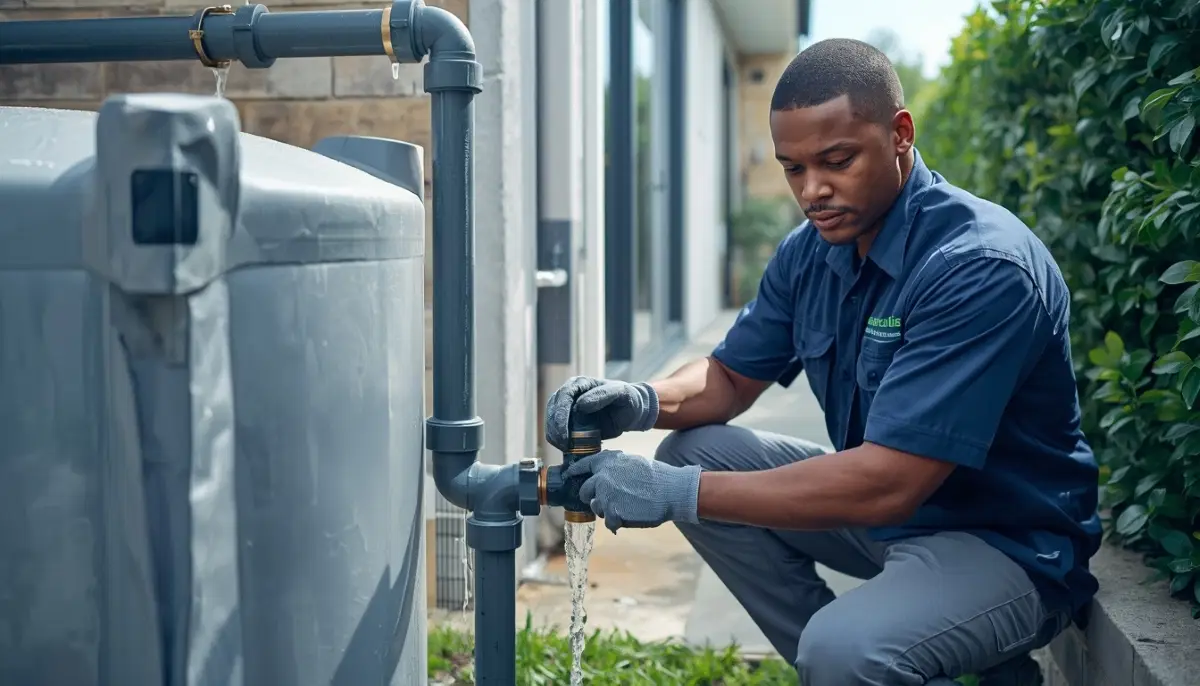
☔ Collect Free Rainwater for Your Home
Get quotes from verified rainwater harvesting specialists. Reduce your water bill by 30-50%. Free inspections available.
Get Rainwater Harvesting Quotes Near You
Servicing Gauteng, KwaZulu-Natal, Durban, Umhlanga, Ballito, Westville, and across South Africa
Rainwater Harvesting Plumbing Setup: Collect & Use Rainwater at Home
☔ From rooftop to toilet—complete guide to rainwater collection, storage, filtration, and plumbing for South African homes
Every time it rains, thousands of litres of free water flow off your roof and into the stormwater drain. You pay for that water twice—once through municipal water bills, and again through stormwater management charges. What if you could capture that water and use it instead?
That’s the promise of rainwater harvesting plumbing. A properly designed system collects rain from your roof, stores it in a tank, and distributes it to toilets, washing machines, and gardens. In a water-scarce country like South Africa, it’s one of the smartest investments you can make.
I’ve helped homeowners across Gauteng and KwaZulu-Natal install rainwater harvesting systems. The results are remarkable: water bills cut by 30-50%, gardens that thrive during droughts, and the satisfaction of using free, natural water. A 5,000-litre tank in Johannesburg (annual rainfall 700mm) on a 150m² roof can collect 100,000+ litres annually—enough to cover most toilet and garden needs.
This comprehensive guide will teach you everything about rainwater collection—from calculating tank size to filtration, from plumbing connections to legal requirements. Whether you’re in rainy KwaZulu-Natal or drier Gauteng, this rainwater tank installation guide has you covered.
For related information, read our greywater system guide, water saving plumbing tips, low-flow fixtures guide, and water efficient fixtures guide. Let’s capture that free water.
📋 Table of Contents – Rainwater Harvesting Plumbing Guide
☔ Why Harvest Rainwater in South Africa?
South Africa is a water-scarce country with an average annual rainfall of 450mm (well below the global average of 860mm). Here’s why every home should consider rainwater harvesting plumbing:
💰
30-50% Reduction
Typical household water bill savings
🌧️
100,000+ Litres/Year
Collectable from a typical home in Gauteng
📈
8-12% Annual Tariff Hikes
Protection against rising water costs
Benefits of rainwater harvesting:
- Reduce water bills – Free water for toilets, laundry, and gardens
- Drought resilience – Store water for dry periods
- Better for plants – Rainwater is soft, chemical-free, and ideal for gardens
- Reduce stormwater runoff – Less water entering municipal drains
- Protection against outages – Water stored during load-shedding or main breaks
- Increased property value – Rainwater systems are attractive to buyers
Read our home plumbing system diagram guide to understand how rainwater integrates with your existing plumbing.
📊 How Much Rainwater Can You Collect?
Before investing in rainwater tank installation, calculate your potential harvest:
The formula: Annual Rainfall (mm) × Roof Area (m²) × Runoff Coefficient (0.85) = Litres per year
Example calculation (Johannesburg):
- Annual rainfall: 700mm (0.7 metres)
- Roof area: 150m²
- 0.7 × 150 × 0.85 = 89,250 litres per year
Regional rainfall averages:
- Durban (KZN): 1,000-1,200mm/year – Excellent harvesting potential
- Cape Town (Western Cape): 500-600mm/year – Winter rainfall, storage needed
- Johannesburg/Pretoria (Gauteng): 650-750mm/year – Summer rainfall, good potential
- Bloemfontein (Free State): 550-600mm/year – Moderate potential
- Upington (Northern Cape): 200-250mm/year – Limited potential
What you can do with collected rainwater: Toilet flushing, washing machines, garden irrigation, car washing, and (with treatment) laundry and bathing. Never drink untreated rainwater.
For location-specific services, explore our plumbing services Gauteng and KwaZulu-Natal pages.
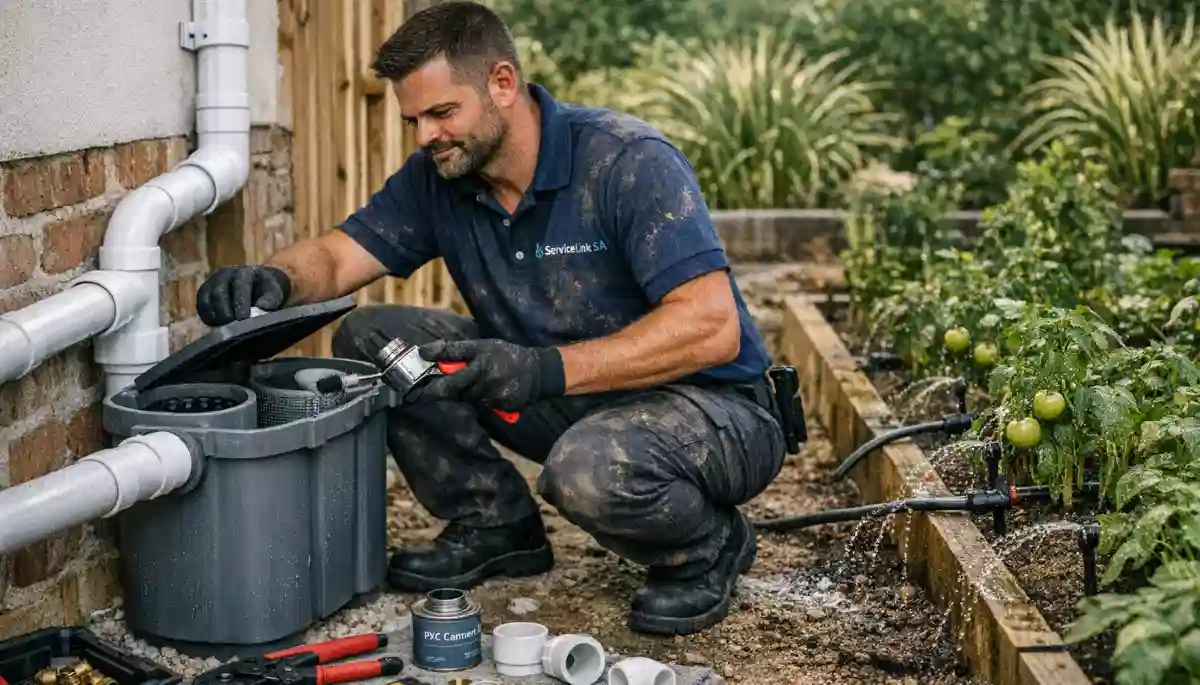
🔧 Rainwater Harvesting System Components
A complete rainwater harvesting plumbing system includes these components:
🏠 Collection Surface
Your roof. Metal roofs are best (cleanest water). Tile roofs are fine. Avoid roofs with lead flashings or treated wood.
🍂 Gutters & Downpipes
Collect water from the roof. Must be clean, properly sloped, and leaf-guarded.
🌊 First-Flush Diverter
Diverts the first 20-50 litres of each rainfall (the dirtiest water from the roof). Essential for water quality.
🧹 Leaf Filter/Screen
Removes leaves and debris before water enters the tank.
🛢️ Storage Tank
Holds collected rainwater. Available in polyethylene, concrete, steel, or fibreglass.
💧 Pump & Pressure Tank
Pressurises water for household use. Essential for toilets and washing machines.
🔧 Filtration
Sediment filter (20-50 micron) for household use. UV treatment for potable systems.
🚰 Plumbing Connections
Pipes connecting tank to toilets, washing machine, or garden irrigation.
Read our water efficient fixtures guide for complementary water-saving upgrades.
☔ Collect Free Rainwater for Your Home
Get quotes from verified rainwater harvesting specialists. Reduce your water bill by 30-50%. Free inspections available.
Get Rainwater Harvesting Quotes
Free quotes • Verified specialists • Beat Your Quote guarantee
📏 Tank Sizing Guide
Choosing the right tank size is critical for rainwater tank installation:
| Household Size | Roof Area | Recommended Tank Size | Usage | Typical Payback |
|---|---|---|---|---|
| 1-2 people (small home) | 80-120m² | 1,000-2,500 litres | Garden only | 3-5 years |
| 2-3 people | 100-150m² | 2,500-5,000 litres | Garden + toilet | 4-6 years |
| 3-4 people | 150-200m² | 5,000-10,000 litres | Toilets + laundry + garden | 5-7 years |
| 4-5 people | 200-300m² | 10,000-15,000 litres | Full household (non-potable) | 6-8 years |
Sizing principles:
- Larger tanks store more water but cost more
- For garden-only use, smaller tanks suffice
- For toilet flushing, size for 2-4 weeks of storage
- In high-rainfall areas (Durban), smaller tanks fill quickly
- In low-rainfall areas (Gauteng), larger tanks store water for dry periods
Read our low-flow fixtures guide to reduce your water demand and tank size.
🛢️ Types of Rainwater Tanks
Several tank options for rainwater collection are available:
| Material | Cost (5,000L) | Lifespan | Pros | Cons | Best For |
|---|---|---|---|---|---|
| Polyethylene (Plastic) | R4,000-R8,000 | 15-20 years | Lightweight, affordable, UV-stabilised | Can degrade in direct sun over decades | Most homes |
| Concrete | R8,000-R15,000 | 50+ years | Very durable, can be buried | Heavy, expensive, requires professional installation | Buried systems, permanent installations |
| Steel (Galvanised) | R6,000-R12,000 | 20-30 years | Durable, attractive, recyclable | Can rust, heavier than plastic | Aesthetic-conscious homeowners |
| Fibreglass | R10,000-R20,000 | 30+ years | Very durable, smooth interior | Expensive | Premium installations |
For most South African homes, polyethylene tanks offer the best value.
🧹 Filtration & First-Flush Systems
Proper filtration is essential for how to set up rainwater harvesting at home safely:
First-flush diverter (essential):
- Diverts the first 20-50 litres of each rainfall (contains roof dust, bird droppings, debris)
- Cost: R500-R1,500
- Improves water quality significantly
Leaf filter/screen (essential):
- Removes leaves and large debris before water enters tank
- Cost: R200-R800
- Installed at downpipe or tank inlet
Sediment filter (for household use):
- Removes particles down to 20-50 microns
- Cost: R500-R2,000
- Essential for toilet flushing and laundry
UV treatment (for potable systems only):
- Kills bacteria and pathogens
- Cost: R3,000-R8,000
- Required if using rainwater for bathing or drinking (not recommended)
💡 Pro Tip:
A first-flush diverter is the most important water quality investment. For R500-R1,500, it removes the dirtiest water from each rainfall. Don’t skip it.
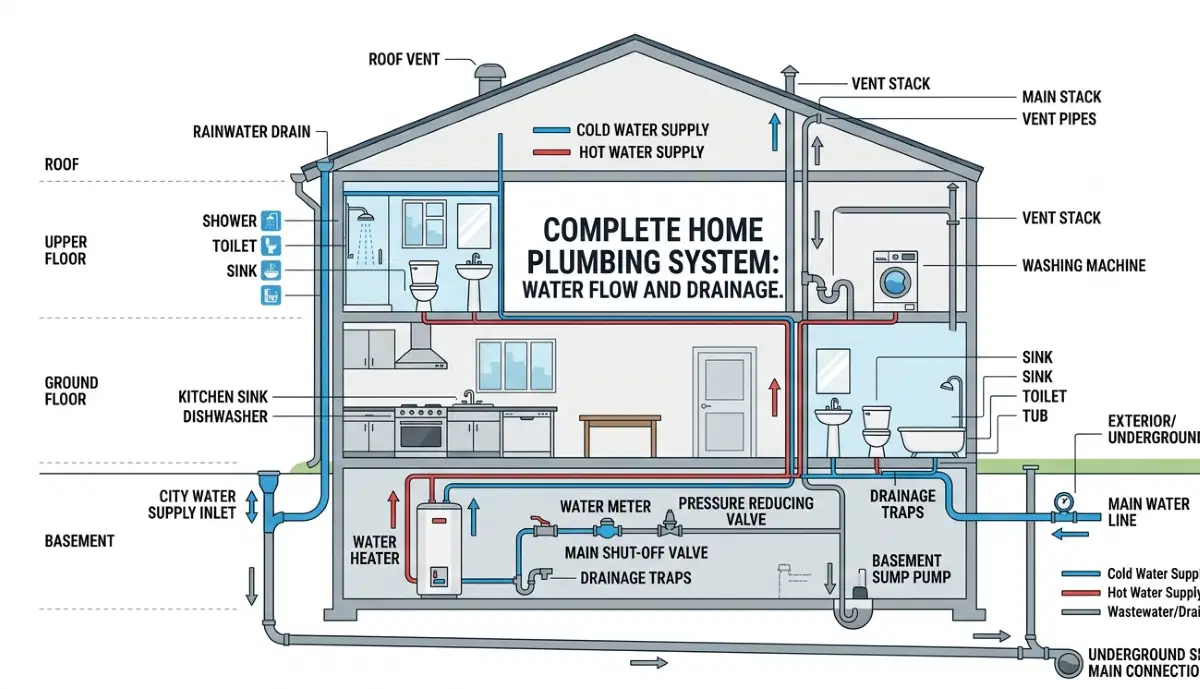
🔧 Plumbing Connections to Your Home
Connecting your rainwater collection system to household plumbing requires professional installation:
Connection options:
- Toilet flushing only: Connect tank to toilet cisterns. Requires pump and pressure tank. Most common and cost-effective.
- Toilets + washing machine: Larger demand, requires filtration (20-50 micron).
- Full non-potable supply: Toilets, laundry, garden, outdoor taps. Requires pump, pressure tank, and sediment filter.
- Potable (drinking) system: UV treatment required. Not recommended for DIY—professional only.
Key plumbing requirements:
- Backflow prevention device (prevents contamination of main supply)
- Isolation valves for maintenance
- Dedicated pipe runs (separate from potable water lines)
- Clear labelling of non-potable outlets
- COC from PIRB-registered plumber
Read our plumbing COC guide for compliance information.
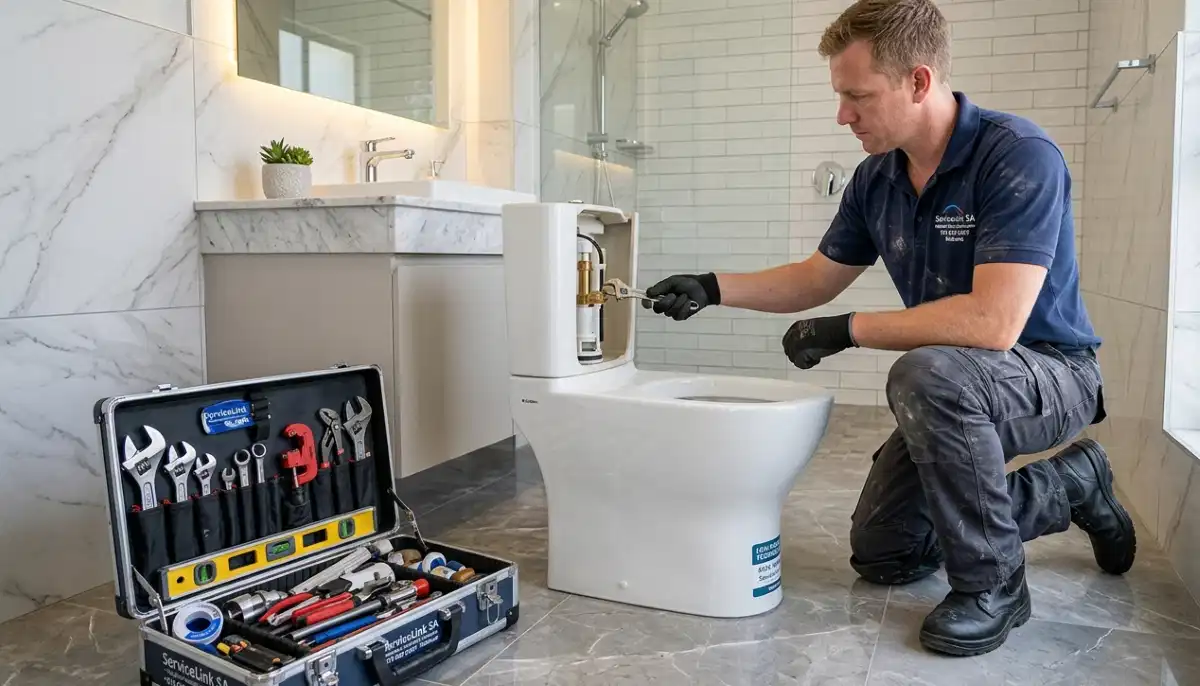
⚡ Pump Selection & Pressure Tanks
To use rainwater for toilets and laundry, you need a pump:
Pump types:
- Single impeller pump (0.5-1.0 HP): For garden irrigation only. Cost R1,500-R4,000.
- Multi-stage pressure pump (0.75-1.5 HP): For household use (toilets, laundry). Cost R3,000-R8,000.
- Constant pressure pump (variable speed): Best for whole-house non-potable supply. Cost R6,000-R12,000.
Pressure tank (recommended):
- Stores pressurised water, reduces pump cycling
- Extends pump life by 50-80%
- Cost: R800-R2,500 (24-50L tank)
Pump sizing guide:
- 1-2 toilets + garden: 0.5-0.75 HP pump, 24L pressure tank
- 3-4 toilets + washing machine: 0.75-1.0 HP pump, 50L pressure tank
- Whole house non-potable: 1.0-1.5 HP constant pressure pump, 50L+ pressure tank
Read our water pressure pump installation guide for more information.
⚖️ Legal Requirements & Regulations
Before installing rainwater harvesting plumbing, understand the legal framework:
- Department of Water and Sanitation (DWS): Supports rainwater harvesting but requires backflow prevention.
- Municipal bylaws: Many municipalities have specific requirements. Some require permits for tanks over certain sizes. Check with your local municipality.
- SANS 10400 compliance: Rainwater systems must comply with South African National Standards.
- Backflow prevention: REQUIRED to prevent rainwater from contaminating the municipal supply.
- Cross-connection prevention: Rainwater lines must be completely separate from potable water lines.
- Labelling: All non-potable outlets must be clearly labelled “NOT FOR DRINKING”.
Penalties for non-compliance: Fines, system removal orders, and liability for contamination.
🔧 Installation Process
Professional rainwater tank installation follows these steps:
- Site assessment (1-2 hours) – Roof area measurement, rainfall calculation, tank location selection.
- Tank selection & sizing – Based on roof area, household size, and intended use.
- Permits (if required) – Municipal approval for tank installation (1-4 weeks).
- Base preparation (1-2 days) – Concrete slab or compacted crusher run base for tank.
- Tank delivery & placement (1 day) – Tank positioned on prepared base.
- Gutter & downpipe modification (1 day) – Install leaf filter, first-flush diverter, and downpipe connection.
- Plumbing connections (1-2 days) – Connect tank to house plumbing, install pump and pressure tank.
- Backflow prevention installation – Essential for legal compliance.
- Testing & commissioning (1 day) – Test pump, check for leaks, verify backflow prevention.
- COC issuance – Certificate of Compliance from PIRB-registered plumber.
Total time: 3-7 days depending on complexity.
💰 Rainwater Harvesting Cost Guide
Here’s what to budget for how to set up rainwater harvesting at home:
| Component | Cost Range (ZAR) | Notes |
|---|---|---|
| Rainwater Tank (2,500L) | R2,500-R5,000 | Polyethylene |
| Rainwater Tank (5,000L) | R4,000-R8,000 | Most common size |
| Rainwater Tank (10,000L) | R7,000-R15,000 | For larger households |
| Tank Base/Stand | R1,000-R3,000 | Concrete slab or stand |
| First-Flush Diverter | R500-R1,500 | Essential for water quality |
| Leaf Filter/Screen | R200-R800 | Essential |
| Pump & Pressure Tank | R3,000-R10,000 | For household use |
| Sediment Filter (20-50 micron) | R500-R2,000 | For toilet/laundry use |
| Installation Labour (plumbing) | R3,000-R8,000 | Professional installation recommended |
| Total System (5,000L, basic) | R12,000-R22,000 | Tank + basic pump + garden use only |
| Total System (5,000L, household) | R18,000-R35,000 | Toilets + laundry + garden + pump + filtration |
For location-specific pricing, explore our Durban, Umhlanga, Ballito, and Westville pages.
📊 Savings Calculator & Payback Period
Here’s how a rainwater collection system pays for itself:
| Household Size | Monthly Water Bill | Rainwater Portion (40%) | Rainwater Savings (70% of portion) | Annual Saving | System Cost | Payback Years |
|---|---|---|---|---|---|---|
| 2 people (garden only) | R600 | R240 | R168 | R2,016 | R8,000 | 4 years |
| 3-4 people (toilets + garden) | R1,000 | R400 | R280 | R3,360 | R18,000 | 5.4 years |
| 4-5 people (toilets + laundry + garden) | R1,500 | R600 | R420 | R5,040 | R25,000 | 5 years |
Payback example: A family of 4 in Durban installing a R18,000 system saving R3,360/year achieves payback in 5.4 years. After payback, free water for 10-15 years.
Read our water saving plumbing tips guide for more conservation strategies.
🔧 Maintenance Requirements
Regular maintenance keeps your rainwater harvesting plumbing system working efficiently:
Monthly:
- Clean gutters and downpipe screens
- Check first-flush diverter (clean if clogged)
- Inspect tank for debris at inlet
Quarterly:
- Clean sediment filter (if installed)
- Check pump pressure and operation
- Inspect pipes for leaks
Annually:
- Clean tank (professional service recommended for larger tanks)
- Check tank for cracks or damage
- Service pump (professional)
- Check backflow prevention device
- Inspect all plumbing connections
Read our home plumbing maintenance checklist for a complete schedule.
❌ 5 Costly Mistakes to Avoid
Mistake #1: No First-Flush Diverter
The first 20-50 litres of each rainfall contain roof dust, bird droppings, and debris. Without a first-flush diverter, this enters your tank, causing odours and algae growth. A R500-R1,500 diverter is essential.
Mistake #2: No Backflow Prevention
Without backflow prevention, rainwater can contaminate the municipal water supply. This is illegal and dangerous. Backflow prevention is required by law for all rainwater systems connected to household plumbing.
Mistake #3: Undersizing the Tank
A 1,000L tank may fill in one good rain but empties quickly during dry spells. Size for 2-4 weeks of storage based on your usage. Bigger is generally better.
Mistake #4: No Pump Pressure Tank
A pump without a pressure tank will short-cycle (turn on/off every few seconds), wearing out quickly. Always install a pressure tank (R800-R2,500) with your pump.
Mistake #5: Using Untreated Rainwater for Drinking
Untreated rainwater can contain bacteria, heavy metals from roofs, and other contaminants. Never drink untreated rainwater. For potable use, professional UV treatment is required.
📋 Real-World Rainwater Harvesting Case Studies
☔ Case 1: Garden Only in Johannesburg
Location: Gauteng | Homeowner: The Nkosi Family
System: 2,500L tank + first-flush + submersible pump. Cost R8,500.
Savings: Garden water bill reduced from R450 to R50/month (R4,800/year).
Payback: 1.8 years.
Lesson: Even a small system pays for itself quickly for garden irrigation.
🏠 Case 2: Whole-House Non-Potable in Durban
Location: Durban | Homeowner: The Naidoo Family
System: 10,000L tank + pressure pump + filtration + plumbing to toilets and washing machine. Cost R35,000.
Savings: Water bill reduced from R1,400 to R600/month (R9,600/year).
Payback: 3.6 years.
Lesson: Whole-house systems cost more but offer greater savings and convenience.
❓ Frequently Asked Questions About Rainwater Harvesting
How to set up rainwater harvesting at home?
How to set up rainwater harvesting at home: 1) Calculate your roof area and potential harvest, 2) Choose tank size (2,500-10,000L typical), 3) Install gutters and downpipes with leaf filter, 4) Install first-flush diverter, 5) Position tank on stable base, 6) Connect to pump and pressure tank, 7) Plumb to toilets/laundry/garden (professional recommended).
How much does a rainwater harvesting system cost in South Africa?
A rainwater harvesting plumbing system costs R12,000-R22,000 for a basic garden-only system (5,000L tank + pump). A full household system (toilets + laundry) costs R18,000-R35,000. In Umhlanga or Ballito, rates may vary.
Is rainwater safe for toilet flushing and laundry?
Yes—with proper filtration (20-50 micron sediment filter), rainwater is safe for toilet flushing and laundry. Never drink untreated rainwater. For toilet use, a sediment filter is sufficient. For laundry, a finer filter is recommended to protect washing machine components.
Do I need a permit for a rainwater tank?
Permit requirements vary by municipality. Many allow tanks up to 5,000L without a permit. Larger tanks or systems connected to household plumbing may require permits. Always check with your local municipality before installation. A PIRB-registered plumber can advise on local requirements.
What size rainwater tank do I need?
Tank size depends on roof area, rainfall, and usage. For garden only: 1,000-2,500L. For toilets + garden: 2,500-5,000L. For toilets + laundry + garden: 5,000-10,000L. In high-rainfall areas (Durban), smaller tanks fill quickly. In lower-rainfall areas (Gauteng), larger tanks store water for dry periods.
Can I drink rainwater from my tank?
Not without treatment. Untreated rainwater can contain bacteria, bird droppings, roof debris, and environmental pollutants. For potable use, professional UV treatment and filtration are required. Most homeowners use rainwater only for non-potable purposes (toilets, laundry, garden).
How long do rainwater tanks last?
Polyethylene tanks: 15-20 years. Concrete tanks: 50+ years. Steel tanks: 20-30 years. Proper maintenance (annual cleaning, UV protection from sunlight) extends lifespan significantly. Quality tanks come with 5-10 year warranties.
How do I find a reliable rainwater harvesting installer?
To find a reliable installer for rainwater collection: 1) Verify PIRB registration, 2) Ask for rainwater system experience, 3) Get detailed quotes, 4) Check reviews. ServiceLink SA connects you with verified installers in Gauteng and KwaZulu-Natal.
✅ Final Thoughts: Capture Nature’s Gift
Rainwater is free, clean, and abundant during South Africa’s rainy seasons. A properly designed rainwater harvesting plumbing system can cut your water bill by 30-50%, protect you from droughts and outages, and provide water independence.
Key takeaways for South African homeowners:
- A 150m² roof in Gauteng collects 90,000+ litres annually – free water
- System cost: R12,000-R35,000 – payback 3-7 years
- Essential components: Tank, first-flush diverter, leaf filter, pump, pressure tank, backflow prevention
- Professional plumbing required for household connections – PIRB-registered plumber
- First-flush diverter is critical – removes the dirtiest water from each rainfall
- Backflow prevention is legally required – prevents contamination
- Never drink untreated rainwater – use for toilets, laundry, garden only
Your action plan: Calculate your roof area and potential harvest. Decide on usage (garden only vs household). Get quotes from 3 verified installers through ServiceLink SA. Install before the next rainy season. Start saving water and money.
☔ Collect Free Rainwater for Your Home
Get quotes from verified rainwater harvesting specialists. Reduce your water bill by 30-50%. Free inspections available.
📞 Call us: 073 138 4726 for immediate help finding a rainwater specialist near you.
Greywater systems •
Water saving tips •
Low-flow fixtures •
Water efficient fixtures •
Beat Your Quote guarantee
📚 Official resources & standards referenced:
- Department of Water and Sanitation – Rainwater harvesting guidelines and regulations.
- SANS 10400 – Collection standards and plumbing compliance.
- Plumbing Industry Registration Board (PIRB) – Find registered rainwater installers.
Information provided for general guidance based on industry research and DWS/SANS standards. For specific rainwater harvesting plumbing advice for your home, consult multiple verified installers.
Written by: ServiceLink SA Research Team
Rainwater Harvesting & Water Conservation Specialists
The ServiceLink SA Research Team comprises rainwater harvesting experts, water conservation specialists, and plumbing industry professionals with decades of experience helping homeowners implement rainwater collection systems across South Africa. Our team works directly with PIRB-registered plumbers, tank manufacturers, and water authorities to bring you accurate, actionable information about how to set up rainwater harvesting at home, costs, and regulations. We continuously update this guide to reflect current water conservation standards, SANS regulations, and real-world best practices for rainwater tank installation.
For more information about rainwater harvesting and water conservation, explore our related resources:
greywater system guide,
water saving plumbing tips,
low-flow fixtures guide,
rainwater harvesting guide,
and water efficient fixtures guide.
Our what is ServiceLink SA and
contractor verification process pages explain how we connect you with trusted professionals.
See our service areas page for rainwater harvesting coverage in your region.