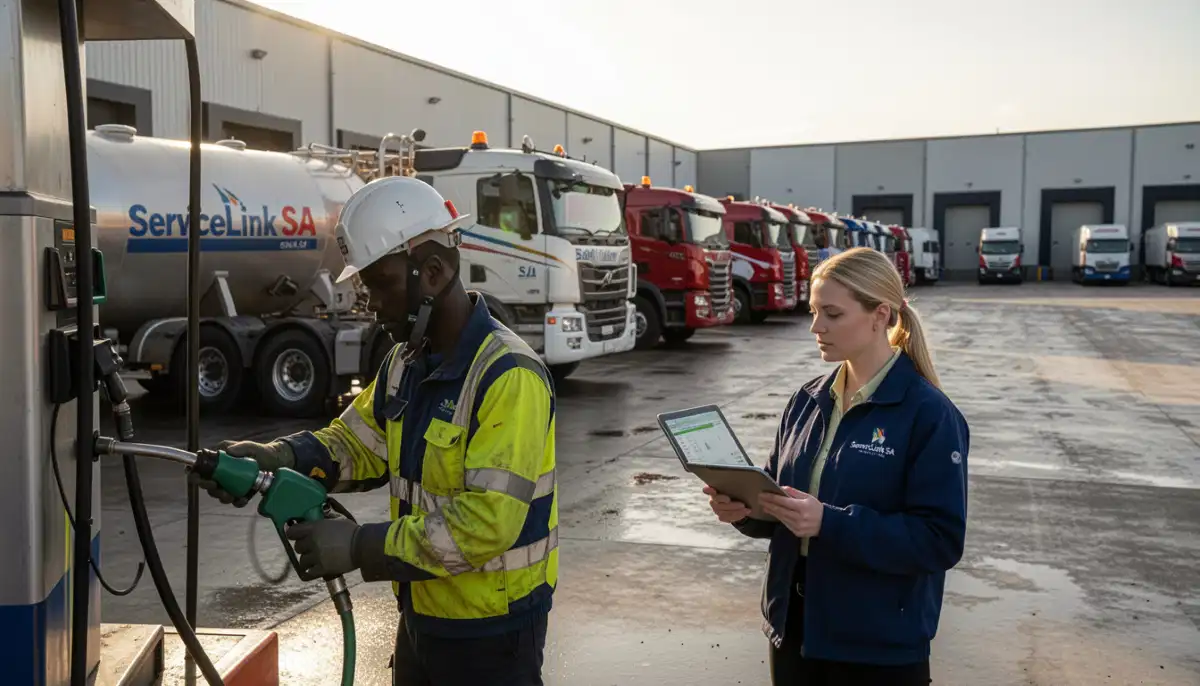
Keep Your Fleet Moving
ServiceLink SA connects you with verified bulk fuel suppliers specializing in fleet fueling solutions. If we can’t assist directly, we’ll connect you with our trusted partner companies to carry out your fuel supply projects professionally and timeously.
Get Free Logistics Fuel Quotes
Servicing Johannesburg, Pretoria, Durban, Cape Town, Sandton, Midrand, and across South Africa
Cut Your Transport Fuel Costs by 15%: Complete Guide to Logistics Fuel Supply in South Africa
🚛 From overnight depot refuelling to cross-border fleet supply—your complete guide to transport company fuel management
I once worked with a logistics company in Johannesburg that operated 80 long-haul trucks. They were spending over R2 million monthly on diesel—but they had no idea if they were getting good prices, no control over driver fuel purchases, and no visibility into fuel consumption across their fleet. Their drivers were buying fuel at retail prices along routes, paying R2-R3 more per litre than wholesale. They were bleeding money.
After we helped them implement proper fleet fueling solutions, their monthly fuel bill dropped by nearly R400,000. That’s R4.8 million annually—straight to the bottom line.
For South African logistics companies, bulk fuel for logistics companies is often the single largest operating expense after payroll. Getting it right can mean the difference between profitability and losses. Getting it wrong can destroy your margins.
This comprehensive guide covers everything you need to know about transport company fuel supply, including diesel delivery for truck fleets Johannesburg and other major hubs, wet hosing benefits, overnight fuelling strategies, fleet fueling best practices, and cost optimization. For more on supplier selection, read how to choose a bulk fuel supplier.
Ready to optimize your logistics fuel costs? Let’s dive in.
📋 Table of Contents – Logistics Fuel Supply Guide
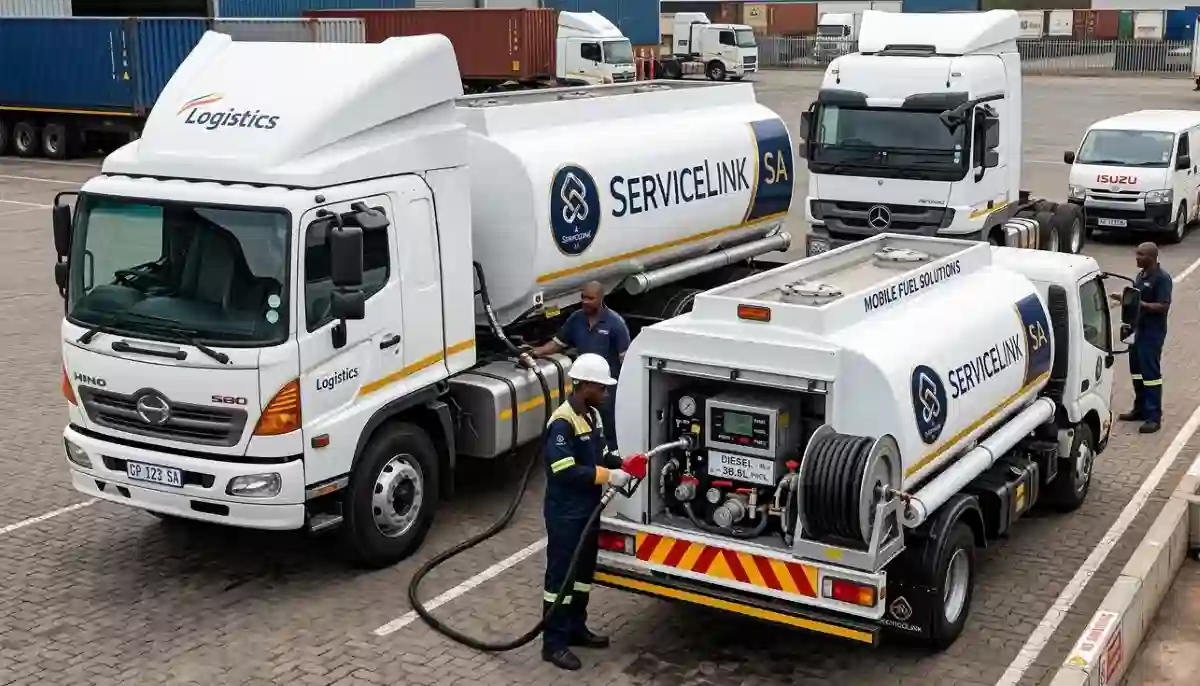
⚠️ Why Bulk Fuel Matters for Logistics Companies
Diesel is the lifeblood of South African logistics. When fuel costs are optimized, margins improve. When fuel supply fails, deliveries stop and contracts are lost.
⚠️ Warning: The High Cost of Poor Logistics Fuel Management
A logistics company with 50 trucks spending R15,000 per truck monthly on fuel is spending R750,000+ monthly. A 10% saving through better fleet fueling solutions is R75,000 monthly—R900,000 annually. Poor fuel management doesn’t just cost money—it costs competitive advantage.
Why bulk fuel for logistics companies demands strategic attention:
- Fuel is your largest variable cost: Typically 25-40% of operating expenses for logistics companies.
- Price volatility: Fuel price fluctuations directly impact profit margins.
- Driver behavior: Without controls, driver fuel purchases can be inefficient or fraudulent.
- Route variability: Different routes, different fuel needs—requires flexible supply solutions.
- Cross-border operations: Different fuel regulations and pricing across borders.
- Depot constraints: Not all depots have on-site fueling infrastructure.
- Rebate opportunities: Logistics companies may qualify for fuel levy refunds on cross-border operations.
Typical fuel consumption by logistics fleet:
| Fleet Size | Monthly Consumption (est.) | Monthly Fuel Cost (est.) | Annual Cost |
|---|---|---|---|
| 10 trucks (local delivery) | 20,000-30,000L | R350,000-R550,000 | R4M-R6.5M |
| 25 trucks (regional) | 60,000-90,000L | R1.0M-R1.6M | R12M-R19M |
| 50 trucks (long-haul) | 150,000-250,000L | R2.7M-R4.5M | R32M-R54M |
| 100+ trucks (national) | 350,000-600,000L+ | R6.5M-R11M+ | R78M-R130M+ |
For more on cost management, read bulk fuel supply costs in South Africa and fleet fueling solutions in South Africa.
🚚 Fleet Fueling Options for Logistics Companies
Different logistics operations need different fueling solutions. Here are the main options for transport company fuel supply:
Depot-based bulk storage (most common):
- On-site fuel storage tanks at your depot
- Scheduled bulk deliveries directly to your tanks
- Best for: Companies with dedicated depots and predictable return schedules
- Lowest cost per litre (wholesale + delivery)
- Requires capital investment in storage tanks
Wet hosing (mobile refuelling):
- Wet hosing providers refuel trucks at your depot or on-site
- No on-site storage tanks required
- Supplier brings bowser and refuels fleet
- Best for: Depots without storage, or supplementing existing storage
- Higher per-litre cost but no capital investment
Overnight fuelling:
- Overnight fuelling services refuel trucks while drivers rest
- Trucks are ready to go each morning
- Best for: Fleets that return to depot nightly
- Improves morning dispatch efficiency
Fuel card programs:
- Drivers use branded fuel cards at partner stations
- Centralized billing and reporting
- Best for: Long-haul fleets that can’t return to depot daily
- Higher cost per litre than depot fueling but offers convenience
Route-based fueling:
- Pre-arranged fueling at specific points along common routes
- Negotiated wholesale rates at partner stations
- Best for: Fixed routes with predictable fueling points
- Balance of convenience and cost
Which fueling option is right for you?
- Return-to-depot fleets: Depot-based bulk storage + overnight fuelling = lowest cost
- Mixed operations: Depot fueling for local trucks + fuel cards for long-haul
- No depot storage: Wet hosing for depot refuelling + fuel cards for en-route
- Cross-border: Fuel cards with cross-border acceptance + route-based agreements
For more on diesel delivery, read diesel delivery services in South Africa.
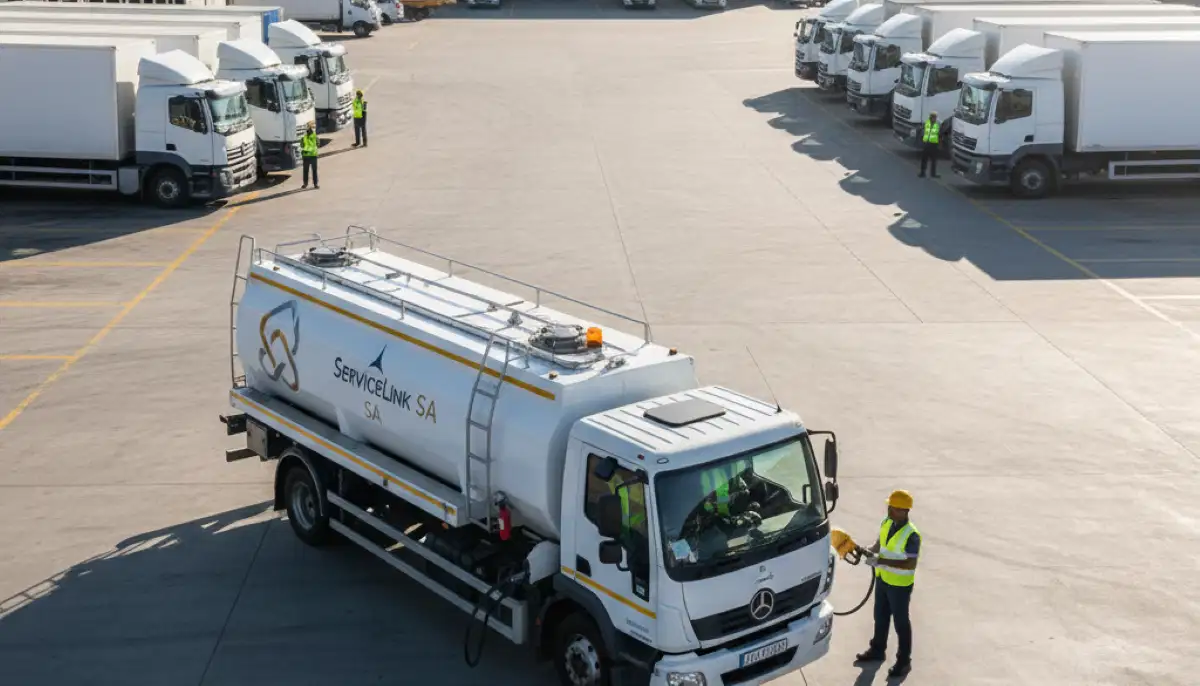
⛽ Wet Hosing: Mobile Refuelling for Truck Fleets
Wet hosing is increasingly popular for logistics companies without on-site storage. Here’s what you need to know:
What is wet hosing?
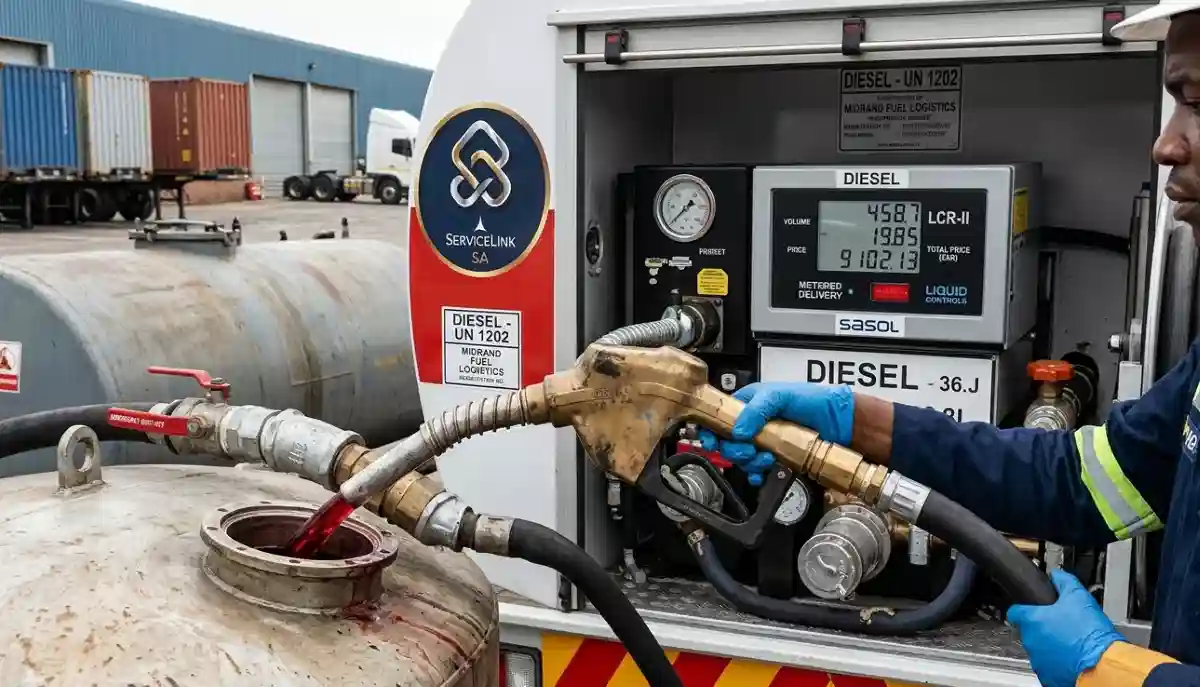
Wet hosing is a mobile refuelling service where a supplier brings a fuel bowser to your depot or location and refuels your trucks directly. “Wet” means the supplier provides both the equipment and the fuel. “Hosing” refers to the hose used to transfer fuel.
Benefits of wet hosing for logistics companies:
- No capital investment: No need to purchase storage tanks or fueling infrastructure
- No compliance burden: Supplier manages storage compliance and safety
- Flexible scheduling: Adjust fueling times based on fleet returns
- Scalable: Easy to increase or decrease as fleet size changes
- Reduced theft risk: No on-site fuel storage to secure
- Professional management: Supplier handles metering, quality, and documentation
Wet hosing costs (indicative):
| Service Type | Typical Cost Structure | Best For |
|---|---|---|
| Scheduled wet hosing | Wholesale price + R0.75-R1.50/L | Regular daily/weekly refuelling |
| On-demand wet hosing | Wholesale price + R1.50-R2.50/L + call-out | Occasional or emergency refuelling |
| Overnight wet hosing | Wholesale price + R1.00-R2.00/L | Fleets returning overnight |
Is wet hosing right for your fleet?
- Yes, if: You don’t have on-site storage, want to avoid capital investment, have variable fleet sizes, or want to test fueling needs before investing in tanks.
- Consider depot storage if: You have very high volume (50,000L+ monthly), a permanent depot, and capital available—per-litre costs will be lower.
For more on mobile refuelling, read mobile diesel refuelling services and wet hose fuel delivery services.
🌙 Overnight Fuelling: Refuel While Your Trucks Rest
Overnight fuelling is a game-changer for logistics efficiency. Here’s how it works and why it matters:
What is overnight fuelling?
Overnight fuelling means your trucks are refuelled while parked at your depot overnight. Drivers arrive after their shift, park, and go home. Fueling happens during the night. Trucks are ready to go with full tanks when drivers arrive in the morning.
Benefits of overnight fuelling:
- No driver fueling time: Drivers don’t spend 15-30 minutes refuelling before departure—saves 1-2 hours weekly per driver
- Morning dispatch efficiency: All trucks ready immediately at shift start
- Better driver utilization: Drivers start delivering sooner
- Reduced overtime: Less morning prep time means earlier departures
- Lower driver frustration: Drivers appreciate not having to refuel after long shifts
- Improved security: Refuelling happens in controlled depot environment, not at public stations
How overnight fuelling works:
- Drivers park trucks in designated fueling area after shift
- Driver submits fuel order (or automated system tracks levels)
- Overnight fueling team refuels trucks during night
- Trucks are ready with full tanks when drivers arrive morning
- Drivers complete pre-trip inspection and depart immediately
Overnight fuelling options:
- In-house: Your staff refuels from on-site storage. Requires 24/7 fueling staff.
- Outsourced wet hosing: Supplier sends team overnight to refuel fleet. No staff management required.
- Automated depot fueling: Card-operated pumps with driver self-service (not truly overnight unless drivers stay late).
Is overnight fuelling worth it?
For fleets of 20+ trucks returning to depot nightly, overnight fuelling typically pays for itself through improved driver utilization alone. Calculate: 20 trucks × 20 minutes daily fueling time × 220 operating days = 1,467 hours annually of driver time saved. At R150/hour driver cost = R220,000+ annual saving.
For more on night-time operations, read night-time fleet fueling services.
Need Better Fleet Fueling Solutions?
ServiceLink SA connects you with verified suppliers specializing in logistics fuel delivery, wet hosing, and overnight fuelling. If we can’t assist directly, we’ll connect you with our trusted partner companies to carry out your fuel supply projects professionally and timeously.
Get Free Logistics Fuel Quotes
Diesel delivery for truck fleets Johannesburg and nationwide—find local specialists serving your depot locations.
✅ What Makes a Great Logistics Fuel Supplier?
Not all fuel suppliers understand logistics operations. Here’s what separates logistics specialists from general suppliers:
Essential characteristics for logistics fuel suppliers:
- SARS fuel levy refund knowledge: Understanding of cross-border fuel levy refunds. See SARS – Fuel levy refund for transporters.
- Transport Department compliance: Knowledge of cross-border permits. See Transport Department – Cross-border permits.
- IFSA fleet management standards: Alignment with industry standards. See IFSA – Fleet management standards.
- Wet hosing capability: Mobile refuelling equipment and trained operators.
- Overnight fuelling availability: Staff and processes for after-hours refuelling.
- Multiple depot coverage: Can service all your depot locations, not just one.
- Fuel card integration: Can provide or integrate with fuel card programs for en-route fueling.
- Real-time reporting: Digital fueling data for integration with fleet management systems.
- Emergency response: 24/7 emergency delivery for unexpected shortages.
- Cross-border capability: For fleets operating into neighbouring countries.
Why logistics specialization matters: A fuel supplier who only serves retail stations or small fleets may not understand overnight fuelling logistics, multiple depot coordination, or cross-border fuel levy refunds. Logistics-experienced suppliers understand your operational pressures.
ServiceLink SA verifies logistics fuel supplier credentials during our screening process. If we can’t assist directly, we’ll connect you with our trusted partner companies who specialize in fleet fueling solutions. Learn how we verify fuel suppliers.

🚩 7 Red Flags of Logistics Fuel Suppliers (Avoid at All Costs!)
When sourcing bulk fuel for logistics companies, watch out for these warning signs:
- No wet hosing capability: Can’t provide mobile refuelling—limits your fueling options.
- No overnight fuelling availability: Only works 9-5—can’t support overnight fleet preparation.
- Single depot coverage only: Can only service one location—requires multiple suppliers for multiple depots.
- No fuel card integration: Can’t help with en-route fueling for long-haul trucks.
- No cross-border experience (if needed): Unfamiliar with cross-border fuel regulations and permits.
- Poor reporting capabilities: Manual or no digital fueling data—hard to integrate with fleet management.
- No SARS levy refund knowledge: Can’t advise on cross-border fuel levy refunds—costing you money.
For more scam prevention, read how to avoid contractor scams—many principles apply to logistics fuel suppliers too.
🔍 Where to Find Logistics Fuel Suppliers Near You
Finding reliable diesel delivery for truck fleets Johannesburg and other hubs requires logistics-specific sources:
Best methods (recommended):
- ServiceLink SA: Our platform connects you with verified suppliers specializing in logistics fuel delivery, wet hosing, and overnight fuelling. If we can’t assist directly, we’ll connect you with our trusted partner companies. Get quotes from logistics fuel suppliers near you.
- IFSA registered suppliers: Institute of Fleet Management South Africa member directories. IFSA – Fleet management standards.
- Transport Department registers: Check cross-border permit holders. Transport Department – Cross-border permits.
- Logistics industry referrals: Ask fellow logistics operators for supplier recommendations.
- Fuel card provider networks: Major fuel card companies have partner supplier networks.
Methods to avoid or use with caution:
- General fuel suppliers without logistics experience: They likely don’t understand overnight fuelling or multiple depot coordination.
- Social media or classifieds: Never source logistics fuel from unverified online listings—reliability is critical.
For a complete list of service categories, see our bulk fuel supply services page.
📋 How to Verify a Logistics Fuel Supplier (6 Critical Checks)
Before contracting any transport company fuel supply partner, run through this verification checklist:
- Verify SARS fuel levy refund knowledge: Ask about cross-border refund processes. SARS – Fuel levy refund for transporters.
- Check Transport Department compliance: Verify cross-border permit knowledge if needed. Transport Department – Cross-border permits.
- Confirm IFSA alignment: Ask about fleet management standards. IFSA – Fleet management standards.
- Request logistics client references: At least 3 references from similar logistics operations. Call them. Ask about wet hosing reliability, overnight fuelling, and multiple depot coverage.
- Test their reporting: Ask for sample fueling reports. Ensure data format works with your fleet management system.
- Verify emergency response: Ask for documented emergency delivery commitment (response time, after-hours availability).
For more detailed verification guidance, read how to verify a contractor.
📊 Fuel Management Systems for Logistics Fleets
Modern fleet fueling solutions integrate with fuel management systems for real-time visibility and control:
What fuel management systems provide:
- Real-time fuel consumption tracking by vehicle
- Fuel economy monitoring (litres/100km)
- Exception alerts (unusual consumption patterns)
- Driver behavior insights (idling, speeding)
- Automated fuel reconciliation with supplier data
- Integration with route planning and dispatch systems
Key features to look for:
- Automated data capture: Electronic fueling records, no manual entry
- Real-time dashboard: Live visibility across your fleet
- Exception reporting: Automatic alerts for anomalies
- Integration capability: Works with your existing TMS or ERP
- Mobile access: Fleet managers can monitor from anywhere
Benefits of fuel management systems for logistics:
- Identify fuel theft: Detect discrepancies between fuel purchased and fuel used
- Improve driver behavior: Reduce idling and aggressive driving
- Optimize routes: Identify most fuel-efficient routes and times
- Reduce fuel costs: Typical savings of 5-15% through better management
- Simplify rebate claims: Automated records for SARS submissions
Realistic ROI example: A 50-truck fleet spending R3M monthly on fuel achieving 10% savings through better management saves R300,000 monthly—R3.6M annually. A fuel management system costing R150,000 pays for itself in less than one month.
For more on fuel management, read fuel management systems in South Africa and fuel management systems for theft prevention.
❓ Frequently Asked Questions About Logistics Fuel Supply
What are the best fleet fueling solutions for logistics companies?
The best fleet fueling solutions depend on your operation. Return-to-depot fleets benefit from depot-based bulk storage + overnight fuelling. Mixed operations benefit from depot fueling for local trucks + fuel cards for long-haul. Companies without depot storage benefit from wet hosing. ServiceLink SA can connect you with suppliers offering all these options.
What is wet hosing and how can it help my logistics fleet?
Wet hosing is a mobile refuelling service where a supplier brings a fuel bowser to your depot and refuels your trucks directly. Benefits include no capital investment in storage tanks, flexible scheduling, reduced theft risk, and professional fuel management. Ideal for depots without storage or fleets testing fueling needs before investing in tanks.
How do I get diesel delivery for truck fleets in Johannesburg?
For diesel delivery for truck fleets Johannesburg, ServiceLink SA connects you with verified logistics fuel suppliers serving Gauteng depots. Options include scheduled bulk delivery (if you have storage), wet hosing (mobile refuelling), or overnight fuelling services. Compare quotes from multiple suppliers to find the best fit.
What is overnight fuelling and is it worth it?
Overnight fuelling means trucks are refuelled while parked at your depot overnight. Trucks are ready with full tanks when drivers arrive in the morning. Benefits include 1-2 hours weekly saved per driver, improved morning dispatch efficiency, and reduced driver frustration. For fleets of 20+ trucks, overnight fuelling typically pays for itself through driver time savings alone.
What fuel levy refunds are available for transport companies?
Transport companies operating cross-border may qualify for fuel levy refunds on fuel purchased in South Africa but consumed outside the country. SARS provides refund mechanisms for qualifying operators. Your fuel supplier should understand these processes. See SARS – Fuel levy refund for transporters for official requirements.
How do fuel management systems reduce logistics fuel costs?
Fuel management systems provide real-time visibility into consumption by vehicle, driver behavior insights (idling, speeding), exception alerts for anomalies, and automated reconciliation. Typical savings of 5-15% through reduced theft, improved driver behavior, and optimized routes. For a 50-truck fleet, this can be R150,000-R450,000+ monthly savings.
What cross-border permits do I need for fuel transport?
Cross-border fuel transport requires permits from the Transport Department, customs documentation, and compliance with neighbouring country regulations. Your fuel supplier should have experience with cross-border operations. See Transport Department – Cross-border permits for complete requirements.
How do I choose between depot storage and wet hosing?
Choose depot storage if: you have high volume (50,000L+ monthly), a permanent depot, and capital available. Per-litre costs will be lower. Choose wet hosing if: you lack storage, have variable fleet size, want to avoid capital investment, or want to test needs before investing in tanks. Many companies use both—storage for base volume, wet hosing for peak periods.
✅ Final Thoughts: Optimize Your Logistics Fuel Strategy
Your approach to bulk fuel for logistics companies directly impacts your operating margins, fleet efficiency, and competitive position. Poor fuel management bleeds profits. Strategic fuel management builds competitive advantage.
Key takeaways from this guide:
- Fuel is typically 25-40% of logistics operating costs—every percentage point saved is pure profit
- Fleet fueling solutions range from depot storage (lowest cost) to wet hosing (no capital) to fuel cards (convenience)
- Wet hosing provides mobile refuelling without storage investment—ideal for depots without tanks
- Overnight fuelling saves driver time and improves morning dispatch efficiency
- Fuel management systems typically save 5-15% through theft detection and behavior improvement
- Cross-border operators may qualify for SARS fuel levy refunds
- Always verify SARS, Transport Department, and IFSA compliance for logistics suppliers
- ServiceLink SA connects you with verified logistics fuel specialists—if we can’t assist directly, we’ll connect you with our trusted partner companies
Your action plan: Use ServiceLink SA to request quotes from verified logistics fuel suppliers in your area. Compare their fueling options (depot, wet hosing, overnight), multiple depot coverage, and reporting capabilities. Choose a partner who understands logistics operations. Implement fuel management systems for visibility. Then watch your fuel costs drop and margins improve.
Ready to Optimize Your Logistics Fuel Strategy?
ServiceLink SA connects you with verified suppliers offering depot fueling, wet hosing, overnight fuelling, and fuel management systems. If we can’t assist directly, we’ll connect you with our trusted partner companies to carry out your fuel supply projects professionally and timeously.
📞 Call us: 073 138 4726 for immediate help finding logistics fuel suppliers near your depots.
Fleet Fueling Solutions •
Diesel Delivery •
Emergency Fuel Delivery •
Fuel Management Systems •
Generator Fuel Services •
Fuel Tank Installation
📚 Official resources & standards referenced:
- SARS – South African Revenue Service – Fuel levy refund for transporters and cross-border fuel regulations.
- Department of Transport – Cross-border permits and transport regulations.
- IFSA – Institute of Fleet Management South Africa – Fleet management standards and best practices.
- DMRE – Department of Mineral Resources and Energy – Fuel pricing and licensing information.
Information provided for general guidance based on independent research and official sources. Logistics regulations, fuel levy refund processes, and cross-border requirements change periodically. Always verify current requirements directly with SARS, Transport Department, and IFSA.
Written by: ServiceLink SA Research Team
Logistics Fuel Supply & Fleet Management Specialists
The ServiceLink SA Research Team combines expertise from logistics operations, fleet management, fuel supply chain, and regulatory compliance. Our analysts track SARS fuel levy refund processes, Transport Department cross-border permit requirements, IFSA fleet management standards, and maintain relationships with accredited suppliers serving logistics companies across South Africa. This guide draws on primary research, official SARS and Transport Department requirements, and direct interviews with logistics fleet managers, transport operators, and supply chain directors. Our mission is to help South African logistics companies optimize fuel costs, improve fleet efficiency, and maintain compliance through better transport company fuel supply strategies. If we can’t assist directly, we’ll connect you with our trusted partner companies who specialize in fleet fueling solutions.
For more information about bulk fuel for logistics companies, explore our related resources: fleet fueling solutions, diesel delivery services, fuel management systems, how to choose a bulk fuel supplier, mobile diesel refuelling services, wet hose fuel delivery services, and night-time fleet fueling services. See our location-specific guides for Johannesburg, Sandton, Midrand, Durban, and Cape Town.