Need Direct-to-Equipment Diesel Delivery?
ServiceLink SA connects you with verified wet hose fuel delivery providers. Get free quotes today. If we can’t assist directly, we’ll connect you with our trusted partner companies to carry out your fuel supply projects professionally and timeously.
Get Free Wet Hose Delivery Quotes
Servicing Johannesburg, Pretoria, Durban, Cape Town, Emalahleni, and across South Africa
Wet Hose Fuel Delivery Services: Direct-to-Equipment Diesel
🔌 From mining haul trucks to construction excavators—your complete guide to professional hose delivery refuelling
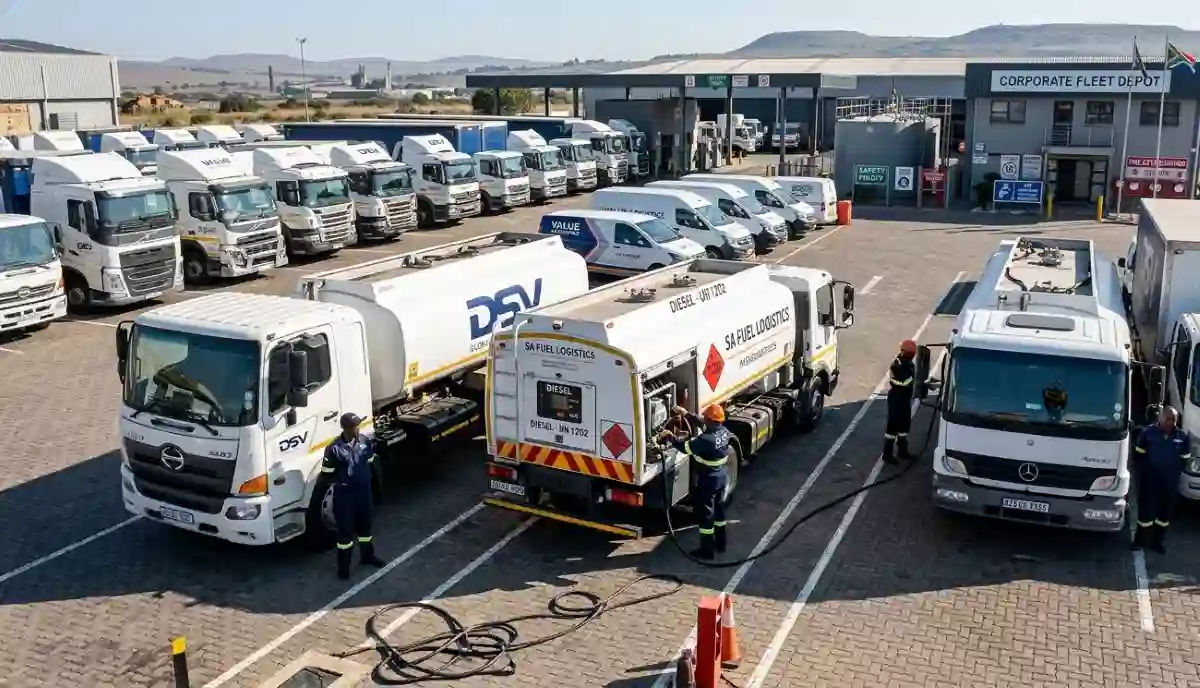
I remember standing at the edge of a massive open-pit mine in Mpumalanga, watching a fleet of 300-ton haul trucks crawl up the haul road. The mine manager pointed to a specialised refuelling truck moving between the parked haul trucks. “That’s wet hose delivery,” he said. “Without it, we’d lose hours of production every shift just moving equipment to a fixed fuel point.”
Wet hose fuel delivery services are the gold standard for direct equipment refuelling in heavy industries. Instead of equipment travelling to a fuel station or bulk tank, a specialised mobile fuel truck with a long hose comes to the equipment.
Whether you operate mining haul trucks, construction excavators, or large agricultural machinery, hose delivery diesel saves significant time and improves operational efficiency. This is especially critical for wet hose diesel delivery for mining equipment, where production downtime costs millions.
This comprehensive technical guide covers everything you need to know about wet hose fuel delivery services, including direct equipment refuelling techniques, equipment refuelling best practices, direct injection safety, and industry-specific applications. For more on fleet solutions, read fleet fueling solutions in South Africa.
Ready to understand the most efficient refuelling method for heavy equipment? Let’s dive in.
📋 Table of Contents – Wet Hose Delivery Guide
🔌 What Are Wet Hose Fuel Delivery Services?
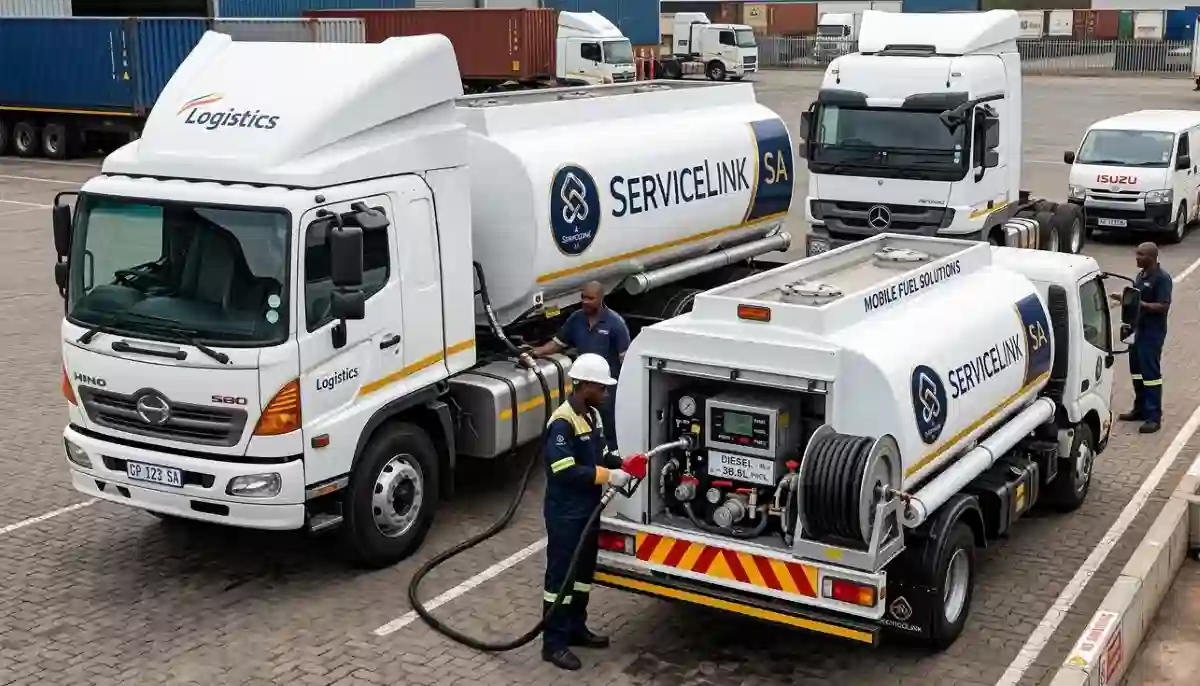
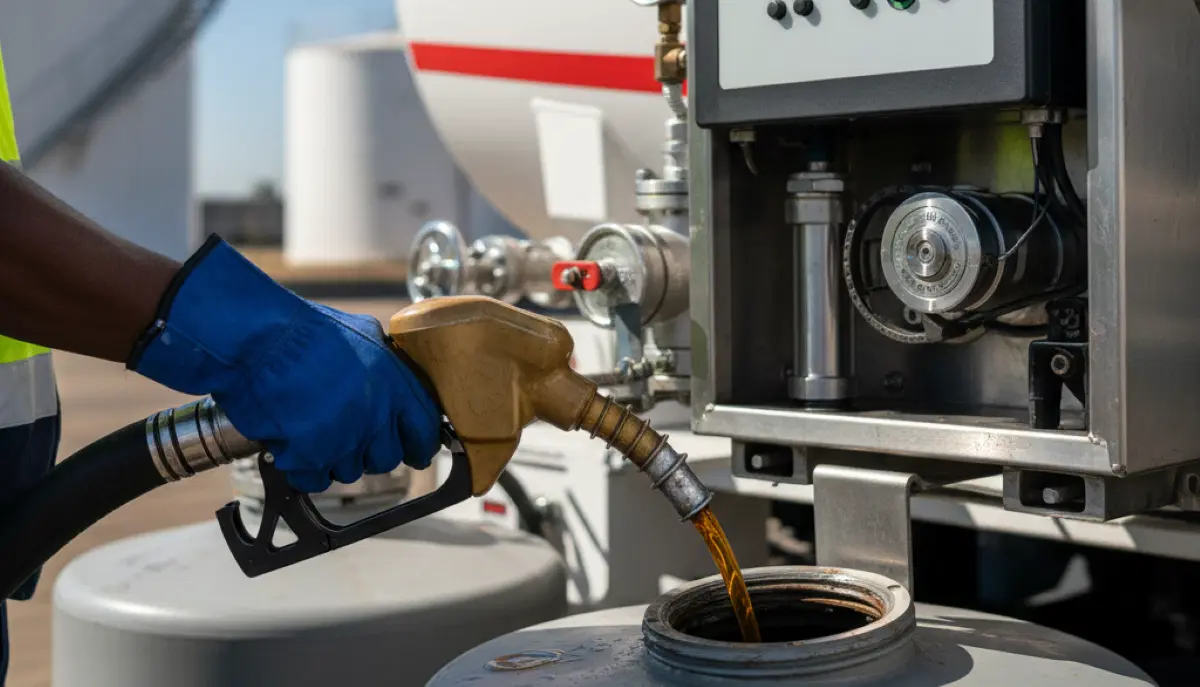
Wet hose fuel delivery services are specialised mobile refuelling operations where a delivery truck equipped with a long, high-flow hose refuels equipment directly where it sits. The “wet” refers to the hose being filled with fuel during delivery—the fuel is already in the line before reaching the equipment.
⚠️ The Core Concept
Wet hose delivery means a specialised fuel truck with an extended hose (typically 15-30 metres or longer) pulls up alongside equipment. The operator extends the hose to reach the equipment’s fuel tank and refuels it directly—no equipment movement required.
What makes wet hose different from standard bowser delivery:
| Characteristic | Wet Hose Delivery | Standard Bowser Delivery |
|---|---|---|
| Hose length | 15-30+ metres | 5-10 metres |
| Flow rate | High (200-400 L/min) | Moderate (50-150 L/min) |
| Equipment movement needed | None (truck comes to equipment) | Minimal (equipment may need to position) |
| Best for | Large equipment, remote sites | Smaller equipment, depots |
| Typical equipment size | Mining haul trucks, large excavators | Forklifts, tractors, smaller machinery |
What wet hose delivery includes:
- Specialised fuel truck: Equipped with high-capacity pump and long-reach hose
- Trained operator: Certified in dangerous goods handling and equipment refuelling
- High-flow nozzle: Designed for rapid refuelling of large tanks
- Metered dispensing: Accurate measurement of fuel delivered
- Safety equipment: Static grounding, spill containment, fire extinguishers
- Documentation: Delivery notes with litres, equipment ID, and meter readings
Why “wet hose” matters:
The term “wet hose” indicates that the hose is already filled with fuel before refuelling begins. This ensures accurate metering (no air in the line) and immediate high-flow delivery. The hose remains “wet” between equipment refuelling, maintaining consistent flow.
For more on delivery methods, read diesel delivery services.
⚙️ How Wet Hose Delivery Works
The direct equipment refuelling process using wet hose technology is highly efficient:
Step 1: Equipment positioning (minimal)
Equipment operators position their machines in a designated refuelling area or the wet hose truck navigates to each machine’s location. Unlike other methods, equipment doesn’t need to travel to a fixed fuel point.
Step 2: Wet hose truck arrival
The specialised fuel truck arrives at the equipment location. The operator performs a safety check of the area and equipment.
Step 3: Static grounding
The operator connects a grounding cable between the truck and equipment to prevent static discharge.
Step 4: Hose extension
The operator extends the long-reach hose (15-30+ metres) to reach the equipment’s fuel tank. The hose is already “wet” (filled with fuel).
Step 5: Nozzle connection
The high-flow nozzle is inserted into the equipment’s fuel filler neck. A secure connection ensures no spillage.
Step 6: High-flow refuelling
The operator activates the pump. Fuel flows at 200-400 litres per minute, rapidly filling large tanks. The meter records exact litres dispensed.
Step 7: Completion and documentation
When the tank is full, the operator stops the pump, removes the nozzle, and retracts the hose. A delivery note is generated showing equipment ID, litres, meter readings, and time.
Step 8: Move to next equipment
The truck moves to the next piece of equipment. The hose remains wet, ready for immediate refuelling.
Wet hose delivery workflow advantages:
- Equipment stays put: No travel time, no repositioning delays
- Rapid refuelling: High-flow rates (200-400 L/min) vs standard (50-150 L/min)
- Continuous operation: Equipment can be refuelled during short breaks
- Multiple equipment: One truck can service many machines in sequence
Typical turnaround time:
- Small equipment (200L tank): 1-2 minutes
- Medium equipment (500L tank): 2-3 minutes
- Large equipment (1,000L+ tank): 3-5 minutes
- Mining haul truck (4,000L+ tank): 10-20 minutes
For more on technical operations, read mobile diesel refuelling services.
⛏️ Wet Hose Diesel Delivery for Mining Equipment
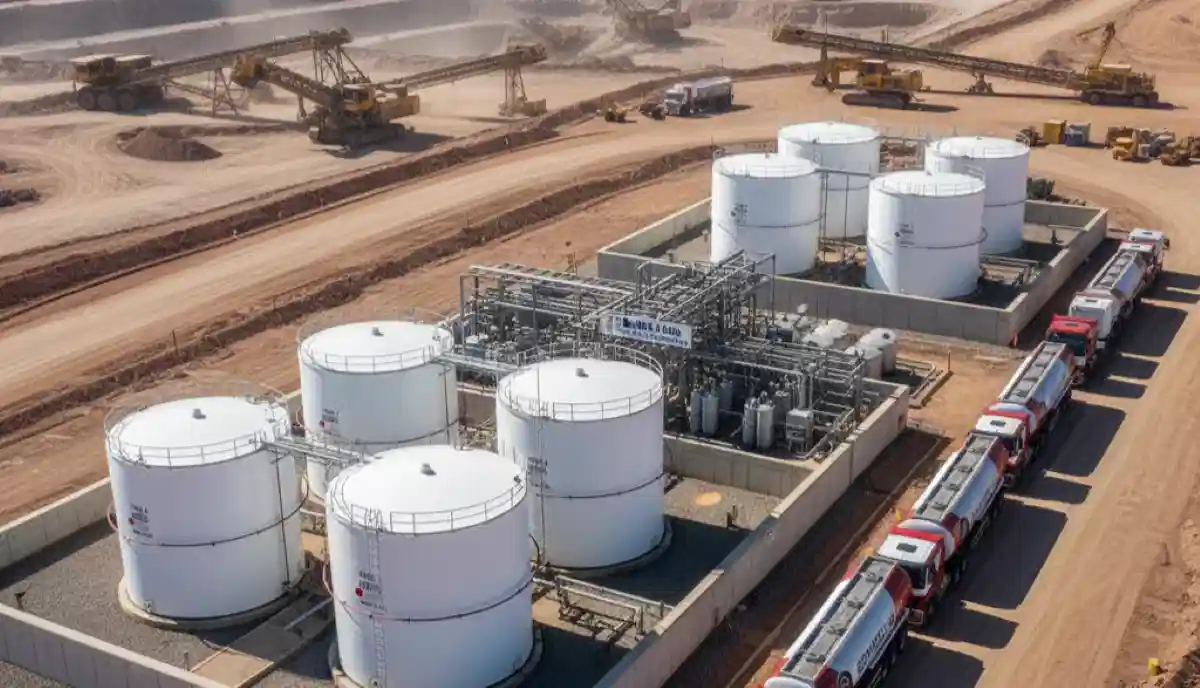
Wet hose diesel delivery for mining equipment is critical for large-scale mining operations:
Why mining needs wet hose delivery:
- Massive equipment: Haul trucks can have 4,000L+ fuel tanks. Standard refuelling methods take too long.
- Remote locations: Mines are often far from fuel depots. Mobile delivery is essential.
- 24/7 operations: Mines run continuously. Refuelling must happen without stopping production.
- Underground operations: Specialised wet hose equipment for confined spaces.
- High costs of downtime: A single haul truck down for refuelling costs thousands per hour.
Mining equipment types that benefit:
- Haul trucks (rigid and articulated): Largest fuel tanks, biggest time savings
- Excavators and shovels: High consumption, continuous operation
- Wheel loaders: Frequent refuelling needs
- Drill rigs: Remote locations, difficult access
- Dozers and graders: Support equipment needing reliable refuelling
- Underground loaders and trucks: Specialised equipment for confined spaces
Time savings for mining equipment:
| Equipment Type | Tank Capacity | Wet Hose Refuel Time | Alternative Method Time | Time Saved |
|---|---|---|---|---|
| Large haul truck | 4,000L+ | 15-20 min | 45-60 min (travel + refuel) | 30-40 min |
| Medium excavator | 1,000L | 3-5 min | 20-30 min | 15-25 min |
| Wheel loader | 500L | 2-3 min | 15-20 min | 12-17 min |
| Drill rig | 800L | 3-4 min | 25-35 min | 20-30 min |
Mining-specific regulations:
Mining refuelling must comply with DMRE mining refuelling regulations. See DMRE – Mining refuelling regulations. Key requirements:
- Underground refuelling equipment must be explosion-proof
- Ventilation requirements for underground refuelling areas
- Emergency shut-off systems
- Spill containment in environmentally sensitive areas
- Operator certification for mining sites
Productivity impact example:
A mine with 20 haul trucks each saving 30 minutes daily in refuelling time = 10 hours daily recovered. At R5,000/hour operating cost per truck (including driver, fuel, wear) = R50,000 daily saved = R18 million annually.
For more on mining fuel, read bulk fuel for mining operations.
Need Direct-to-Equipment Diesel Delivery?
ServiceLink SA connects you with verified wet hose fuel delivery providers. Get free quotes today. If we can’t assist directly, we’ll connect you with our trusted partner companies to carry out your fuel supply projects professionally and timeously.
Get Free Wet Hose Delivery Quotes
Wet hose diesel delivery for mining equipment and other industries—find local specialists near you.
🏗️ Construction Equipment Refuelling
Construction sites benefit significantly from equipment refuelling using wet hose technology:
Construction equipment types that benefit:
- Large excavators (30-50t): High fuel consumption, continuous operation
- Bulldozers: Long working hours, remote site areas
- Wheel loaders: Frequent refuelling needs, high utilisation
- Motor graders: Site preparation, road building
- Compactors and rollers: Continuous operation during paving
- Mobile cranes: Stationary but hard to move for refuelling
Benefits for construction sites:
- No equipment travel time: Machines stay working. For a site with 15 machines saving 30 minutes daily each = 7.5 hours of lost productivity recovered daily.
- Improved site safety: Fewer vehicle movements = fewer accidents. No equipment on public roads.
- Reduced theft risk: Fuel dispensed directly into equipment under supervision.
- Flexible scheduling: Refuel during lunch breaks, shift changes, or overnight.
- Works in tight spaces: Long hoses reach equipment in confined areas.
Construction site challenges wet hose solves:
- Muddy or unstable ground: Equipment can’t move safely. Wet hose brings fuel to them.
- Working at height: Some equipment has elevated fuel fill points. Long hoses reach.
- Multiple levels: Excavators working on different levels. Wet hose trucks can navigate.
- Active work zones: Equipment can’t leave active areas. Refuel without stopping work.
Productivity savings example:
A road construction site with 5 graders, 5 excavators, and 5 dump trucks each saving 30 minutes daily = 7.5 hours daily recovered. At R1,000/hour average operating cost = R7,500 daily saved = R1.9 million annually (250 working days).
For more on construction fuel, read bulk fuel for construction sites.
🚜 Agricultural Direct Equipment Refuelling
Farms with large equipment benefit from direct equipment refuelling:
Agricultural equipment types that benefit:
- Large tractors (200hp+): High consumption during tillage and planting
- Combine harvesters: Critical during harvest—cannot leave fields
- Self-propelled sprayers: Wide working widths, hard to move for refuelling
- Forage harvesters: High consumption, continuous operation
- Irrigation pumps: Stationary but often remote from farmstead
Benefits for farms:
- Critical during harvest: Combines can’t leave fields during harvest windows. Wet hose keeps them working.
- Saves hours daily: Tractors driving to/from farmstead for fuel waste valuable field time.
- Reduces theft risk: Remote farm storage tanks are vulnerable. Direct-to-equipment delivery reduces exposure.
- Supports rebate documentation: Professional delivery provides proper invoices for diesel rebate claims.
- Reaches equipment in fields: Long hoses reach machines working far from roads.
Seasonal application:
- Planting season: Daily wet hose delivery to tractors and planters
- Harvest season: Multiple daily deliveries to combines and grain carts
- Irrigation season: Scheduled delivery to remote pump sites
Time savings example:
A grain farm with 5 combines during harvest each saving 1 hour daily in travel to/from fuel storage = 5 hours daily recovered. At R2,000/hour operating cost (combine + operator) = R10,000 daily saved = R300,000 saved during 30-day harvest.
For more on farm fuel, read bulk fuel for farms and agriculture.
🔧 Equipment Compatibility and Hose Types
Hose delivery diesel systems must be compatible with your equipment:
Fuel tank types and nozzle compatibility:
| Equipment Type | Typical Filler Neck | Nozzle Type Required | Flow Rate Suitable |
|---|---|---|---|
| Mining haul truck | Large (4-6 inches) | High-flow (400 L/min) | 200-400 L/min |
| Construction excavator | Standard (2-3 inches) | Standard (150 L/min) | 100-200 L/min |
| Farm tractor | Standard (2 inches) | Standard (150 L/min) | 80-150 L/min |
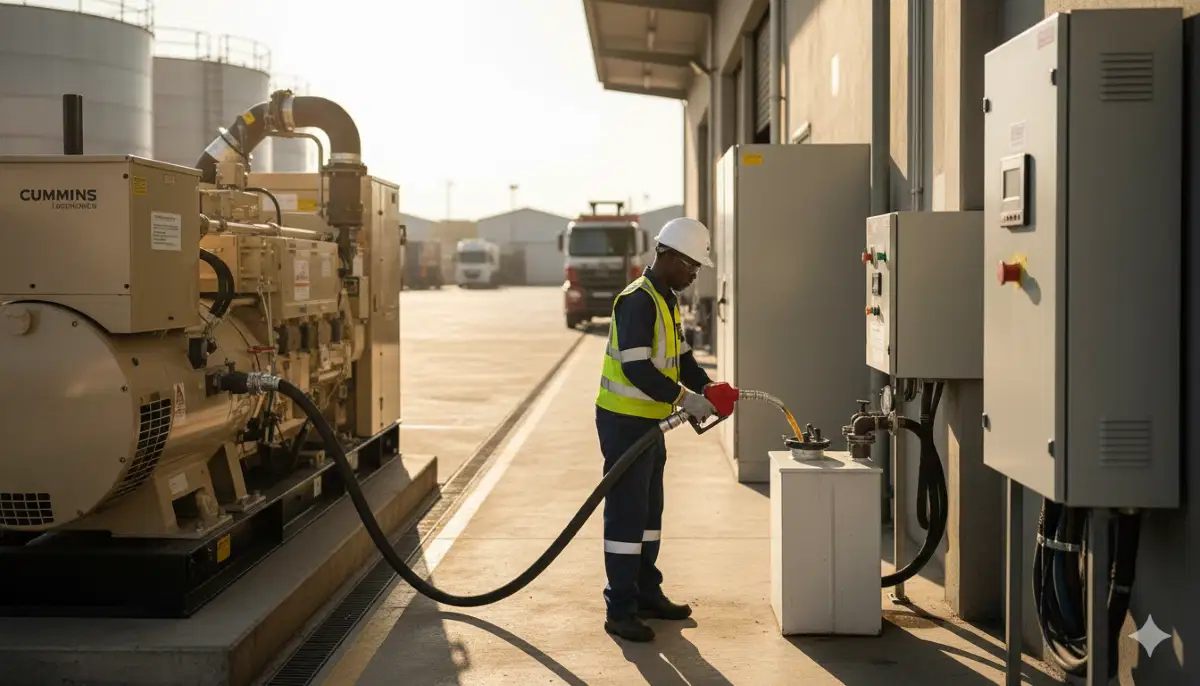
| Generator | Standard (2 inches) | Standard (150 L/min) | 50-100 L/min |
| Small equipment | Small (1-1.5 inches) | Low-flow (50 L/min) | 30-80 L/min |
Hose specifications:
- Length: Typically 15-30 metres, up to 50 metres for specialised applications
- Diameter: 1-2 inches depending on required flow rate
- Material: Diesel-resistant rubber or composite with static dissipation
- Pressure rating: Must handle pump output (typically 50-100 PSI)
- Temperature rating: Suitable for ambient conditions (-10°C to 50°C)
Equipment modifications for wet hose compatibility:
- Most modern equipment is compatible with standard wet hose nozzles
- Older equipment may need filler neck adapters
- Some equipment may need retrofitting for high-flow rates
- Underground mining equipment requires specialised explosion-proof connections
Flow rate considerations:
Using too high a flow rate on small tanks can cause back-splashing. Using too low a flow rate on large tanks wastes time. Your provider should match flow rate to your equipment’s tank size and filler neck design.
For more on equipment, read fuel tank installation.
🛡️ Safety Standards for Hose Delivery
Equipment refuelling using wet hose must comply with strict safety standards:
SABS hose delivery standards:
Wet hose equipment must meet SABS – Hose delivery standards. Key requirements:
- Hoses must be diesel-resistant and static-dissipative
- Nozzles must have automatic shut-off
- Pumps must have emergency shut-off
- Meters must be calibrated annually
- Grounding cables must be in good condition
NRSA equipment refuelling safety:
The National Road Safety Agency regulates equipment refuelling safety. See NRSA – Equipment refuelling safety. Key requirements:
- Operator dangerous goods training and certification
- Site-specific risk assessments
- Emergency response plans
- Spill containment equipment on truck
- Fire extinguishers (minimum 2, appropriate size)
DMRE mining refuelling regulations:
For mining applications, see DMRE – Mining refuelling regulations. Key requirements:
- Underground equipment must be explosion-proof
- Ventilation requirements for underground refuelling areas
- Emergency shut-off systems
- Operator certification for mining sites
- Regular safety inspections
On-site safety requirements during wet hose delivery:
- Equipment engine OFF during refuelling
- Static grounding cable connected before hose connection
- No smoking within 25 metres of refuelling area
- Spill kit readily accessible
- Fire extinguisher within easy reach
- Operator in visual contact with nozzle during refuelling
- Nozzle properly seated to prevent spillage
Operator qualifications:
- Valid driver’s license with dangerous goods endorsement
- Certified dangerous goods training (refresher annually)
- Site-specific induction for each customer location
- First aid and spill response training
For more on safety, read bulk diesel storage regulations.
💰 Cost Efficiency of Wet Hose Delivery
Understanding the economics of wet hose fuel delivery services:
Pricing structure:
- Fuel cost: Wholesale diesel price (BFP + levies + supplier margin)
- Service fee: R1.00-3.00/L depending on volume, frequency, and location
- Mobilisation fee: Fixed fee for truck dispatch (R500-2,000 per visit)
- Minimum charge: Some providers have minimum delivery fees for small volumes
Cost comparison (for reference):
| Method | Typical Cost (R/L) | Productivity Impact | Total Value |
|---|---|---|---|
| Retail fueling (drive to station) | R23.00/L (retail) | -30-60 min daily per machine | Lowest value (time + fuel cost) |
| Bulk storage + self-refuel | R18.50/L (wholesale + transport) | -10-20 min daily per machine (travel to tank) | Medium value (fuel savings, some time loss) |
| Wet hose delivery (on-site) | R19.50-21.00/L (wholesale + service) | Zero time loss (fuel comes to equipment) | Highest value (minimal time loss) |
Total value calculation example (50,000L/month mining fleet):
- Wet hose cost: 50,000L × R20.00/L = R1,000,000
- Retail equivalent: 50,000L × R23.00/L = R1,150,000
- Fuel saving: R150,000 monthly
- Time saving (equipment productivity): 10 hours daily × R5,000/hour = R50,000 daily = R1,500,000 monthly
- Total value created: R150,000 (fuel) + R1,500,000 (productivity) = R1,650,000 monthly benefit
When wet hose makes the most sense:
- High-value equipment (expensive to have idle)
- Remote locations (long travel distances to fuel)
- 24/7 operations (no downtime window for refuelling)
- Large equipment (long refuelling times if travelling)
- Multiple machines in one area (efficient truck routing)
For more on cost analysis, read wholesale diesel prices.
✅ How to Choose a Wet Hose Provider
Selecting the right direct equipment refuelling provider is critical:
Verification checklist:
- Verify SABS compliance: Ask for hose and equipment certification. See SABS – Hose delivery standards.
- Check NRSA safety compliance: Confirm operator training and permits. See NRSA – Equipment refuelling safety.
- Verify DMRE mining compliance (if applicable): Check mining-specific regulations. See DMRE – Mining refuelling regulations.
- Request client references: At least 3 references from similar equipment/industries.
- Check insurance: Public liability and environmental damage coverage (minimum R10 million).
- Verify meter calibration: Current calibration certificates for all meters.
- Inspect equipment (if possible): Condition of hoses, nozzles, safety equipment.
- Confirm emergency response: 24/7 availability? Typical response time?
Questions to ask potential providers:
- What hose lengths do you offer? (15m, 30m, 50m?)
- What flow rates can you achieve? (L/min)
- Do you have experience with my equipment types?
- Can you handle underground refuelling (if applicable)?
- What is your spill response procedure?
- Do you have backup equipment if primary truck breaks down?
- What safety certifications do your operators hold?
- Can you provide sample delivery documentation?
- What are your payment terms?
Red flags to avoid:
- No SABS certification or expired certificates
- Poorly maintained hoses (cracks, leaks, wear)
- Operators without dangerous goods training
- Cash-only payments
- No written delivery documentation
- Vague about emergency response times
- Can’t provide client references
- No insurance or low coverage limits
For more on supplier selection, read how to choose a bulk fuel supplier.
❓ Frequently Asked Questions About Wet Hose Fuel Delivery
What are wet hose fuel delivery services?
Wet hose fuel delivery services are specialised mobile refuelling operations where a truck with a long, high-flow hose refuels equipment directly where it sits. Equipment doesn’t need to move to a fuel point—saving significant time and improving productivity.
How does direct equipment refuelling work?
Direct equipment refuelling using wet hose involves a specialised fuel truck positioning near equipment, extending a long hose (15-30+ metres), connecting a high-flow nozzle to the equipment’s fuel tank, and refuelling at 200-400 litres per minute. No equipment movement required.
What is wet hose diesel delivery for mining equipment?
Wet hose diesel delivery for mining equipment is essential for large mining haul trucks (4,000L+ tanks), excavators, and loaders. It eliminates equipment travel time to fuel points, saving 30-60 minutes per machine daily—critical when downtime costs thousands per hour.
How much does hose delivery diesel cost?
Hose delivery diesel typically costs wholesale price plus R1.00-3.00/L service fee. While higher than bulk storage, the productivity savings (equipment not travelling to fuel) usually outweigh the premium. For mining, saved production time alone can be worth R1,000s per hour.
What safety standards apply to equipment refuelling?
Equipment refuelling using wet hose must comply with SABS hose delivery standards, NRSA equipment refuelling safety regulations, and for mining, DMRE mining refuelling regulations. Requirements include certified equipment, trained operators, static grounding, and spill response plans.
What is direct injection in fuel delivery?
Direct injection in this context refers to diesel being delivered directly from the wet hose truck into the equipment’s fuel tank. Unlike other methods where fuel goes into storage tanks first, wet hose delivery injects fuel straight into the equipment that will use it—no intermediate storage.
Can wet hose delivery work for underground mining?
Yes, specialised explosion-proof wet hose equipment is available for underground mining. Equipment must meet DMRE mining refuelling regulations for underground use, including explosion-proof electrical systems, ventilation integration, and emergency shut-off systems. Not all providers offer underground capability.
What’s the difference between wet hose and standard bowser delivery?
Wet hose uses longer hoses (15-30m vs 5-10m), higher flow rates (200-400 L/min vs 50-150 L/min), and requires no equipment movement. Standard bowser delivery may require equipment to reposition. Wet hose is better for large equipment and remote sites; standard bowser works for smaller equipment and depots.
✅ Final Thoughts: Maximise Equipment Productivity
Wet hose fuel delivery services represent the most efficient method for refuelling large equipment. By eliminating equipment travel time, reducing refuelling duration, and enabling refuelling during short breaks, wet hose delivery maximises equipment utilisation and operational productivity.
Key takeaways from this guide:
- Wet hose fuel delivery services bring diesel directly to equipment with long hoses and high flow rates
- Direct equipment refuelling eliminates travel time to fuel points—saving 30-60 minutes daily per machine
- Hose delivery diesel achieves 200-400 L/min flow rates vs 50-150 L/min for standard methods
- Wet hose diesel delivery for mining equipment is critical for large haul trucks and continuous operations
- Equipment refuelling using wet hose improves site safety (fewer vehicle movements)
- Direct injection of diesel eliminates intermediate storage and handling
- Compliance with SABS, NRSA, and DMRE standards is essential for safety
- Cost premium over bulk storage is offset by productivity gains
- Choose providers with certified equipment, trained operators, and proper insurance
- ServiceLink SA connects you with verified, compliant wet hose delivery providers
Your action plan: Assess your current refuelling process. Calculate time lost to equipment travel and slow refuelling. Determine if your equipment types and site layout suit wet hose delivery. Get quotes from multiple verified providers. Choose a compliant provider with appropriate hose lengths and flow rates. Implement a trial to measure productivity gains.
Ready for Direct-to-Equipment Diesel Delivery?
ServiceLink SA connects you with verified wet hose fuel delivery providers. Get free quotes today. If we can’t assist directly, we’ll connect you with our trusted partner companies to carry out your fuel supply projects professionally and timeously.
📞 Call us: 073 138 4726 for immediate help finding wet hose delivery providers near you.
Diesel Delivery •
Fleet Fueling Solutions •
Emergency Fuel Delivery •
Generator Fuel Services •
Fuel Management Systems
📚 Official resources & standards referenced:
- SABS – South African Bureau of Standards – Hose delivery standards and equipment certification.
- NRSA – National Road Safety Agency – Equipment refuelling safety regulations and dangerous goods permits.
- DMRE – Department of Mineral Resources and Energy – Mining refuelling regulations and fuel licensing.
- Department of Transport – Vehicle licensing and transport regulations.
Information provided for general guidance based on independent research and official sources. Safety regulations, licensing requirements, and compliance standards change periodically. Always verify current requirements directly with SABS, NRSA, and DMRE.
Written by: ServiceLink SA Research Team
Heavy Equipment Refuelling & Mining Logistics Specialists
The ServiceLink SA Research Team combines expertise from heavy equipment operations, mining logistics, and mobile refuelling technology. Our analysts track SABS hose delivery standards, monitor NRSA equipment refuelling safety regulations, analyse DMRE mining refuelling requirements, and maintain relationships with accredited wet hose delivery providers across South Africa. This guide draws on primary research, official SABS, NRSA, and DMRE documentation, and direct experience with mining haul trucks, construction excavators, and large agricultural machinery. Our mission is to help South African businesses understand wet hose fuel delivery services, direct equipment refuelling benefits, and hose delivery diesel applications. If we can’t assist directly, we’ll connect you with our trusted partner companies who specialise in compliant, professional wet hose delivery services for mining, construction, and agriculture.
For more information about wet hose fuel delivery, explore our related resources: fleet fueling solutions, diesel delivery services, how to choose a bulk fuel supplier, mobile diesel refuelling services, fuel bowser delivery services, and bulk fuel for mining operations. See our location-specific guides for Johannesburg, Pretoria, Durban, Cape Town, and Emalahleni.