
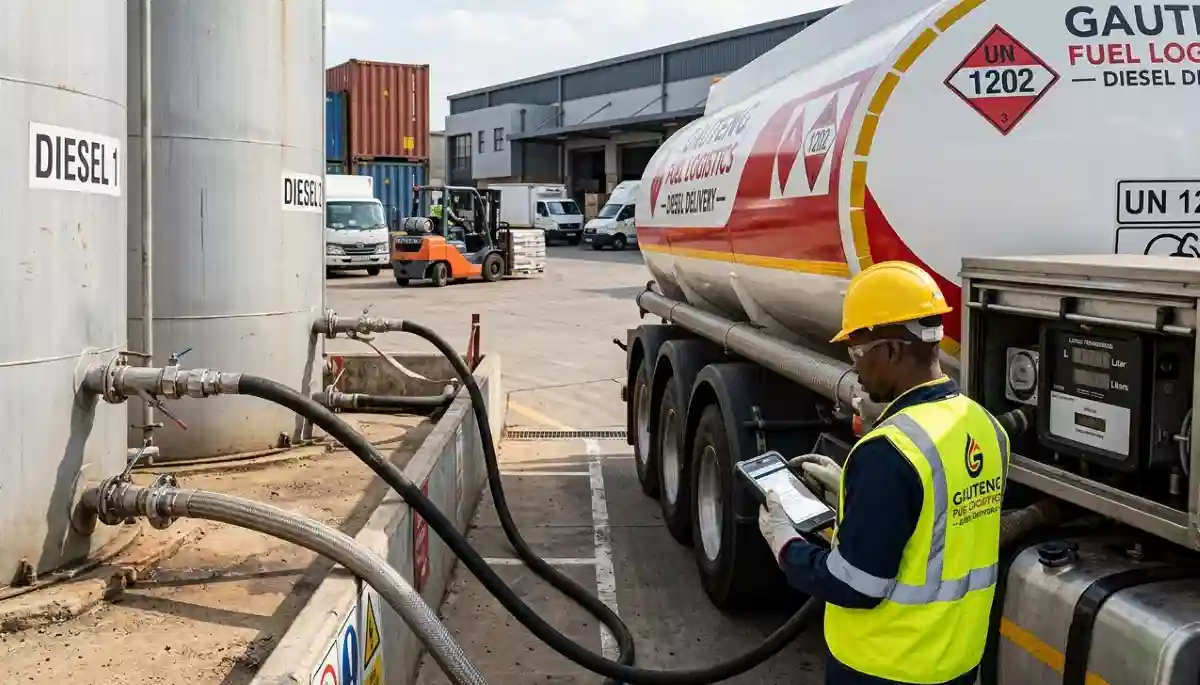
Need Diesel Delivered to a Remote Location?
ServiceLink SA connects you with verified fuel delivery providers specialising in remote sites. Get free quotes today. If we can’t assist directly, we’ll connect you with our trusted partner companies to carry out your fuel supply projects professionally and timeously.
Get Free Remote Delivery Quotes
Servicing Limpopo, Mpumalanga, North West, Northern Cape, and across South Africa’s remote regions
Fuel Delivery for Remote Sites: Diesel to Off-Grid Locations
🏔️ From mining camps to rural farms—your complete guide to off-grid diesel delivery
I once spoke with a mine manager in the Northern Cape whose operation was 400 kilometres from the nearest fuel depot. His haul trucks burned through 50,000 litres of diesel daily. If a delivery was delayed by even one day, the entire mine would shut down—costing over R5 million in lost production.
“Fuel delivery for remote sites isn’t just about convenience,” he told me. “It’s about survival. If the fuel doesn’t arrive, we don’t operate.”
For businesses operating in South Africa’s most isolated regions—remote mining camps, off-grid farms, rural construction projects, and wildlife reserves—reliable off-grid diesel delivery is critical. The challenges are unique: long distances, poor road conditions, limited communication, and no backup options.
This comprehensive service guide covers everything you need to know about fuel delivery for remote sites, including remote location fuelling strategies, diesel delivery to remote mining camps, long-distance delivery logistics, off-road delivery challenges, and how to choose a provider that can reliably reach your site. For more on diesel delivery, read diesel delivery services in South Africa.
Ready to ensure your remote operation never runs dry? Let’s dive in.
📋 Table of Contents – Remote Fuel Delivery Guide
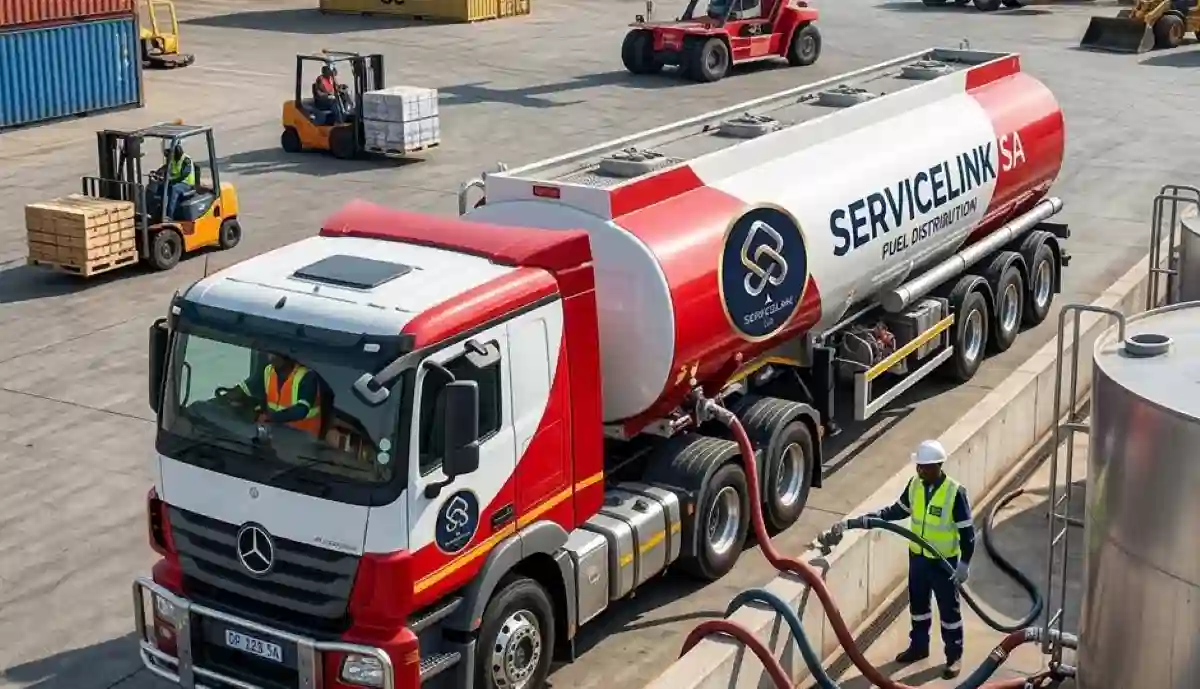
🏔️ What Is Fuel Delivery for Remote Sites?
Fuel delivery for remote sites refers to the specialised service of transporting diesel to locations far from urban centres, fuel depots, and main roads. These sites often lack access to retail fuel stations and may have challenging road conditions.
⚠️ The Critical Difference
Remote site delivery isn’t just about distance—it’s about reliability. When you’re 300km from the nearest fuel station, a missed delivery means complete shutdown. Providers must have contingency plans for breakdowns, road closures, and weather events.
What qualifies as a “remote site”?
- Mining camps and operations far from towns
- Rural farms without nearby fuel stations
- Remote construction projects (roads, dams, pipelines)
- Wildlife reserves and lodges off the grid
- Telecommunications towers in rural areas
- Remote research stations and field camps
- Border posts and remote military installations
Key characteristics of remote site delivery:
- Long distances: Often 100-500+ km from nearest depot
- Poor road conditions: Gravel, dirt, or unmaintained roads
- Limited communication: Poor cell phone reception
- No backup options: Only one supplier can reach the site
- High consequences of failure: Complete operation shutdown
- Specialised equipment needed: Off-road capable vehicles
Why remote delivery requires specialised providers:
Not every fuel delivery company can service remote sites. Providers must have:
- Off-road capable tankers (4×4 or 6×6)
- Drivers experienced in remote route navigation
- Satellite communication for areas without cell service
- Emergency breakdown response plans
- Extra fuel for return trips (no refuelling options en route)
- Understanding of remote site safety protocols
For more on delivery types, read diesel delivery services.
⚠️ Unique Challenges of Remote Site Delivery
Remote location fuelling presents challenges not found in urban deliveries:
1. Distance and travel time:
- Round trips can take 1-3 days depending on location
- Drivers may need overnight accommodation
- Weather can extend travel times significantly
- Road closures can completely block access
2. Road conditions:
- Gravel roads cause dust that can contaminate fuel if not properly sealed
- Mud during rainy season makes roads impassable
- Steep gradients require powerful vehicles
- River crossings may be needed
- No road maintenance in many remote areas
3. Communication limitations:
- Poor or no cell phone reception
- Satellite phones or radios required
- No real-time tracking of delivery vehicles
- Delayed communication of emergencies
4. Limited backup options:
- Only one supplier may service the area
- No alternative fuel sources nearby
- Breakdown recovery is difficult and slow
- Spare parts may not be available locally
5. Weather vulnerability:
- Rainy seasons can make roads impassable for weeks
- Extreme heat affects vehicle performance
- Flooding can cut off entire regions
- Planning must account for seasonal access limitations
6. Security concerns:
- Remote areas may have higher theft risk
- No security infrastructure along routes
- Drivers may be vulnerable to hijacking
- Fuel cargo is valuable and attractive to criminals
7. Regulatory compliance:
Remote deliveries must still comply with DMRE remote site regulations. See DMRE – Remote site regulations. Key requirements include:
- Proper dangerous goods documentation
- Driver rest period compliance (especially for long trips)
- Vehicle fitness for remote conditions
- Emergency response plans for remote areas
For more on regulatory compliance, read bulk diesel storage regulations.
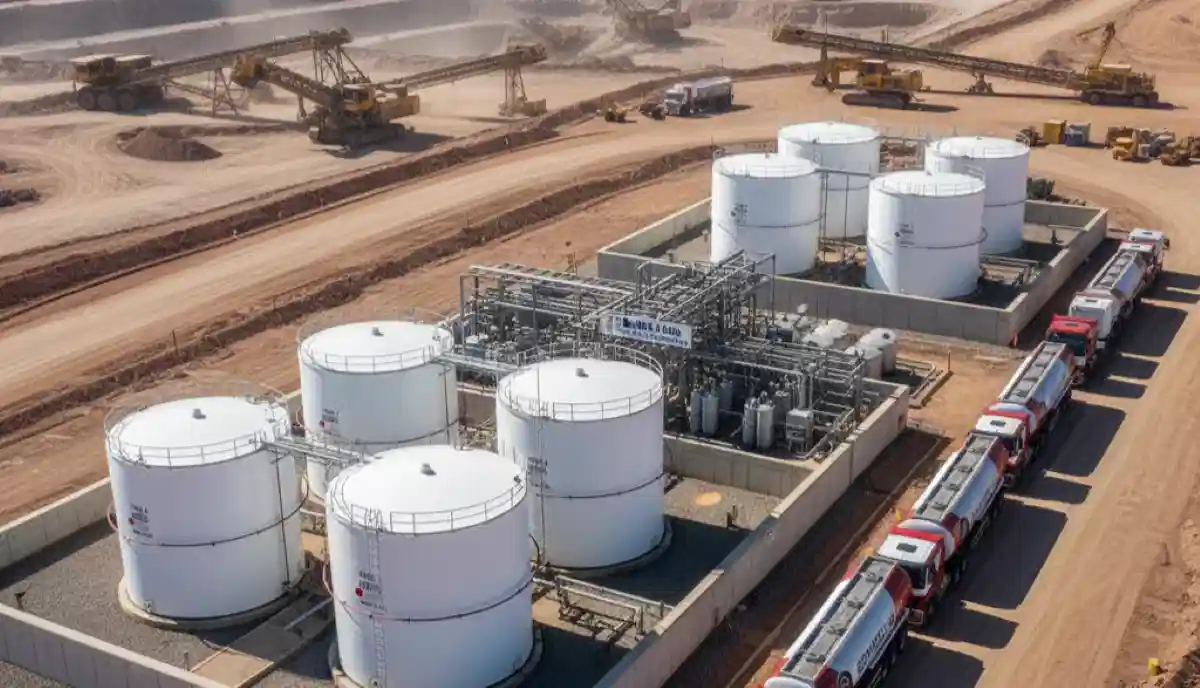
⛏️ Diesel Delivery to Remote Mining Camps
Diesel delivery to remote mining camps is one of the most demanding remote fueling applications:
Why mining camps need specialised delivery:
- Massive volumes: Large mines consume 500,000-2,000,000+ litres monthly
- 24/7 operations: Any delivery delay causes immediate production stoppage
- Remote locations: Often 200-500km from nearest fuel depot
- Poor roads: Haul roads and access tracks can be challenging
- High consequences: A day without fuel costs R3M-R15M+ in lost production
Mining delivery requirements:
- Multiple tanker deliveries daily or weekly
- Large on-site storage (7-30 days capacity)
- Dedicated delivery scheduling and tracking
- Emergency response plans for supply interruption
- Backup supplier relationships
- Underground delivery capability if applicable
Typical mining delivery volumes:
| Mine Size | Monthly Diesel Consumption | Delivery Frequency | Storage Recommended |
|---|---|---|---|
| Small mine | 100,000-300,000L | Weekly | 7-14 days |
| Medium mine | 300,000-1,000,000L | 2-3 times weekly | 7-10 days |
| Large mine | 1,000,000-3,000,000L+ | Daily or multiple daily | 5-7 days |
Mining-specific challenges:
- Seasonal access: Some mines become inaccessible during rainy seasons
- Security: Fuel theft is a significant risk at remote mines
- Quality preservation: Long storage times require fuel testing and rotation
- Underground delivery: Specialised equipment for underground mines
- Compliance: DMRE mining fuel regulations must be followed
Best practices for mining delivery:
- Maintain minimum 7-14 days of on-site storage
- Establish contracts with primary and backup suppliers
- Implement automated tank monitoring with alerts
- Conduct regular fuel quality testing
- Plan deliveries based on seasonal access constraints
- Build weather buffers into delivery schedules
For more on mining fuel, read bulk fuel for mining operations.
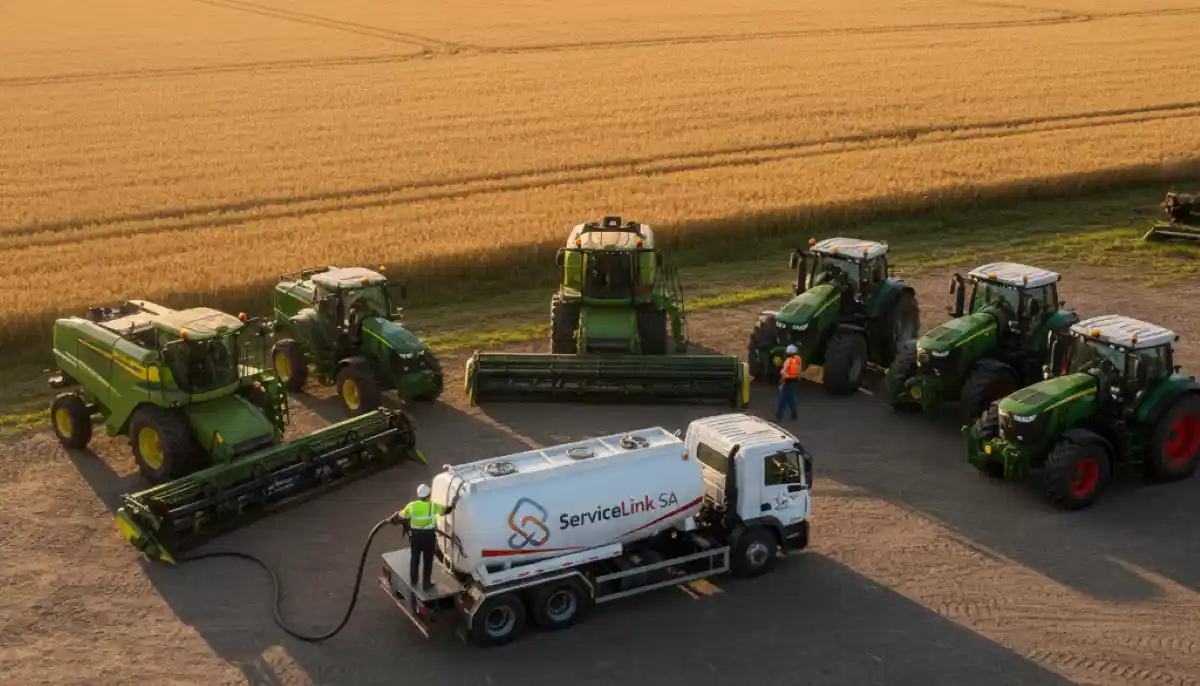
🚜 Off-Grid Diesel Delivery for Rural Farms
Off-grid diesel delivery for rural farms presents unique challenges:
Why farms need remote delivery:
- No nearby fuel stations: Many rural farms are 50-150km from the nearest town
- Seasonal urgency: Planting and harvest cannot wait for fuel
- Large equipment: Tractors and combines have high consumption
- Irrigation dependency: Diesel pumps must run continuously during dry spells
- Road conditions: Farm access roads may be unmaintained
Farm delivery requirements:
- On-farm storage tanks (5,000-50,000L capacity)
- Scheduled deliveries based on seasonal consumption
- Emergency delivery during critical periods
- Proper documentation for diesel rebate claims
- Flexibility for weather-related delays
Seasonal delivery planning:
| Season | Typical Delivery Frequency | Volume per Delivery | Critical Factors |
|---|---|---|---|
| Planting | Weekly | 10,000-30,000L | Timing critical—cannot delay planting |
| Growing/Irrigation | Bi-weekly | 10,000-20,000L | Irrigation pumps run continuously |
| Harvest | 2-3 times weekly | 15,000-30,000L | Most critical—harvest cannot wait |
| Off-season | Monthly | 5,000-15,000L | Lower consumption, but storage must be maintained |
Farm-specific challenges:
- Muddy roads: Wet seasons can make farm tracks impassable
- Remote location: No alternative fuel sources if delivery fails
- Storage concerns: On-farm tanks may be old or non-compliant
- Water contamination: Condensation in rural tanks is common
- Theft: Remote farm tanks are vulnerable to fuel theft
Best practices for farm delivery:
- Maintain minimum 14-21 days storage before planting/harvest
- Schedule deliveries based on weather forecasts
- Install lockable tank caps and security measures
- Conduct regular water checks and fuel testing
- Keep detailed records for diesel rebate claims
For more on farm fuel, read bulk fuel for farms and agriculture.
Need Diesel Delivered to a Remote Location?
ServiceLink SA connects you with verified fuel delivery providers specialising in remote sites. Get free quotes today. If we can’t assist directly, we’ll connect you with our trusted partner companies to carry out your fuel supply projects professionally and timeously.
Get Free Remote Delivery Quotes
Long-distance delivery specialists for mining camps, farms, and remote construction sites.
🏗️ Remote Construction Site Fuelling
Remote construction projects (roads, dams, pipelines, wind farms) need reliable remote location fuelling:
Why construction sites need remote delivery:
- Temporary locations with no existing fuel infrastructure
- Heavy equipment (excavators, dozers, dump trucks) with high consumption
- Often far from towns and fuel stations
- Project timelines demand uninterrupted operation
- Weather can make access difficult
Construction delivery requirements:
- Mobile bowsers or temporary storage tanks
- Flexible delivery schedules as project phases change
- Ability to reach sites in various conditions
- Emergency delivery for unexpected shortages
- Documentation for project accounting
Typical remote construction delivery volumes:
- Small site (road construction): 5,000-15,000L weekly
- Medium site (dam or pipeline): 15,000-40,000L weekly
- Large site (wind farm): 40,000-100,000L+ weekly
Construction-specific challenges:
- Site mobility: The fuel point moves as the project progresses
- Access changes: New roads, excavated areas, changing terrain
- No permanent storage: Temporary tanks or direct-to-equipment delivery
- Weather exposure: Sites exposed to elements, affecting delivery windows
- Security: Remote construction sites have high theft risk
Best practices for construction delivery:
- Use mobile bowsers or temporary storage that can move with the project
- Schedule deliveries around weather forecasts
- Install lockable tanks or use wet hosing (no storage on site)
- Maintain contact with site manager for access updates
- Plan for seasonal access limitations
For more on construction fuel, read bulk fuel for construction sites.
🚛 Long-Distance Delivery Logistics
Long-distance delivery to remote sites requires careful logistics planning:
Key logistics considerations:
- Travel time: Round trips can take 1-3 days
- Driver hours: Compliance with NRSA driver rest regulations
- Accommodation: Drivers may need overnight stops
- Refuelling: Tankers need fuel for return trip (no en-route options)
- Vehicle maintenance: Remote routes increase breakdown risk
- Communication: Satellite phones for areas without cell service
NRSA long-distance transport regulations:
Long-distance fuel transport must comply with NRSA – Long-distance transport regulations. Key requirements:
- Driver rest periods (no driving more than 9 hours daily)
- Vehicle fitness for long-distance operation
- Dangerous goods documentation for entire journey
- Emergency response plans for breakdowns
- Tracking and monitoring requirements
SABS remote delivery standards:
Equipment must meet SABS – Remote delivery standards. Key requirements:
- Vehicles suitable for gravel and unpaved roads
- Spare tyre and repair equipment carried
- Communication equipment for emergencies
- Extra fuel for return journey
- First aid and survival equipment
Planning long-distance deliveries:
- Calculate round-trip distance and travel time
- Plan overnight stops if needed (accommodation, secure parking)
- Ensure drivers are rested and compliant with hours regulations
- Carry spare parts and emergency equipment
- Have satellite communication for areas without cell service
- Inform site of estimated arrival time with buffers
- Have backup plan for breakdowns (recovery vehicle on standby)
Cost implications of long-distance delivery:
- Higher transport differential (R1.50-3.50/L vs urban R0.30-0.60/L)
- Driver accommodation costs if overnight stops required
- Higher vehicle maintenance costs for rough roads
- Premium for remote area expertise
For more on delivery costs, read wholesale diesel prices.
🛻 Off-Road Delivery Challenges
Off-road delivery to remote sites presents unique vehicle and operational challenges:
Vehicle requirements for off-road delivery:
- 4×4 or 6×6 capability: Standard 4×2 trucks cannot handle remote roads
- High ground clearance: To navigate ruts and obstacles
- Heavy-duty suspension: To withstand rough terrain
- All-terrain tyres: For gravel, mud, and sand
- Winch capability: For self-recovery if stuck
- Spare tyre carriers: Multiple spares for remote areas
Road condition challenges:
- Gravel roads: Dust can contaminate fuel if tank seals are poor
- Mud: Rainy season makes many remote roads impassable
- Sand: Desert areas require specialised driving techniques
- Rocky terrain: Increases tyre puncture risk
- River crossings: May be impossible during flood season
- Steep gradients: Require powerful vehicles and careful driving
Driver qualifications for off-road delivery:
- Experienced in off-road driving techniques
- Familiar with remote route hazards
- Trained in vehicle recovery procedures
- Knowledge of basic vehicle repairs
- Understanding of weather impact on road conditions
- Navigation skills without GPS (backup maps)
Weather impact on off-road delivery:
- Rainy season: Many remote roads become impassable for weeks
- Heat: Extreme temperatures affect vehicle performance
- Flooding: Can cut off entire regions
- Fog: Reduces visibility on mountain passes
- Frost: Affects road grip in high-altitude areas
Mitigation strategies:
- Build weather buffers into delivery schedules
- Stockpile fuel before rainy season starts
- Use satellite weather monitoring for delivery planning
- Have alternative routes identified
- Carry emergency supplies for weather delays
For more on transport regulations, read diesel delivery services.
🏭 Fuel Storage Solutions for Remote Sites
Proper storage is critical for remote location fuelling success:
Storage options for remote sites:
| Storage Type | Capacity Range | Best For | Pros | Cons |
|---|---|---|---|---|
| Above-ground tanks | 10,000-200,000L | Mines, large farms | Large capacity, permanent | High cost, installation required |
| Portable tanks (skid/trailer) | 5,000-20,000L | Construction sites, temporary operations | Mobile, no permanent installation | Smaller capacity |
| Fuel cubes | 500-2,000L | Small sites, generators | Highly portable, low cost | Very small capacity |
| Generator day tanks | 500-5,000L | Generator backup power | Dedicated to generator | Single purpose |
Storage capacity recommendations:
- Mines: Minimum 7-14 days consumption (often 500,000-2,000,000L+)
- Farms: Minimum 14-21 days consumption during peak season (20,000-100,000L)
- Construction: Minimum 5-10 days consumption (20,000-100,000L depending on project)
- Generator sites: Minimum 5-7 days backup power (5,000-50,000L)
Storage considerations for remote sites:
- Bunding: Secondary containment required for environmental compliance
- Security: Lockable caps, fencing, lighting, cameras
- Monitoring: Automated level monitoring with remote alerts
- Quality: Regular testing for water and microbial growth
- Access: Clear area for delivery tanker access
- Compliance: SABS standards and environmental permits
Generator day tanks for remote sites:
For sites relying on generator backup power, generator day tanks provide dedicated fuel supply. See diesel day tanks for generators for specifications. Benefits include:
- Dedicated supply for generator (not shared with equipment)
- Automated refilling from main storage
- Leak detection and automatic shut-off
- Smaller footprint than main storage
For more on storage, read fuel tank installation and commercial fuel storage tanks.
🚨 Emergency Fuel Delivery for Remote Sites
When a remote site runs critically low, emergency fuel delivery is the only option:
Why emergency delivery for remote sites is different:
- Longer response times: 6-24 hours vs 2-6 hours in urban areas
- Higher costs: Premium rates reflect distance and difficulty
- Limited provider availability: Few suppliers offer remote emergency service
- Access challenges: May need specialised vehicles for off-road conditions
- Communication difficulties: May need satellite phone coordination
Emergency delivery costs for remote sites (for reference):
- Daytime emergency: Wholesale + R3.00-5.00/L + R1,000-3,000 call-out fee
- Night/weekend emergency: Wholesale + R4.00-6.00/L + R1,500-4,000 call-out fee
- Extreme remote (300km+): Wholesale + R5.00-8.00/L + R2,000-5,000 call-out fee
How to prepare for remote site emergencies:
- Establish relationships with at least 2 emergency providers before you need them
- Have satellite phone or reliable communication method
- Maintain clear site access instructions and GPS coordinates
- Keep contact details for local emergency services
- Maintain minimum 3-5 days buffer fuel at all times
- Monitor tank levels daily to avoid surprises
- Have backup generator or alternative power if possible
What to do in a remote site fuel emergency:
- Confirm current fuel level and estimated time remaining
- Contact your primary emergency provider immediately (don’t wait)
- If primary can’t respond within required time, contact backup provider
- Provide exact GPS coordinates, site access instructions, and required volume
- Implement fuel conservation measures (reduce non-essential consumption)
- Prepare for potential shutdown if delivery is delayed
For more on emergency delivery, read emergency fuel delivery in South Africa.
❓ Frequently Asked Questions About Remote Fuel Delivery
What is fuel delivery for remote sites?
Fuel delivery for remote sites is specialised diesel transport to locations far from urban centres and fuel depots—typically 100-500+ km away. It requires off-road capable vehicles, experienced drivers, and contingency plans for breakdowns and weather delays.
How does off-grid diesel delivery work?
Off-grid diesel delivery involves a specialised tanker travelling to remote locations using gravel roads, farm tracks, or off-road routes. Deliveries are typically scheduled based on site consumption, with larger storage tanks to buffer against delivery delays. Providers must have satellite communication and emergency response plans.
What is diesel delivery to remote mining camps?
Diesel delivery to remote mining camps is high-volume fuel transport for mines far from urban areas. Mines consume 100,000-2,000,000+ litres monthly, requiring frequent deliveries (daily to weekly). Providers must have off-road tankers, reliable scheduling, and emergency backup plans to prevent costly production stoppages.
How much does long-distance fuel delivery cost?
Long-distance delivery costs more than urban delivery due to distance, road conditions, and driver time. Typical transport differential: R1.50-3.50/L for remote sites vs R0.30-0.60/L for urban. Emergency remote delivery can cost R3.00-8.00/L plus call-out fees. Get quotes from multiple providers for accurate pricing.
What are the challenges of off-road delivery?
Off-road delivery challenges include: poor road conditions (gravel, mud, sand), weather vulnerability (rainy season closures), communication limitations (no cell service), higher breakdown risk, driver fatigue on long routes, and security concerns in remote areas. Providers must have specialised vehicles and contingency plans.
How much fuel storage do I need at a remote site?
For remote location fuelling, storage recommendations: mines: 7-14 days consumption; farms: 14-21 days during peak season; construction: 5-10 days; generator sites: 5-7 days backup power. Larger storage provides buffer against delivery delays, weather closures, and emergencies.
Can I get emergency fuel delivery to a remote site?
Yes, but response times are longer (6-24 hours vs 2-6 hours urban) and costs are higher (premium R3.00-8.00/L + call-out fees). Not all providers offer remote emergency service. Establish relationships with emergency providers before you need them, and maintain minimum 3-5 days buffer fuel at all times.
What regulations apply to remote fuel delivery?
Remote fuel delivery must comply with SABS remote delivery standards, NRSA long-distance transport regulations, and DMRE remote site regulations. Requirements include driver rest periods, vehicle fitness for remote conditions, dangerous goods documentation, emergency response plans, and communication equipment. Always verify provider compliance.
✅ Final Thoughts: Keep Your Remote Operation Running
Fuel delivery for remote sites requires specialised expertise, equipment, and contingency planning. Unlike urban deliveries, remote fueling has no room for error—a missed delivery can mean complete operation shutdown, costing millions in lost production.
Key takeaways from this guide:
- Fuel delivery for remote sites requires off-road capable vehicles and experienced drivers
- Off-grid diesel delivery costs more than urban delivery (R1.50-3.50/L vs R0.30-0.60/L)
- Remote location fuelling demands larger on-site storage (7-21 days minimum)
- Diesel delivery to remote mining camps is the most demanding application (high volume, high consequences)
- Long-distance delivery requires careful logistics: driver rest periods, accommodation, satellite communication
- Off-road delivery faces challenges: poor roads, weather vulnerability, breakdown risk
- Compliance with SABS, NRSA, and DMRE standards is essential for safety and legality
- Emergency remote delivery is available but has longer response times and higher costs
- Proper on-site storage with monitoring and security is critical
- ServiceLink SA connects you with verified providers specialising in remote site delivery
Your action plan: Assess your remote site’s fuel requirements and storage capacity. Calculate your buffer against delivery delays. Research providers with remote site experience and proper certifications. Get quotes from multiple providers. Establish primary and backup supplier relationships. Implement tank monitoring with alerts. Plan for seasonal access limitations. Never let your remote site run dry.
Ready for Reliable Remote Site Fuel Delivery?
ServiceLink SA connects you with verified fuel delivery providers specialising in remote sites. Get free quotes today. If we can’t assist directly, we’ll connect you with our trusted partner companies to carry out your fuel supply projects professionally and timeously.
📞 Call us: 073 138 4726 for immediate help finding remote site fuel delivery providers near your location.
Diesel Delivery •
Emergency Fuel Delivery •
Generator Fuel Services •
Fleet Fueling Solutions •
Fuel Tank Installation
📚 Official resources & standards referenced:
- SABS – South African Bureau of Standards – Remote delivery standards and equipment certification.
- NRSA – National Road Safety Agency – Long-distance transport regulations and driver hours.
- DMRE – Department of Mineral Resources and Energy – Remote site regulations and fuel licensing.
- Department of Transport – Vehicle licensing and transport regulations for remote areas.
Information provided for general guidance based on independent research and official sources. Safety regulations, licensing requirements, and compliance standards change periodically. Always verify current requirements directly with SABS, NRSA, and DMRE.
Written by: ServiceLink SA Research Team
Remote Logistics & Off-Grid Fuel Supply Specialists
The ServiceLink SA Research Team combines expertise from remote logistics, off-grid operations, and fuel supply chain management. Our analysts track SABS remote delivery standards, monitor NRSA long-distance transport regulations, analyse DMRE remote site requirements, and maintain relationships with accredited providers serving South Africa’s most isolated regions—including Limpopo, Mpumalanga, North West, and Northern Cape. This guide draws on primary research, official SABS, NRSA, and DMRE documentation, and direct experience with remote mining camps, off-grid farms, and isolated construction projects. Our mission is to help South African businesses secure reliable fuel delivery for remote sites, off-grid diesel delivery, and remote location fuelling. If we can’t assist directly, we’ll connect you with our trusted partner companies who specialise in long-distance and off-road delivery to South Africa’s most challenging locations.
For more information about remote fuel delivery, explore our related resources: diesel delivery services, emergency fuel delivery, generator fuel supply and refilling, fleet fueling solutions, fuel tank installation, and bulk fuel for mining operations. See our location-specific guides for Emalahleni, Secunda, Rustenburg, Polokwane, and Kimberley.