
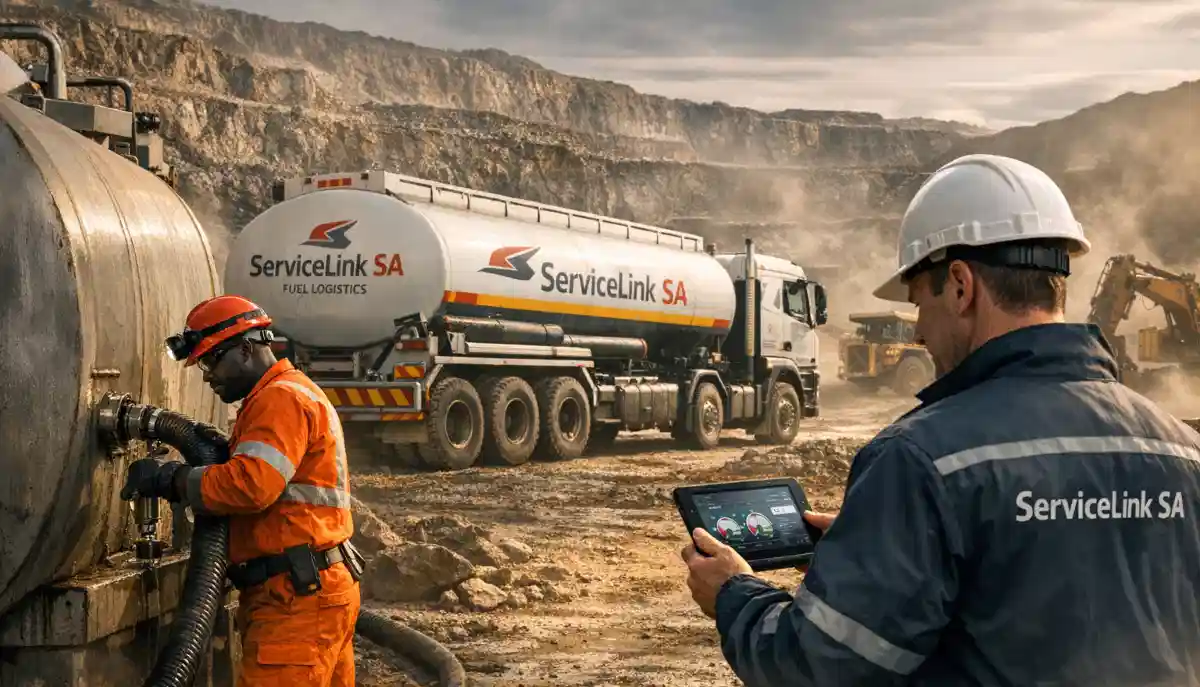
Power Your Mining Operations
ServiceLink SA connects you with verified bulk fuel suppliers specializing in mine diesel supply. Get free quotes today.
Servicing Emalahleni, Secunda, Rustenburg, Middelburg, Polokwane, and across South Africa’s mining regions
Bulk Fuel for Mining Operations: Diesel Supply for Mines in SA
⛏️ From open-pit haul trucks to underground loaders—your complete guide to reliable mine diesel supply
I once stood at the edge of an open-pit mine in Mpumalanga, watching a fleet of haul trucks the size of double-storey houses crawl up the haul road. Each truck burned through hundreds of litres of diesel per hour. The mine manager told me something I’ll never forget: “If our diesel supply stops for one shift, we lose R2 million in production. If it stops for a day, we lose R6 million. And if it stops for a week, we lose the mine.”
That’s the reality of bulk fuel for mining operations. Unlike a logistics company that can park idle trucks, a mine can’t just pause. Underground dewatering pumps must run. Ventilation fans must spin. Ore processing can’t stop mid-cycle.
Whether you operate a coal mine in Mpumalanga, a platinum mine in Rustenburg, or a diamond mine in Limpopo, reliable mine diesel supply is not a luxury—it’s a survival requirement. This guide covers everything you need to know about securing mining fuel delivery, including diesel supply for underground mining operations, 500ppm diesel specifications, and mining logistics best practices.
For more on supplier selection, read how to choose a bulk fuel supplier. Ready to optimize your mine’s fuel supply? Let’s dive in.
📋 Table of Contents – Mining Fuel Supply Guide
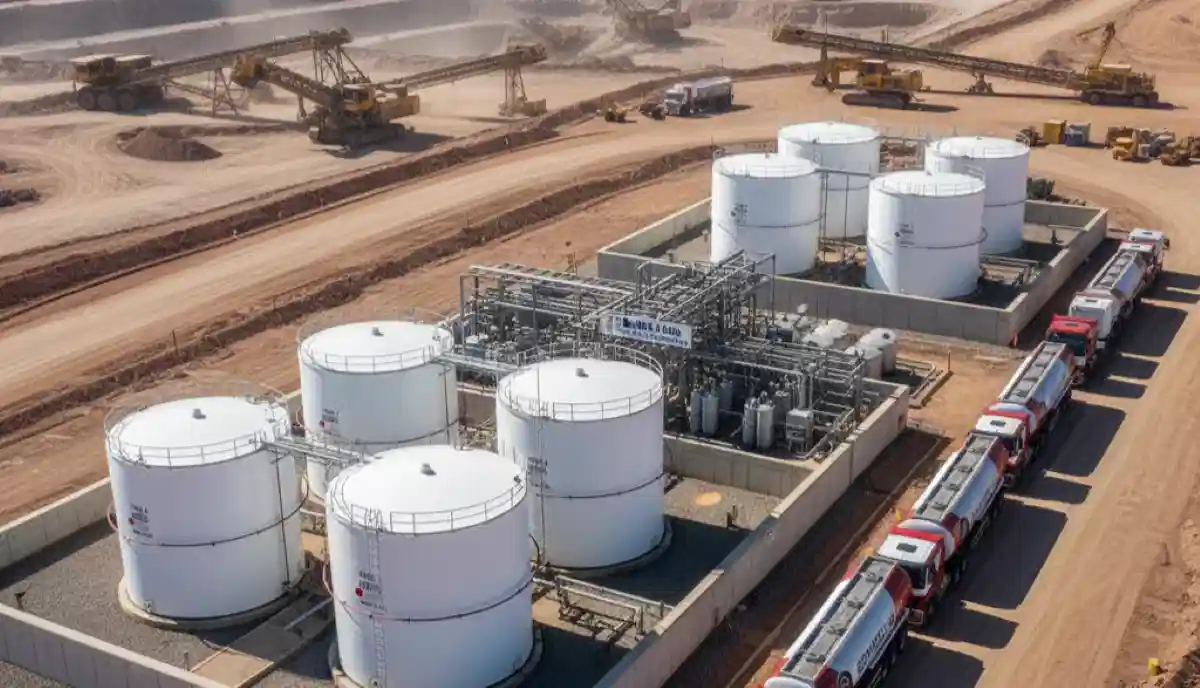
⚠️ Why Bulk Fuel Matters for Mining Operations
Diesel is the lifeblood of modern mining. From haul trucks to excavators, from generators to dewatering pumps—almost everything that moves or produces power in a mine runs on diesel.
⚠️ Warning: The High Cost of Mining Fuel Disruption
A single day without diesel can cost a中型 coal mine R3-R8 million in lost production. For larger operations, losses can exceed R15 million daily. Beyond direct losses, underground safety systems (ventilation, dewatering) depend on diesel generators—fuel disruption creates safety risks.
Why bulk fuel for mining operations demands special attention:
- Continuous operations: Most mines run 24/7/365. Fuel supply can’t take weekends off.
- Massive volumes: A single large mine can consume 500,000-2,000,000+ litres of diesel monthly.
- Remote locations: Many mines are far from urban fuel depots, requiring dedicated logistics.
- Underground challenges: Diesel supply for underground mining operations requires specialized equipment and safety protocols.
- Quality sensitivity: Mining equipment is expensive (R5M-R50M+ per unit). Contaminated fuel causes catastrophic damage.
- Regulatory scrutiny: Mining fuel storage and handling face strict DMRE and DFFE oversight.
Typical diesel consumption by mining equipment:
| Equipment Type | Typical Fuel Consumption | Application |
|---|---|---|
| Large haul truck (300t payload) | 300-500 L/hour | Open-pit ore haulage |
| Excavator (200t class) | 200-350 L/hour | Overburden removal, ore loading |
| Underground loader (10t) | 30-60 L/hour | Underground ore handling |
| Diesel generator (1MW) | 200-250 L/hour | Backup or primary power |
| Drill rig | 40-100 L/hour | Blasthole drilling |
For more on cost management, read bulk fuel supply costs in South Africa.
🛢️ Diesel Specifications for Mining: 50ppm vs 500ppm
Mining operations typically use 500ppm diesel (500 parts per million sulphur content). Here’s why and how it compares to 50ppm:
| Specification | 500ppm Diesel | 50ppm Diesel |
|---|---|---|
| Sulphur content | 500 ppm (0.05%) | 50 ppm (0.005%) |
| Typical mining use | ✅ Standard for most mining equipment | Limited to emissions-sensitive areas |
| Lubricity | Better natural lubricity | May require additives |
| Cost per litre | Lower (5-10c/L less than 50ppm) | Higher |
| Emissions | Higher SOx emissions | Lower SOx emissions |
| Engine compatibility | All mining diesel engines | All mining diesel engines |
Why mining prefers 500ppm diesel:
- Cost advantage: 500ppm typically costs 5-10c/L less than 50ppm. For a mine using 1 million litres monthly, that’s R50,000-R100,000+ monthly savings.
- Better lubricity: The sulphur content provides natural lubrication for fuel injectors and pumps, potentially extending equipment life.
- Wide availability: 500ppm is the standard diesel grade in South Africa, readily available from all suppliers.
- Emissions considerations: Underground mines with ventilation constraints may prefer 50ppm for lower SOx emissions. Check with ventilation engineers.
When to consider 50ppm for mining:
- Underground operations with ventilation limitations
- Mines with strict environmental permits requiring lower emissions
- Equipment with after-treatment systems requiring low-sulphur fuel (rare in mining)
For more on diesel grades, read 50ppm vs 500ppm diesel explained.
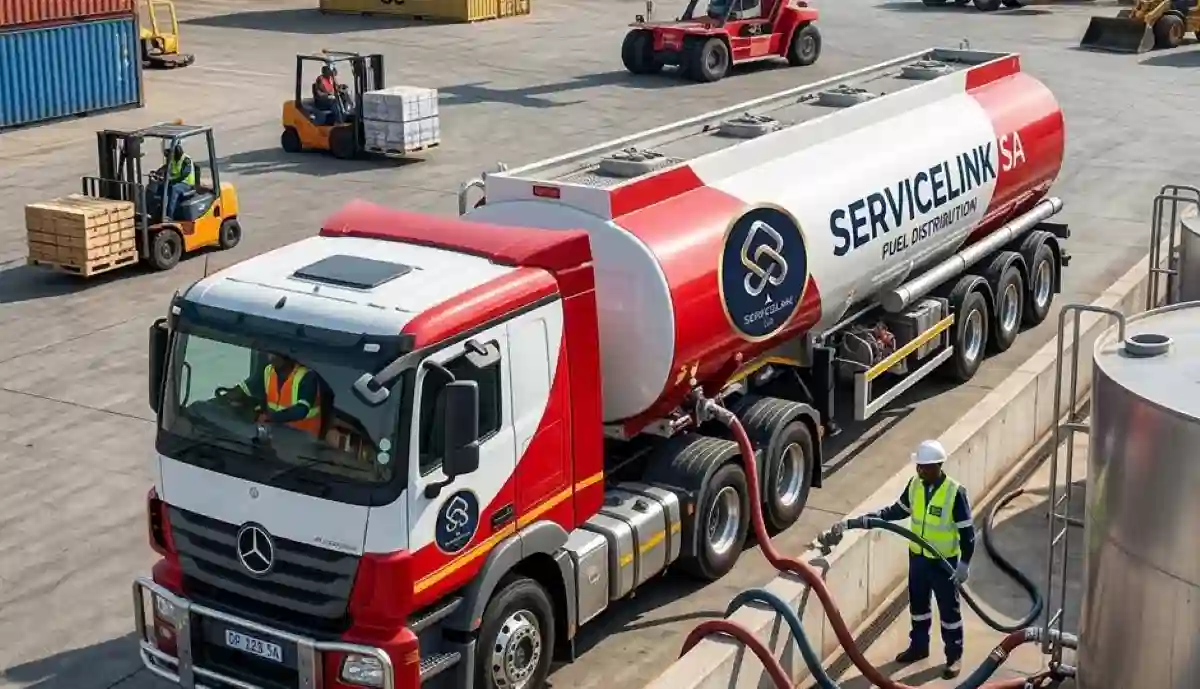
⛰️ Unique Challenges of Mining Fuel Delivery
Mining logistics for fuel presents challenges that other industries don’t face:
Remote site access:
- Many mines are 100-500km from major fuel depots
- Road conditions can be poor, especially during rainy seasons
- Security concerns in some mining regions require escorted deliveries
Volume variability:
- Production fluctuations cause unpredictable fuel demand
- Strikes, weather, or equipment failures can suddenly reduce or increase consumption
- Contract minimums must balance supplier needs with operational reality
Underground delivery:
- Diesel supply for underground mining operations requires specialized equipment
- Underground fuel storage must meet explosion-proof standards
- Ventilation constraints may limit diesel equipment hours
- Emergency fuel must be accessible but safely stored
Quality preservation:
- Long storage periods (weeks or months) risk fuel degradation
- Water contamination from condensation is a constant battle
- Microbial growth (diesel bug) can clog filters and damage engines
Regulatory compliance:
- DMRE mining fuel regulations require specific storage and handling
- DFFE environmental compliance demands spill prevention and response plans
- CIDB contractor grading for mining fuel suppliers. See CIDB – Mining contractor grading.
For more on storage challenges, read bulk diesel storage regulations.
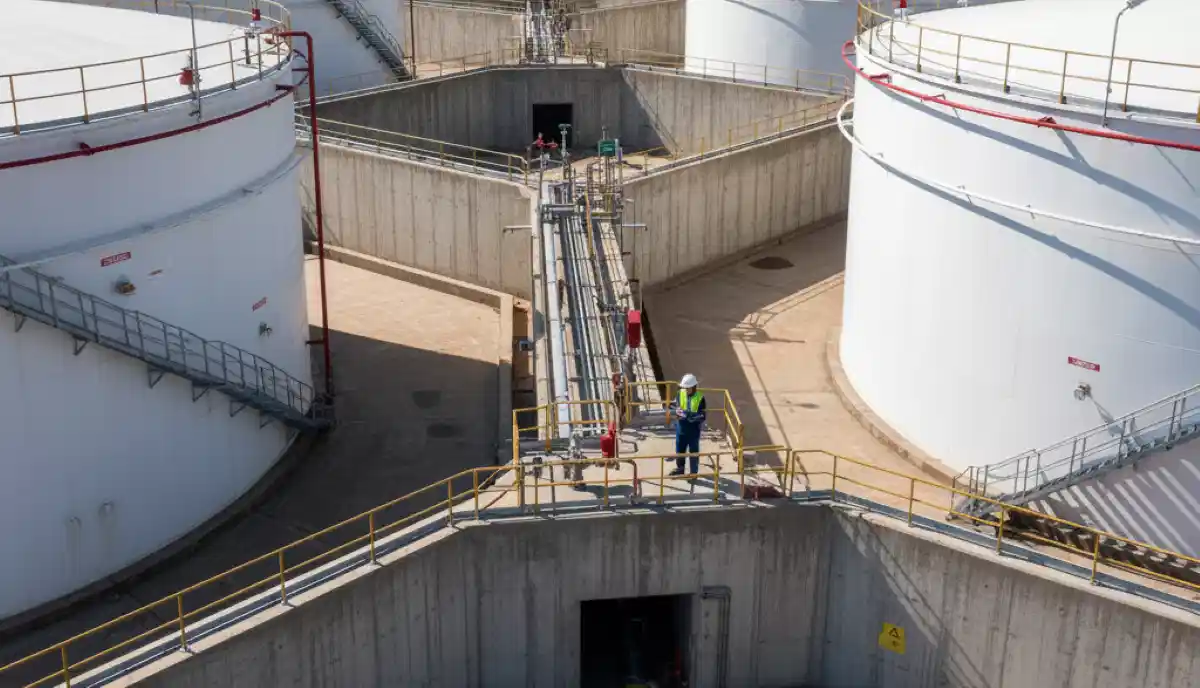
✅ What Makes a Great Mining Fuel Supplier?
Not all mine diesel supply companies understand mining’s unique requirements. Here’s what separates mining specialists from general fuel suppliers:
Essential characteristics for mining fuel suppliers:
- DMRE mining compliance: Specific licenses for mining fuel supply. See DMRE – Mining fuel regulations.
- DFFE environmental compliance: Spill response plans and environmental management systems. See DFFE – Mining environmental compliance.
- CIDB grading: Appropriate grading for mining contracts. See CIDB – Mining contractor grading.
- Underground delivery capability: Equipment and training for underground fuel delivery if needed.
- Remote logistics expertise: Experience delivering to remote sites with challenging road conditions.
- Bulk storage solutions: Can install and maintain mine-site fuel storage facilities.
- Emergency response: 24/7 emergency delivery to prevent production stoppages.
- Quality assurance: Regular fuel testing and contamination prevention programs.
- Rebate support: Documentation for mining diesel rebate claims.
Why mining specialization matters: A general fuel supplier might deliver fine to a logistics depot in Johannesburg but fail completely at a remote mine site. Mining requires dedicated logistics, specialized equipment, and regulatory expertise that only mining-focused suppliers provide.
ServiceLink SA verifies mining fuel supplier credentials during our screening process. Learn how we verify mining fuel suppliers.
Need a Mining Fuel Specialist?
ServiceLink SA connects you with verified suppliers who understand mining logistics, underground delivery, and DMRE compliance.
Connect with suppliers serving Emalahleni, Secunda, Rustenburg, and all mining regions.
🚩 7 Red Flags of Mining Fuel Suppliers (Avoid at All Costs!)
When sourcing bulk fuel for mining operations, watch out for these warning signs:
- No DMRE mining-specific compliance: General fuel licenses aren’t sufficient for mining operations.
- No DFFE environmental authorization: Mining fuel storage requires specific environmental approvals.
- No underground delivery experience (if needed): Underground fuel delivery requires specialized training and equipment.
- Poor remote access track record: Ask about their experience with your specific region and road conditions.
- No emergency response plan: Mines can’t wait days for emergency deliveries. Ask for documented emergency response times.
- Limited storage capacity: Suppliers without significant on-site storage can’t guarantee supply during disruptions.
- No mining client references: If they can’t provide references from similar mines, they lack relevant experience.
For more scam prevention, read how to avoid contractor scams—many principles apply to mining fuel suppliers too.
🔍 Where to Find Mining Fuel Suppliers Near You
Finding reliable mining fuel delivery partners requires industry-specific sources:
Best methods (recommended):
- ServiceLink SA: Our platform connects you with verified suppliers specializing in mining fuel. Free quotes, verified credentials, and mining-specific experience. Get quotes from mining fuel suppliers near you.
- DMRE mining supplier register: Check official registers for mining-approved fuel suppliers. DMRE – Mining fuel regulations.
- Chamber of Mines (Minerals Council): Member suppliers often meet mining standards.
- Industry referrals: Ask fellow mine managers for supplier recommendations.
Methods to avoid or use with caution:
- General fuel suppliers without mining experience: They likely don’t understand mining’s unique requirements.
- Social media or classifieds: Never source mining fuel from unverified online listings.
For a complete list of service categories, see our bulk fuel supply services page.
📋 How to Verify a Mining Fuel Supplier (6 Critical Checks)
Before contracting any mine diesel supply partner, run through this verification checklist:
- Verify DMRE mining compliance: Check their specific mining fuel licenses. DMRE – Mining fuel regulations.
- Confirm DFFE environmental compliance: Request environmental authorization and spill response plans. DFFE – Mining environmental compliance.
- Check CIDB grading: Verify appropriate grading for mining contracts. CIDB – Mining contractor grading.
- Request mining client references: At least 3 references from similar mines. Call them. Ask about reliability, remote access, and emergency response.
- Audit their safety record: Request injury and environmental incident records.
- Verify underground capability (if needed): Ask for equipment documentation and driver training records for underground delivery.
For more detailed verification guidance, read how to verify a contractor.
🏭 Fuel Storage Solutions for Mine Sites
Proper storage is critical for bulk fuel for mining operations. Here are common solutions:
Above-ground storage tanks:
- Typically 20,000L – 200,000L+ capacity
- Double-skinned or bunded for spill containment
- Must meet SANS 10089-3 standards
- Require DFFE environmental authorization
Underground storage:
- Common for underground mines
- Must meet explosion-proof standards
- Special ventilation requirements
- Emergency shut-off systems mandatory
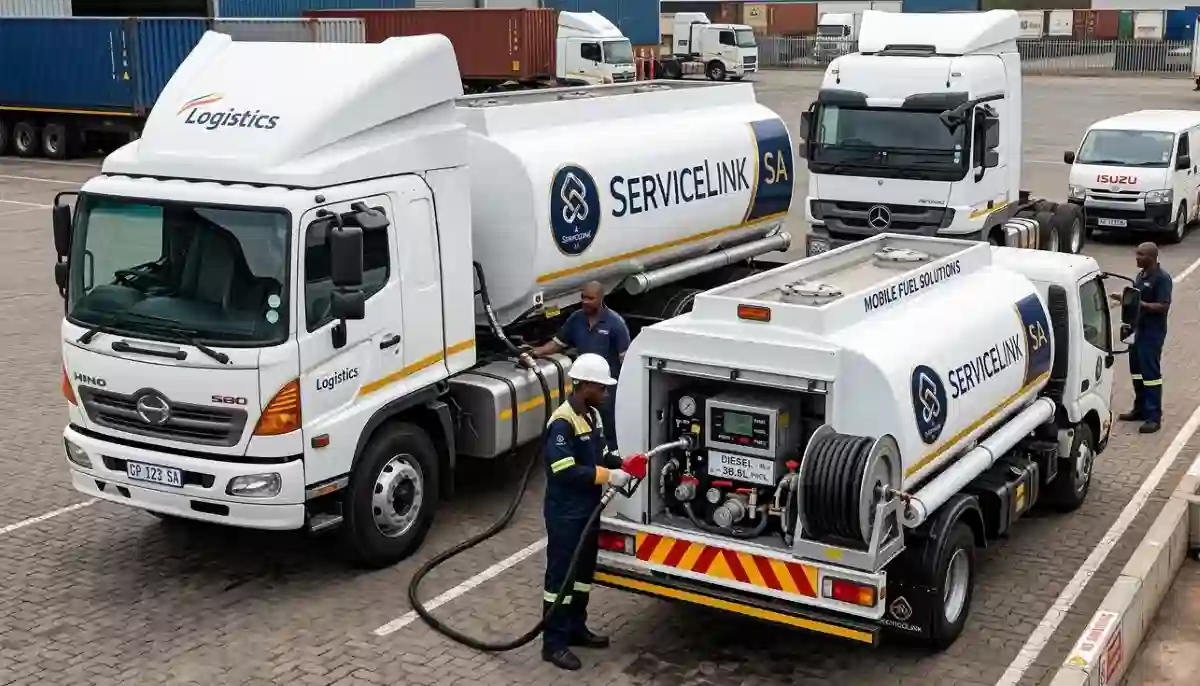
Mobile bowsers:
- For refueling equipment across large mine sites
- Typical capacity: 5,000L – 20,000L
- Require regular inspection and certification
Fuel management systems:
- Automated tank monitoring (level, temperature, water)
- Access control for dispensing
- Real-time consumption tracking
- Integration with mine management systems
For more on storage, read fuel tank installation and diesel storage tanks for mines.
🚛 Mining Logistics: Getting Fuel Underground and Across Site
Mining logistics for fuel involves more than just delivery to the mine gate. Here’s what’s involved:
Primary delivery (depot to mine):
- Large tanker deliveries (30,000L – 45,000L) to mine storage facilities
- Typically weekly or bi-weekly depending on consumption
- Requires site access agreements and safety inductions
Secondary distribution (mine storage to equipment):
- Bowser delivery from bulk storage to equipment
- Can be supplier-provided or mine-operated
- Requires trained operators and safety protocols
Underground logistics:
- Specialized underground fuel delivery vehicles
- Explosion-proof electrical systems
- Ventilation integration for emissions management
- Emergency refuge and response planning
Best practices for mining fuel logistics:
- Maintain minimum 7-14 days of on-site storage
- Implement real-time tank monitoring
- Establish relationships with backup suppliers
- Regular quality testing (weekly or monthly)
- Comprehensive spill response plans
For more on fuel management, read fuel management systems in South Africa.
❓ Frequently Asked Questions About Mining Fuel Supply
What diesel grade do most South African mines use?
Most mines use 500ppm diesel because it costs less (5-10c/L cheaper than 50ppm) and provides better lubricity for mining equipment. Underground mines with ventilation constraints may use 50ppm to reduce SOx emissions. Always consult your equipment manufacturer’s specifications.
How do I ensure reliable diesel supply for underground mining operations?
Diesel supply for underground mining operations requires suppliers with underground delivery experience, explosion-proof equipment, and ventilation integration. Maintain 7-14 days of on-site storage, implement real-time monitoring, and establish backup supplier relationships.
What are the DMRE regulations for mining fuel storage?
DMRE mining fuel regulations require licensed suppliers, approved storage facilities, spill containment (bunding), regular inspections, and emergency response plans. See DMRE – Mining fuel regulations for complete requirements.
How much diesel does a typical South African mine use monthly?
Bulk fuel for mining operations volumes vary dramatically by mine size and type. Small operations: 100,000-300,000L monthly. Medium mines: 300,000-1,000,000L monthly. Large operations: 1,000,000-3,000,000L+ monthly. Coal and platinum mines typically have highest diesel consumption.
What is the diesel rebate for mining operations?
Mining operations can claim diesel rebate on fuel used for qualifying extraction and processing activities. The rebate refunds a portion of the General Fuel Levy and RAF Levy. Your fuel supplier should provide documentation supporting rebate claims. Read diesel rebate system guide for details.
What are the environmental compliance requirements for mining fuel storage?
DFFE requires environmental authorization for mining fuel storage, spill containment systems (bunding at 110% of tank capacity), spill response plans, regular inspections, and incident reporting. See DFFE – Mining environmental compliance.
How do I prevent fuel contamination at mine sites?
Prevent contamination through regular fuel testing (weekly/monthly), water drain systems on storage tanks, filtration during transfer, microbial treatment programs, and proper housekeeping. For more, read fuel quality testing and sampling.
What CIDB grading do mining fuel suppliers need?
CIDB grading requirements depend on contract value. Large mining fuel contracts (R10M+ annually) typically require Grade 5-9 CE (Civil Engineering) or ME (Mechanical Engineering) grading. Check CIDB – Mining contractor grading for specific requirements.
✅ Final Thoughts: Choose Your Mining Fuel Partner Wisely
Your choice of bulk fuel for mining operations directly impacts your production continuity, equipment reliability, and regulatory compliance. The wrong supplier risks catastrophic downtime, contaminated fuel, and environmental violations. The right supplier becomes a strategic partner in keeping your mine running.
Key takeaways from this guide:
- Mining fuel disruption costs R3M-R15M+ daily in lost production
- Most mines use 500ppm diesel for cost and lubricity benefits
- Mining logistics require specialized remote and underground delivery capabilities
- Always verify DMRE mining compliance, DFFE environmental authorization, and CIDB grading
- Maintain 7-14 days of on-site storage with proper bunding
- Implement regular fuel quality testing and tank monitoring
- Establish relationships with backup suppliers for emergencies
- Use ServiceLink SA to connect with verified mining fuel specialists
Your action plan: Use ServiceLink SA to request quotes from verified mining fuel suppliers in your region. Compare their credentials, mining experience, underground capability (if needed), and emergency response plans. Choose a partner who understands mining’s unique challenges. Then implement robust monitoring and testing protocols to protect your investment.
Ready to Secure Reliable Mining Fuel Supply?
ServiceLink SA connects you with verified suppliers who understand mining logistics, DMRE compliance, and underground delivery.
📞 Call us: 073 138 4726 for immediate help finding mining fuel suppliers near you.
Diesel Delivery •
Emergency Fuel Delivery •
Fleet Fueling Solutions •
Fuel Tank Installation •
Generator Fuel Services •
Fuel Management Systems
📚 Official resources & standards referenced:
- DMRE – Department of Mineral Resources and Energy – Mining fuel regulations and licensing.
- DFFE – Department of Forestry, Fisheries and the Environment – Mining environmental compliance and spill regulations.
- CIDB – Construction Industry Development Board – Mining contractor grading requirements.
- SABS – South African Bureau of Standards – SANS 342 diesel quality and SANS 10089-3 storage standards.
Information provided for general guidance based on independent research and official sources. Mining regulations, environmental requirements, and grading standards change periodically. Always verify current requirements directly with DMRE, DFFE, and CIDB.
Written by: ServiceLink SA Research Team
Mining Fuel Supply & Logistics Specialists
The ServiceLink SA Research Team combines expertise from mining fuel logistics, DMRE compliance, and environmental management. Our analysts track mining fuel regulations, monitor mining logistics best practices, and maintain relationships with accredited suppliers serving South Africa’s major mining regions including Mpumalanga, Limpopo, North West, and Gauteng. This guide draws on primary research, official DMRE and DFFE requirements, and direct interviews with mine managers and procurement professionals at coal, platinum, gold, and diamond operations. Our mission is to help mining operations secure reliable, compliant bulk fuel supply while avoiding costly disruptions and regulatory violations.
For more information about bulk fuel for mining operations, explore our related resources: how to choose a bulk fuel supplier, bulk fuel supply costs, diesel delivery services, bulk diesel storage regulations, diesel storage tanks for mines, and fuel management systems. See our location-specific guides for Emalahleni, Secunda, Rustenburg, Middelburg, and Polokwane.