Need Mobile Fuel Delivery?
ServiceLink SA connects you with verified fuel bowser delivery services. Get free quotes today. If we can’t assist directly, we’ll connect you with our trusted partner companies to carry out your fuel supply projects professionally and timeously.
Get Free Bowser Delivery Quotes
Servicing Johannesburg, Pretoria, Durban, Cape Town, Sandton, and across South Africa
Fuel Bowser Delivery Services: Mobile Diesel Refuelling SA
🚚 From construction sites to fleet depots—your complete guide to mobile diesel delivery
I once watched a construction site manager waste over two hours every morning sending excavators and loaders to a nearby fuel station. Each piece of equipment had to drive off-site, wait in line, refuel, and drive back. Two hours of productive time lost daily. And that was before the real work even began.
Then he discovered fuel bowser delivery services. A mobile fuel bowser now arrives at his site every morning. His equipment is refueled where it sits—no travel, no waiting, no lost productivity. The savings in equipment hours alone paid for the service many times over.
Whether you run a construction site, a mine, a farm, or a logistics depot, diesel bowser hire and mobile fuel delivery can transform your operations. Mobile refuelling eliminates equipment travel time, reduces fuel theft risk, and ensures your machines are always ready to work.
This comprehensive service guide covers everything you need to know about fuel bowser delivery services, including bowser diesel delivery for construction sites, diesel bowser hire options, on-site refuelling benefits, safety regulations, and cost considerations. For more on diesel delivery, read diesel delivery services in South Africa.
Ready to bring the fuel to your equipment? Let’s dive in.
📋 Table of Contents – Fuel Bowser Delivery Guide
🚛 What Are Fuel Bowser Delivery Services?
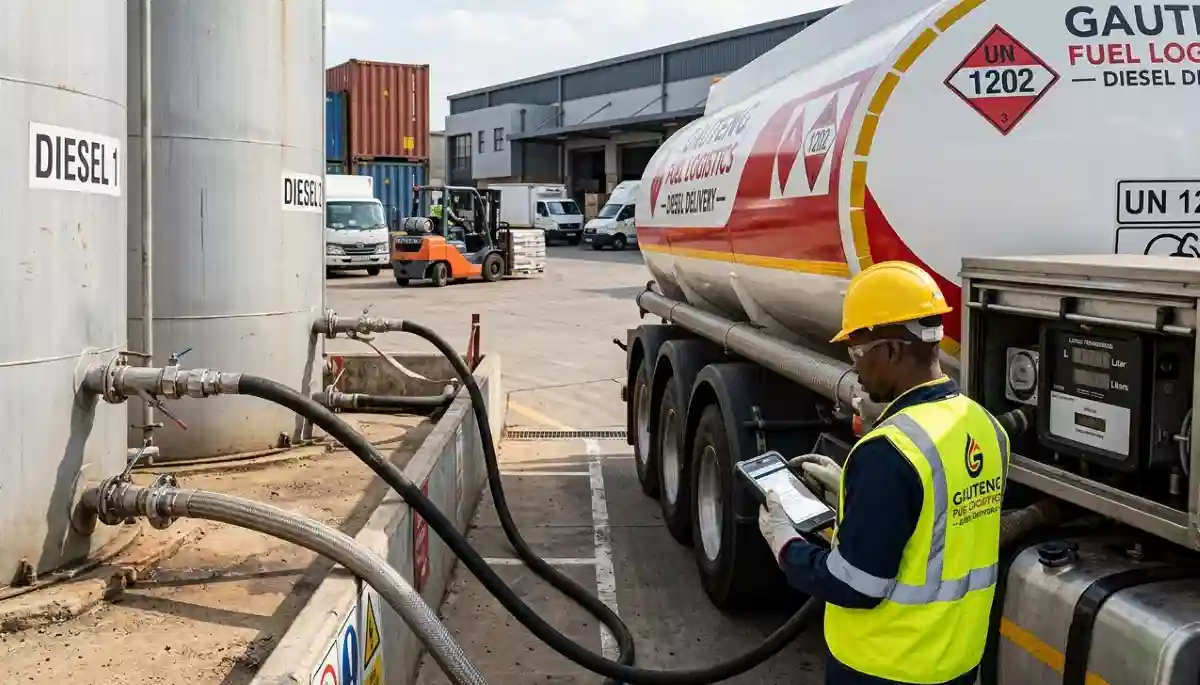
Fuel bowser delivery services provide mobile refuelling directly to your equipment, vehicles, or storage tanks. Instead of driving machinery to a fuel station, the fuel comes to you.
⚠️ The Core Concept of Bowser Delivery
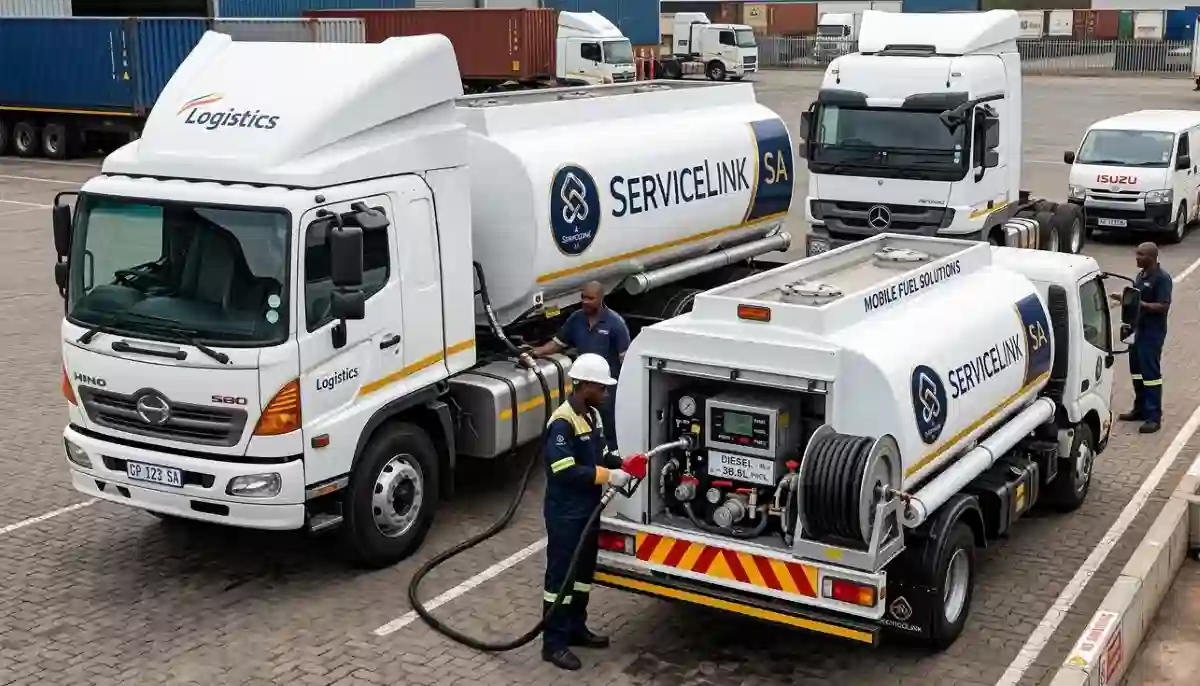
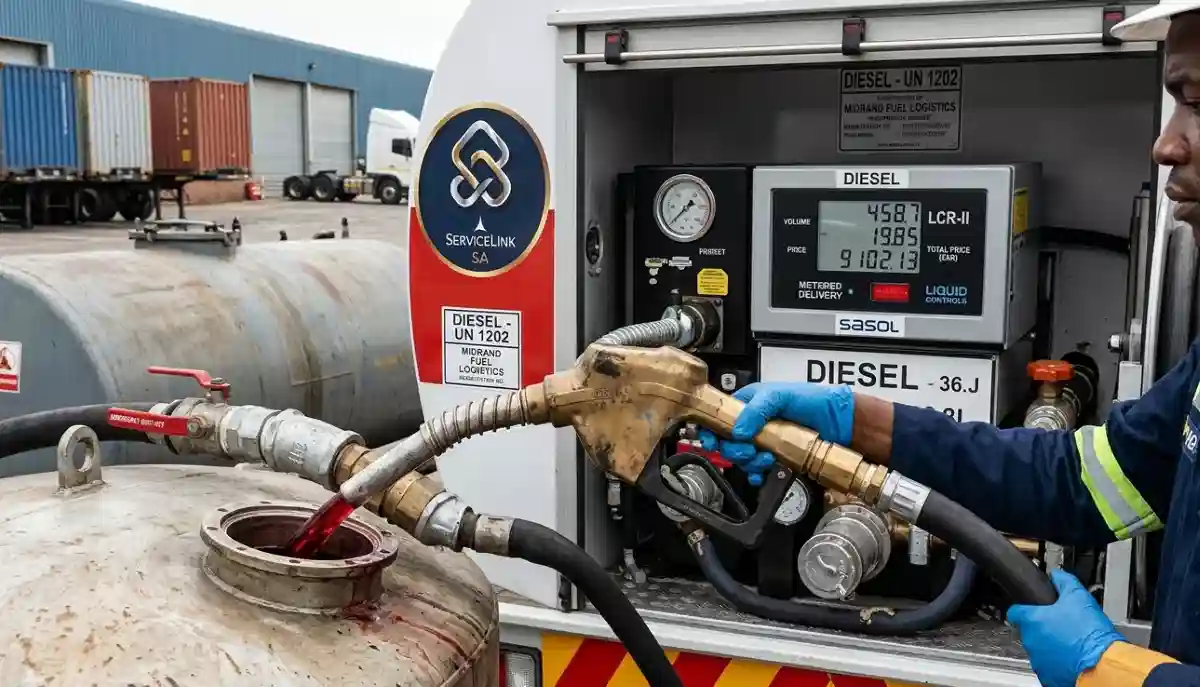
A fuel bowser is a mobile fuel tank mounted on a truck or trailer, equipped with a pump, meter, and hose. Mobile fuel delivery means your equipment stays working while being refuelled—no travel time, no downtime.
What is a fuel bowser?
A fuel bowser (also called a fuel trailer or mobile fuel tank) is a specialised vehicle designed to transport and dispense diesel. Key components include:
- Fuel tank (typically 500L – 5,000L capacity)
- Metered pump (measures exact litres dispensed)
- Hose and nozzle (for safe fuel transfer)
- Safety equipment (fire extinguishers, spill kit)
- Compliance signage (hazchem, dangerous goods)
How bowser delivery differs from bulk tanker delivery:
| Characteristic | Bowser Delivery | Bulk Tanker Delivery |
|---|---|---|
| Typical volume | 500 – 5,000 litres | 10,000 – 40,000+ litres |
| Delivery target | Direct to equipment | To storage tanks |
| On-site storage needed? | No | Yes |
| Best for | Construction, mining, farms, remote sites | Depots with storage tanks |
| Cost per litre | Higher (includes mobile service premium) | Lower (volume efficiency) |
What is diesel bowser hire?
Diesel bowser hire means renting a bowser (with or without operator) for a specific period. You can hire just the equipment (dry hire) or the equipment plus a driver/operator (wet hire).
For more on delivery options, read diesel delivery services.
🛻 Types of Fuel Bowsers Available
Different mobile fuel delivery needs require different bowser configurations:
Trailer-mounted bowsers (towed):
- Capacity: 500L – 3,000L
- Towed behind a bakkie, tractor, or small truck
- Best for: Farms, small construction sites, landscaping
- Pros: Lower cost, can be left on-site
- Cons: Requires towing vehicle
Truck-mounted bowsers (self-propelled):
- Capacity: 1,000L – 5,000L
- Integrated into a truck chassis
- Best for: Large construction sites, mining, logistics depots
- Pros: Higher capacity, professional appearance
- Cons: Higher cost, requires dedicated vehicle
Skid-mounted bowsers (stationary mobile):
- Capacity: 500L – 2,000L
- Mounted on a skid for easy forklift movement
- Best for: Temporary sites, event fueling, emergency backup
- Pros: Highly portable, can be moved as site changes
- Cons: Smaller capacity
Comparison of bowser types:
| Type | Capacity | Mobility | Best For | Typical Cost Range |
|---|---|---|---|---|
| Trailer-mounted | 500-3,000L | Towed | Farms, small sites | R30,000-R80,000 purchase |
| Truck-mounted | 1,000-5,000L | Self-propelled | Large sites, mining | R80,000-R200,000+ purchase |
| Skid-mounted | 500-2,000L | Forklift portable | Temporary sites | R20,000-R50,000 purchase |
Bowser hire vs purchase:
- Hire (rental): Lower upfront cost, maintenance included, flexible terms. Best for short-term or seasonal needs.
- Purchase: Higher upfront cost, you own the asset, maintenance your responsibility. Best for permanent, long-term needs.
For more on equipment, read fuel tank installation.
⚙️ How Mobile Fuel Delivery Works
The process for fuel bowser delivery services is straightforward:
Step 1: Schedule delivery
Contact a bowser delivery provider. Provide your location, equipment types, estimated fuel requirements, and preferred delivery schedule (daily, weekly, on-demand).
Step 2: Provider dispatches bowser
The provider sends a bowser (truck or trailer) to your site. For wet hire, an operator comes with the bowser. For dry hire, you provide the operator.
Step 3: On-site refuelling
The bowser moves to each piece of equipment. The operator (or your staff) refuels each vehicle using the metered pump. The meter records exact litres dispensed.
Step 4: Documentation
You receive a delivery note showing: date, equipment refueled, litres dispensed, fuel grade, meter readings, and total cost. This documentation supports accounting and rebate claims.
Step 5: Payment
You’re invoiced based on actual litres dispensed at agreed rates. Payment terms are negotiated (typically 30 days for established accounts, COD for new customers).
Mobile refuelling workflow:
- For equipment in the field: Bowser travels to each machine’s location
- For depot refuelling: Equipment returns to depot, bowser refuels multiple units in one location
- For overnight fuelling: Bowser operates after hours, equipment ready by morning
Typical turnaround time:
- Scheduled delivery: 24-48 hours notice
- Emergency delivery: 2-6 hours (premium rates)
- Regular scheduled service: As agreed (daily, weekly, etc.)
For more on emergency services, read emergency fuel delivery in South Africa.
✅ Benefits of On-Site Refuelling
On-site refuelling offers significant advantages over traditional fueling methods:
1. Eliminates equipment travel time (major benefit):
Equipment doesn’t leave the site to refuel. For a construction site with 10 machines each spending 30 minutes daily driving to/from a fuel station, that’s 5 hours of lost productivity daily. Mobile refuelling recovers that time.
2. Reduces fuel theft risk:
Fuel is dispensed directly into equipment under supervision. No unattended storage tanks. No driver “mystery shortages.” Metered dispensing provides exact records.
3. Improves site safety:
Fewer vehicle movements on site = fewer accidents. Professional bowser operators follow strict safety protocols. No equipment traveling on public roads to fuel stations.
4. Better fuel management:
Metered dispensing provides exact consumption data per machine. Track fuel efficiency, identify issues early, and optimize routes.
5. No capital investment:
With wet hire, you pay for fuel and service only. No tank purchase, no installation costs, no maintenance responsibility.
6. Flexible scheduling:
Refuel when it suits your operations—overnight, during lunch breaks, between shifts. No forcing equipment off-site during peak production hours.
7. Compliance support:
Professional providers handle all regulatory requirements (NRSA, SABS, Transport Department). You get proper documentation without the administrative burden.
Productivity savings example:
| Equipment Type | Daily Travel Time Saved | Hourly Operating Cost | Daily Saving | Annual Saving (220 days) |
|---|---|---|---|---|
| Large excavator | 45 minutes | R1,500 | R1,125 | R247,500 |
| Wheel loader | 30 minutes | R900 | R450 | R99,000 |
| Dump truck | 30 minutes | R800 | R400 | R88,000 |
| Tractor (farm) | 20 minutes | R600 | R200 | R44,000 |
For more on fleet benefits, read fleet fueling solutions.
Ready to Try Mobile Fuel Delivery?
ServiceLink SA connects you with verified fuel bowser delivery services. Get free quotes today. If we can’t assist directly, we’ll connect you with our trusted partner companies to carry out your fuel supply projects professionally and timeously.
Get Free Bowser Delivery Quotes
Bowser diesel delivery for construction sites and other industries—find local specialists near you.
📋 Diesel Bowser Hire Options
Diesel bowser hire comes in several configurations:
Dry hire (equipment only):
- You rent just the bowser (trailer or skid-mounted)
- You provide the towing vehicle and operator
- You arrange fuel supply separately
- Best for: Businesses with trained staff, long-term needs
- Cost: R500-R1,500/day plus fuel
Wet hire (equipment + operator + fuel):
- Provider supplies bowser, operator, and fuel
- You pay only for fuel used plus service fee
- No equipment management required
- Best for: Short-term projects, no trained staff
- Cost: Wholesale price + R1.00-R2.50/L service fee
Fuel-only bowser service:
- Provider brings bowser, refuels your equipment, and leaves
- No bowser left on site
- Best for: Occasional refuelling needs, emergency top-ups
- Cost: Wholesale price + R1.50-R3.00/L + call-out fee
Scheduled bowser service:
- Regular deliveries on fixed schedule (daily, weekly)
- Provider learns your site layout and equipment locations
- Best for: Ongoing operations with predictable fuel needs
- Cost: Lower per-litre rates than ad-hoc
Cost comparison by hire type:
| Hire Type | Upfront Cost | Per-Litre Cost | Your Responsibility | Best For |
|---|---|---|---|---|
| Dry hire | R500-1,500/day | Fuel + your transport | Operator, fuel sourcing | Long-term, trained staff |
| Wet hire | None | Wholesale + R1.00-2.50/L | None (turnkey) | Short-term, no staff |
| Fuel-only | Call-out fee | Wholesale + R1.50-3.00/L | None | Occasional, emergency |
| Scheduled | None | Wholesale + R0.75-1.50/L | None | Ongoing regular needs |
For more on hire options, read mobile diesel refuelling services.
🏭 Industries That Benefit Most
Fuel bowser delivery services are valuable across many sectors:
Construction sites:
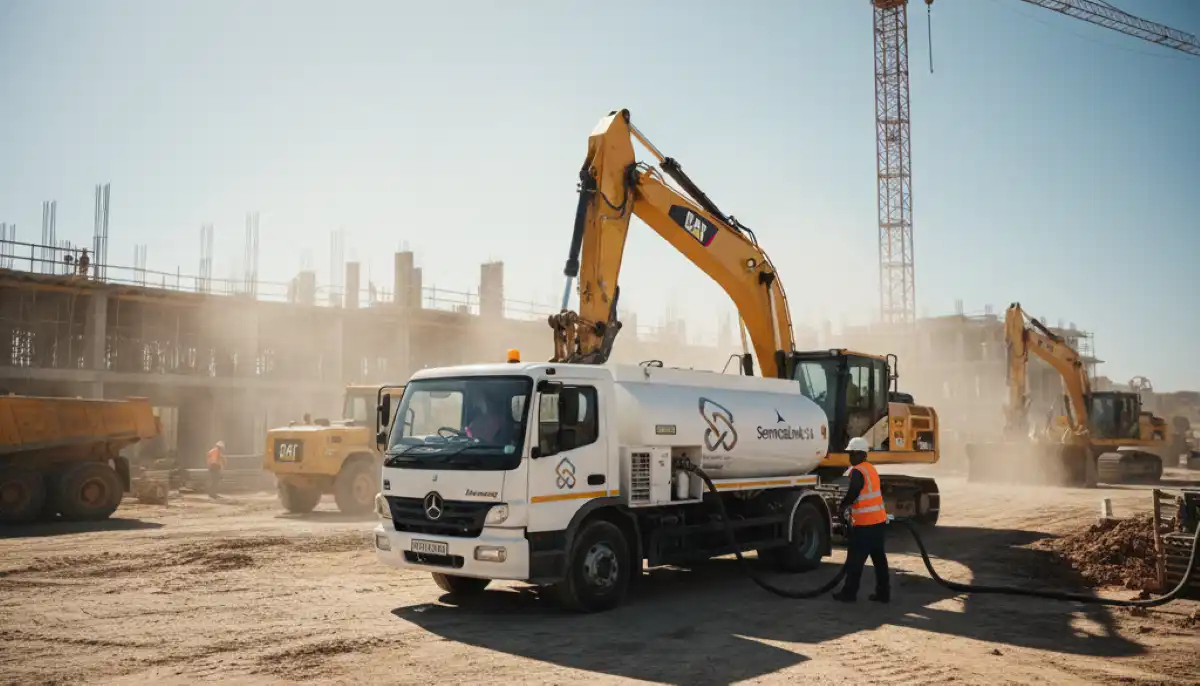
Bowser diesel delivery for construction sites is one of the most common applications. Excavators, loaders, bulldozers, and dump trucks can be refueled without leaving the site. No lost travel time, no disrupting the work schedule.
Mining operations:
Large mining equipment consumes massive volumes. Mobile refuelling brings fuel directly to haul trucks, loaders, and drills—even underground with specialised equipment.
Farms and agriculture:
Tractors, harvesters, and irrigation pumps spread across large properties. A mobile bowser travels to each machine, saving hours of travel time during critical planting and harvest seasons.
Logistics depots:
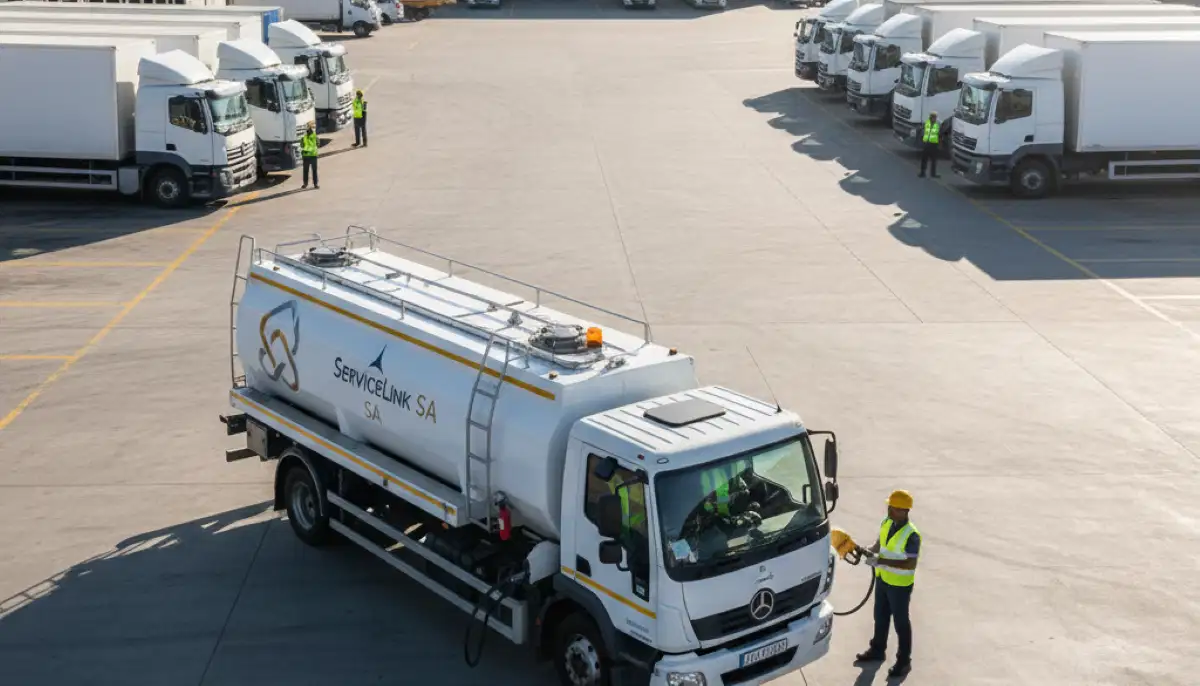
Fleet trucks can be refueled overnight at the depot. Drivers arrive to full tanks, ready to depart immediately. No morning fueling delays.
Manufacturing plants:
Generator fuel for load shedding can be delivered directly to generator day tanks. Forklifts and material handling equipment refueled without leaving the plant floor.
Event venues:
Temporary generators for concerts, festivals, and sporting events need refueling. Mobile bowsers provide discreet, safe refueling without disrupting events.
Remote sites:
Any operation far from fuel stations benefits from mobile delivery. No wasted travel time, no risk of running out of fuel far from supply.
For industry-specific guides, read bulk fuel for construction sites, bulk fuel for mining, bulk fuel for farms, and bulk fuel for logistics.
🛡️ Safety Regulations for Mobile Refuelling
Professional fuel bowser delivery services must comply with strict safety regulations:
SABS bowser safety standards:
Bowsers must meet SABS – Bowser safety standards for tank construction, pressure relief, and safety equipment. Key requirements:
- Properly constructed tanks (no makeshift containers)
- Functioning pressure relief valves
- Static grounding cables
- Fire extinguishers (correct type and size)
- Spill containment kit
NRSA mobile refuelling regulations:
The National Road Safety Agency regulates mobile refuelling operations. See NRSA – Mobile refuelling regulations. Key requirements:
- Dangerous goods transport permits
- Driver dangerous goods training
- Vehicle compliance certificates
- Route permits for certain areas
Transport Department bowser licensing:
Bowsers used on public roads require proper licensing. See Transport Department – Bowser licensing. Key requirements:
- Vehicle registration for road use
- Annual roadworthy certificates
- Operator permits for commercial transport
On-site safety requirements:
- No smoking within 25 metres of refuelling
- Engines off during refuelling
- Static grounding before connecting hose
- Spill response plan in place
- Fire extinguisher within easy reach
- Proper signage (no smoking, flammable)
Driver/operator qualifications:
- Valid driver’s license with appropriate class
- Dangerous goods training certificate
- First aid training (recommended)
- Site-specific safety induction
Choosing a compliant provider:
Always verify that your bowser delivery provider has current SABS certification, NRSA permits, and Transport Department licensing. Ask for copies of certificates. Non-compliant providers risk fines and safety incidents.
For more on compliance, read bulk diesel storage regulations.
💰 Cost Breakdown for Bowser Delivery
Understanding the costs of fuel bowser delivery services helps you budget effectively:
Pricing components:
- Fuel cost: Wholesale diesel price (BFP + levies + supplier margin)
- Delivery fee: Per-litre charge for mobile service (R0.75-R3.00/L depending on service type)
- Call-out fee: Fixed fee for emergency or on-demand delivery (R500-R1,500)
- Equipment rental (dry hire): Daily or weekly bowser rental fee
- Operator fee (wet hire): Hourly or daily rate for trained operator
Typical cost ranges:
| Service Type | Typical Cost (R/L premium) | Additional Fees | Best For |
|---|---|---|---|
| Scheduled wet hire | R0.75-R1.50/L | None | Regular, predictable needs |
| On-demand wet hire | R1.50-R2.50/L | Possible call-out fee (<R500) | Occasional needs, flexible schedule |
| Emergency delivery | R2.00-R4.00/L | Call-out fee R500-1,500 | Urgent shortages, after-hours |
| Dry hire (equipment only) | Fuel + transport costs only | R500-1,500/day rental | Long-term, trained staff |
Cost comparison example (50,000L/month):
- Bulk storage with delivery: Wholesale R18.00/L + transport R0.40/L = R18.40/L total
- Scheduled wet hire: Wholesale R18.00/L + R1.00/L premium = R19.00/L total
- On-demand wet hire: Wholesale R18.00/L + R2.00/L premium = R20.00/L total
- Emergency delivery: Wholesale R18.00/L + R3.00/L + R500 call-out = ~R21.10/L total
Which is most cost-effective?
For regular, predictable needs, bulk storage + scheduled delivery offers lowest per-litre cost. For variable needs or no storage, scheduled wet hire offers good balance of cost and convenience. For emergencies, accept premium pricing as insurance against downtime.
For more on pricing, read wholesale diesel prices.
✅ How to Choose a Bowser Delivery Provider
Selecting the right fuel bowser delivery services provider is critical:
Verification checklist:
- Verify SABS compliance: Ask for bowser certification. See SABS – Bowser safety standards.
- Check NRSA permits: Confirm dangerous goods transport permits. See NRSA – Mobile refuelling regulations.
- Verify Transport Department licensing: Check vehicle and operator licensing. See Transport Department – Bowser licensing.
- Request client references: At least 3 references from similar industries.
- Check insurance: Public liability and environmental damage coverage.
- Verify meter calibration: Current calibration certificates for all meters.
- Confirm driver qualifications: Dangerous goods training certificates.
Questions to ask potential providers:
- Do you offer dry hire, wet hire, or both?
- What is your typical response time for scheduled vs emergency delivery?
- What safety certifications do your bowsers and drivers hold?
- Can you provide a sample delivery note and invoice?
- What is your spill response procedure?
- Do you have backup equipment if a bowser breaks down?
- What are your payment terms?
Red flags to avoid:
- No SABS certification or expired certificates
- Unmarked or poorly maintained bowsers
- Drivers without dangerous goods training
- Cash-only payments
- No written delivery documentation
- Vague about emergency response times
For more on supplier selection, read how to choose a bulk fuel supplier.
❓ Frequently Asked Questions About Fuel Bowser Delivery
What are fuel bowser delivery services?
Fuel bowser delivery services provide mobile refuelling directly to your equipment or vehicles. A bowser (mobile fuel tank with pump and meter) travels to your site and dispenses diesel where your equipment sits—no need to drive to fuel stations.
How does diesel bowser hire work?
Diesel bowser hire comes in two main types: dry hire (you rent just the equipment) and wet hire (provider supplies equipment, operator, and fuel). Wet hire is turnkey—you pay only for fuel used plus service fee. Dry hire requires your own operator and fuel sourcing.
What is bowser diesel delivery for construction sites?
Bowser diesel delivery for construction sites brings mobile refuelling directly to excavators, loaders, bulldozers, and dump trucks. Equipment stays working on site—no travel time to fuel stations, no lost productivity. Especially valuable during tight deadlines and remote locations.
How much does mobile fuel delivery cost?
Mobile fuel delivery costs vary by service type: scheduled wet hire adds R0.75-1.50/L to wholesale price; on-demand adds R1.50-2.50/L; emergency adds R2.00-4.00/L plus call-out fee. Dry hire equipment rental costs R500-1,500/day plus your fuel and transport costs.
What are the benefits of on-site refuelling?
On-site refuelling benefits include: eliminates equipment travel time (saving hours daily), reduces fuel theft risk, improves site safety (fewer vehicle movements), provides accurate metered dispensing, requires no capital investment in storage tanks, and offers flexible scheduling.
What safety regulations apply to mobile refuelling?
Mobile refuelling must comply with SABS bowser safety standards, NRSA dangerous goods transport permits, and Transport Department licensing. Providers must have certified equipment, trained drivers, proper insurance, and spill response plans. Always verify provider compliance.
Can I get emergency bowser delivery?
Yes, professional fuel bowser delivery services offer 24/7 emergency delivery. Typical response time is 2-6 hours depending on location. Expect premium pricing (R2.00-4.00/L above wholesale plus R500-1,500 call-out fee) but emergency delivery prevents costly downtime.
What is the difference between wet hire and dry hire?
Mobile refuelling wet hire means the provider supplies bowser, operator, and fuel—turnkey service with no responsibility for you. Dry hire means you rent just the equipment—you provide operator and fuel. Wet hire is simpler but higher per-litre cost; dry hire has lower per-litre cost but requires your staff and fuel sourcing.
✅ Final Thoughts: Bring the Fuel to Your Equipment
Fuel bowser delivery services transform how businesses refuel equipment. By bringing fuel directly to your machines, you eliminate travel time, reduce theft risk, improve safety, and gain better fuel management data. Whether you choose wet hire (turnkey) or dry hire (equipment only), mobile refuelling delivers real operational benefits.
Key takeaways from this guide:
- Fuel bowser delivery services bring mobile refuelling directly to your equipment
- Diesel bowser hire options include dry hire (equipment only) and wet hire (turnkey)
- Mobile fuel delivery eliminates equipment travel time—saving hours daily
- Bowser diesel delivery for construction sites keeps heavy machinery working without leaving site
- On-site refuelling reduces fuel theft risk and improves site safety
- Professional providers must comply with SABS, NRSA, and Transport Department regulations
- Costs range from R0.75-4.00/L premium over wholesale depending on service type
- Wet hire offers turnkey convenience; dry hire offers lower per-litre cost
- Emergency delivery available 24/7 at premium rates
- ServiceLink SA connects you with verified, compliant bowser delivery providers
Your action plan: Assess your current refuelling process. Calculate time lost to equipment travel. Get quotes from multiple bowser delivery providers. Compare wet hire vs dry hire for your needs. Choose a compliant provider with proper safety certifications. Start with a trial period to measure productivity gains.
Ready to Try Mobile Fuel Delivery?
ServiceLink SA connects you with verified fuel bowser delivery services. Get free quotes today. If we can’t assist directly, we’ll connect you with our trusted partner companies to carry out your fuel supply projects professionally and timeously.
📞 Call us: 073 138 4726 for immediate help finding bowser delivery providers near you.
Diesel Delivery •
Emergency Fuel Delivery •
Fleet Fueling Solutions •
Generator Fuel Services •
Fuel Tank Installation •
Fuel Management Systems
📚 Official resources & standards referenced:
- SABS – South African Bureau of Standards – Bowser safety standards and tank certification.
- NRSA – National Road Safety Agency – Mobile refuelling regulations and dangerous goods transport permits.
- Department of Transport – Bowser licensing and vehicle registration requirements.
- DMRE – Department of Mineral Resources and Energy – Fuel pricing and licensing information.
Information provided for general guidance based on independent research and official sources. Safety regulations, licensing requirements, and compliance standards change periodically. Always verify current requirements directly with SABS, NRSA, and Transport Department.
Written by: ServiceLink SA Research Team
Mobile Fuel Delivery & Logistics Specialists
The ServiceLink SA Research Team combines expertise from mobile fuel logistics, equipment safety compliance, and operations management. Our analysts track SABS bowser safety standards, monitor NRSA mobile refuelling regulations, analyse Transport Department licensing requirements, and maintain relationships with accredited bowser delivery providers across South Africa. This guide draws on primary research, official SABS, NRSA, and Transport Department documentation, and direct experience with construction, mining, agricultural, and logistics operations. Our mission is to help South African businesses understand fuel bowser delivery services, diesel bowser hire options, and mobile refuelling benefits. If we can’t assist directly, we’ll connect you with our trusted partner companies who specialise in compliant, professional bowser delivery services.
For more information about fuel bowser delivery services, explore our related resources: diesel delivery services, emergency fuel delivery, fleet fueling solutions, how to choose a bulk fuel supplier, mobile diesel refuelling services, and wet hose fuel delivery services. See our location-specific guides for Johannesburg, Pretoria, Durban, Cape Town, and Sandton.