Want Your Fleet Ready by Morning?
ServiceLink SA connects you with verified night-time fleet fueling providers. Get free quotes today. If we can’t assist directly, we’ll connect you with our trusted partner companies to carry out your fuel supply projects professionally and timeously.
Servicing Johannesburg, Pretoria, Durban, Cape Town, Sandton, and across South Africa
Night-Time Fleet Fueling Services: Refuel While Your Trucks Rest
🌙 From depot bypass to overnight wet hosing—your complete guide to after-hours fleet refuelling
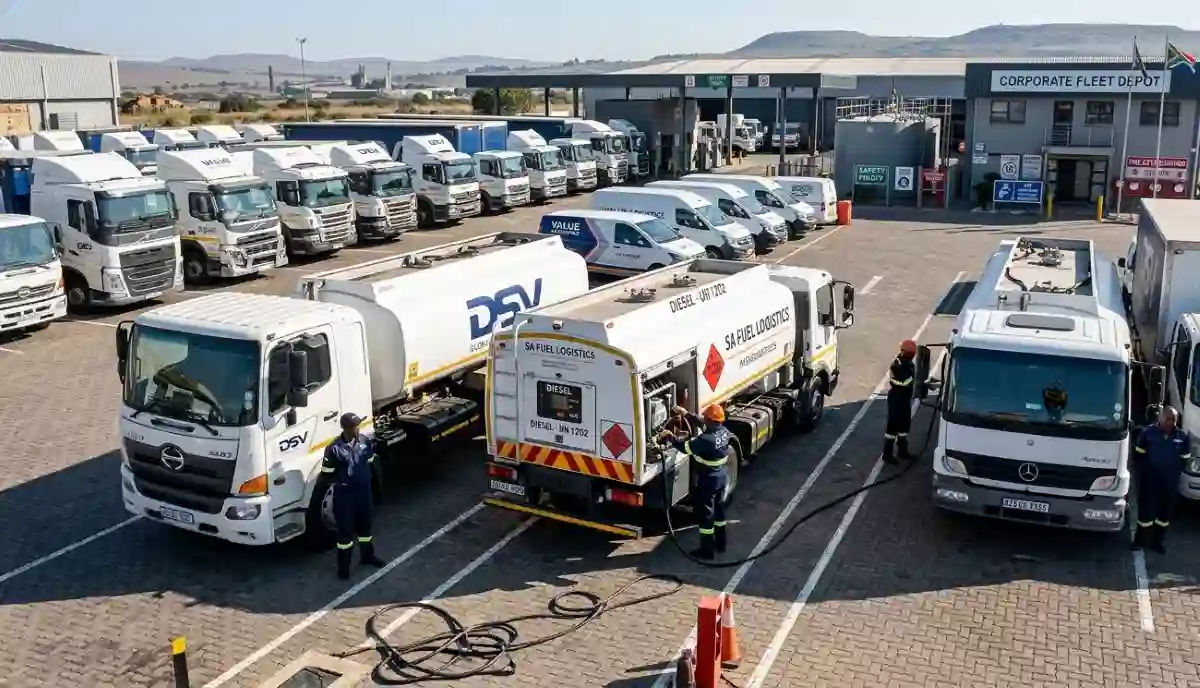
I remember standing in a logistics depot in Johannesburg at 5:30 AM, watching drivers scramble to refuel their trucks before starting their routes. Some had arrived 30 minutes early. Others were running late. The fuel island queue was five trucks deep. By the time the last truck was fueled, the first delivery window had already been missed.
The depot manager looked exhausted. “Every single morning, it’s the same chaos,” he said. “If I could just have these trucks ready when drivers arrive, we’d save at least an hour per driver every day.”
That’s exactly what night-time fleet fueling services deliver. By refueling your fleet while trucks are parked overnight, drivers arrive to full tanks and can depart immediately. No morning queues. No wasted time. No missed delivery windows.
Whether you run a logistics fleet, delivery service, or any operation with vehicles returning to depot nightly, overnight diesel delivery and after-hours fuelling transform morning efficiency. This is the power of depot bypass—eliminating the morning fuel stop entirely.
This comprehensive service guide covers everything you need to know about night-time fleet fueling services, including night time diesel delivery for truck fleets, overnight diesel delivery logistics, after-hours fuelling options, depot bypass benefits, wet hosing for fleets, and how to choose the right provider. For more on fleet solutions, read fleet fueling solutions in South Africa.
Ready to transform your morning dispatch? Let’s dive in.
📋 Table of Contents – Night-Time Fleet Fueling Guide
🌙 What Are Night-Time Fleet Fueling Services?
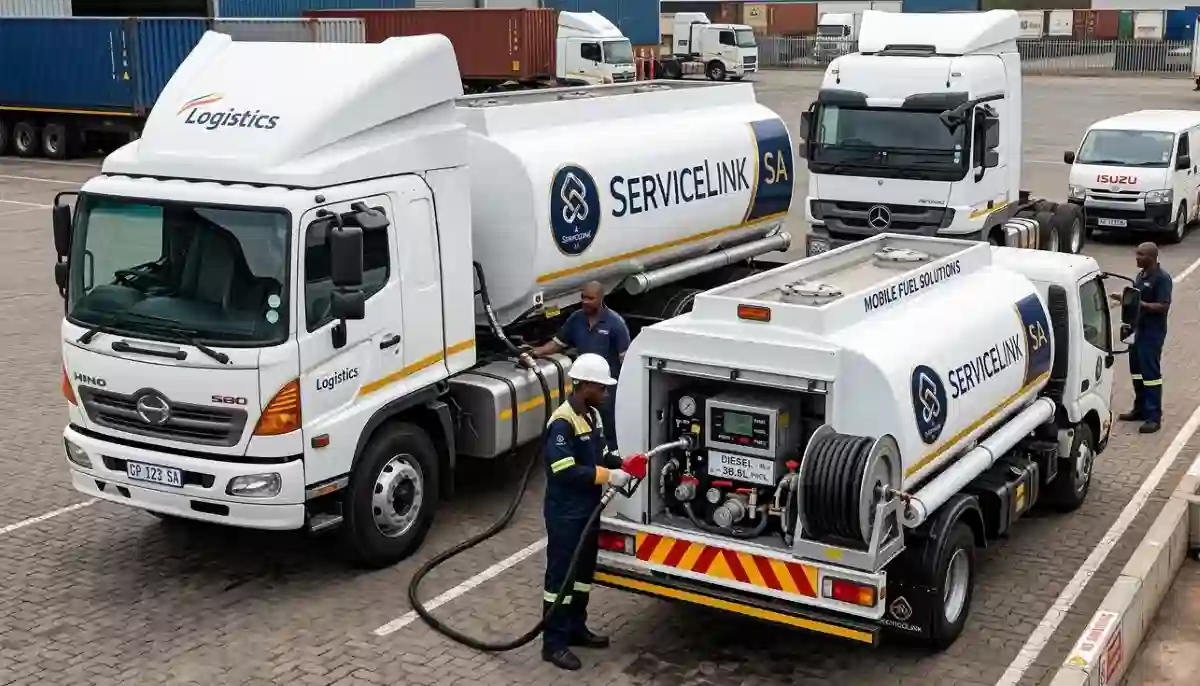
Night-time fleet fueling services are specialised after-hours refuelling operations where diesel is delivered to your fleet vehicles while they are parked overnight at your depot. Drivers arrive in the morning to find full tanks and can depart immediately—no morning fueling required.
⚠️ The Core Concept
Depot bypass means eliminating the morning fuel stop entirely. Trucks are refueled overnight while drivers rest. The first task of the day becomes the first delivery—not waiting in a fuel queue.
What night-time fleet fueling includes:
- Overnight diesel delivery: Fuel delivered to your depot after hours
- After-hours fuelling: Refuelling occurs between end of shift and start of next shift
- Wet hosing: Provider supplies equipment, operator, and fuel (turnkey)
- Dry hosing: Provider supplies equipment only; your staff operate
- Depot fueling: All vehicles refueled in one location at your depot
- Metered dispensing: Accurate tracking of fuel per vehicle
- Documentation: Delivery notes ready for drivers each morning
How night fueling differs from day fueling:
| Characteristic | Night-Time Fueling | Day-Time Fueling |
|---|---|---|
| Driver time required? | ❌ No (happens after drivers leave) | ✅ Yes (15-30 minutes daily per driver) |
| Morning dispatch efficiency | ✅ High (trucks ready immediately) | ❌ Low (queues at fuel island) |
| Driver overtime risk | ✅ Low (no morning delays) | ❌ High (fuel delays push into overtime) |
| Depot congestion during peak hours | ✅ Low (fueling happens off-peak) | ❌ High (fueling adds to morning chaos) |
| Staffing requirements | May need after-hours staff (or outsourced) | Day shift staff only |
| Best for | Depot-based fleets, early dispatch needs | Small fleets, flexible schedules |
Why fleets are switching to night fueling:
- Driver time savings: 15-30 minutes daily per driver recovered
- Earlier departures: First deliveries happen earlier, not delayed by fueling
- Reduced overtime: Less morning chaos means drivers start on time
- Better driver satisfaction: Drivers appreciate not having to refuel after long shifts
- Improved depot efficiency: Fueling happens during off-peak hours
- Reduced theft risk: Controlled environment with supervision
For more on fleet solutions, read fleet fueling solutions.
⚙️ How Overnight Diesel Delivery Works
The process for overnight diesel delivery is designed for efficiency and minimal disruption:
Step 1: Drivers end shift and park
Drivers complete their routes, return to depot, and park vehicles in designated fueling area. They submit fuel orders or leave tank levels to be checked by fueling team.
Step 2: After-hours fueling team arrives
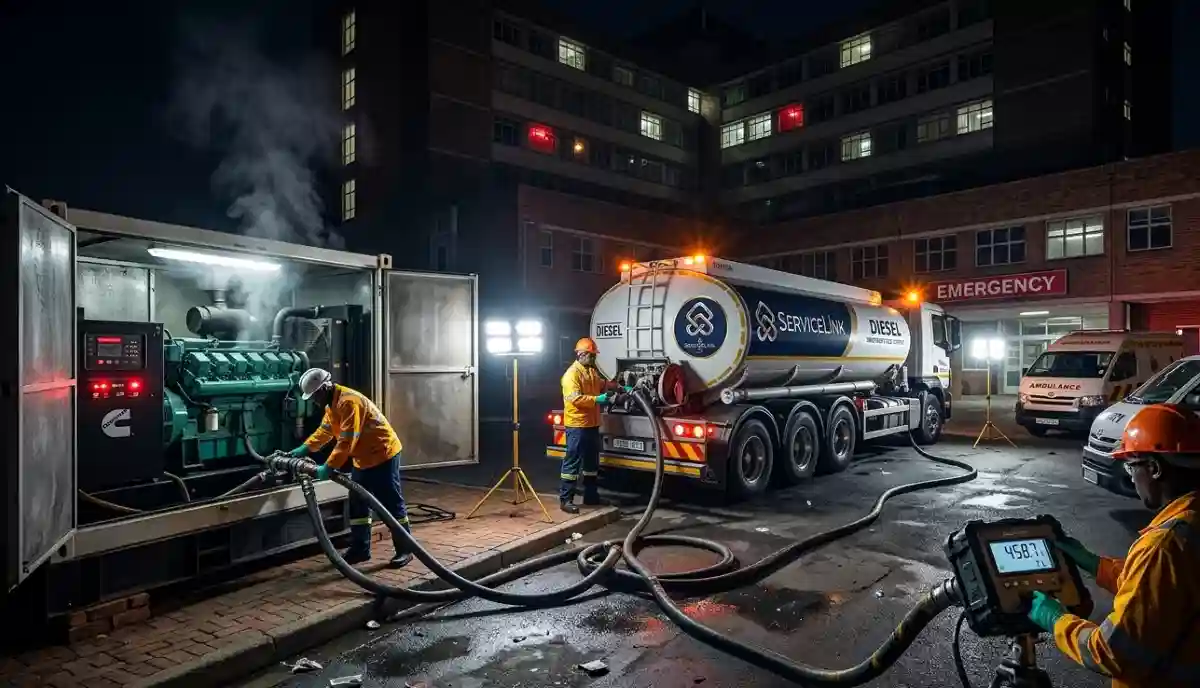
The night fueling provider (or your night shift staff) arrives after drivers have gone home. For wet hosing, the provider brings equipment and operator.
Step 3: Overnight refuelling
All vehicles are refueled systematically. Metered pumps record exact litres per vehicle. Quality checks are performed if needed.
Step 4: Documentation prepared
Delivery notes are generated for each vehicle showing litres dispensed, meter readings, and fuel grade. These are ready for drivers in the morning.
Step 5: Drivers arrive to full tanks
Drivers arrive in the morning, perform pre-trip inspections, and depart immediately. No fueling stop. No queue. No delay.
Overnight fueling workflow options:
- Wet hosing (outsourced): Provider brings bowser and operator. Refuels all vehicles. Leaves delivery notes. No staff required from you.
- Dry hosing (in-house): Your night shift staff refuels using rented or owned equipment. You manage staffing and operations.
- Bulk tank with night staff: You have on-site storage tanks. Night shift staff refuels vehicles using depot pumps.
- Automated depot fueling: Card-operated pumps allow drivers to self-fuel (but this still requires driver time, not true overnight).
Typical overnight fueling timeline:
| Time | Activity | Responsible |
|---|---|---|
| 17:00 – 19:00 | Drivers return, park vehicles, end shift | Drivers |
| 19:00 – 20:00 | Night fueling team arrives, sets up | Provider/Your staff |
| 20:00 – 23:00 | Overnight refuelling of all vehicles | Provider/Your staff |
| 23:00 – 05:00 | Trucks parked with full tanks, ready for morning | – |
| 05:00 – 06:00 | Drivers arrive, review delivery notes, depart | Drivers |
For more on delivery processes, read diesel delivery services.
✅ Benefits of Depot Bypass
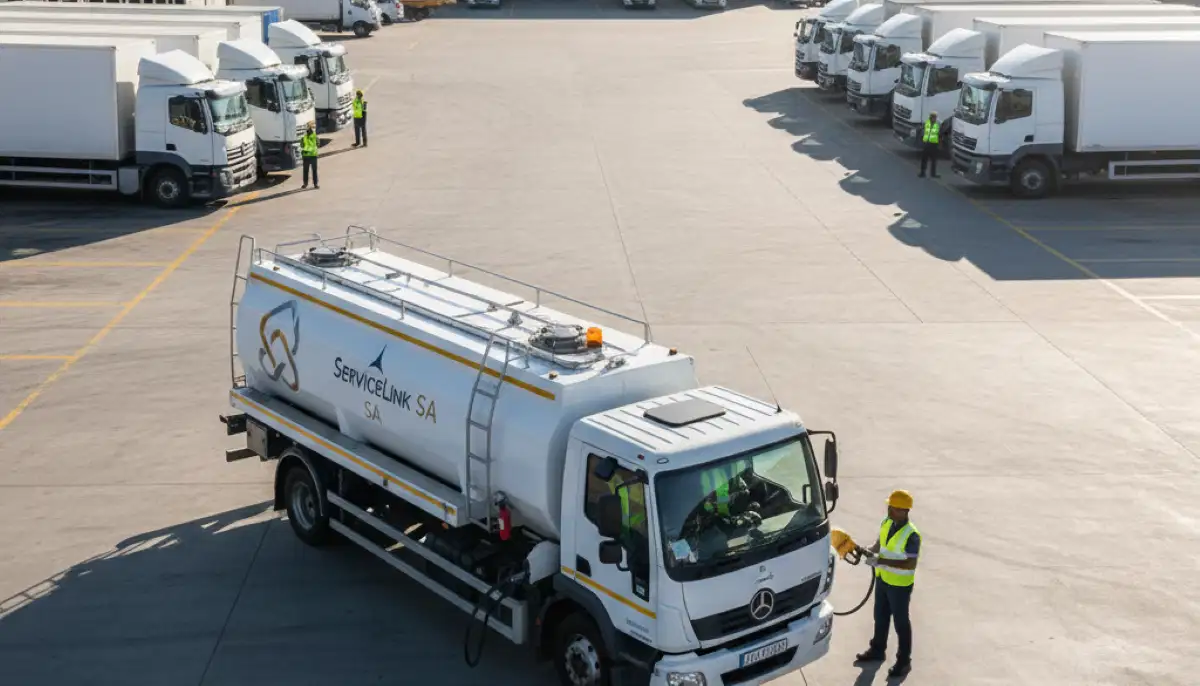
Depot bypass through night-time fueling delivers multiple operational benefits:
1. Driver time savings (most significant):
Drivers save 15-30 minutes daily that would otherwise be spent refueling. For a 50-truck fleet, that’s 12.5-25 hours daily recovered = R3,750-R7,500 daily saved (at R300/hour driver cost).
2. Earlier first deliveries:
When drivers don’t need to refuel, first deliveries happen 15-30 minutes earlier. For time-sensitive deliveries (fresh produce, pharmaceuticals, express courier), this can mean the difference between meeting and missing delivery windows.
3. Reduced overtime costs:
Morning fueling delays often push driver shifts into overtime. Eliminating fueling reduces overtime risk. Many fleets report 10-20% reduction in overtime after switching to night fueling.
4. Improved driver satisfaction:
Drivers consistently report higher satisfaction when they don’t have to refuel after long shifts. “I just want to go home” is a common sentiment. Night fueling respects that.
5. Reduced depot congestion:
Morning fuel queues are eliminated. The depot is less chaotic. Safety improves with fewer vehicles moving during peak hours.
6. Better fuel management:
Night fueling typically includes metered dispensing with detailed records. Better data for tracking consumption per vehicle, identifying inefficiencies, and reducing theft.
7. Lower fuel cost (wholesale vs retail):
Night fueling uses wholesale pricing (not retail). Combined with time savings, the total value is substantial.
8. Extended vehicle life:
Fueling at depot in controlled environment is gentler on vehicles than public fuel stations. Less risk of damage from inexperienced drivers or poorly maintained pumps.
Depot bypass value calculation:
| Fleet Size | Daily Driver Time Saved | Annual Time Value (R300/hr driver) | Fuel Savings (Wholesale vs Retail) | Total Annual Benefit |
|---|---|---|---|---|
| 10 trucks | 2.5-5 hours | R187,500-R375,000 | R100,000-R300,000 | R287,500-R675,000 |
| 25 trucks | 6.25-12.5 hours | R468,750-R937,500 | R250,000-R750,000 | R718,750-R1,687,500 |
| 50 trucks | 12.5-25 hours | R937,500-R1,875,000 | R500,000-R1,500,000 | R1,437,500-R3,375,000 |
| 100 trucks | 25-50 hours | R1,875,000-R3,750,000 | R1,000,000-R3,000,000 | R2,875,000-R6,750,000 |
For more on fleet benefits, read fleet fueling solutions.
Ready to Transform Your Morning Dispatch?
ServiceLink SA connects you with verified night-time fleet fueling providers. Get free quotes today. If we can’t assist directly, we’ll connect you with our trusted partner companies to carry out your fuel supply projects professionally and timeously.
Night time diesel delivery for truck fleets—find local specialists near your depot.
⏱️ Driver Time Savings: The Real ROI
The return on investment for night-time fleet fueling services is driven primarily by driver time savings:
How much time do drivers spend fueling?
Based on industry studies, the average driver spends:
- 5-10 minutes driving to/from fuel island or station
- 5-10 minutes waiting in queue (if multiple trucks)
- 5-10 minutes actual fueling time
- Total: 15-30 minutes daily per driver
Annual time value calculation:
For a 50-truck fleet with drivers earning R300/hour (including benefits and overhead):
- Daily time saved: 20 minutes average × 50 trucks = 1,000 minutes = 16.7 hours daily
- Daily value: 16.7 hours × R300 = R5,010
- Annual value (250 operating days): R5,010 × 250 = R1,252,500
Additional value drivers:
- Earlier departures: First deliveries happen 20 minutes earlier. For time-sensitive freight, this can mean additional delivery windows per day.
- Reduced overtime: Morning fueling delays often push shifts into overtime. Eliminating fueling reduces overtime by 10-20% for many fleets.
- Improved driver retention: Drivers prefer not refueling after long shifts. Reduced turnover saves recruitment and training costs (R30,000-R50,000 per driver replacement).
Real-world example:
A logistics company in Gauteng with 120 delivery trucks switched to overnight wet hosing. Results after 12 months:
- Driver time saved: 25 minutes daily per driver = 50 hours daily = R15,000 daily saved
- Fuel cost saved: Wholesale vs retail saved R3.20/L × 300,000L monthly = R960,000 monthly
- Overtime reduction: 15% reduction = R45,000 monthly saved
- Driver retention improvement: Reduced turnover saved R200,000 annually
- Total annual benefit: Over R14 million
For more on cost analysis, read wholesale diesel prices.
💧 Wet Hosing for Night-Time Fleets
Wet hosing is the most popular method for night-time fleet fueling:
What is wet hosing for night fleets?
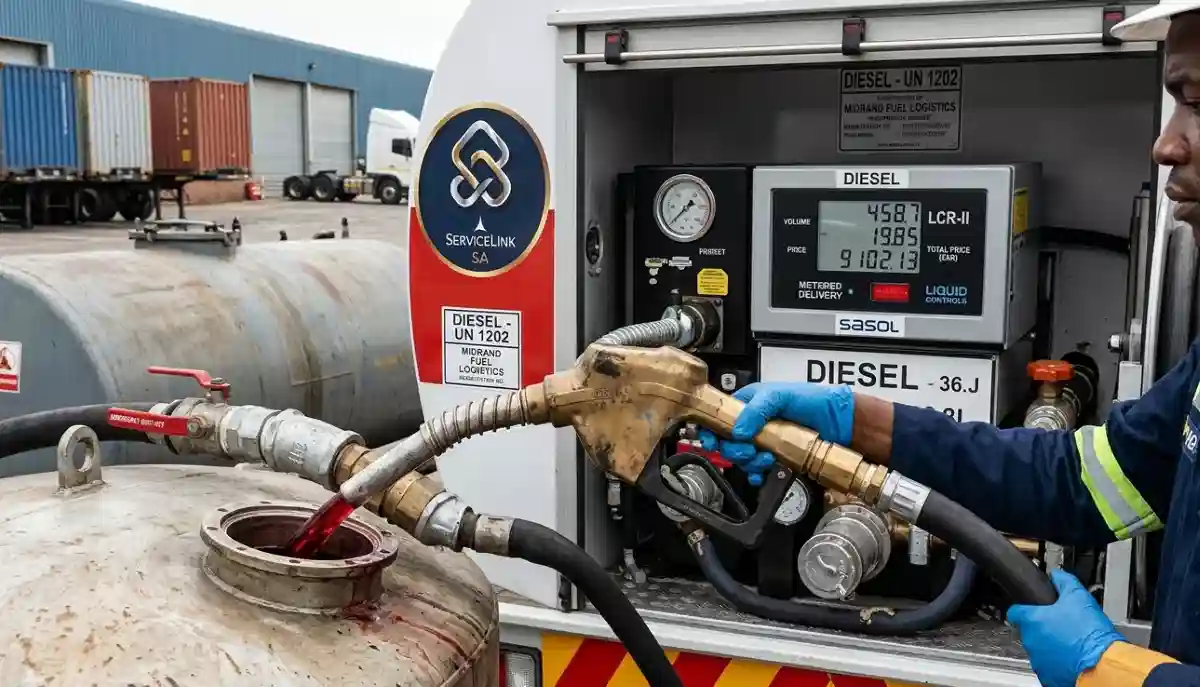
Wet hosing means the provider supplies everything—the bowser, the operator, and the fuel. They arrive after your drivers have left, refuel all vehicles overnight, and leave delivery notes for the morning. You don’t need any equipment or night shift staff.
Benefits of wet hosing for night fueling:
- No capital investment: No need to purchase bowsers or storage tanks
- No night shift staff: Provider handles all overnight operations
- No compliance burden: Provider manages safety and regulations
- Flexible scaling: Easy to increase or decrease as fleet size changes
- Professional management: Provider handles metering, quality, documentation
- Turnkey solution: You simply pay for fuel used plus service fee
Wet hosing overnight process:
- Drivers park vehicles and go home
- Provider’s night team arrives with mobile bowser
- All vehicles are refueled using metered pump
- Delivery notes are prepared for each vehicle
- Team departs, leaving vehicles full and ready
- Drivers arrive to full tanks and delivery notes
Wet hosing costs for night fueling (for reference):
| Service Type | Typical Cost Premium (R/L) | What’s Included | Best For |
|---|---|---|---|
| Scheduled nightly wet hosing | R0.75-1.50/L | Equipment, operator, fuel, delivery notes | Regular nightly needs |
| Every-other-night wet hosing | R1.00-1.75/L | Same as above | Every-other-day schedule |
| On-demand night wet hosing | R1.50-2.50/L + call-out | Same as above + emergency premium | Variable or emergency needs |
Is wet hosing right for your fleet?
Choose wet hosing if: You want turnkey solution, no night shift staff, no equipment investment, flexible scaling, and professional management.
Consider dry hosing/in-house if: You have very large fleet (100+ trucks), existing night shift staff, want lowest possible per-litre cost, and can manage compliance yourself.
For more on wet hosing, read wet hose fuel delivery services.
🚛 Fleet Types That Benefit Most
Night time diesel delivery for truck fleets is valuable for many fleet types:
1. Logistics and delivery fleets (highest benefit):
- Return to depot nightly
- Early morning dispatch windows
- Time-sensitive deliveries (courier, fresh produce, pharmaceuticals)
- Driver time savings directly improves delivery capacity
2. Municipal and service fleets:
- Waste collection, street sweeping, utility vehicles
- Fixed morning departure times
- Public visibility of late departures
3. Retail distribution fleets:
- Store deliveries with strict arrival windows
- Early morning deliveries to supermarkets
- Penalties for late arrivals
4. Construction fleets (return-to-depot):
- Dump trucks, concrete mixers, flatbeds
- Early site start times
- Driver time directly billable to projects
5. Bus and passenger transport:
- School buses, commuter buses, tour operators
- Fixed departure times cannot be missed
- Passenger waiting time is critical
Which fleets benefit less?
- Long-haul fleets that don’t return to depot nightly
- Very small fleets (under 5 trucks) where time savings are minimal
- Fleets with 24/7 operations and staggered shift starts
For more on fleet types, read fleet fueling solutions.
🛡️ Safety Regulations for Night Operations
Night-time fueling must comply with specific safety regulations:
SABS night operations standards:
Night fueling equipment must meet SABS – Night operations standards. Key requirements:
- Adequate lighting at fueling points (minimum illumination levels)
- Reflective markings on all fueling equipment
- Proper grounding for static electricity in low-visibility conditions
- Emergency lighting for power failures
- Safety signage visible in darkness (reflective or illuminated)
NRSA after-hours transport regulations:
After-hours fuel transport must comply with NRSA – After-hours transport regulations. Key requirements:
- Driver rest periods before night shifts
- Maximum consecutive night driving hours
- Vehicle lighting and visibility requirements
- Communication protocols for night operations
- Emergency response availability 24/7
Transport Department night delivery permits:
Some areas require special permits for night deliveries. See Transport Department – Night delivery permits. Key requirements:
- Noise restrictions in residential areas
- Route restrictions for certain hours
- Permits for deliveries before 6am or after 8pm
- Municipal by-laws may restrict night fueling at certain depots
Depot safety requirements for night fueling:
- Adequate security lighting in fueling area
- CCTV coverage of fueling operations
- Security personnel if depot is in high-risk area
- Emergency contact numbers posted and accessible
- Spill response equipment accessible in darkness
- Clear signage for fueling area location
Operator requirements for night fueling:
- Valid dangerous goods training (night-specific modules)
- Experience with night operations
- Good night vision (medical clearance)
- Communication device (radio or phone)
- High-visibility clothing with reflective tape
- Personal lighting (headlamp or torch)
For more on safety, read bulk diesel storage regulations.
💰 Cost Structure for Night Fueling
Understanding the costs of night-time fleet fueling services helps you evaluate ROI:
Pricing components:
- Fuel cost: Wholesale diesel price (BFP + levies + supplier margin)
- Night service premium: Additional per-litre charge for after-hours operation (R0.50-1.50/L)
- Wet hosing fee (if applicable): Included in service premium or separate
- Call-out fee: For emergency night delivery (R500-1,500)
- Minimum charge: Some providers have minimum fees for small fleets
Typical cost ranges:
| Service Type | Night Premium (R/L) | Total Premium vs Day Wholesale | What’s Included |
|---|---|---|---|
| Scheduled night bulk delivery (to your tanks) | R0.30-0.60/L额外 | R0.30-0.60/L (vs day R0.30-0.60) | Delivery only, your staff pump |
| Scheduled night wet hosing | R0.75-1.50/L | R0.75-1.50/L (includes all services) | Equipment, operator, fuel, delivery notes |
| On-demand night wet hosing | R1.50-2.50/L + call-out | R1.50-2.50/L + R500-1,500 | Same as scheduled + emergency premium |
| Emergency night delivery | R2.00-4.00/L + call-out | R2.00-4.00/L + R500-1,500 | Urgent response (2-6 hours) |
Cost comparison example (50,000L/month fleet):
- Daytime wet hosing: Wholesale R18.00/L + R1.00/L = R19.00/L
- Night wet hosing: Wholesale R18.00/L + R1.30/L = R19.30/L
- Difference: R0.30/L premium for night service
- Monthly additional cost: 50,000L × R0.30 = R15,000
- Driver time savings value: 50 trucks × 20 minutes × 220 days × R300/hr = R1.1M annually / 12 = R91,667 monthly
- Net benefit: R91,667 – R15,000 = R76,667 monthly net saving
Is night fueling worth the premium?
For most fleets of 20+ trucks, the driver time savings far outweigh the night service premium. Even for smaller fleets (10+ trucks), the net benefit is usually positive.
For more on pricing, read wholesale diesel prices.
✅ How to Choose a Night Fueling Provider
Selecting the right night-time fleet fueling services provider requires careful evaluation:
Verification checklist:
- Verify SABS night operations compliance: Ask for equipment certification for night use. See SABS – Night operations standards.
- Check NRSA after-hours transport compliance: Confirm driver certifications and hour tracking. See NRSA – After-hours transport.
- Verify Transport Department night delivery permits: Ensure they have required permits for your area. See Transport Department – Night delivery permits.
- Request fleet client references: At least 3 references from similar-sized fleets.
- Check insurance: Public liability and environmental coverage for night operations.
- Verify meter calibration: Current calibration certificates for all meters.
- Confirm emergency response: 24/7 availability for night emergencies? Response time?
- Ask about backup equipment: What if primary bowser breaks down during night shift?
Questions to ask potential providers:
- What is your typical arrival window for night fueling? (e.g., 8pm-10pm)
- How do you handle access if depot gates are locked?
- What happens if a vehicle is not in the designated fueling area?
- How do you communicate with my morning dispatch team?
- What is your procedure for reporting fueling issues?
- Do you provide vehicle-specific delivery notes?
- Can you integrate with my fuel management system?
- What is your backup plan if a vehicle’s fuel cap is locked?
- What are your payment terms?
Red flags to avoid:
- No SABS night operations certification
- Poorly maintained equipment (lights not working, reflective tape missing)
- Drivers without night-specific dangerous goods training
- Vague about arrival times or communication procedures
- No documented emergency response plan for night operations
- Cash-only payments
- Can’t provide fleet client references
For more on supplier selection, read how to choose a bulk fuel supplier.
❓ Frequently Asked Questions About Night-Time Fleet Fueling
What are night-time fleet fueling services?
Night-time fleet fueling services are after-hours refuelling operations where diesel is delivered to your fleet vehicles while they are parked overnight. Drivers arrive to full tanks and can depart immediately—saving 15-30 minutes daily per driver.
How does overnight diesel delivery work?
Overnight diesel delivery involves a provider sending a mobile bowser to your depot after drivers have gone home. All vehicles are refueled using metered pumps. Delivery notes are left for drivers. Vehicles are ready with full tanks when drivers arrive in the morning.
What is depot bypass in fleet fueling?
Depot bypass means eliminating the morning fuel stop entirely. Trucks are refueled overnight while parked. Drivers bypass the fuel island and go straight to their routes. This saves 15-30 minutes daily per driver and gets deliveries on the road earlier.
How much does night time diesel delivery for truck fleets cost?
Night time diesel delivery for truck fleets typically adds R0.75-1.50/L premium over day wholesale for wet hosing (turnkey service). For a 50-truck fleet, the R15,000 monthly premium is far outweighed by driver time savings (R90,000+ monthly).
What is the ROI for night fleet fueling?
The ROI for after-hours fuelling is driven by driver time savings. A 50-truck fleet saving 20 minutes daily per driver recovers 16.7 hours daily. At R300/hour driver cost, that’s R5,010 daily saved—over R1.25 million annually. Most fleets see payback within 1-3 months.
What safety regulations apply to night fueling?
After-hours fuelling must comply with SABS night operations standards (lighting, reflective markings), NRSA after-hours transport regulations (driver hours), and Transport Department night delivery permits (noise restrictions, route limits). Choose providers with proper certifications.
Can I get wet hosing for night-time fleets?
Yes, wet hosing is the most popular method for night fueling. The provider supplies equipment, operator, and fuel—turnkey service. No night shift staff required. You pay for fuel plus service fee. Most night fueling providers offer wet hosing as their primary service.
How do I choose a night fueling provider?
Choose a provider with SABS night operations certification, NRSA after-hours transport compliance, Transport Department night delivery permits, verifiable fleet references, proper insurance, calibrated meters, and 24/7 emergency response. ServiceLink SA can connect you with verified providers.
✅ Final Thoughts: Transform Your Morning Dispatch
Night-time fleet fueling services transform morning operations from chaos to efficiency. By refueling your fleet overnight, drivers arrive to full tanks and can depart immediately. No morning fuel queues. No wasted time. No missed delivery windows.
Key takeaways from this guide:
- Night-time fleet fueling services save 15-30 minutes daily per driver
- Overnight diesel delivery means trucks are ready when drivers arrive
- After-hours fuelling eliminates morning fuel queues and depot congestion
- Depot bypass gets first deliveries on the road 15-30 minutes earlier
- Night time diesel delivery for truck fleets typically adds R0.75-1.50/L premium over day wholesale
- Wet hosing offers turnkey night fueling with no capital investment
- Driver time savings alone deliver ROI of R1M+ annually for 50-truck fleets
- Compliance with SABS, NRSA, and Transport Department night regulations is essential
- Choose providers with proper certifications, references, and emergency response
- ServiceLink SA connects you with verified night-time fleet fueling providers
Your action plan: Calculate your fleet’s daily driver time spent fueling. Multiply by number of trucks and driver hourly cost. Compare to night fueling premium. Get quotes from multiple verified providers. Start with a trial period to measure time savings and driver satisfaction. Never waste another morning in a fuel queue.
Ready to Transform Your Morning Dispatch?
ServiceLink SA connects you with verified night-time fleet fueling providers. Get free quotes today. If we can’t assist directly, we’ll connect you with our trusted partner companies to carry out your fuel supply projects professionally and timeously.
📞 Call us: 073 138 4726 for immediate help finding night fueling providers near your depot.
Fleet Fueling Solutions •
Diesel Delivery •
Emergency Fuel Delivery •
Fuel Management Systems •
Generator Fuel Services
📚 Official resources & standards referenced:
- SABS – South African Bureau of Standards – Night operations standards and equipment certification.
- NRSA – National Road Safety Agency – After-hours transport regulations and driver hour compliance.
- Department of Transport – Night delivery permits and route restrictions.
- DMRE – Department of Mineral Resources and Energy – Fuel pricing and licensing information.
Information provided for general guidance based on independent research and official sources. Night operations regulations, permit requirements, and compliance standards change periodically. Always verify current requirements directly with SABS, NRSA, and Transport Department.
Written by: ServiceLink SA Research Team
Fleet Operations & Night Logistics Specialists
The ServiceLink SA Research Team combines expertise from fleet operations management, night logistics, and fuel supply chain optimisation. Our analysts track SABS night operations standards, monitor NRSA after-hours transport regulations, analyse Transport Department night delivery permit requirements, and maintain relationships with accredited night-time fueling providers across South Africa. This guide draws on primary research, official SABS, NRSA, and Transport Department documentation, and direct experience with logistics fleets, delivery services, and municipal fleets that successfully implemented night fueling. Our mission is to help South African fleet operators understand night-time fleet fueling services, overnight diesel delivery, and depot bypass benefits. If we can’t assist directly, we’ll connect you with our trusted partner companies who specialise in professional night-time fleet fueling services.
For more information about night-time fleet fueling, explore our related resources: fleet fueling solutions, diesel delivery services, emergency fuel delivery, fuel management systems, mobile diesel refuelling services, and wet hose fuel delivery services. See our location-specific guides for Johannesburg, Sandton, Pretoria, Durban, and Cape Town.