
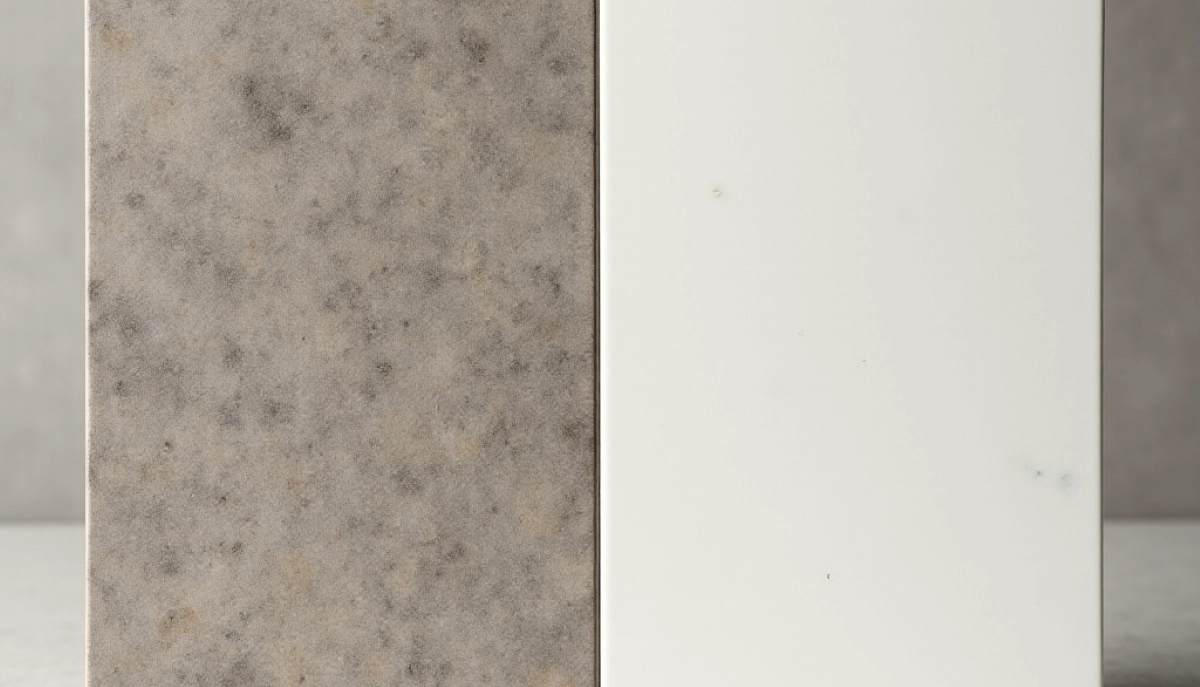
Not Sure Which Tile Is Right for You?
Get free quotes from verified tiling specialists who can help you choose between natural stone and porcelain based on your budget, lifestyle, and location.
Get Free Tile Selection Advice
Servicing Gauteng, Johannesburg, Sandton, and across South Africa
Natural Stone Tiles vs Porcelain Tiles: Which Is Better SA?
🏔️ From luxurious marble to durable porcelain – the complete guide to choosing your perfect tile
You’re standing in a tile showroom, completely overwhelmed. On one side, there’s beautiful natural stone – travertine, marble, slate – with its unique veining and organic texture. On the other side, there’s porcelain – sleek, consistent, and incredibly durable. Both are stunning. Both have passionate advocates. Which one is right for your home?
I’ve helped hundreds of homeowners across Gauteng, Johannesburg, and Sandton answer this exact question. The truth? There’s no universal “better” choice. The right tile depends on your budget, lifestyle, location, and design preferences. A busy family home with kids and pets needs different flooring than a formal adult-only entertaining space.
In this complete tile comparison guide, I’ll break down everything you need to know about natural stone vs porcelain tiles. You’ll learn about durability, maintenance, cost, appearance, installation requirements, and the pros and cons of each. By the end, you’ll know exactly which is better natural stone or porcelain tiles for YOUR specific situation.
For more material comparisons, check out our guides on porcelain vs ceramic tiles, marble tiles installation, travertine tiles guide, granite tiles guide, and cement vs ceramic tiles.
📋 Table of Contents – Natural Stone vs Porcelain Guide
📊 Quick Comparison: Natural Stone vs Porcelain Tiles
Here’s a high-level overview of the stone tile vs porcelain debate:
| Feature | Natural Stone | Porcelain |
|---|---|---|
| Durability | Good – but can scratch, stain, etch (marble) | Excellent – very hard, scratch-resistant, stain-resistant |
| Water Absorption | 0.5% – 5% (varies by stone type) | 0.1% – 0.5% (very low) |
| Maintenance | High – requires regular sealing, special cleaners | Low – no sealing needed, easy cleaning |
| Cost (Material/m²) | R500 – R1,500+ | R250 – R800 |
| Installation Cost/m² | R250 – R500 (specialist required) | R150 – R350 |
| Appearance | Unique, organic, each tile different | Consistent, can mimic stone perfectly |
| Sealing Required | Yes – every 1-2 years | No – but grout still needs sealing |
| Best For | Luxury homes, feature areas, low-traffic spaces | High-traffic areas, families, pets, wet areas |
For a visual material comparison, see the tile type comparison chart later in this guide.
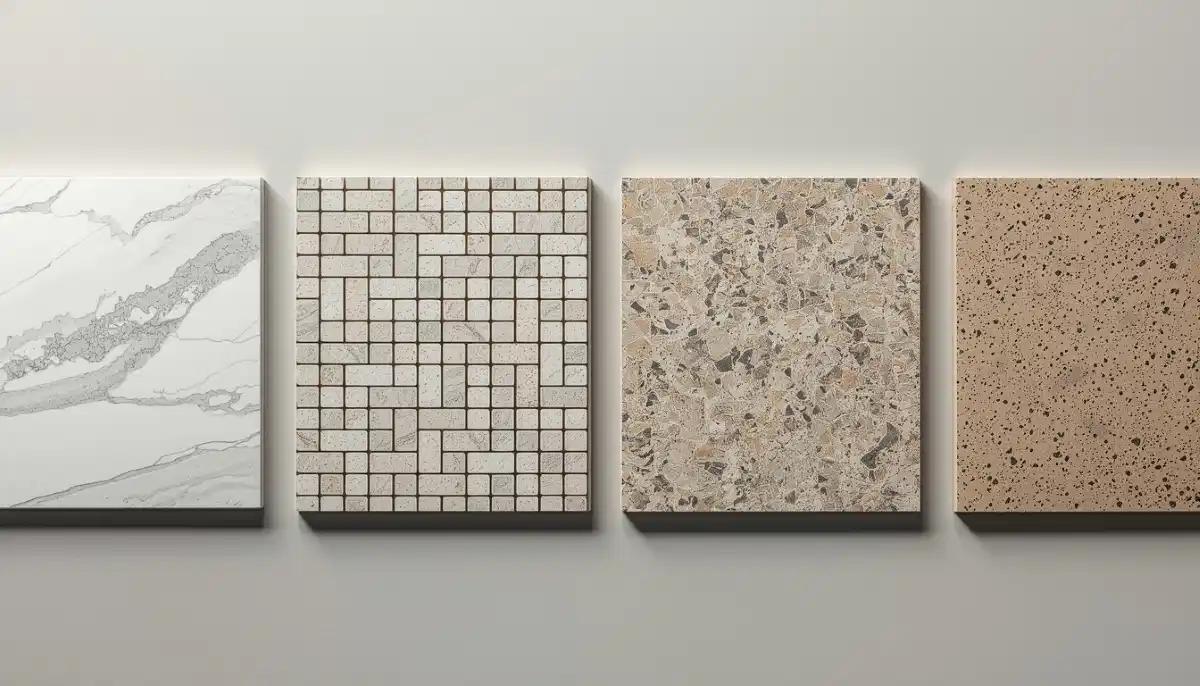
🏔️ What Is Natural Stone Tile?
Natural stone tiles are quarried directly from the earth – each piece is unique, with its own veining, colour variations, and texture.
Common Natural Stone Tile Types:
- Marble: Elegant, with distinctive veining. Soft and porous – etches from acids. Read our marble tiles installation and maintenance guide.
- Travertine: Earthy, with natural pits and holes. Softer stone, requires filling and sealing. See travertine tiles explained.
- Granite: Very hard, durable, low absorption. Excellent for kitchens and high-traffic areas. Read granite tiles guide.
- Slate: Dark, textured, split-face appearance. Durable but can flake.
- Limestone: Soft, matte appearance. Very porous – requires heavy sealing.
- Quartzite: Extremely hard, resembles marble but more durable. Expensive.
Key Characteristics of Natural Stone:
- Each tile is unique – no two are exactly alike
- Requires regular sealing to prevent stains and moisture absorption
- Can scratch, etch (marble reacts to acids), or chip
- Provides timeless, luxurious appearance that increases home value
- Can be refinished (ground and polished) to remove scratches
- Natural variations in colour and pattern are features, not defects
Manufacturing process: Quarried from mountains or quarries worldwide. Cut into blocks, then sliced into tiles. Finished by polishing, honing (matte), or tumbling.
🏺 What Is Porcelain Tile?
Porcelain is a man-made ceramic product fired at extremely high temperatures to create a dense, hard, and durable tile.
Key Characteristics of Porcelain:
- Made from refined clay and minerals fired at over 1200°C
- Extremely dense – water absorption under 0.5%
- Very hard – difficult to scratch or chip
- Stain-resistant – does not require sealing (except grout)
- Can be manufactured to look exactly like natural stone, wood, concrete, or fabric
- Colour and pattern are consistent throughout – no surprises
- Available in rectified (precision-cut) edges for very narrow grout lines
- Through-body porcelain has colour throughout (better for chips)
Types of Porcelain:
- Glazed porcelain: Has a glass-like surface coating. More stain-resistant but scratches may show.
- Full-body (through-body) porcelain: Colour runs through the entire tile. Chips are less visible.
- Polished porcelain: High-gloss finish. Can be slippery when wet.
- Matte porcelain: Non-reflective finish. More slip-resistant.
- Textured porcelain: Surface texture for slip resistance. Good for wet areas and outdoors.
Porcelain vs ceramic: Porcelain is denser, harder, and more water-resistant than standard ceramic tiles. For more details, read porcelain vs ceramic tiles.
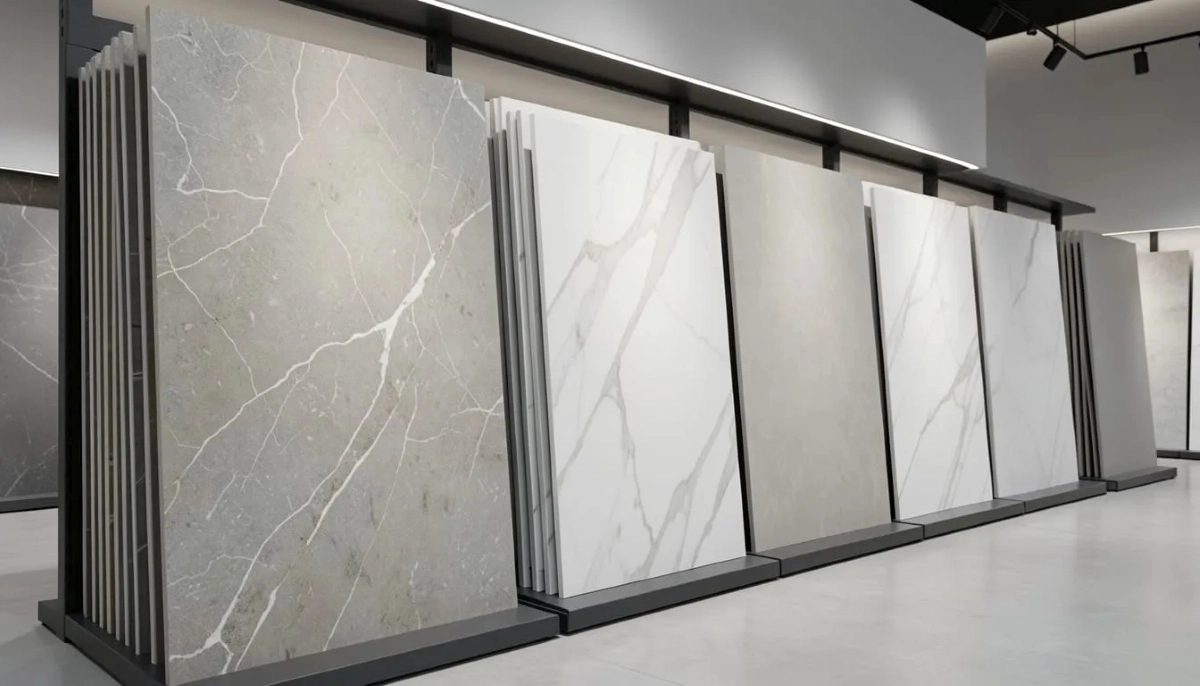
Still Trying to Decide Between Natural Stone and Porcelain?
Get free quotes from verified tiling specialists who can assess your space, lifestyle, and budget – and recommend the perfect tile for your project.
Free inspections available. Beat Your Quote guarantee.
💪 Durability Comparison – Which Lasts Longer?
When comparing natural stone vs porcelain tiles, durability is often the deciding factor.
Porcelain Durability:
Porcelain is exceptionally durable. It’s rated PEI 3-5 (Porcelain Enamel Institute rating), meaning it can withstand residential and even commercial foot traffic. It’s resistant to scratches, stains, and moisture. A properly installed porcelain floor can last 50+ years with minimal maintenance.
Natural Stone Durability:
Natural stone durability varies significantly by type. Granite and quartzite are very hard and durable – comparable to porcelain. Marble and travertine are softer and more susceptible to scratching, etching (from acids like lemon juice or vinegar), and staining. However, natural stone can be refinished – ground down and re-polished – to remove damage, which porcelain cannot.
Comparison Table:
| Property | Porcelain | Granite | Marble | Travertine |
|---|---|---|---|---|
| Hardness (Mohs scale) | 7-8 | 7-8 | 3-5 | 3-4 |
| Scratch resistance | Excellent | Excellent | Fair | Fair |
| Stain resistance | Excellent | Good (when sealed) | Poor (must seal) | Poor (must seal) |
| Acid resistance | Excellent | Good | Poor (etches) | Poor (etches) |
| Water absorption | 0.1%-0.5% | 0.4%-0.5% | 0.5%-1% | 1%-5% |
Verdict: For busy family homes, kitchens, bathrooms, and rental properties, porcelain is more durable and worry-free. For formal spaces with careful owners, natural stone offers unmatched beauty.

🧹 Maintenance – Sealing and Care Requirements
The biggest practical difference between stone tile vs porcelain is maintenance.
Porcelain Maintenance (Low):
- No sealing required – porcelain itself is impervious to stains
- Clean with pH-neutral tile cleaner or mild soap and water
- Grout still needs sealing every 1-2 years (especially in wet areas)
- Sweep or vacuum regularly to prevent grit from scratching glaze
- Wipe spills promptly (good practice for any floor)
- Can use steam cleaners safely
Natural Stone Maintenance (High):
- Must be sealed before use and resealed every 1-2 years
- Requires stone-specific cleaners (never vinegar, bleach, or acidic products)
- Wipe spills immediately – especially wine, coffee, citrus, and oil
- Marble etches from any acid – even lemon juice or tomato sauce
- Cannot use steam cleaners – heat and moisture can damage stone and sealer
- Requires periodic professional honing/polishing to remove scratches
- More susceptible to staining in kitchens and high-traffic areas
Maintenance Comparison:
| Task | Porcelain | Natural Stone |
|---|---|---|
| Initial sealing | Not required | Required before use |
| Regular sealing | Grout only (1-2 years) | Every 1-2 years (tile and grout) |
| Daily cleaning | Mild soap or tile cleaner | Stone-specific cleaner only |
| Steam cleaning | Safe | Not recommended |
| Annual maintenance cost (per m²) | R20 – R50 | R100 – R300 |
For cleaning guidance, read our tile cleaning methods guide.

💰 Cost Comparison – Material and Installation
Budget is a major factor in the natural stone vs porcelain tiles decision.
Material Costs (per m²):
- Porcelain: R250 – R800 (standard), R800 – R1,500 (premium, stone-look)
- Travertine: R400 – R800
- Marble: R600 – R1,500
- Granite: R500 – R1,200
- Quartzite: R800 – R2,000+
Installation Costs (per m²):
- Porcelain: R150 – R350 (standard tiles), R250 – R400 (large format)
- Natural stone: R250 – R500 (requires specialist installer, more careful handling)
Total Installed Cost Examples (50m² floor):
- Standard porcelain: R20,000 – R50,000
- Premium stone-look porcelain: R50,000 – R90,000
- Travertine (natural stone): R40,000 – R80,000
- Marble (natural stone): R60,000 – R120,000+
Long-term cost considerations:
Natural stone requires ongoing sealing (R100-R300 per m² annually). Porcelain has minimal maintenance costs. However, natural stone can be refinished to look new again – porcelain cannot be restored once damaged. Factor these into your 10-year budget.
For a complete pricing breakdown, read our tile installation cost per square meter guide.
🎨 Appearance – Natural Variation vs Consistency
This is where personal preference plays the biggest role in which is better natural stone or porcelain tiles.
Natural Stone Appearance:
No two natural stone tiles are identical. The variations in colour, veining, and texture are features – not defects. This creates a floor that is truly unique. However, some people find the variation overwhelming or difficult to coordinate with other design elements.
Porcelain Appearance:
Porcelain can be manufactured to look like almost anything – stone, wood, concrete, fabric, or metal. Digital printing technology creates incredibly realistic stone looks. However, porcelain is consistent. If you want the organic variation of real stone, you’ll need to buy multiple dye lots and mix them.
Can porcelain look exactly like natural stone?
Modern porcelain is remarkably realistic. From a few feet away, most people cannot tell the difference. Up close, porcelain lacks the subtle depth and translucency of real stone. But for many homeowners, the durability and low maintenance of porcelain outweigh this minor difference.
Which looks more luxurious?
Real natural stone – especially marble or limestone – carries a cachet that porcelain cannot match. For high-end homes, stone adds undeniable value and prestige. However, premium stone-look porcelain in large format can achieve 90% of the look at 50% of the cost.
🔧 Installation Differences
Both materials require professional installation, but natural stone is more demanding.
Porcelain Installation:
- Can be cut with wet saw or manual cutter (harder than ceramic)
- Requires premium polymer-modified thin-set adhesive
- Large format requires back-buttering and leveling systems
- No special handling required
- Rectified porcelain allows very narrow grout lines (2-3mm)
Natural Stone Installation:
- Requires specialist stone installer – not all tilers have experience
- Must use white thin-set (grey can bleed through lighter stones)
- Requires careful handling – stone can break or chip
- Must seal before grouting to prevent grout staining
- Wider grout lines recommended (3-5mm) to accommodate size variation
- Some stones (travertine) require filling of natural pits before sealing
For installation guidance, read our large format tiles installation and tile adhesives explained guides.
🏠 Best Uses for Each Material
Here’s where each material excels in the stone tile vs porcelain debate:
Porcelain – Best For:
- High-traffic areas (hallways, kitchens, family rooms)
- Homes with children, pets, or heavy furniture
- Bathrooms and wet areas (very low water absorption)
- Outdoor patios, pool decks, and balconies (outdoor-rated porcelain)
- Rental properties (durable, low maintenance)
- Underfloor heating systems (conducts heat well)
- Large open-plan areas (consistent appearance)
Natural Stone – Best For:
- Formal living and dining rooms (low traffic)
- Luxury primary bathrooms (marble or limestone)
- Feature walls and fireplace surrounds
- Entryways (first impressions – granite or quartzite for durability)
- Homes where natural variation is celebrated
- Restoration projects (period homes, heritage properties)
- High-end homes where budget isn’t the primary constraint
What NOT to use each for:
- Don’t use soft stone (marble, travertine) in: Kitchens (acid spills), high-traffic areas, homes with children or pets
- Don’t use polished porcelain in: Wet areas (slippery when wet) – use matte or textured instead
- Don’t use standard porcelain outdoors: Must use outdoor-rated (freeze-thaw resistant)
✅❌ Pros and Cons Summary
Porcelain Pros:
- ✓ Extremely durable – resists scratches, stains, moisture
- ✓ Low maintenance – no sealing required
- ✓ Affordable – cheaper than most natural stone
- ✓ Consistent appearance – easy to coordinate
- ✓ Can mimic stone, wood, concrete, and more
- ✓ Suitable for outdoors, wet areas, underfloor heating
Porcelain Cons:
- ✗ Can be cold and hard underfoot
- ✗ Difficult to cut – requires wet saw or diamond blade
- ✗ Cannot be refinished – chips are permanent
- ✗ Some designs look artificial up close
- ✗ Heavy – requires strong subfloor
Natural Stone Pros:
- ✓ Uniquely beautiful – each tile is one-of-a-kind
- ✓ Adds significant home value and prestige
- ✓ Can be refinished – ground and polished to remove damage
- ✓ Natural, organic appearance that ages beautifully
- ✓ Cools home naturally (stone stays cool in summer)
Natural Stone Cons:
- ✗ Expensive – both material and installation
- ✗ High maintenance – requires regular sealing
- ✗ Porous – stains easily without sealing
- ✗ Soft stones scratch and etch (marble, travertine)
- ✗ Requires specialist installer – not all tilers qualify
- ✗ Variation can be challenging to coordinate
🤔 Which Should You Choose? Decision Guide
Answer these questions to determine which is better natural stone or porcelain tiles for YOUR home:
Question 1: What’s your budget?
Under R500/m² installed? → Porcelain. Over R1,000/m²? → Consider natural stone.
Question 2: Do you have children or pets?
Yes → Porcelain (more durable, easier to clean). No → Natural stone possible.
Question 3: Is this a high-traffic area?
Yes (kitchen, hallway, family room) → Porcelain. Low traffic (formal dining, master bath) → Natural stone possible.
Question 4: How much maintenance are you willing to do?
Minimal → Porcelain. Willing to seal annually and use special cleaners → Natural stone.
Question 5: Do you love natural variation?
Yes → Natural stone. Prefer consistency → Porcelain.
Question 6: Is this a wet area (shower, bathroom floor, pool deck)?
Yes → Porcelain (lower water absorption). Natural stone can work but requires perfect sealing and more maintenance.
Question 7: Do you need underfloor heating?
Both work, but porcelain is more efficient (thinner, better conductivity).
The Bottom Line:
For 80% of homeowners, porcelain is the better choice. It offers durability, low maintenance, and excellent stone looks at a fraction of the cost. Natural stone is for homeowners who value authenticity and uniqueness above all else – and are willing to accept the maintenance responsibilities that come with it.
❓ Frequently Asked Questions About Natural Stone vs Porcelain
Which is more durable – natural stone or porcelain?
Porcelain is generally more durable. It’s harder, less porous, and more resistant to scratches, stains, and moisture. However, granite and quartzite natural stone are comparable in hardness to porcelain. Marble and travertine are softer and more prone to damage. For busy family homes, porcelain is the more durable choice.
Is porcelain cheaper than natural stone?
Yes – significantly. Porcelain tiles cost R250-R800 per m² installed (R150-R350/m² labour). Natural stone costs R500-R1,500+ per m² for material plus R250-R500/m² for specialist installation. Total installed: porcelain R20,000-R50,000 for 50m²; natural stone R40,000-R120,000+. Porcelain is the budget-friendly option.
Can porcelain tiles look like real stone?
Yes – modern digital printing technology creates incredibly realistic stone looks. From a few feet away, most people cannot distinguish high-quality porcelain from real stone. Up close, porcelain lacks the subtle depth and translucency of natural stone. For most homeowners, the difference is acceptable given the durability and cost advantages of porcelain.
Does natural stone need to be sealed?
Absolutely. All natural stone tiles must be sealed before use and resealed every 1-2 years. Sealing prevents stains, moisture absorption, and makes cleaning easier. Without sealing, natural stone will stain permanently – especially porous stones like marble, travertine, and limestone. Grout also needs sealing regardless of tile type.
Which is better for a bathroom – natural stone or porcelain?
Porcelain is better for bathrooms. Its very low water absorption (0.1%-0.5%) makes it ideal for wet areas. Natural stone is more porous – even when sealed, water can eventually penetrate. In showers, soap scum and hard water stains are harder to remove from stone. For bathroom floors, choose matte or textured porcelain for slip resistance.
Can I use natural stone in a kitchen?
Yes – but choose wisely. Granite and quartzite are durable enough for kitchens. Avoid marble and travertine – they etch from acids (lemon juice, vinegar, tomato sauce) and stain easily. All stone in kitchens requires perfect sealing and immediate spill cleanup. Many homeowners prefer porcelain in kitchens for worry-free durability.
Which adds more value to my home – natural stone or porcelain?
Natural stone generally adds more perceived value, especially marble in bathrooms or granite countertops. However, the difference is shrinking as high-quality porcelain becomes more realistic. A well-installed stone-look porcelain floor adds significant value with less maintenance. For resale, choose based on your neighbourhood – stone in luxury areas, porcelain in mid-range homes.
Is natural stone environmentally friendly?
It’s complicated. Natural stone is quarried – which has environmental impact – but it lasts forever and can be refinished rather than replaced. Porcelain requires high-energy firing but uses abundant clay materials. Some porcelain contains recycled content. Neither is clearly “greener.” If sustainability matters, look for locally sourced stone or porcelain with recycled content.
✅ Final Thoughts: Choose the Tile That Fits Your Life
The natural stone vs porcelain tiles decision isn’t about which is objectively better – it’s about which is better for YOUR home, lifestyle, and budget.
Porcelain wins on durability, low maintenance, and affordability. It’s the practical choice for busy families, rental properties, and anyone who wants beautiful floors without ongoing work. Modern porcelain looks remarkably like natural stone, giving you 90% of the look at 50% of the cost.
Natural stone wins on authenticity, uniqueness, and prestige. It’s for homeowners who appreciate natural variation, don’t mind regular maintenance, and want a floor that’s truly one-of-a-kind. If you have the budget and the lifestyle to maintain it, natural stone is stunning.
Key takeaways for choosing between natural stone and porcelain:
- Porcelain is more durable, lower maintenance, and more affordable
- Natural stone offers unique beauty and prestige but requires more care
- For busy homes with kids/pets → porcelain
- For formal, low-traffic areas with budget → natural stone
- Modern porcelain can mimic stone extremely well
- Always factor long-term maintenance costs into your decision
Your next step: Ready to choose your tiles? Get free quotes from verified tiling specialists who can help you select the right material and install it perfectly.
Ready to Choose Your Perfect Tile?
Get free quotes from verified tiling specialists who can help you compare natural stone and porcelain – and install your choice flawlessly.
📞 Call us: 073 138 4726 for personalised tile selection advice.
Are You a Tiling Contractor?
Join ServiceLink SA’s network of verified tiling specialists. Get qualified leads, grow your business, and connect with homeowners across South Africa.
📚 Official resources & standards referenced:
- SABS – South African Bureau of Standards for stone and porcelain standards, including hardness testing and water absorption specifications.
- SANS 10400 – South African National Standard for material specifications and installation requirements.
Information provided for general guidance. Always consult a qualified professional for tile selection and installation advice.
Written by: Innocent T Hanyani
Construction & Home Services Industry Specialist | 21+ Years Experience
Innocent T Hanyani has over two decades of experience working across South Africa’s construction and home improvement sectors. Throughout his career, he has helped hundreds of homeowners choose between natural stone and porcelain – balancing budget, lifestyle, and design preferences. His practical experience with both materials, including installation, maintenance, and long-term performance, provides homeowners with honest, actionable advice. He has seen beautiful natural stone floors ruined by poor maintenance and porcelain floors that perfectly mimic marble at a fraction of the cost.
For more information about tile types and materials, explore our related resources: porcelain vs ceramic tiles, marble tiles installation guide, travertine tiles explained, granite tiles guide, and cement vs ceramic tiles. Learn about our process on what is ServiceLink SA and how our service works. Find tilers in your area: Gauteng, Johannesburg, and Sandton. For related services, see our flooring services and building construction guides.