
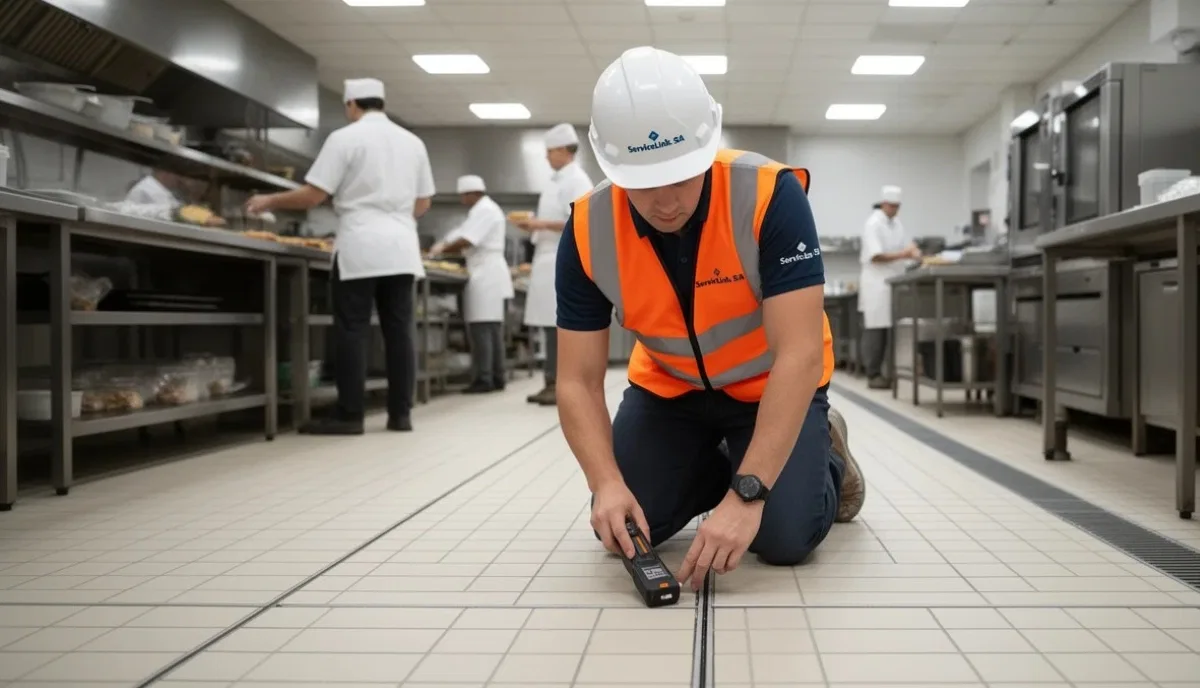
Opening a Commercial Kitchen?
Get free quotes from verified commercial tiling contractors who understand health compliance and safety regulations.
Get Free Commercial Tiling Quotes
Servicing Gauteng, Johannesburg, Sandton, and across South Africa
Commercial Kitchen Tiling Requirements in South Africa: Health & Safety
🍽️ From slip resistance to hygiene – the complete guide to compliant commercial kitchen flooring
You’re opening a restaurant, café, or commercial kitchen. You’ve planned the menu, hired the staff, and designed the layout. But have you thought about the floor? In a commercial kitchen, tiling isn’t just about looks – it’s about safety, hygiene, and legal compliance.
I’ve worked on commercial kitchen projects across Gauteng, Johannesburg, and Sandton, and I’ve seen what happens when owners ignore commercial kitchen tiling requirements SA. Failed health inspections, slip-and-fall accidents, and costly re-tiling within months. The standards are there for a reason – and they’re enforceable.
In this complete guide to restaurant kitchen tiles and health compliance tiling, I’ll answer what are tiling requirements for commercial kitchens in South Africa. You’ll learn about slip resistance ratings (R10-R13), hygiene requirements, chemical resistance, drainage, expansion joints, and inspection standards. By the end, you’ll know exactly how to specify and install food safety flooring that passes inspection and keeps your staff safe.
For more commercial guidance, check out our guides on non-slip tile requirements, tiling warranty guide, and residential vs commercial tilers.
📋 Table of Contents – Commercial Kitchen Tiling Guide
⚠️ Why Commercial Kitchen Tiling Standards Matter
Commercial kitchen tiling requirements SA exist for critical reasons:
Consequences of Non-Compliance:
- Failed health inspections: Can lead to fines or closure orders
- Slip-and-fall accidents: Lawsuits, worker compensation claims – read slip resistance guide
- Bacterial growth: Improper grout harbours bacteria – read grout maintenance
- Floor failure: Premature cracking, loose tiles, water damage – read cracking causes
- Insurance issues: Claims may be denied if flooring wasn’t compliant
- Costly re-tiling: Non-compliant floors must be replaced
Regulatory Framework:
Commercial kitchens must comply with:
- SANS 10400 – Building regulations for commercial spaces
- SABS – Slip resistance standards (R-ratings)
- Health Department regulations – Food safety and hygiene
- Municipal bylaws – Local requirements
- Occupational Health and Safety Act – Worker safety
For more on regulatory standards, read our non-slip tile requirements guide.

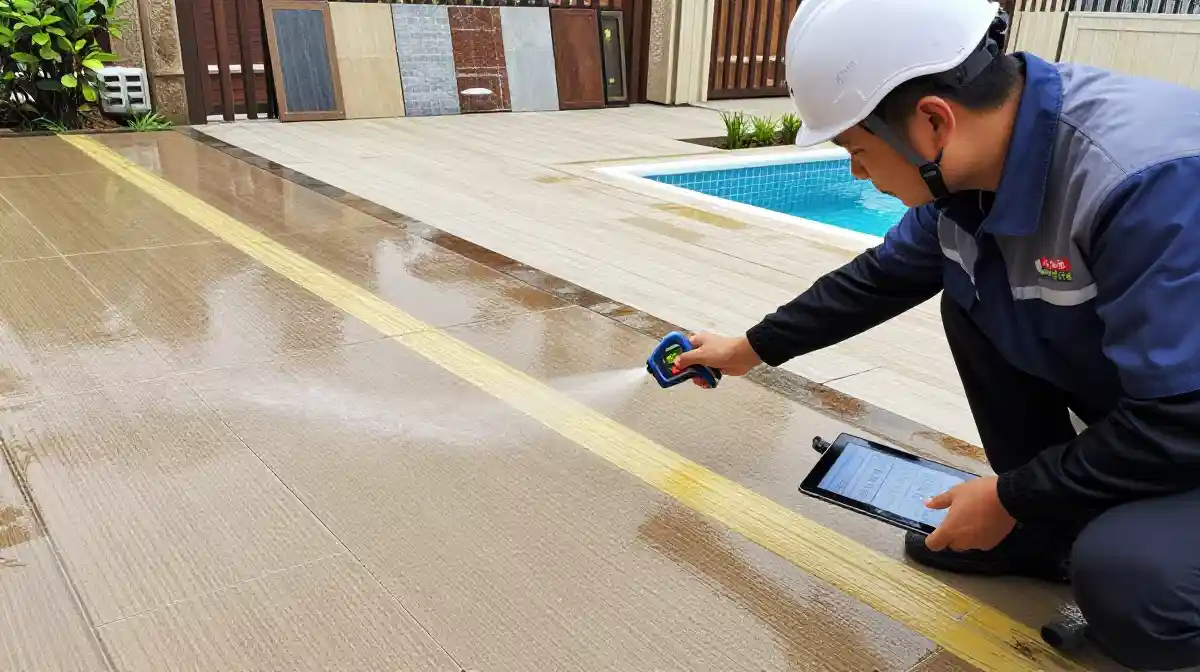
👟 Slip Resistance – R-Ratings for Commercial Kitchens
Slip resistance is the most critical safety requirement for restaurant kitchen tiles:
Required R-Ratings for Commercial Kitchens:
- R11: Minimum for commercial kitchens with moderate water/grease exposure
- R12: Recommended for most commercial kitchens (better safety margin)
- R13: Required for areas with heavy water/grease (dishwashing, fryer stations)
What R-Ratings Mean:
- R9: Low slip resistance – NOT suitable for commercial kitchens
- R10: Moderate – dry areas only, not for food prep zones
- R11: Good – suitable for most commercial kitchen areas
- R12: High – recommended for wet/greasy areas
- R13: Maximum – for high-risk zones (dishwashing, fryers)
How to Ensure Compliance:
- Specify tiles with R11 or R12 rating (R13 for high-risk zones)
- Request manufacturer certification of R-rating
- Choose textured finishes – never polished or glossy tiles
- Consider slip resistance testing after installation
- Read our non-slip outdoor tiles guide for similar principles
For detailed R-rating information, read our SABS slip resistance guide.
Need a Compliant Commercial Kitchen Tiler?
Get free quotes from verified commercial tiling contractors who understand health compliance and safety regulations.
Get Free Commercial Tiling Quotes
Free inspections available. Fully insured contractors.
🧼 Hygiene and Food Safety Requirements for Health Compliance Tiling
Health compliance tiling focuses on preventing bacterial growth and ensuring easy cleaning:
Key Hygiene Requirements:
- Non-porous surface: Tiles must not absorb liquids or bacteria – porcelain is best
- Smooth but textured: Easy to clean but still slip-resistant
- Minimal grout lines: Large format tiles reduce bacteria-harbouring joints
- Epoxy grout: Non-porous, chemical-resistant, won’t harbour bacteria – read grouting guide
- Coved base: Seamless transition from floor to wall (no right-angle corners)
- No standing water: Proper drainage prevents bacterial breeding grounds
Tile Material Recommendations:
- Porcelain (best): Very low water absorption (0.1-0.5%), durable, easy to clean
- Quarry tile: Durable, slip-resistant, but more porous – requires sealing
- Ceramic: Not recommended – too porous, can crack under heavy use
- Natural stone: Avoid – porous, difficult to clean, harbours bacteria
Cleaning Considerations:
Floors must withstand daily scrubbing with hot water, detergents, and sanitisers. Tiles and grout must not degrade from frequent cleaning. Epoxy grout is strongly recommended.
Read our tile cleaning methods guide for commercial cleaning protocols.
🔥 Chemical and Heat Resistance
Commercial kitchens expose flooring to harsh conditions:
Chemical Resistance Required:
- Grease and cooking oils
- Detergents and degreasers
- Sanitisers and bleach solutions
- Acidic cleaners (food-safe sanitisers)
- Spilled food acids (tomato sauce, citrus, vinegar)
Heat Resistance Required:
- Hot pans and trays dropped on floor
- Spilled hot oil and water
- Steam from dishwashers and cooking equipment
- Near ovens, fryers, and ranges
Material Recommendations:
- Porcelain: Excellent chemical and heat resistance – best choice
- Quarry tile: Good resistance but needs sealing
- Epoxy grout: Essential – cement grout degrades from chemicals
- Avoid: Ceramic (cracks from heat), natural stone (etches from acids)
For more on material durability, read our tile comparison chart and natural stone vs porcelain guide.
💧 Drainage and Slope Requirements
Proper drainage prevents standing water, which is a slip hazard and bacterial breeding ground:
Slope Requirements:
- Minimum slope: 2% (20mm drop per 1 meter) towards drains
- Recommended slope: 2-3% for most commercial kitchens
- Floor drains: Required in wet areas (dishwashing, prep sinks)
- Trench drains: Recommended for large commercial kitchens
Drainage Considerations:
- Slope must be in the structural slab before tiling
- Tiles must follow the slope – no birdbaths (low spots)
- Drains must be accessible for cleaning
- Floor sinks or grease traps may be required – consult a plumbing professional
Inspection: Health inspectors will check for standing water. Any puddles 30 minutes after cleaning fail inspection.
Read our waterproofing guide for membrane requirements under drainage.
🧹 Grouting and Sealing for Commercial Kitchens
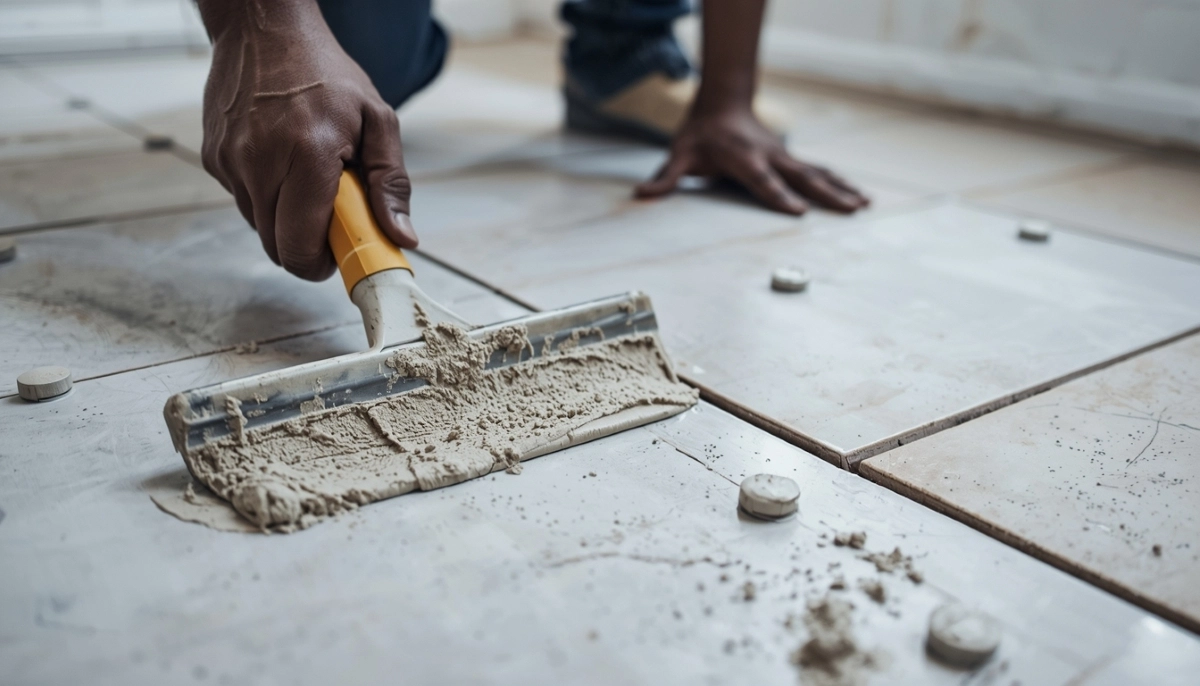
Grout is the weak point in any tile installation – especially in commercial kitchens:
Grout Requirements:
- Epoxy grout (mandatory): Non-porous, chemical-resistant, waterproof, won’t harbour bacteria
- Cement grout (NOT acceptable): Porous, absorbs bacteria, degrades from cleaning chemicals
- Joint width: 3-5mm for commercial kitchens (wider than residential)
- Colour: Darker grout hides stains better than white
Sealing Requirements:
- Epoxy grout: No sealing needed (already waterproof)
- Porcelain tiles: No sealing needed (tile itself)
- Quarry tiles: Must be sealed before use and resealed annually
- Natural stone: Not recommended – if used, heavy sealing required
Why Epoxy Grout Is Essential:
Standard cement grout is porous – it absorbs grease, food particles, and bacteria. No amount of cleaning can fully sanitise cement grout. Health inspectors know this and will flag cement grout in commercial kitchens. Epoxy grout is the only acceptable choice.
For more on grouting, read our grouting and waterproofing guide.
📏 Expansion and Movement Joints
Commercial kitchens experience temperature fluctuations and heavy equipment movement:
Requirements:
- Perimeter joints: Required at all walls and fixed equipment
- Field joints: Every 3-5 meters in each direction
- Joint filler: Flexible sealant (silicone or polyurethane), not grout
- Joint width: 6-10mm minimum
Why Expansion Joints Matter:
Without expansion joints, temperature changes cause tiles to press against each other, leading to tenting (tiles lifting) or cracking. Heavy equipment (ovens, refrigerators) also causes movement.
Inspection: Health and building inspectors check for proper expansion joints. Missing joints are a common compliance failure.
Read our tile leveling system guide for joint spacing guidance.
🔄 Wall-to-Floor Coving – Hygiene Essential
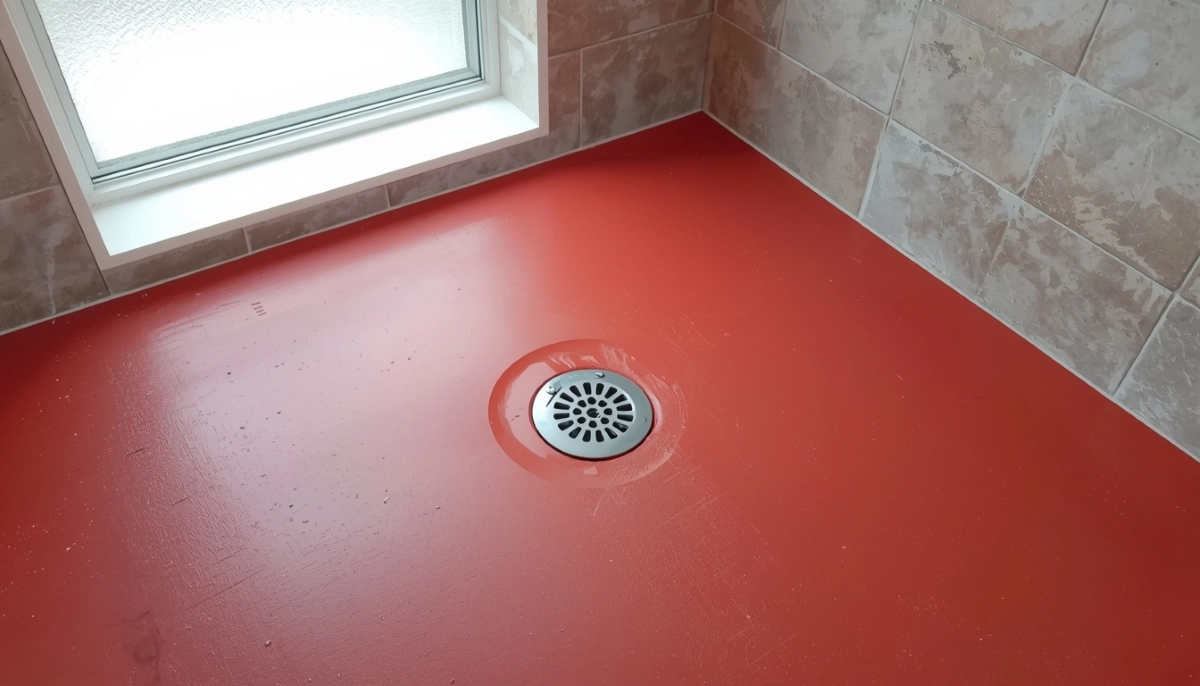
Coving creates a seamless, curved transition from floor to wall:
What Is Coving?
A curved tile base (typically 75-150mm up the wall) that eliminates the right-angle corner where dirt and bacteria collect. Cove tiles are specially shaped or regular tiles cut to create a curved profile.
Why Coving Is Required:
- Eliminates difficult-to-clean corners
- Prevents water and grease from seeping behind walls
- Creates a continuous waterproof surface
- Required by health codes in many municipalities
Installation Requirements:
- Cove base minimum 75mm up the wall (150mm recommended)
- Seamless transition – no gaps between floor and wall tiles
- Epoxy grout for cove joints
- Stainless steel corner guards in high-impact areas
Inspection: Health inspectors specifically check coving. Missing or poorly installed coving is a common violation.
📋 Inspection and Compliance – What Inspectors Look For
Health and building inspectors will check these items for commercial kitchen tiling requirements SA:
Health Inspector Checklist:
- ✓ Slip resistance (R11 minimum, R12 recommended)
- ✓ Smooth, cleanable surface (no cracks or damaged tiles)
- ✓ Epoxy grout (cement grout fails inspection)
- ✓ Coved base (seamless floor-to-wall transition)
- ✓ Proper drainage (no standing water)
- ✓ No gaps or cracks where bacteria can hide
- ✓ Easy-to-clean surfaces throughout
Building Inspector Checklist:
- ✓ Expansion joints installed correctly
- ✓ Proper slope to drains (2% minimum)
- ✓ Waterproofing membrane in wet areas
- ✓ Compliance with SANS 10400 standards
- ✓ Proper substrate preparation
How to Prepare for Inspection:
- Keep all product specifications (R-ratings, epoxy grout certification)
- Document installation process with photos
- Retain contractor warranty and compliance certificates
- Schedule a pre-inspection walk-through with your contractor
Read our tiling warranty guide for documentation requirements.
🔧 Choosing a Commercial Tiling Contractor
Not all tilers understand restaurant kitchen tiles requirements. Here’s how to choose:
Must-Have Qualifications:
- Commercial experience: Ask for portfolio of restaurant/kitchen projects
- Knowledge of SABS standards: Understands R-ratings and slip resistance
- Epoxy grout expertise: Epoxy is different from cement grout – requires skill
- Coving experience: Not all tilers can install coved bases correctly
- High insurance: R5-10 million+ public liability – read insurance guide
- Workmanship warranty: Minimum 2-5 years – read warranty guide
Questions to Ask:
- “Have you tiled commercial kitchens before?” (Ask for references)
- “What R-rating tiles do you recommend for my kitchen layout?”
- “Do you use epoxy grout? Which brand?”
- “Can you install coved bases?”
- “Do you understand health department requirements?”
- “What warranty do you offer on commercial work?”
Read our contractor selection guide and residential vs commercial tilers for more.
ServiceLink SA connects you with verified commercial tiling contractors. Learn about what is ServiceLink SA and our verification process.
❓ Frequently Asked Questions About Commercial Kitchen Tiling
What are the tiling requirements for commercial kitchens in South Africa?
What are tiling requirements for commercial kitchens – key requirements include: slip resistance R11-R13 (R12 recommended), epoxy grout (non-porous, chemical-resistant), coved base (seamless floor-to-wall transition), proper drainage (2% slope), expansion joints, and waterproofing in wet areas. All materials must comply with SANS 10400 and SABS standards.
What R-rating do I need for restaurant kitchen tiles?
For restaurant kitchen tiles, R11 is minimum, R12 is recommended for most areas, and R13 is required for high-risk zones (dishwashing, fryer stations). R9 and R10 are NOT acceptable – they become dangerously slippery when wet or greasy. Always choose textured finishes – never polished or glossy tiles. Read our non-slip requirements guide.
Do I need epoxy grout in a commercial kitchen?
YES – epoxy grout is mandatory for health compliance tiling in commercial kitchens. Standard cement grout is porous – it absorbs grease, food particles, and bacteria, making proper sanitation impossible. Health inspectors will fail cement grout. Epoxy grout is non-porous, chemical-resistant, waterproof, and won’t harbour bacteria. The extra cost is worth the compliance and safety.
What is coving and why is it required?
Coving is a curved tile transition from floor to wall (typically 75-150mm up the wall). It eliminates the right-angle corner where dirt and bacteria collect. Coving creates a seamless, easy-to-clean surface and prevents water/grease from seeping behind walls. Most health codes require coving in commercial kitchens. Not all tilers have coving experience – ask before hiring.
Can I use ceramic tiles in a commercial kitchen?
Not recommended. Ceramic tiles are too porous, can crack under heavy equipment, and may not meet slip resistance requirements. For commercial kitchen tiling requirements SA, porcelain or quarry tiles are recommended. Porcelain is best – very low absorption, excellent durability, and available with R11-R13 ratings. Ceramic is acceptable for dry storage areas but not for food prep or cooking zones.
How do I prepare for a health inspection of my kitchen floor?
Ensure: tiles have R11+ slip resistance certification, epoxy grout is used throughout, coved bases are installed correctly, no standing water (proper drainage), no cracked or damaged tiles, and all surfaces are clean and sanitised. Keep documentation: product specifications, installation photos, contractor warranty. Read our cleaning guide for sanitation protocols.
How much slope does a commercial kitchen floor need?
Commercial kitchen floors require minimum 2% slope (20mm drop per 1 meter) towards drains. Recommended slope is 2-3%. The slope must be in the structural slab before tiling – tiles follow the slope. Health inspectors check for standing water – any puddles 30 minutes after cleaning fail inspection. Read our waterproofing guide for membrane requirements.
How do I find a qualified commercial kitchen tiler?
Look for: commercial kitchen portfolio (photos of restaurant/kitchen projects), epoxy grout experience, coving installation capability, high insurance (R5-10 million+), workmanship warranty (2-5 years), and knowledge of SABS standards. Ask for references from recent commercial kitchen clients. Use ServiceLink SA’s verified commercial tiling contractors. Read our residential vs commercial guide.
✅ Final Thoughts: Safety and Compliance First
Commercial kitchen tiling requirements SA are not optional – they’re legally enforceable standards designed to protect staff, customers, and your business. Slip-resistant tiles (R11-R13), epoxy grout, coved bases, proper drainage, and expansion joints are essential for compliance.
Cutting corners on commercial kitchen flooring leads to failed health inspections, slip-and-fall accidents, and costly re-tiling. Invest in quality materials and experienced commercial tilers who understand these requirements. Your business depends on it.
Key takeaways for commercial kitchen tiling:
- Slip resistance: R11 minimum, R12 recommended, R13 for high-risk zones
- Epoxy grout is mandatory – cement grout fails health inspection
- Coved bases required – eliminates bacteria-harbouring corners
- Proper drainage: 2% minimum slope, no standing water
- Porcelain tiles are best – durable, non-porous, chemical-resistant
- Hire experienced commercial tilers with epoxy and coving expertise
- Keep documentation for health and building inspections
Your next step: Ready to install compliant commercial kitchen flooring? Get free quotes from verified commercial tiling contractors who understand health compliance and safety regulations.
Need a Compliant Commercial Kitchen Tiler?
Get free quotes from verified commercial tiling contractors who understand commercial kitchen tiling requirements SA and health compliance.
📞 Call us: 073 138 4726 to discuss your commercial kitchen project.
Free inspections •
Fully insured contractors •
Workmanship guarantees
Are You a Commercial Tiling Professional?
Join ServiceLink SA’s network of verified commercial tiling contractors. Get qualified leads for restaurant and commercial kitchen projects.
📚 Official resources & standards referenced:
- SANS 10400 – South African National Standard for commercial kitchen standards and building regulations.
- SABS – South African Bureau of Standards for slip resistance standards (R-ratings) and material specifications.
Information provided for general guidance. Commercial kitchens have additional requirements – always consult qualified professionals and local health authorities.
Written by: ServiceLink SA Research Team
Commercial Construction & Compliance Specialists
The ServiceLink SA Research Team has worked with commercial kitchen owners, health inspectors, and commercial tiling contractors across South Africa. Our team understands the critical importance of compliance – failed inspections cost businesses time, money, and reputation. This guide distills regulatory requirements into practical advice for restaurant owners, facility managers, and contractors.
For more information about commercial tiling, explore our related resources: non-slip tile requirements guide, tiling warranty guide, and residential vs commercial tilers. Learn about our process on what is ServiceLink SA and how we verify contractors. Find commercial tilers in your area: Gauteng, Johannesburg, and Sandton. For related services, see our cleaning services and waterproofing guides.