
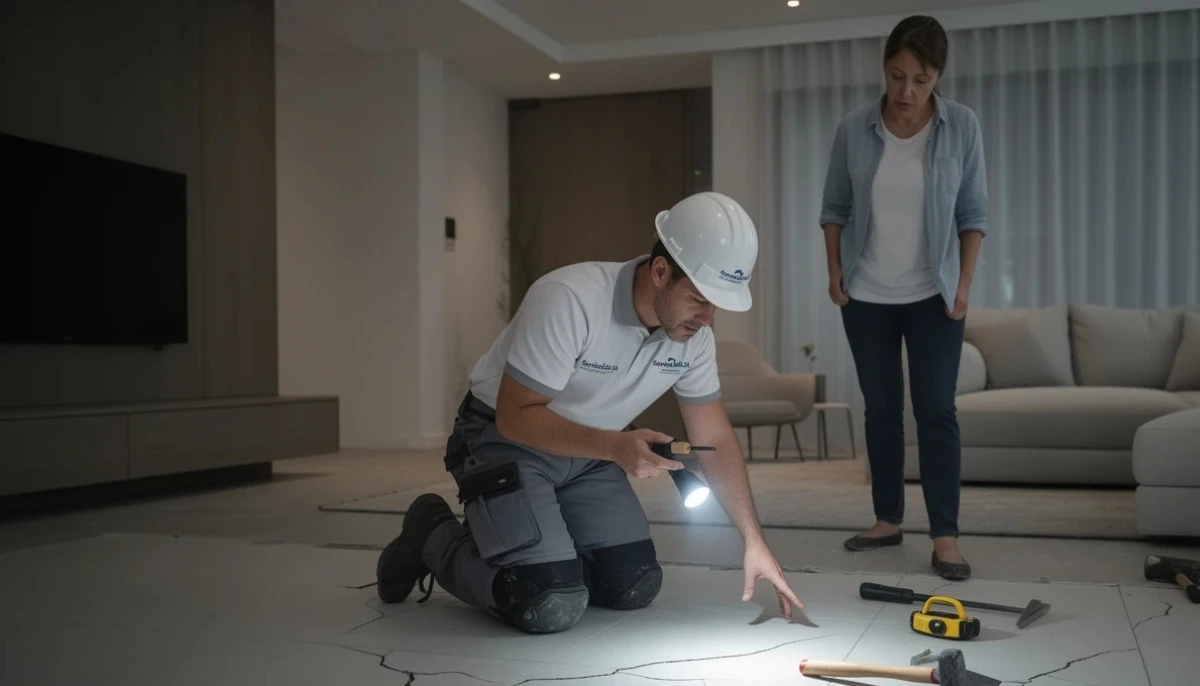
Cracked Tiles Driving You Crazy?
Get free quotes from verified tiling specialists who can diagnose cracked tiles causes and provide lasting tile fracture reasons solutions.
Get Free Tile Inspection Quotes
Servicing Gauteng, Johannesburg, Pretoria, and across South Africa
Tile Cracking After Installation: Why It Happens & How to Prevent SA
🔍 Don’t replace cracked tiles until you read this – understanding the root cause saves you thousands
You’ve just installed beautiful new tiles. Months later, you notice a crack. Then another. You replace them, and the new tiles crack too. What’s happening? Is it bad tiles? Bad installation? Something else entirely?
I’ve investigated hundreds of cracked tile cases across Gauteng, Johannesburg, and Pretoria. The answer to tile cracking after installation why is rarely simple. Most homeowners blame the tiles or the installer – but the real culprit is often something else: subfloor movement, missing expansion joints, or improper adhesive.
In this complete guide to cracked tiles causes, I’ll answer why do tiles crack after installation with 7 common causes, how to diagnose your specific problem, and most importantly – how to prevent it from happening again. You’ll learn about tile fracture reasons ranging from substrate movement to thermal expansion, and what to do about each.
For more repair guidance, check out our guides on cracked tile repair, loose tile repair, tile adhesives explained, and floor leveling preparation.
📋 Table of Contents – Tile Cracking Guide
⚠️ Why Understanding Tile Cracking After Installation Why Matters
Before diving into cracked tiles causes, understand why diagnosis is critical:
Consequences of Ignoring the Root Cause:
- New tiles will crack again – often within weeks or months
- Hidden structural issues worsen over time
- Water damage through cracks (bathrooms, kitchens) – read water damage guide
- Safety hazards from sharp edges – read cracked tile repair
- Wasted money on repeated repairs
- Potential liability if someone is injured
The Diagnostic Approach:
Instead of just replacing cracked tiles, investigate:
- Where are the cracks? (Centre of room? Along walls? Pattern?)
- When did they appear? (Soon after installation? Months later? After weather change?)
- What type of cracks? (Hairline? Wide? Spiderweb?)
- Are tiles also loose or hollow? – read hollow tiles guide
According to SANS 10400 installation standards and SABS adhesive standards, proper installation prevents most cracking issues.
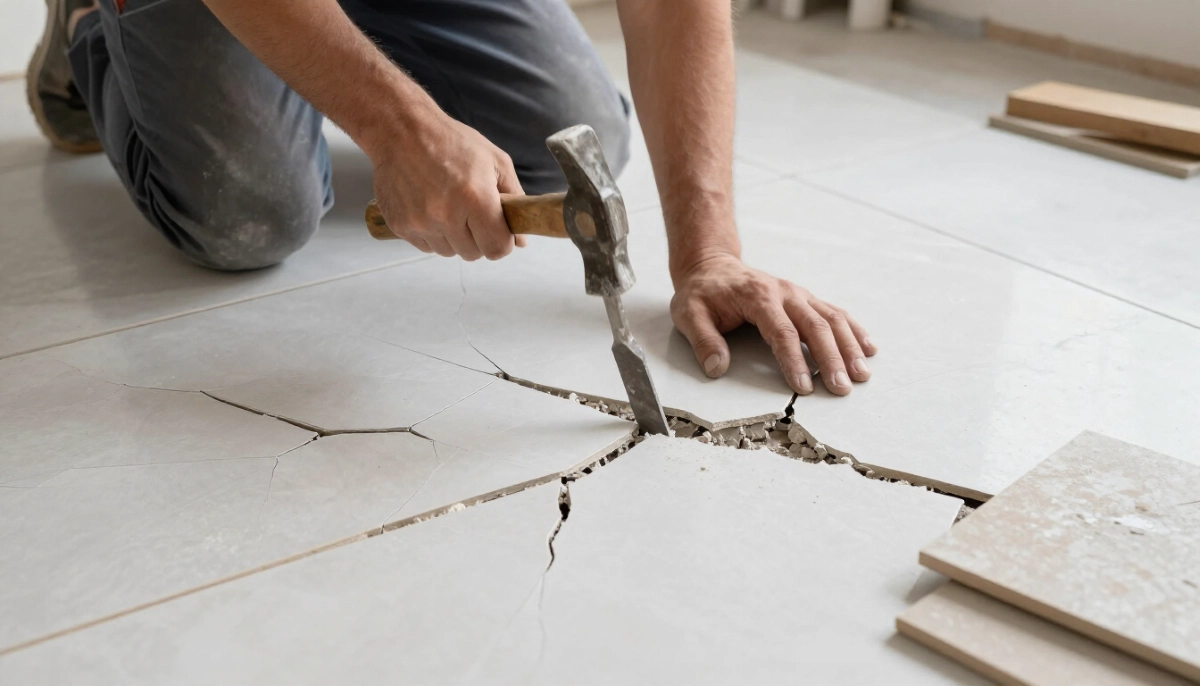
🏗️ Cause #1: Subfloor Movement (Most Common Tile Fracture Reasons)
Substrate movement is the #1 cause of tile cracking after installation why investigations reveal.
What Happens:
The subfloor (concrete slab or wooden floor) moves, settles, or flexes. Tiles are rigid and cannot accommodate this movement – they crack. This is especially common in new homes where the foundation is still settling.
Signs of Subfloor Movement:
- Cracks in a straight line across multiple tiles
- Cracks following a pattern (along foundation lines)
- Tiles also sound hollow – read hollow tiles guide
- Visible cracks in the subfloor itself (if accessible)
- Bouncy or spongy feeling floor (wooden subfloors)
Solutions:
- For wooden subfloors: Add reinforcement (sister joists, additional plywood)
- For concrete slabs: Address foundation issues – may need structural engineer – read building construction guide
- Use an uncoupling membrane (e.g., Schluter-DITRA) under tiles for future installations
- For existing cracked tiles: Remove, fix subfloor, then re-tile
Prevention: Before tiling, ensure subfloor meets deflection standards (L/360 for ceramic, L/720 for natural stone).
📏 Cause #2: Missing Expansion Joints
Tiles expand and contract with temperature changes. Without expansion joints, they press against each other and crack.
What Happens:
As temperature rises, tiles expand. With no room to expand, they push against walls, cabinets, or each other. The pressure causes tiles to crack – often in a straight line or “tenting” (tiles lifting in the middle).
Signs of Missing Expansion Joints:
- Parallel cracks across the floor
- Tiles lifting in the centre (tenting)
- Cracks near walls or fixed objects
- Floor installed in large areas (over 8m in any direction) without joints
Solutions:
- Install expansion joints every 5-8 meters in each direction
- Perimeter gaps at walls (8-10mm) filled with flexible sealant, not grout – read leveling system guide
- For existing cracked tiles: Remove tiles, cut expansion joints, re-tile
Prevention: Always include expansion joints in large installations. Required by SANS 10400 standards.
🩹 Cause #3: Wrong Adhesive or Improper Application
The wrong adhesive leads to bonding failure and tile fracture reasons.
What Happens:
Without proper bonding, tiles flex underfoot and crack. Common adhesive mistakes:
- Using standard thinset for large format tiles (needs LFT mortar) – read adhesives guide
- Not back-buttering large tiles – read large format guide
- Adhesive skinned over before tile placement
- Incorrect trowel notch size
- Using mastic in wet areas (fails) – read adhesives guide
Signs of Adhesive Failure:
- Tiles sound hollow when tapped – read hollow tiles guide
- Cracks appear soon after installation
- Tiles can be lifted (poor bond)
Solutions:
- For existing: Remove tiles, scrape old adhesive, re-tile with correct adhesive and back-buttering
- For future: Use polymer-modified thinset, correct notch size, back-butter tiles over 300x300mm
Read our complete tile adhesives guide for proper selection.
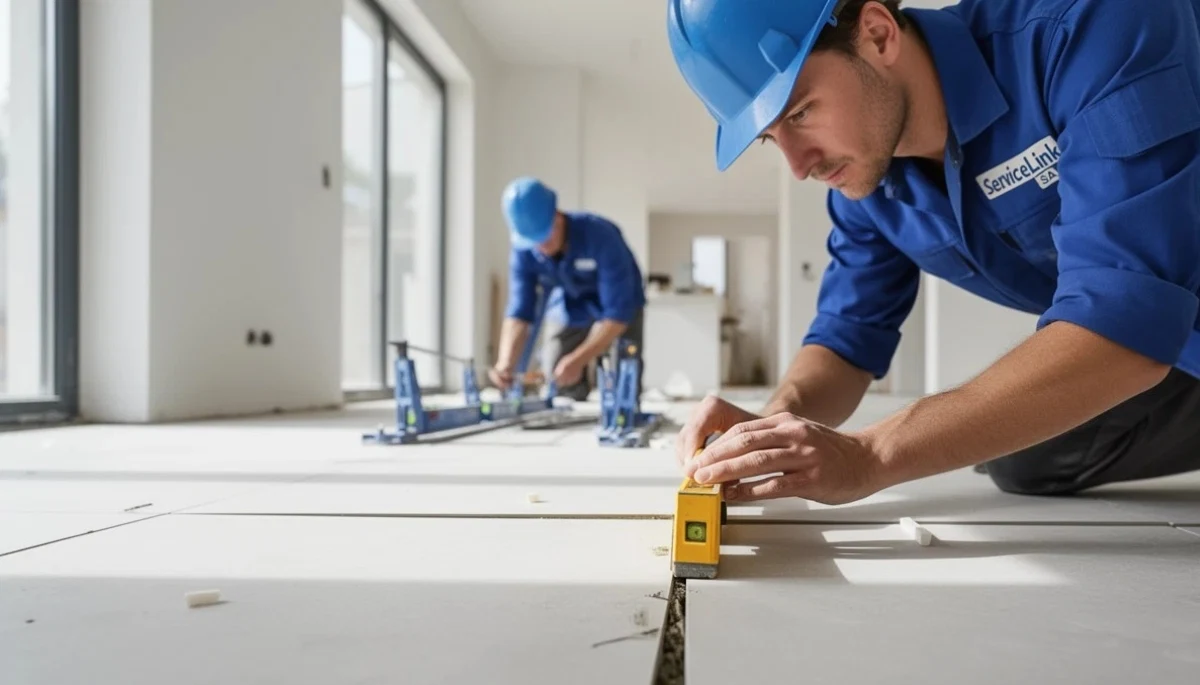
Cracked Tiles Keep Coming Back?
Get free quotes from verified tiling specialists who can diagnose cracked tiles causes and fix the root problem – not just the symptoms.
Free inspections available. Dispute resolution.
📐 Cause #4: Uneven Subfloor
An uneven subfloor creates voids under tiles. When weight is applied, tiles flex into the void and crack.
What Happens:
Tiles need a flat, stable base. High spots create point loads; low spots create voids. Over time, foot traffic causes the tile to crack over voids.
Signs of Uneven Subfloor:
- Cracks in specific areas where floor dips
- Tiles sound hollow in the centre – read hollow tiles guide
- Visible lippage – read lippage guide
- Floor was never leveled before tiling
Solutions:
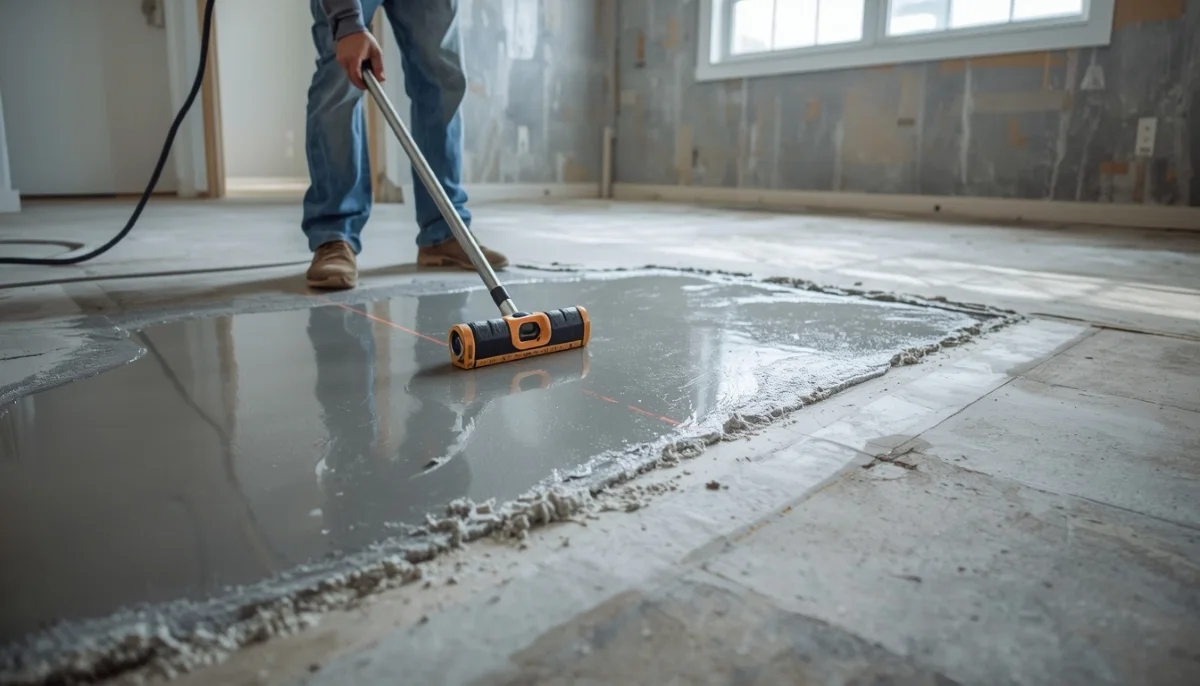
- Before tiling: Use self-levelling compound to flatten subfloor
- For existing: Remove tiles, level subfloor, re-tile
Flatness Standards:
- Standard tiles (under 300mm): 5mm over 2 meters
- Large format tiles (300-600mm): 3mm over 2 meters
- Very large tiles (600mm+): 2mm over 2 meters
Read our floor leveling guide for proper preparation.
⚡ Cause #5: Point Loads or Heavy Impact
Dropping heavy objects or placing heavy furniture with small legs can crack tiles.
What Happens:
Tiles are strong under distributed loads but weak under point loads. A heavy object dropped on a small area (e.g., a hammer, a heavy pan, a chair leg) creates pressure exceeding tile strength.
Signs of Impact/Point Load Cracks:
- Single cracked tile (not multiple in a pattern)
- Star-shaped or spiderweb crack pattern from a central point
- Adjacent tiles are fine
- Recent event (dropped something, moved heavy furniture)
Solutions:
- Replace the cracked tile – read cracked tile repair guide
- Use felt pads under heavy furniture legs to distribute weight
- Drop rugs in high-risk areas (kitchen near stove)
Prevention: Choose tiles with higher PEI rating (4-5) for high-traffic or kitchen areas.
🏺 Cause #6: Poor Tile Quality
Cheap, low-quality tiles are more prone to cracking.
What Happens:
Tiles with low PEI ratings, high water absorption, or manufacturing defects crack under normal use.
Signs of Poor Tile Quality:
- Cracks appear in multiple tiles (not just one)
- Tiles are very cheap (under R80/m²)
- Inconsistent thickness or size between tiles
- Visible manufacturing defects (warping, uneven glaze)
Solutions:
- Replace with quality tiles (PEI 3+ for floors, PEI 4+ for high traffic)
- For ongoing issues: Consider claiming against tile supplier (if manufacturing defect)
Prevention: Buy tiles from reputable suppliers with quality certifications. Read our tile comparison chart.
💧 Cause #7: Water Damage
Water under tiles can cause cracking through several mechanisms.
What Happens:
- Water softens adhesive – tiles become loose and crack underfoot – read loose tile repair
- Efflorescence (salt crystals) grows under tiles, pushing them up – read water damage guide
- Wooden subfloor swells from moisture, pushing tiles
- Freeze-thaw cycles (in cold areas) cause water to expand and crack tiles
Signs of Water-Related Cracking:
- Cracks in wet areas (bathrooms, kitchens, near appliances)
- Efflorescence (white powder) on tile surfaces or edges
- Musty odours or visible mould
- Loose or hollow tiles – read hollow tiles guide
- Water stains on ceiling below (upper floors)
Solutions:
- Fix water source (plumbing leaks, failed waterproofing) – read plumbing services and waterproofing guide
- Remove damaged tiles and subfloor
- Allow to dry completely (may take weeks)
- Re-install with proper waterproofing
🔬 Diagnose by Crack Pattern – What Your Cracks Tell You
The pattern of tile fracture reasons reveals the cause:
| Crack Pattern | Likely Cause | Action |
|---|---|---|
| Straight line across multiple tiles | Subfloor movement or missing expansion joints | Structural assessment needed – read building construction guide |
| Single star/spiderweb crack | Impact or point load | Replace tile – read cracked tile repair |
| Hairline cracks in multiple tiles | Thermal stress or poor tile quality | Check expansion joints, consider tile replacement |
| Cracks only in centre of room | Subfloor deflection (wooden floor) | Reinforce subfloor |
| Cracks near walls or cabinets | Missing expansion joints | Add perimeter gaps with flexible sealant |
| Cracks in wet areas only | Water damage or failed waterproofing | Check waterproofing – read waterproofing guide |
| Cracks with hollow sound | Adhesive failure or uneven subfloor | Check subfloor flatness – read leveling guide |
For a complete diagnostic approach, read our cracked tile repair guide.

🛡️ How to Prevent Future Tile Cracking
Preventing tile cracking after installation why requires attention to these factors:
Before Installation (Critical):
- Ensure subfloor is flat (use self-levelling compound)
- Check subfloor deflection (wooden floors) – reinforce if needed
- Install uncoupling membrane for new installations (prevents cracks from subfloor movement)
- Plan expansion joints every 5-8 meters and at walls
- Choose quality tiles with appropriate PEI rating (3+ for floors, 4+ for high traffic)
- Use correct adhesive for tile type – read adhesives guide
- Ensure proper waterproofing in wet areas – read waterproofing guide
During Installation:
- Back-butter tiles 300x300mm and larger
- Use correct trowel notch size (6mm for standard, 8-10mm for large format)
- Don’t walk on tiles for 48 hours after installation
- Use tile leveling system for large format tiles – read leveling system guide
After Installation (Maintenance):
- Use felt pads under heavy furniture legs
- Avoid dropping heavy objects on tiles
- Address any water leaks immediately – read plumbing services
- Monitor for hairline cracks – repair promptly
📞 When to Call a Professional for Why Do Tiles Crack After Installation Diagnosis
Some situations require professional assessment:
- Multiple cracked tiles in a pattern: Indicates subfloor movement or structural issues – read building construction guide
- Cracks keep returning after repairs: Root cause not addressed
- Cracks with water damage signs: May involve plumbing or waterproofing – read water damage guide
- Floor feels bouncy or spongy: Subfloor deflection – structural issue
- New installation with widespread cracking: May be installer liability – read warranty guide
- Cracks in a commercial space: Liability concerns – read commercial guide
ServiceLink SA connects you with verified tiling specialists who can diagnose cracked tiles causes. Learn about what is ServiceLink SA and our verification process. For disputes with previous installers, read our dispute resolution guide.
❓ Frequently Asked Questions About Tile Cracking After Installation
Why do tiles crack after installation?
Why do tiles crack after installation – common cracked tiles causes include: subfloor movement (most common), missing expansion joints, wrong adhesive, uneven subfloor, point loads/impact, poor tile quality, and water damage. Understanding the specific cause is essential – replacing cracked tiles without fixing the root problem means the new tiles will crack again.
Can subfloor movement cause tile cracking?
Yes – substrate movement is the #1 cause of tile cracking after installation why. When concrete slabs settle or wooden subfloors flex, rigid tiles cannot accommodate the movement and crack. Signs include straight-line cracks across multiple tiles. Solutions include reinforcing subfloors, using uncoupling membranes, or addressing foundation issues. Read our building construction guide for more.
How do I know if my tiles cracked from impact or subfloor issues?
Impact cracks: single tile, star/spiderweb pattern from a central point, adjacent tiles fine. Subfloor movement: straight-line cracks across multiple tiles, pattern continues across the floor. Impact cracks can be fixed by replacing the single tile. Subfloor movement requires addressing the underlying structural issue – otherwise new tiles will crack too. Read our cracked tile guide for diagnosis help.
Can wrong adhesive cause tile cracking?
Yes – using the wrong adhesive leads to bonding failure, hollow spots, and eventual cracking. Common mistakes: using standard thinset for large format tiles (needs LFT mortar), not back-buttering, adhesive skinned over before tile placement, or using mastic in wet areas. Read our tile adhesives guide for proper selection. Signs include hollow-sounding tiles – read hollow tiles guide.
Do I need expansion joints to prevent tile cracking?
Yes – expansion joints are essential for preventing cracking in large installations. Tiles expand and contract with temperature changes. Without expansion joints every 5-8 meters and at walls, tiles press against each other and crack (often in straight lines or tenting). Perimeter gaps at walls (8-10mm) must be filled with flexible sealant, not grout. Required by SANS 10400 standards.
Is poor tile quality a common cause of cracking?
Yes – cheap, low-quality tiles (under R80/m²) often have low PEI ratings, high water absorption, or manufacturing defects that cause cracking under normal use. For floors, choose tiles with PEI 3 minimum (PEI 4 for high traffic). Buy from reputable suppliers. Read our tile comparison chart and affordable tiling guide for quality options on a budget.
Can water damage cause tiles to crack?
Yes – water damage causes cracking through multiple mechanisms: water softens adhesive (tiles become loose and crack), efflorescence (salt crystals) grows under tiles pushing them up, wooden subfloors swell from moisture, or freeze-thaw cycles cause expansion. Signs include cracks in wet areas, efflorescence (white powder), musty odours, and loose/hollow tiles. Read our water damage guide for diagnosis and repair.
How can I prevent tile cracking in my new home?
Prevent tile cracking after installation why by: ensuring subfloor is flat (use self-levelling compound), installing expansion joints every 5-8 meters, using quality tiles (PEI 3+), using correct adhesive with back-buttering, using uncoupling membrane on problem subfloors, proper waterproofing in wet areas, and using felt pads under heavy furniture. Read our floor leveling guide and large format guide.
✅ Final Thoughts: Diagnose First, Repair Second
Understanding tile cracking after installation why is the key to permanent repair. Replacing cracked tiles without diagnosing the cause is like putting a bandage on a broken bone – the problem will return.
Use the crack patterns in this guide to identify likely causes. Check for subfloor movement, missing expansion joints, adhesive issues, uneven subfloors, impact damage, poor tile quality, or water problems. Then address the root cause before repairing the tiles.
Key takeaways for tile cracking:
- Subfloor movement is the #1 cause – check for straight-line cracks
- Expansion joints prevent thermal cracking – required every 5-8 meters
- Wrong adhesive leads to hollow spots and cracking – match to tile type
- Uneven subfloor creates voids – use self-levelling compound before tiling
- Impact cracks are isolated – replace single tile
- Poor tile quality cracks under normal use – choose PEI 3+ for floors
- Water damage requires fixing the source first
- For structural issues, call a professional – read building construction guide
Your next step: If you have cracked tiles that keep returning, get free quotes from verified tiling specialists who can diagnose cracked tiles causes and provide lasting solutions.
Need Professional Tile Crack Diagnosis?
Get free quotes from verified tiling specialists who can diagnose cracked tiles causes and fix the root problem – not just the symptoms.
📞 Call us: 073 138 4726 to discuss your cracked tile problem.
Free inspections •
Workmanship guarantees •
Dispute resolution
Are You a Tiling Professional?
Join ServiceLink SA’s network of verified tiling contractors. Get qualified leads and grow your business.
📚 Official resources & standards referenced:
- SANS 10400 – South African National Standard for installation standards, expansion joint requirements, and substrate specifications.
- SABS – South African Bureau of Standards for adhesive standards and material quality specifications.
Information provided for general guidance. For structural issues, always consult qualified professionals.
Written by: ServiceLink SA Research Team
Construction & Tile Failure Analysis Specialists
The ServiceLink SA Research Team has investigated hundreds of tile cracking cases across South Africa. Our team works with structural engineers, tilers, and homeowners to identify root causes of tile cracking after installation why. This guide distills years of failure analysis into practical diagnostic tools – helping you understand why your tiles cracked and how to prevent it from happening again.
For more information about tile cracking and repairs, explore our related resources: cracked tile repair guide, loose tile repair guide, tile adhesives explained, and floor leveling guide. Learn about our process on what is ServiceLink SA and how we verify contractors. Find tilers in your area: Gauteng, Johannesburg, and Pretoria. For related services, see our building construction and waterproofing guides.